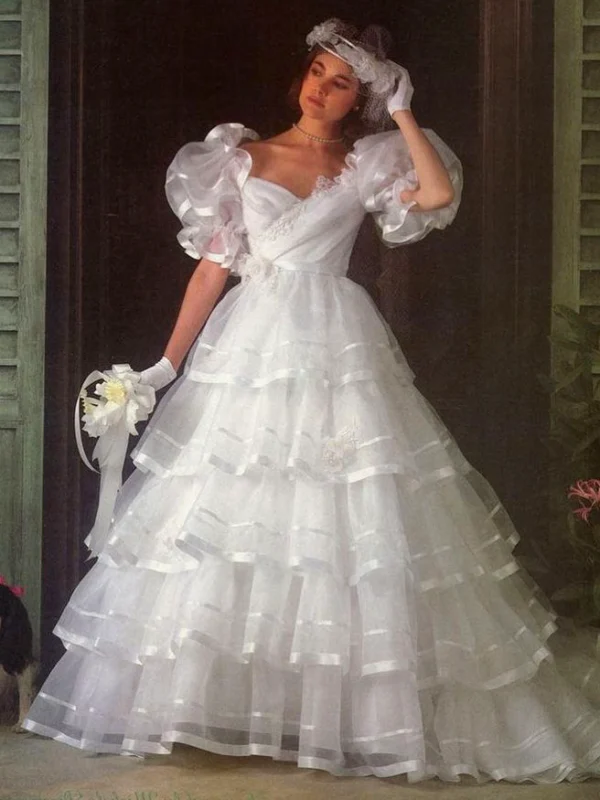
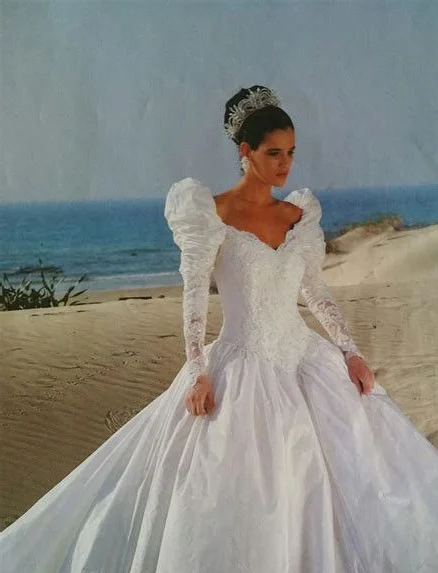
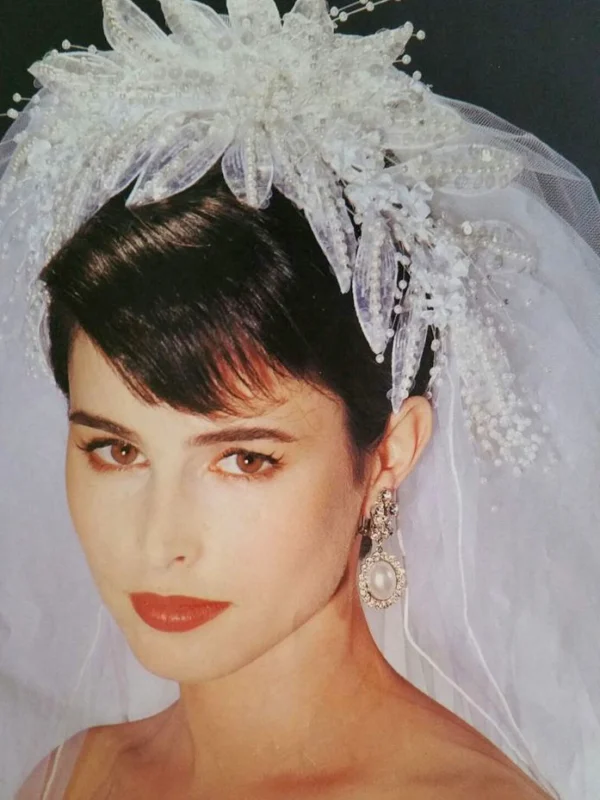
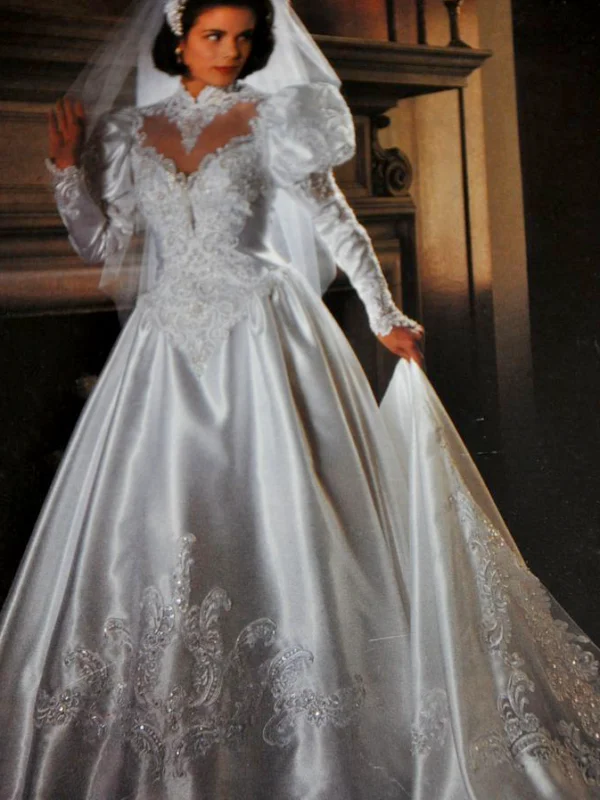
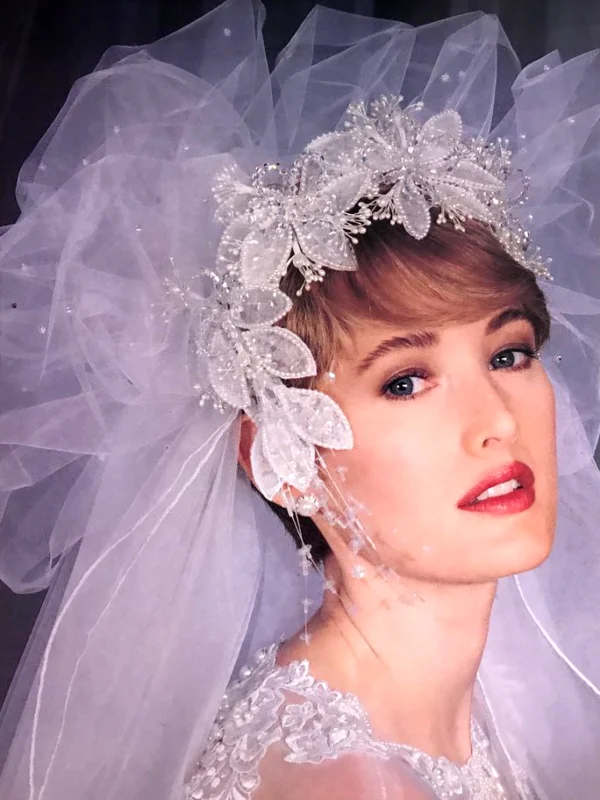
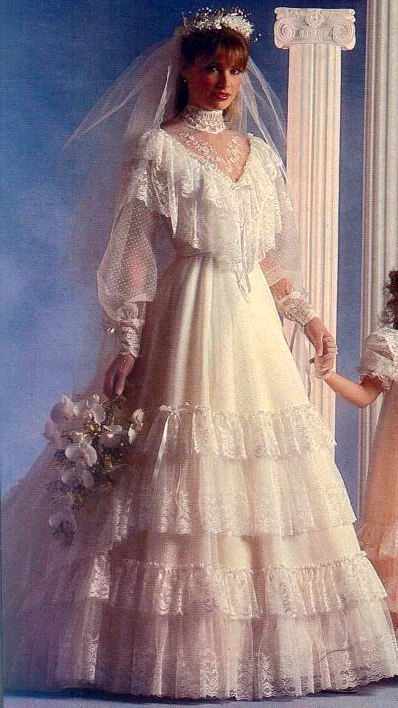
To compare retro bridal details, read this selection through three separate areas. Large short ruffles sit beside the upper body. Other dresses place the strongest volume higher at the shoulders and continue towards the hands. Two close views show how much drawing can appear directly against the head and behind it. The skirt references add repeated horizontal boundaries or a longer quieter area.
Avoid moving immediately between complete outfits. Choose a shoulder idea first and place a headpiece idea beside it. Decide afterwards whether the skirt should continue that repetition or create a pause. The close photographs are not confirmed accessory views of one of the full-length dresses. Their purpose here is comparison of scale and placement. You can enjoy a headpiece’s pointed shapes without wanting an especially broad veil too.
Bring two specific preferences to a fitting and introduce the actual pieces individually. Inspect the side before adding further jewellery. The photographs establish neither a production date nor historical authenticity. Your selected emphasis connects the forms, and comparing them with the same dress, hair and shoes keeps that choice understandable.
Guide to comparing these images
Find the pause between repeated edges
The dress with short ruffled sleeves repeats broad edges through the skirt tiers. The puff-shouldered option with a decorated lower hem leaves a longer quiet interval below its bodice. Compare that interval rather than deciding only between large and small sleeves. You may prefer substantial shoulder volume while wanting fewer interruptions down the skirt.
The two close head views show another distinction: pointed leaf-like ornaments sit near the face, while upright veil folds extend the area behind the head. A front detail can therefore remain similar while the surrounding outline becomes broader. Keep the visible ear pendant separate from those rear folds when comparing the amount of detail.
Choose a rhythm for the whole outline
Follow the sequence from head to shoulder, waist and hem. Note whether you want frequent repeated borders or one strong upper accent followed by a quieter stretch. Use the higher-collar reference to compare a more enclosed upper line within that sequence. This produces a concrete description of the preferred arrangement without relying on an assumed decade or garment age.