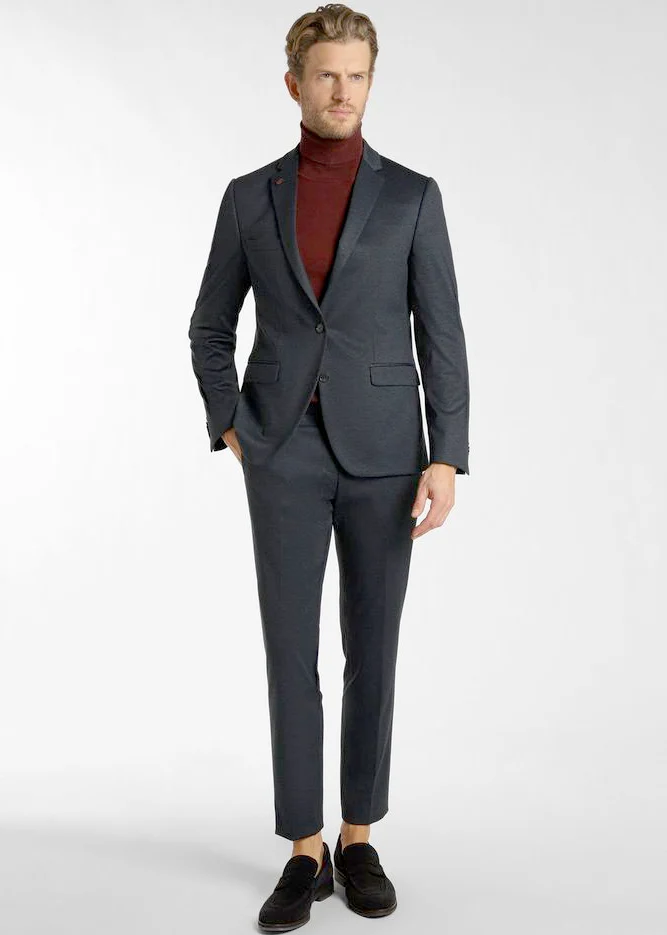
A dark jacket with a red turtleneck connects a quieter upper front to a higher coloured neck area. Dark trousers end above the shoes, leaving an ankle area visible. Dark flat shoes complete the lower line. One hand is near the trouser side, while the other arm rests beside the body. Unlike the closer torso crops, this picture shows the complete lower relationship. It establishes neither invisible socks nor a particular fibre or trouser length suitable for every double-breasted jacket.
Compare the larger quiet neck area with the tie idea first. If you prefer a turtleneck, test it in the jacket you actually choose. Inspect neck height and visible edge while standing and sitting. You need not copy colour, front arrangement and trouser finish together simply because you like one element in the photograph.
Use the lower view for your own shoe trial. Compare how much ankle and shoe you want visible and have any changed hem assessed on the actual garment. The picture offers a clear neck colour and a visibly finished leg area. Both observations can contribute without relabelling this single-breasted-looking front as a double-breasted jacket.