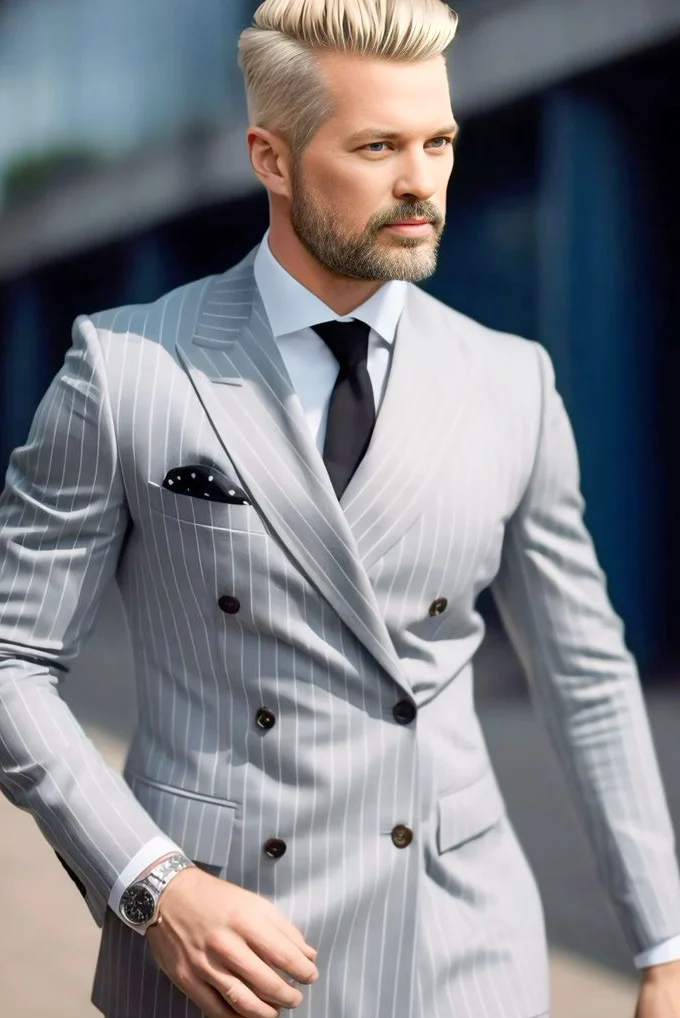
A pale striped double-breasted jacket connects an overlapping front with several visible darker buttons. White shirt provides a pale neck frame, with the dark tie making a continuous centre. A dark piece with small pale dots sits at the upper pocket. A watch and one hand held forwards complete the view. Light and shadow change the prominence of the stripes. The crop supplies neither a complete leg line nor shoe shape and establishes no material composition or ready-to-wear specification for another person.
Use this as a comparison with the dark front and colourful tie. Place your actual shirt below the chosen lapels first and assess the visible collar area. Compare a quiet tie with a patterned option afterwards, before adding the dotted square or another pocket arrangement. That sequence helps identify which contrast you actually prefer.
View the whole upper area with relaxed arms. Have the intended fastening explained on the real garment instead of assigning the same job to every visible button. Choose complete trousers and your shoes next. You can retain the pale overlapping form without adopting every smaller contrast in the photograph simultaneously.