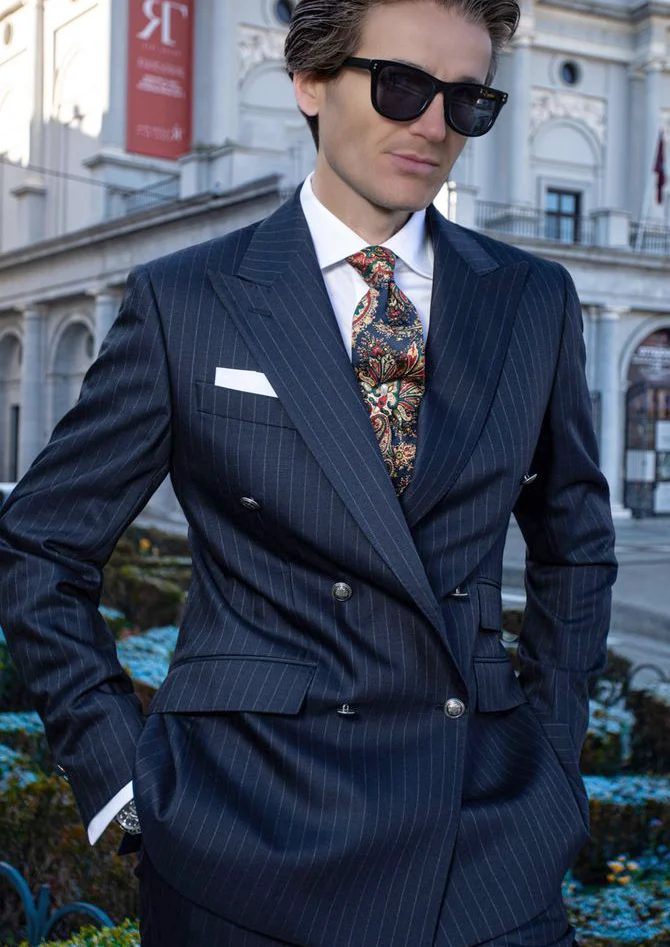
Pinstripes run across a dark blue double-breasted jacket in this closer view. The overlapping front has several buttons, with narrow lines changing direction across lapels and areas. A white shirt frames a tie with larger multicoloured curved motifs. The pocket square forms a quiet pale rectangle. Dark sunglasses and a hand in a pocket complete the stance. Entire trousers and footwear lie outside the frame, leaving upper drawing rather than lower length as the information supplied.
Compare the size relationship between narrow stripe and broader tie motif first. Try a quieter and more strongly drawn tie on the actual white shirt while the jacket remains unchanged. Decide afterwards whether a pale square should quietly complete the chest or carry another motif itself. That second task need not automatically follow the first, allowing a quieter area to remain beside a tie you enjoy.
Inspect conversational distance and add a complete front with ordinary arm position. Check how much patterned middle remains across your intended wearing states. The crop shows an upper relationship, not suitable trouser length, a particular era or fibre. Use visible lines as a concrete base for your real combination and complete missing information on the actual pieces.