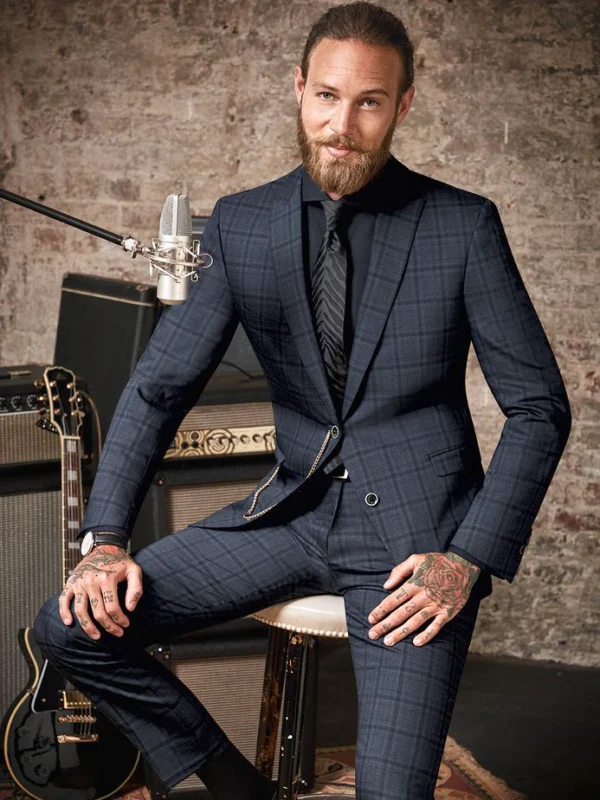
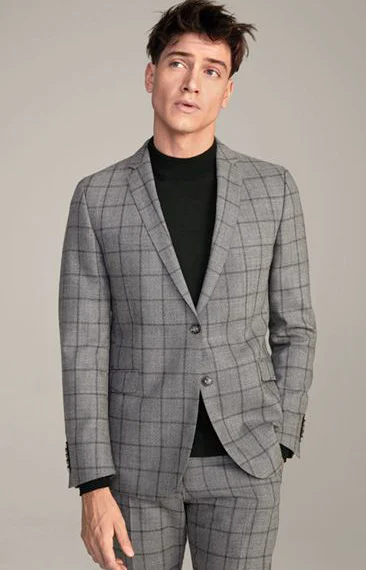
Combine suit patterns here by beginning with the jacket area. The seated dark blue example has a finer grid beside a black tie with subtle angular drawing. The grey version places a clearer check above a plain black top, creating a deliberate pause from further patterns. It helps compare what the jacket already contributes before introducing a second or third motif, rather than treating a quiet middle as an incomplete outfit.
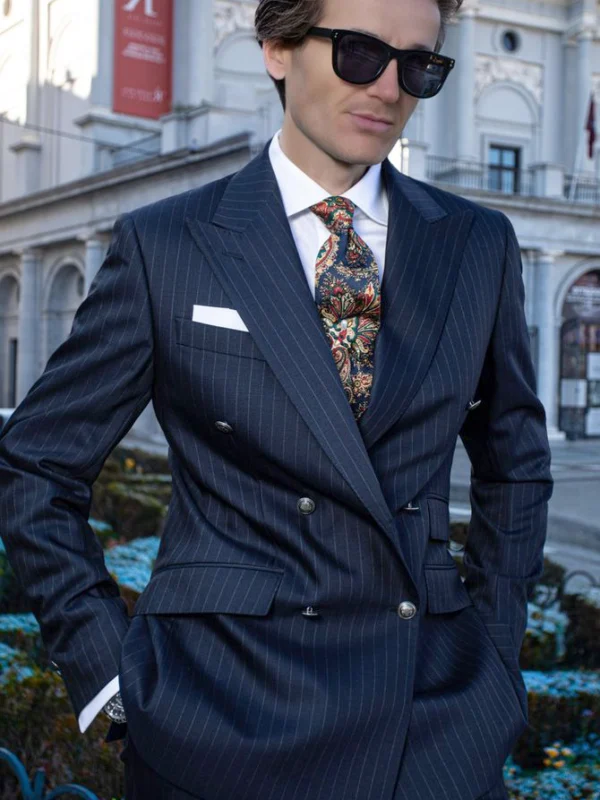
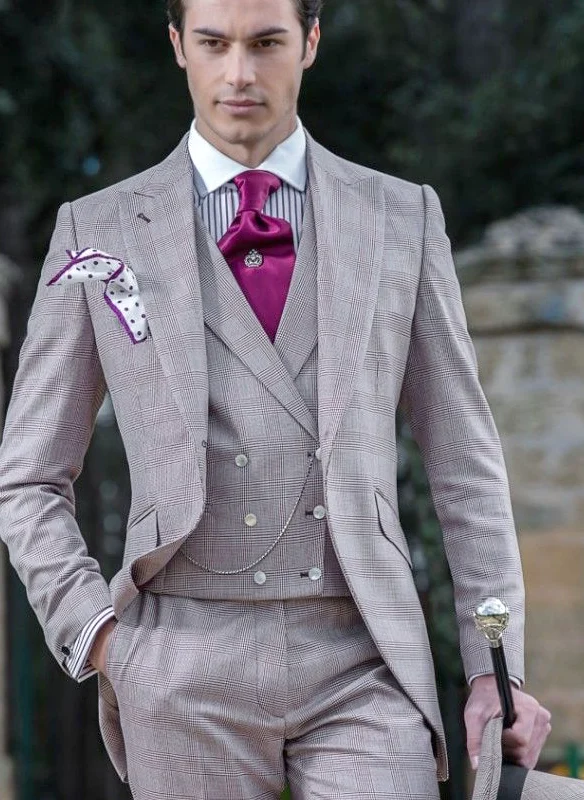
The dark blue double-breasted striped jacket adds a larger multicoloured curved tie and a quiet white square. The pale multi-piece look connects fine checks with shirt stripes, a broad magenta neck area and a dotted chest accent. These references distribute colour and pattern across different areas. Component count alone cannot explain their weight within the torso.
Choose a leading area for the real fitting. Add a tie or shirt and keep other pieces consistent initially. Inspect the whole torso from conversational distance before details. Remove a small accent for comparison. A suitable mix develops from the relationship you choose between two drawings and quieter zones, rather than an obligation to pattern every available position.