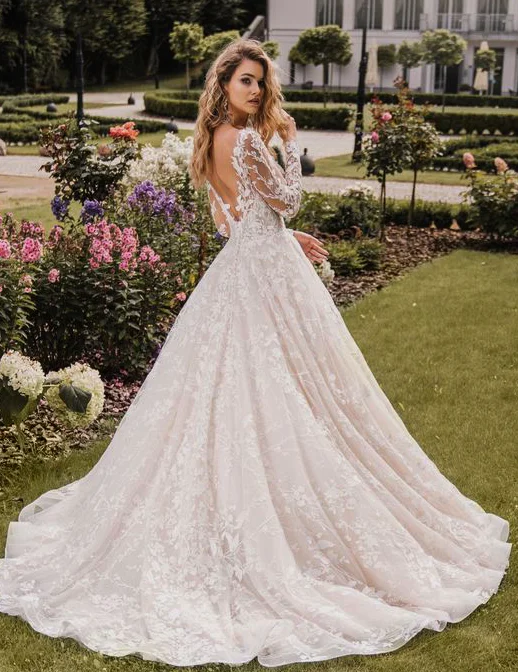
Patterned bridal sleeves from behind create a different effect here from the closer smooth reference. Light motifs run over the arms and repeat across the wide lower area. Part of the back remains open. The sideways turn brings one arm and the waist forward visually, while the skirt spreads across the grass behind. Separate the pattern effect from the actual amount of skirt volume.
Begin by deciding whether you want decoration to continue between sleeves and skirt. Then compare how much exposed back you would like alongside it. A continuing motif need not come with exactly the opening shown here. Ask for matching front and back views of the real model, rather than mentally combining different dresses into a single available product.
Test the complete shape with relaxed hands and then while turning. A skirt arranged on the ground says little about carrying it between chairs or up steps. Plan those routes practically. The picture does not establish internal construction or fibre; use it for visible lines and the placement of light motifs.