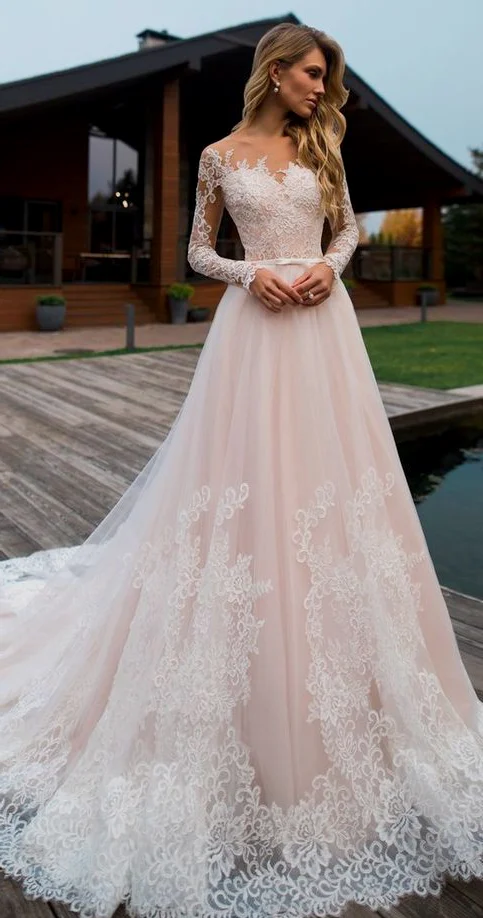
Close patterned bridal sleeves show light motifs with skin visible between them in this view. The upper bodice edge follows an irregular-looking pattern line. A narrow pale transition marks the waist; below it, the skirt stays quieter before developing larger motifs towards the hem. This makes the distribution of decoration a useful comparison, rather than simply counting how much detail is present.
At a fitting, keep one arm beside your body and bring the other slightly forwards. Compare transparency against different backgrounds and from some distance. You can enjoy the patterned arm surface and still prefer a different neckline. Describe those wishes separately. Then bend your elbow without pulling the cuff down. This helps reveal whether the sleeve and bodice work together in your movement.
Use a neutral stance with free hands for the skirt comparison. The picture shows a lower area spread sideways rather than a walking trial. Plan actual hem length separately with shoes. The pale motifs do not establish a fibre or manufacturing technique; they suggest a visible pattern distribution.