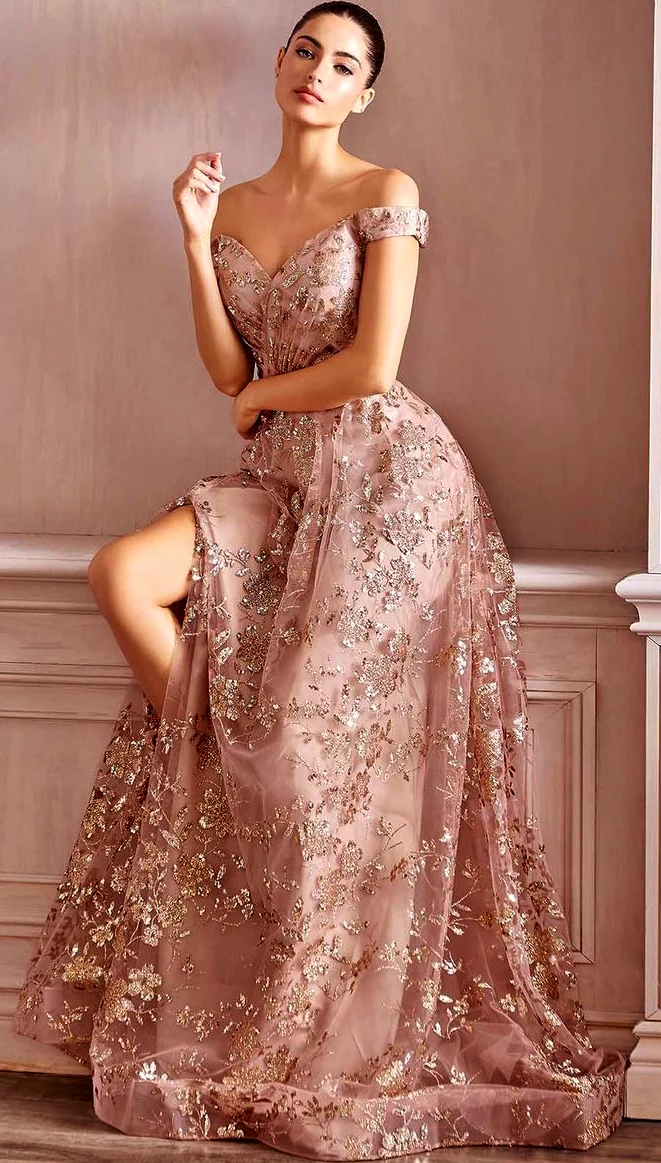
Pink with pale motifs creates a different effect from a largely unpatterned skirt. Branching shapes extend over the bodice and long outer skirt layer. The upper edge sits below the shoulders at the sides and dips farther in the middle. The seated pose also reveals an opening in the skirt. Pattern connects the upper and lower areas, while pink appears as the base between the shapes.
For a similar direction, first choose between stronger and quieter pattern contrast. Look at the dress from several steps away and then close up. Ask whether you want the pink area or the pale drawing to register first. A less densely decorated candidate can answer the same colour preference with a calmer overall impression. Compare it with the same hairstyle and earrings so that the changing pattern remains easy to assess.
Try a necklace after that initial comparison. The decorated upper edge already introduces small lines close to the face. An additional pendant may appeal, but choose it deliberately. Assess the skirt opening on the actual garment while standing and sitting; this single pose cannot establish its complete effect during wear.