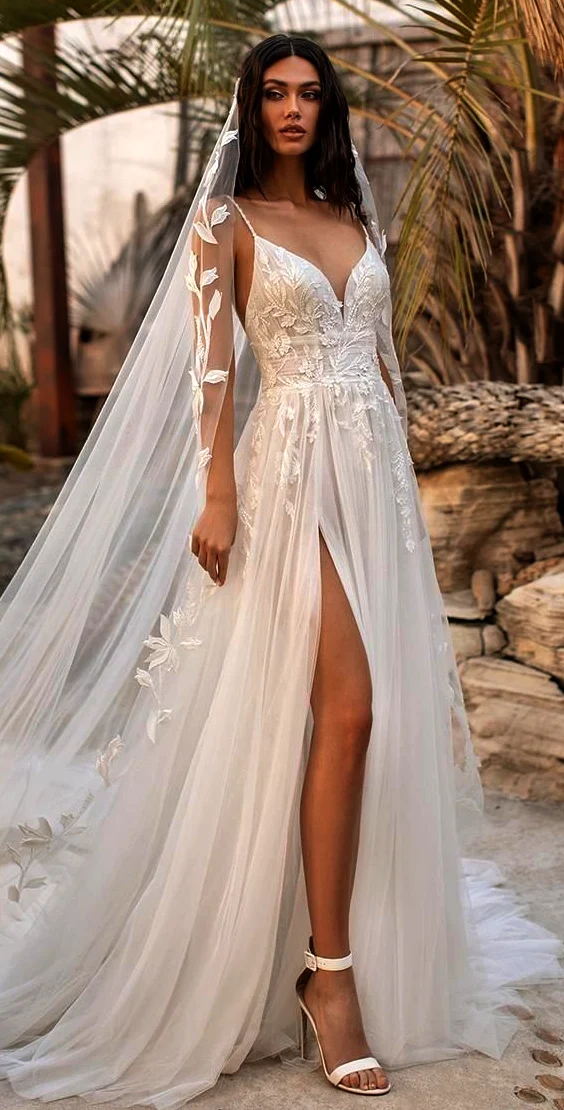
A floral veil beside a widening skirt expands the visible outfit here. The dress has fine straps, a V-shaped front centre and pale motifs extending into its upper skirt. Longer folds fall more quietly below. The front opening reveals leg and shoe. Beside and behind the body, the long veil adds larger floral shapes along its edge. It creates an additional outside area rather than making every visible boundary part of the skirt itself.
Assess the skirt line without that companion first during selection. Does its outline appeal on its own? Add the intended veil afterwards and view front and side again. You may enjoy a broader second patterned area or prefer the skirt to remain more distinct. Those wishes become clearer when every element is not changed simultaneously. Keep veil placement similar when comparing its effect.
Check the visible shoe area with the skirt falling normally next. The pictured leg position supplies another view rather than a fixed requirement. Clarify whether veil and dress are separate components of the actual offer. Similar floral motifs establish neither shared manufacture nor a common sales set. Choose their visible relationship and confirm the real pieces instead of assuming the complete photographed combination is available together.