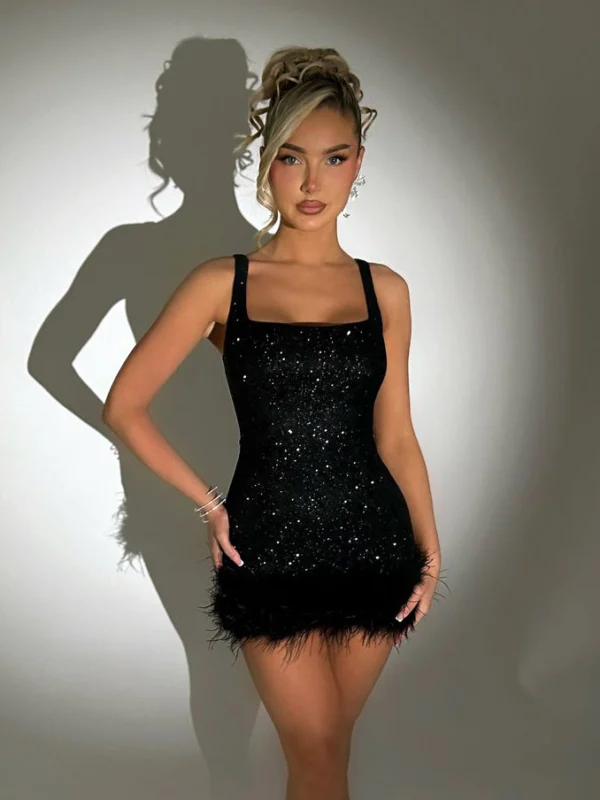
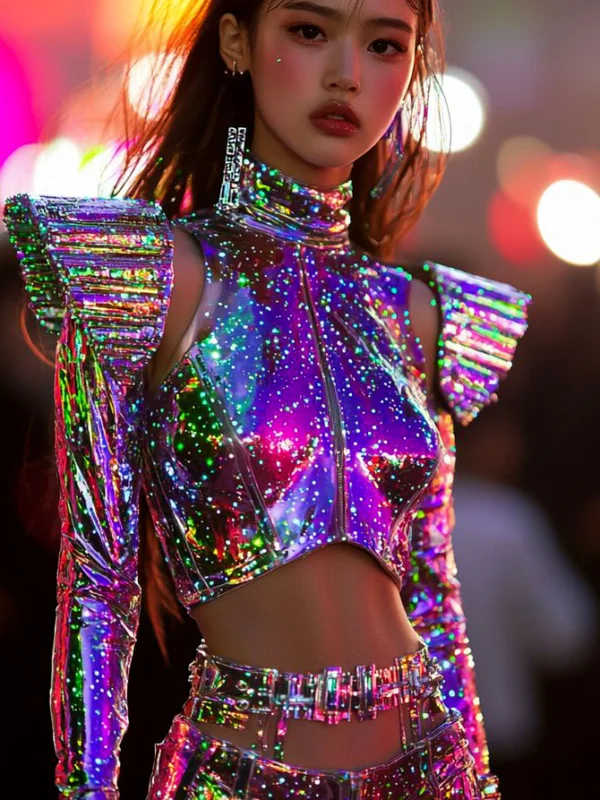
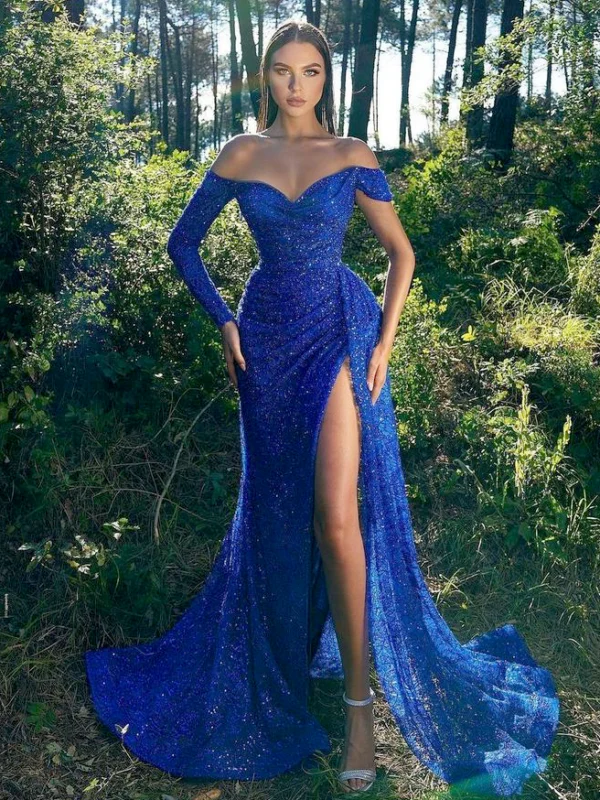
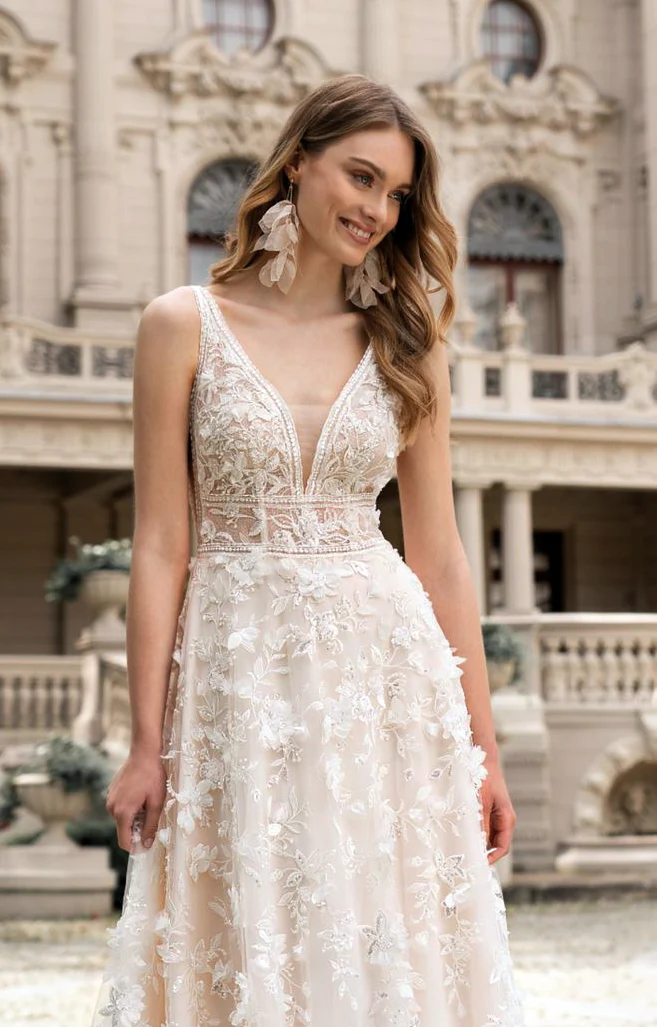
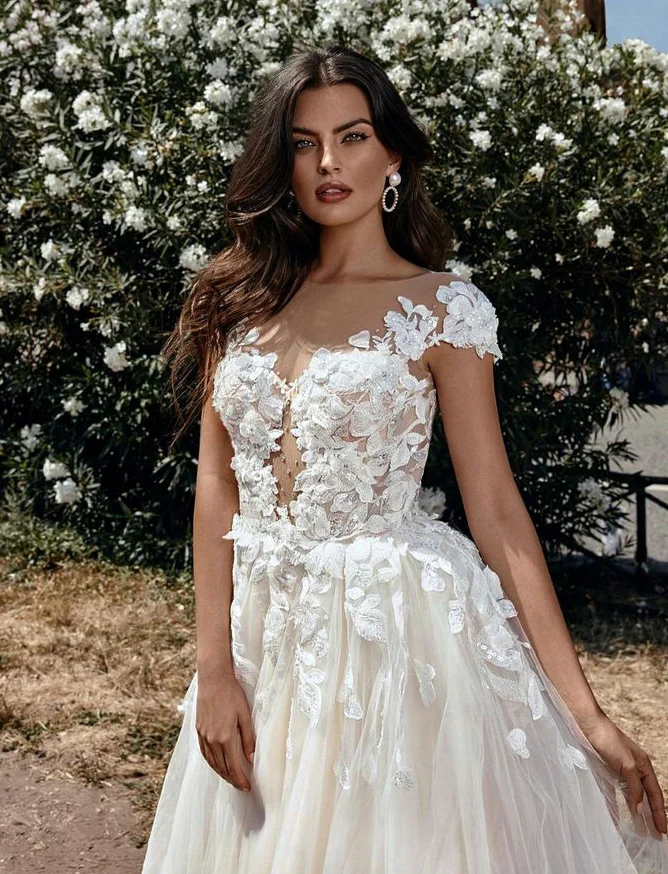
Floral earrings can repeat a flowered dress or provide a separate focal point beside a quieter bodice. The aim is to choose their size and position, rather than collect as many matching flowers as possible. The leading image shows large pale hanging petal shapes beside a floral V neckline. Three other references help compare an oval drop, a small pale stud and longer earrings. Start with the visible earring you want, then add the necklace, hairstyle and further floral details individually.
Choose floral earrings by scale and spacing
Look at the separate petal shapes beside the face in the main image, then at the smaller motifs on the dress. Their sizes do not have to match. A larger earring can remain a recognisable shape while the fabric carries numerous smaller flowers. Decide which relationship you want: an obvious repeated motif or simply a similar pale colour. Hold the real earring beside the intended bodice and view it at conversation distance, rather than comparing enlarged product close-ups alone.
Try a smaller alternative under the same conditions. The reference with a small pale stud shows a different amount of jewellery beside large flowers along an open shoulder edge. Keep your hairstyle and dress unchanged for this comparison. You can then distinguish liking the large earring itself from liking the whole decorated image. A note such as “large hanging flowers, no extra necklace” also makes the next selection more specific than a general request for romantic jewellery without a size or placement.
Check length beside the actual neckline
The V neckline remains visible between the larger earrings in the main photograph. The higher floral comparison bodice instead has an oval earring drop beside a higher outer edge. Compare where the bottom of the jewellery finishes in relation to neck, shoulder and fabric. There is no single length required for every dress. Choose the placement you enjoy on the complete upper outfit and assess it slightly from the side as well as facing the camera directly.
If you are choosing between a higher neckline and bare shoulders, change only the dress first while keeping the earring. Then compare jewellery sizes. The off-shoulder dress guide helps describe that open shoulder line. A large earring does not need to fill the whole bare area. You may prefer a small option when the dress’s floral edge should remain particularly clear. Make that decision on your own combination rather than through a general rule linking exposed skin to a particular amount of jewellery.
Distribute flowers between ears and dress
The leading example repeats floral shapes at the ears, neckline and bodice. Another reference places larger petal-like forms around the bare shoulder line and waist. You can distribute flowers across these areas or leave one quieter. Choose where the most noticeable shape should sit first. If that is the earrings, an equally large necklace is optional. If you particularly like the shoulder border, compare a smaller stud alongside it instead of automatically repeating the largest possible flower in every accessory.
Add an intended bag or hair accessory afterwards. The guide to jewellery with a statement dress expands this choice between individual pieces. Look beyond a shared flower shape to the number of noticeable details in your normal stance. Floral earrings beside a floral bodice are one possible combination, rather than a compulsory matching set. Different motifs can appeal too when you deliberately choose their placement. Removing an existing necklace may resolve the outfit more effectively than buying another matching accessory.
Try hair and floral earrings together
Test the planned hairstyle with both earrings, rather than holding just one piece beside the ear. Look from the sides and turn your head as you would during a conversation. With loose hair, a flower may be visible differently from when strands are drawn back. Decide whether you want both earrings continuously clear or enjoy them partly concealed. A quick straight-on photograph cannot answer that whole question; a short side view helps show the relationship between the real hair and jewellery.
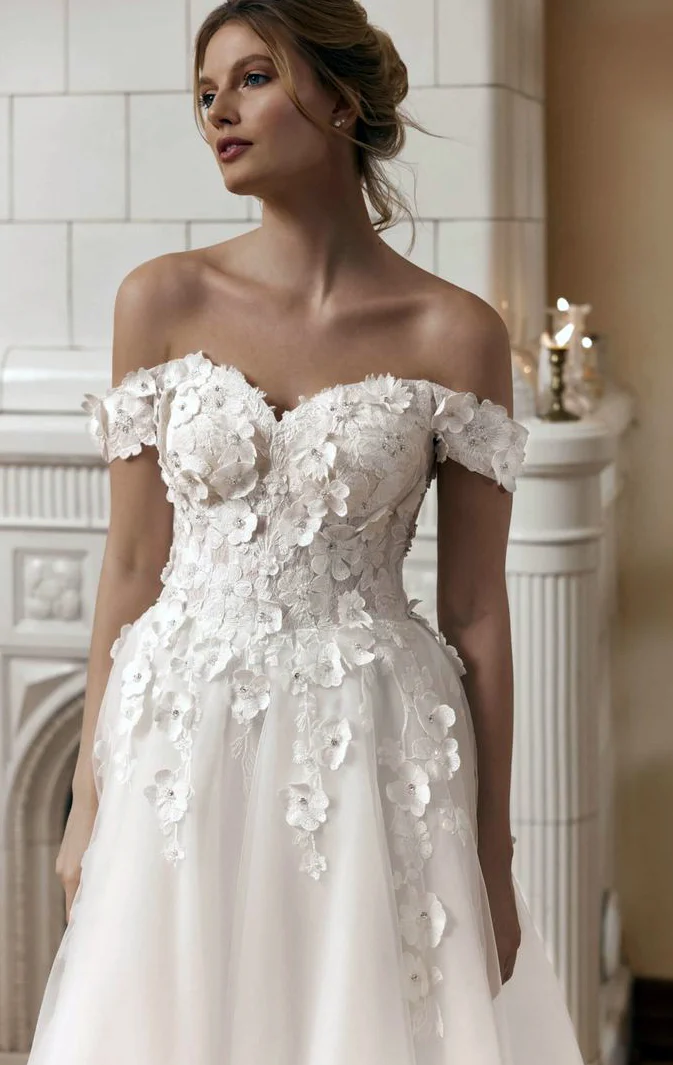
Use the small-stud comparison to test a quieter option without simultaneously changing the entire hairstyle. If you plan a hair ornament, put it in its intended position and assess its proximity to the earring. Choose between the two arrangements afterwards. Specific notes such as “flower visible below the ear, hair behind it” or “small stud beside bare shoulders” are useful in a styling appointment. They communicate the position you want more clearly than a collection of unrelated close-ups where the dress, hair and jewellery all change at once.
Test the actual pair in ordinary use
Ask for the dimensions, weight and fastening of the actual pair before deciding. Those details replace guesses from a pale close-up. Try the intended fastening according to the provider’s instructions and decide whether you want to put the earrings on yourself or plan help. Turn your head and, where the fitting conditions allow, put on and remove the jacket you actually intend to wear. Observe how closely jewellery, hair and clothing come together during those ordinary movements.
Decide whether the pair feels suitable for your planned wearing time. A large visible motif proves neither high nor low weight. If you dislike a long flower shape when trying it, look for a smaller or shorter version with a related motif rather than keeping it solely because the dress photograph appeals. You could plan an already tried small stud for a later change. That is a personal outfit choice, not an assertion that the photographed jewellery has particular weight, comfort or fastening properties.
Establish care for the jewellery you choose
Material, coating and any stones belong in the actual product information. The GIA care guidance explains that ultrasonic cleaning is unsuitable for some jewellery. Do not transfer a general cleaning method to unidentified floral earrings. Ask for care and storage instructions for the particular pair instead. Its pale appearance does not determine those instructions. The dress has its own care information too; jewellery and textiles should not be treated as though their care requirements were interchangeable.
Make the last comparison wearing the dress and intended hair. Check four things: a recognisable flower shape, your preferred length beside the neckline, deliberately chosen other accessories and a pair tested in use. A small front and side photograph lets you compare a large flower and small stud under the same conditions. Floral earrings should contribute to the combination you want. Identical motifs in every position and a particular material are unnecessary; the visible arrangement and your own trial provide a more concrete basis for choosing.
Choose floral earrings by scale and length beside your real neckline. Compare a smaller stud with the same hairstyle, add other accessories individually and test the actual pair in use.
Frequently asked questions
Do floral earrings need a necklace?
Try the earrings on your dress without a necklace first. Add it separately and decide whether you want another noticeable piece beside the flowers at your ears.
How do I compare large flowers and small studs?
Wear both pairs in turn with the same dress and hairstyle. Compare front and side views so jewellery scale is the only changed choice.
What should I ask before buying the pair?
Request actual dimensions, weight, fastening, material and care. Where possible, test the intended arrangement with your hair and planned jacket.