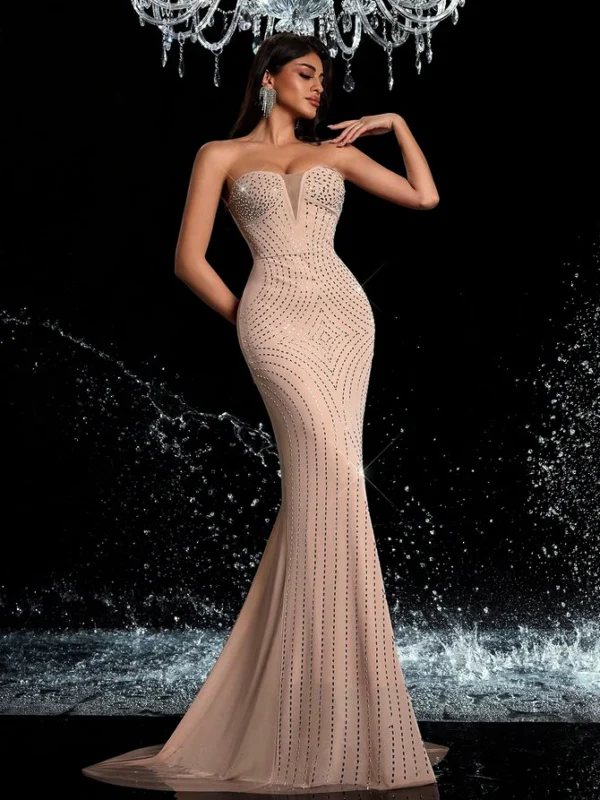
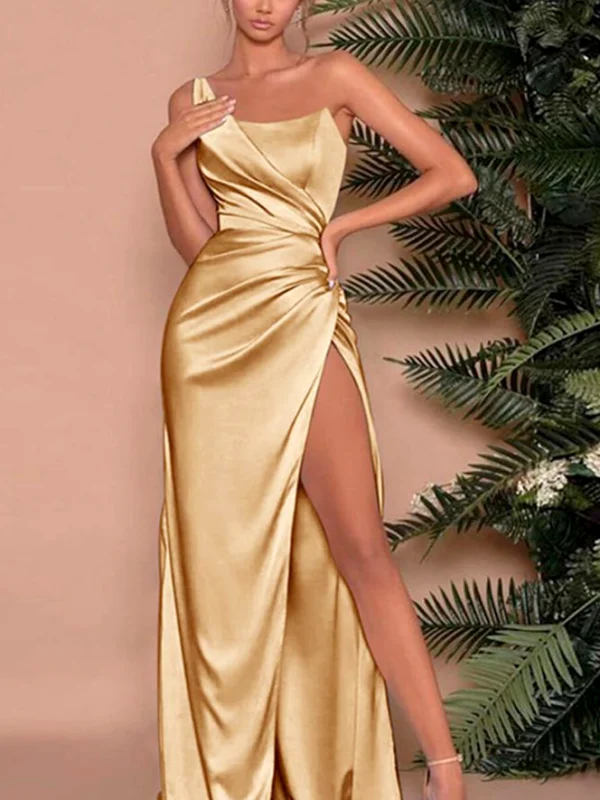
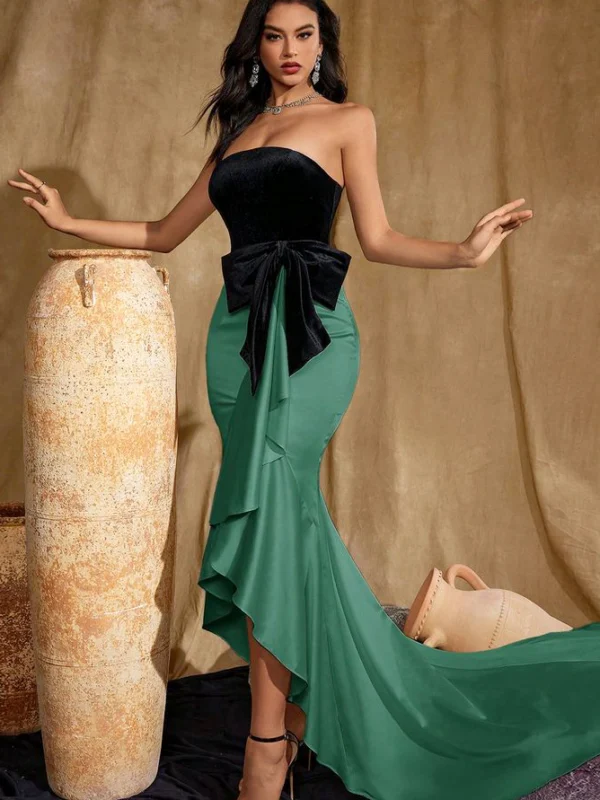
Choose a fitted evening dress through its actual position at the bodice, waist and hips, together with your movements. A narrow front view alone is insufficient. Some of our references combine a closer base with large outer side areas; another has a short narrow front beside floor-length fabric. Decide where you want closeness to the body first. Try the real dress with your intended underwear and shoes afterwards, assessing the front, sides and rear rather than classifying the entire outline from one photograph.
The six images show dark red, gold tones, yellow and blue-violet. A small upper opening, visible vertical bodice lines, diagonally gathered-looking hip areas and several high leg openings supply concrete comparisons. They establish no specific stretch, built-in support or all-day comfort. Hands held behind the body and fabric spread to the sides also affect the pictured outline. Use the images for shape preferences and verify the fit on the actual model offered.
1. Where should your fitted evening dress stay narrow?
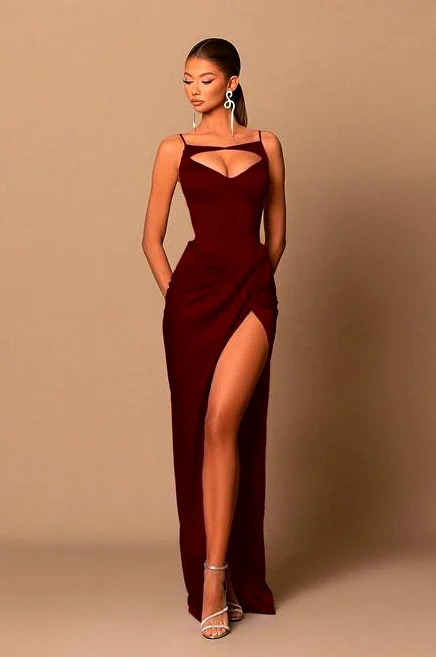
Begin with a complete front view and a freely falling skirt. The dark red reference with slim shoulder connections has a closer outline and diagonally placed areas over the waist and hips. The other red image adds much wider outer fabric. Decide separately whether you prefer the narrow base or its combination with extra width. A broad rear area does not automatically make the front fit looser. Request front, side and rear views of the same actual version of your candidate.
Name your preferred areas: bodice, waist, hip line and lower skirt. You can want a clearer waist shape and more room below without following a fixed body-type prescription. Compare two actual candidates with different lines and consider your own impression. If the vertical bodice lines particularly interest you, the comparison of corset appearance and confirmed construction adds that question. Visible lines cannot replace an explanation of the actual internal structure.
2. Which size information belongs to the actual model?
Jovani lists bust, waist and hip measurements separately in inches on its size chart and notes that its size guides are product-specific. This is a named example of considering several measurements, rather than a size identification for our photographs. Use the actual candidate’s chart and accompanying measuring instructions. A familiar label from another dress does not establish how this version fits you. Record the offered size alongside its specific model information.
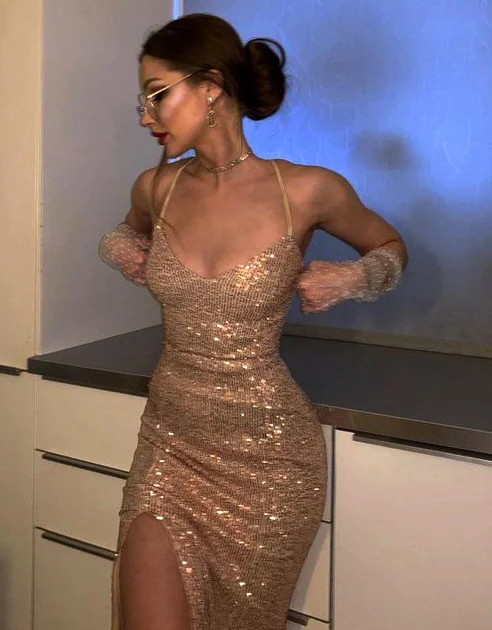
Ask about composition, lining and intended fit as well. A smooth yellow surface or small gold-looking reflections establishes no stretch content. Clarify which details describe the dress actually offered. A possible alteration is another question: which area would change and what should the result look like? Discuss the confirmed proposal without assuming any adjustment is possible merely because you want a closer line. The fitting then shows how those described properties come together in your combination.
3. How can you assess sitting and walking in a narrow base?
Look at the dress while standing naturally with arms at your sides first. Sit on a normal seat of the kind you intend to use and stand again. Walk several steps and turn. Notice whether those actions would require constant repositioning of the skirt or bodice. The preferred narrow line is only part of your selection; your real movements belong to it. A photograph with one leg extended cannot demonstrate the complete sequence.
The high leg opening in the yellow reference is clearly visible beside the diagonally placed fabric. In the blue-violet image, the opening lies under a different upper fold. Compare its position while standing and walking on the real dress. Do not turn that observation into a rule that every high opening automatically supplies sufficient movement. The actual combination of width, opening and fit needs to be tried on you. The comparison of body closeness and a movement fitting extends this choice beyond visible styling.
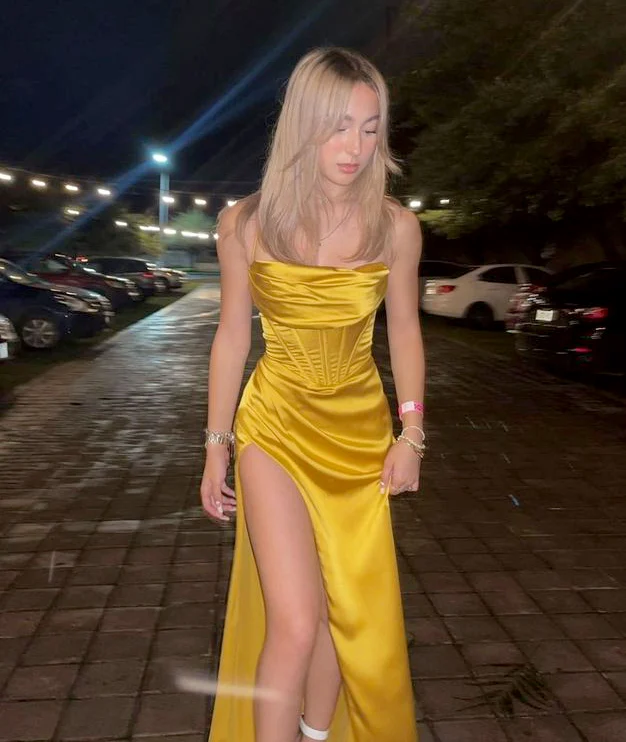
4. How do neckline and underwear affect your choice?
Compare the upper line independently of your preferred hip shape. The gold-looking image has slim connections and a lower rounded edge. The dark red reference places a narrow horizontal connection above a heart-like area. They frame the neck and chest differently. Try your candidate with the actual planned underwear and bring your arms forward. Assess the visible combination from the front and side instead of inferring a particular support function from decorative bodice lines.
Add jewellery separately afterwards. Start with your planned hair, add earrings and then consider a necklace. The neckline should remain visible in the way you want within that combination. The real impression determines whether you want an additional jewellery piece beside it. A broad folded upper surface, as in the blue-violet reference, raises a different question from the red dress’s small opening. The comparison of metallic-looking dress surfaces helps separate reflection from upper shape while making that choice.
5. Which extra width and accessories do you want to wear?
The red reference with a large outer skirt area and the blue image with a short front show why base and outer silhouette need separate consideration. Do you prefer a quieter narrow line or the additional side fabric itself? Ask which pieces belong to the real offer and how they connect. A visible broad starting point establishes no detachable option. Request the agreed complete version before planning two different ways of wearing it.
Bring your planned bag and hold it beside and in front of the body. Open it with its intended contents. Check whether a strap crosses an upper fold or the bag covers a chosen hip line. Add the outer layer you actually intend to use afterwards. Assess the outfit with it and after taking it off. You can then examine the narrower route in several real situations without changing shoes, bag and jewellery together during the comparison.
6. How should you confirm hem, alterations and care?
Wear the intended shoes for the final length check and release held side areas. The gold-looking close image omits the full lower edge; the red complete view shows it more clearly. Another model’s length cannot supply a missing measurement for your favourite, however. Ask about the front and rear of the actual dress. Discuss a proposed change alongside the leg opening and extra fabric areas, and establish when you can view the complete arrangement again.
Treatment and storage need the finished dress’s label and accompanying information. GINETEX explains textile care symbols; a shiny appearance determines no washing or ironing method. Finish by recording the confirmed size, affected alterations and accessories tried together. Your fitted evening dress then becomes a checked combination of several fitting areas and visible lines. The references supply concrete shape ideas. The decision belongs to the real model with the movements and pieces you intend to use.
Choose closeness to the body in separate areas. Try the actual dress while standing, sitting and walking; a wide outer panel does not explain the fit of its narrower base.
Frequently asked questions
Must a fitted evening dress be equally tight everywhere?
A fitted evening dress need not be equally tight in every area. Compare bodice, waist, hips and lower skirt separately and test the actual version through your movements. A narrow base may also be combined with wider outer areas.
Does a smooth surface prove stretch content in a fitted evening dress?
A smooth or shiny surface on a fitted evening dress establishes neither composition nor stretch. Use the actual model’s details and assess its fit at the appointment.
Are wide side areas on a fitted evening dress automatically detachable?
Wide side areas on a fitted evening dress establish neither their connection nor a detachable version. Ask about attachment, included pieces and the actual version offered.
How should I check a fitted evening dress before changing its hem?
Check the fitted evening dress with the intended shoes, letting the skirt fall freely and assessing front and rear. Discuss the new length together with the leg opening and outer fabric areas on the actual model.