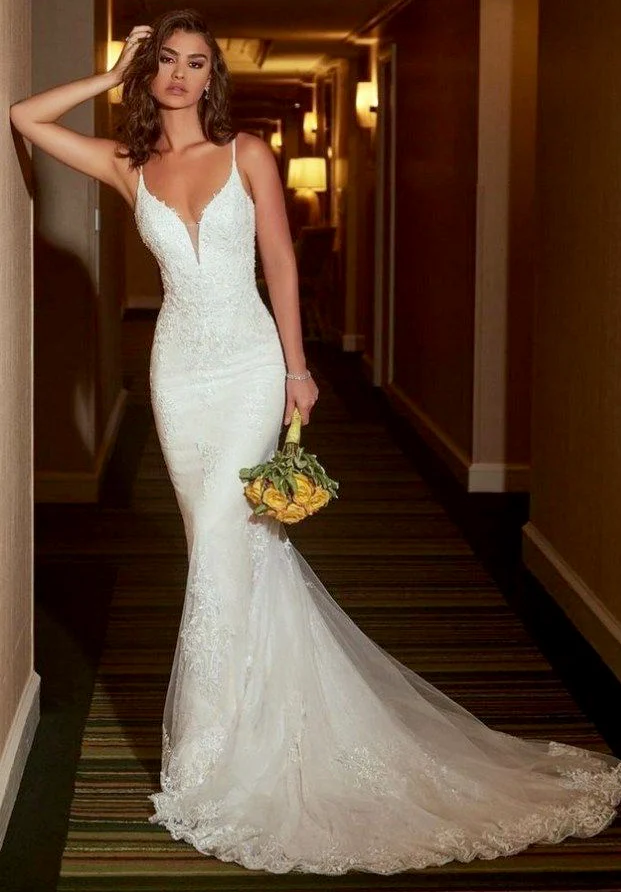
A fit and flare wedding dress is most usefully compared through the transition from its narrower section into a wider skirt. The key question is where your actual dress changes direction, rather than whether a description promises a particular height. An earlier, softer opening looks different from a long narrow section followed by a stronger lower spread. These photographs provide different starting points for that comparison. They cannot replace a side view or your own movement trial. Begin with the lower outline and keep neckline, jewellery and veil as separate decisions.
If pattern makes the transition harder to follow, use a simple wedding dress as a quieter reference. Identify the outline you want first, then add floral or vertical decoration as a separate design choice.
Fit and flare wedding dress: read the transition first
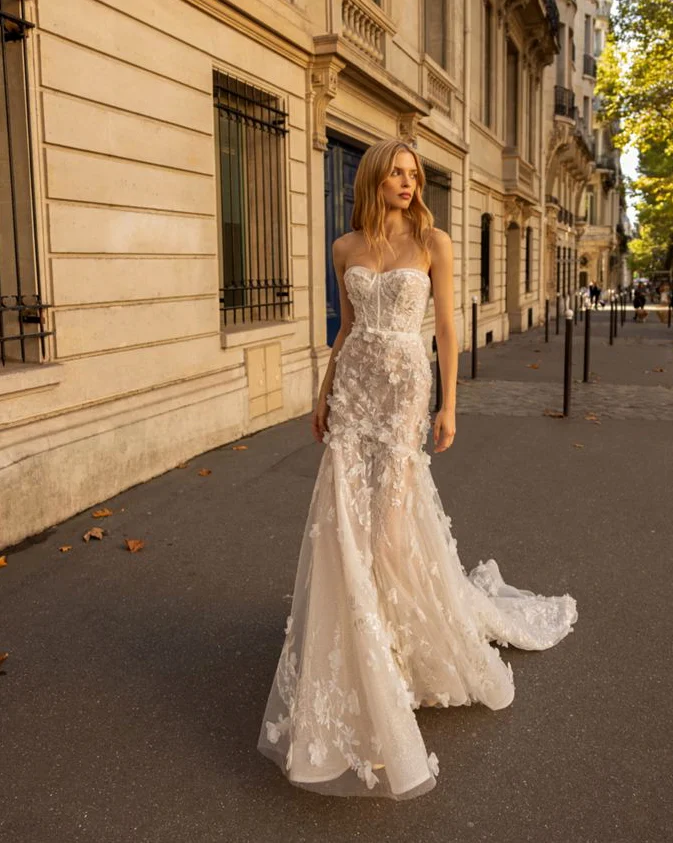
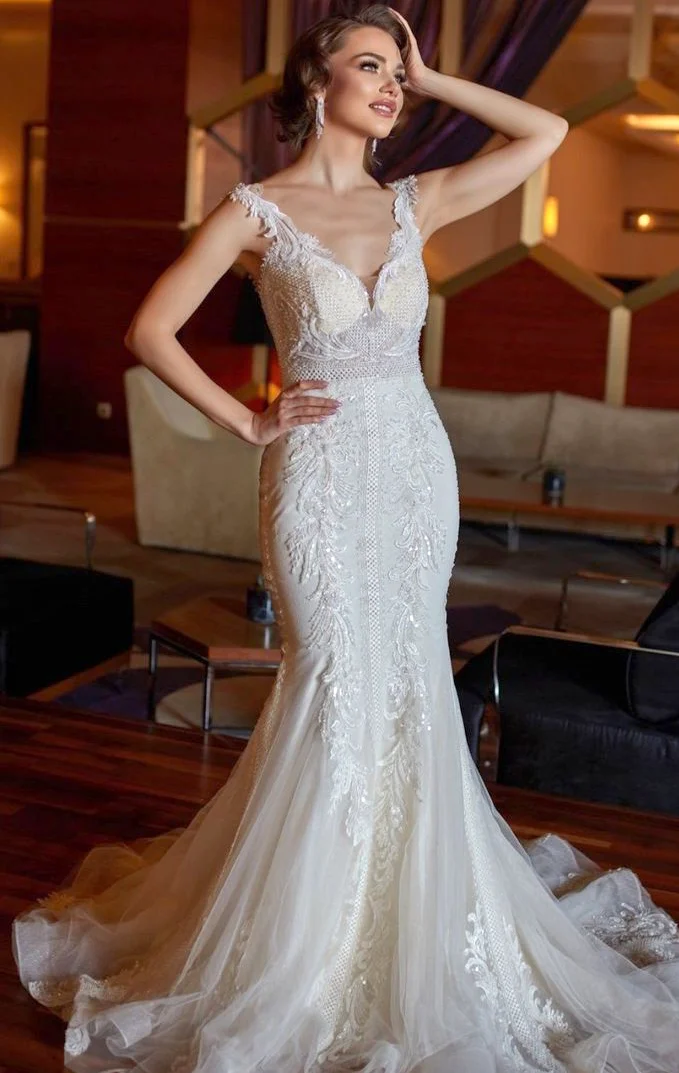
The full strapless floral view shows a closer hip outline opening gradually into broader pale panels below. In the photograph with strong vertical decoration, the narrow section remains readable for longer before the lower finish spreads more clearly. Point to that particular area during the consultation. Words such as softer, earlier or more pronounced are helpful only when they refer to an outline you can actually show.
The Pronovias fit-and-flare category includes different product descriptions and shapes. Use such names to find a selection, rather than as a substitute for examining each dress. A name does not establish your actual room for movement or a compulsory knee position. Request a neutral front and side view for every candidate, with the skirt released rather than pulled out by the hands.
Compare the narrower section on your own body
Place two candidates with reasonably similar upper designs side by side. Follow each line from the waist across the hips to the point where the skirt starts moving outwards. Decide whether you prefer a flowing transition or a more obvious change. This is a design preference, rather than a rule about which body shape is allowed to wear which dress. Describe the result you want without treating your body as a problem to correct.
Keep the same shoes and a similar stance for the comparison. A forward leg or strongly turned hip changes the visible contour. Let your arms fall naturally and look again. Note whether the opening spreads evenly or appears stronger through particular panels, as well as whether it starts higher or lower. That gives your next fitting a more specific question than a silhouette label alone.
Judge the front and side separately
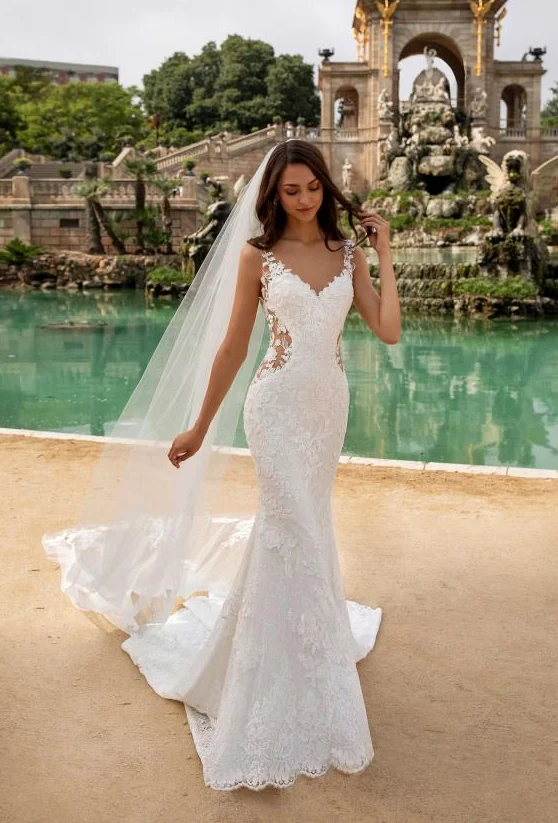
A front photograph may show a broad lower area while the side appears considerably less spread. A rear train can also enlarge the overall surface without changing the front opening. Examine the side before arranging the back fabric especially widely. Follow both the front and rear contours with your eyes. Check whether you can recognise the transition in both directions in the way you prefer.
The mermaid wedding dress guide connects a generally fitted silhouette with the bodice and train. This question is narrower: where should your preferred skirt width begin? If you want an alteration, ask for the area to be marked on the actual garment. Simply asking for less tightness leaves the intended section unclear. Also ask which changes the existing construction can reasonably accommodate.
Test the opening with actual steps
Walk a short distance using your ordinary stride. Turn, stop and sit on a comparable chair. Notice whether you want to keep arranging the skirt by hand or can make the movements you prefer. A photograph does not establish hidden stretch or guaranteed comfort. A wider-looking lower surface does not automatically mean there is more room in the closer section above it. Record appearance and your movement experience separately.
Try a second candidate whose opening starts differently. Describe exactly which movement changes. Is there more room when sitting, does only the visible hem change, or does another section fit more closely? Discuss that observation with the adviser instead of inferring the solution from one image. If you plan to use two pairs of shoes, repeat the trial with both complete combinations.
Separate decoration and posing from cut
Floral motifs can make the transition look softer or more strongly marked. Another dress’s central vertical pattern guides the eye downwards instead. Do not choose the skirt solely because of the way decoration divides its surface. Look first at the outside edge and then at the inner pattern. That makes it easier to say whether you prefer the actual shape or mainly its decorative presentation.
Compare that same outside line from a similar distance while paying more and less attention to its pattern. For a different starting point, look at full-skirt wedding dresses. That guide centres a larger lower area rather than diagnosing where a narrower skirt opens. Decide first whether the closer section itself matches your preference before selecting how long that section should continue.
Record two candidates for the next fitting
Choose two genuinely comparable dresses and write one sentence about each transition: for example, longer and narrow with a marked lower change, or earlier and more gradually opened. Add your side-view and movement observations. The note remains useful when neckline, veil and jewellery choices arrive later. It prevents several new details from quietly replacing the original decision about skirt width.
If alterations are discussed, ask about their effect on the entire lower outline, rather than only one seam. Recheck the proposed adjustment with your shoes and normal posture. The suitable choice is the dress whose actual outline you prefer and whose handling you have tried yourself. That does not require a prescribed body shape or a promise that every garment carrying the same description will fit identically.
Compare two transitions with a similar upper idea
If you already like a floral bodice, find two genuinely available dresses with reasonably similar upper designs for the shape comparison. One can open earlier and more gradually while the other stays narrow for longer. Look at the outer side line first and record your preference before adding a veil or spreading the train. A larger rear photograph area then cannot accidentally determine the skirt opening you wanted.
Repeat the same short walk and sitting movement in both candidates. Describe one specific observation for each dress: the place where you want more room when sitting, for example, or the transition you recognise more clearly while standing. Point to it during the consultation. This connects the visible difference with an actually tested requirement instead of hoping another silhouette name guarantees the appropriate solution.
Compare where the narrower skirt begins to widen. Assess the actual side outline and movement instead of relying on a fixed knee position or a label.
Frequently asked questions
Does the flare always start at the knee?
A fixed knee position is not a useful rule for this selection. Compare the actual transition on each dress while wearing it.
Are fit and flare and mermaid always identical?
Offers group the descriptions differently. Ask about the particular outline instead of assuming the name guarantees an identical cut.
Which views should I request to assess the shape?
Request complete front and side views with the skirt released, then compare the actual transition during your own fitting.


