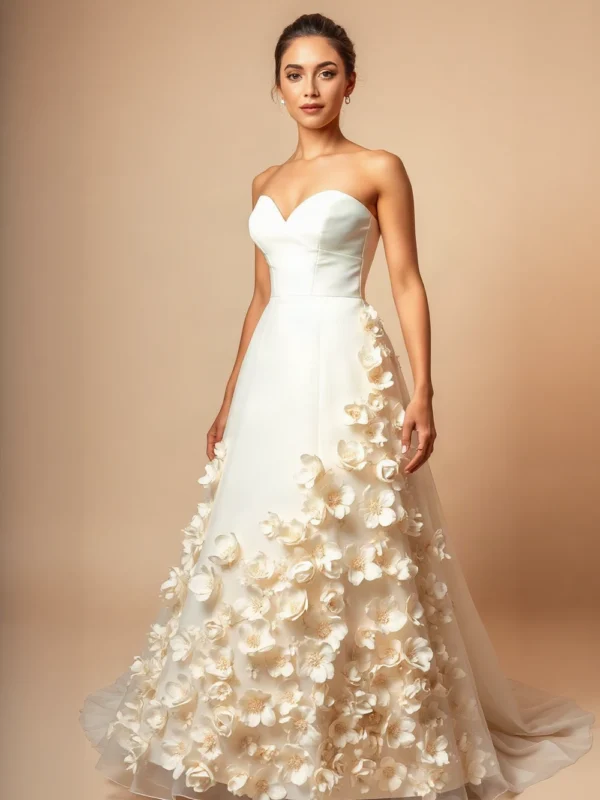
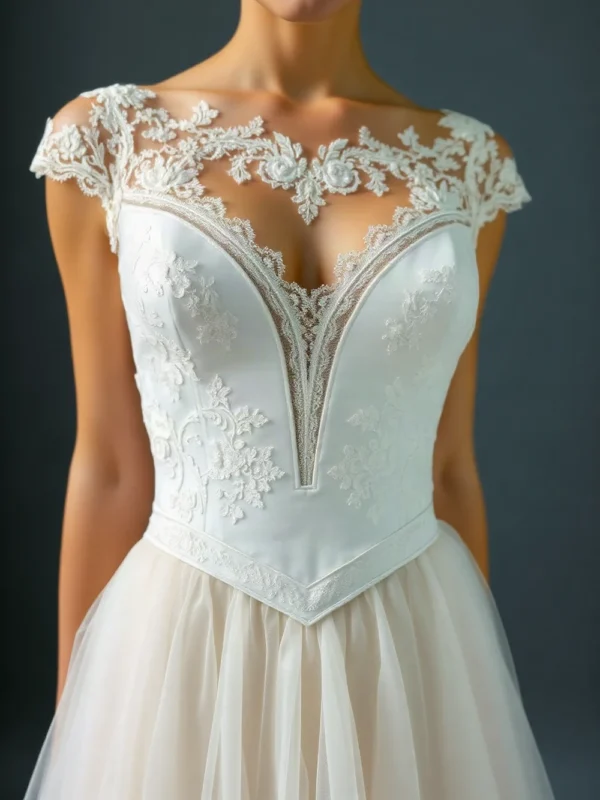
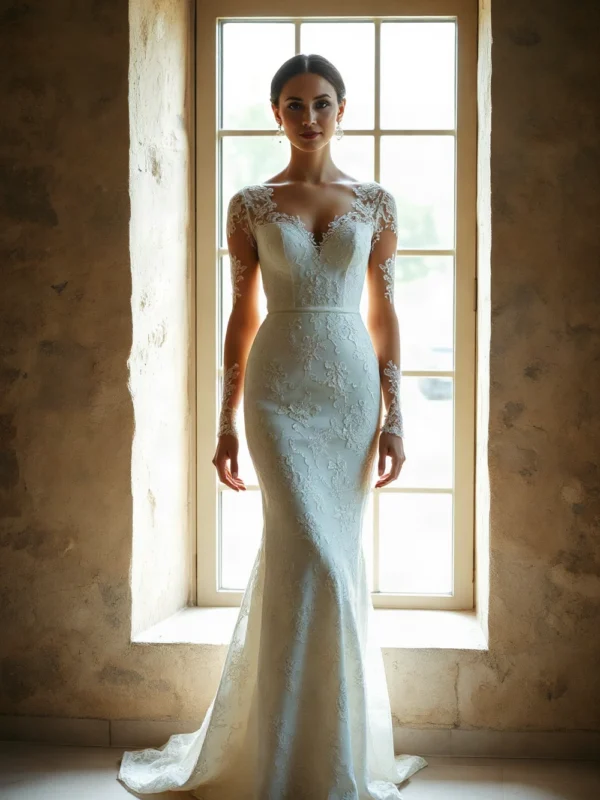
A romantic wedding dress is defined not only by floral decoration or a wide skirt. Draping direction, neckline framing, waist definition and skirt movement can create romance in different ways. All six images share an A-line silhouette, fitted near the waist and widening toward the floor, but vary among crossover strapless sweetheart, one-shoulder, off-the-shoulder and fine-strapped square necklines. Their skirts use calm folds, asymmetrical layers, clean expanses or disciplined pleats.
These images compare shape, proportion and styling relationships rather than catalogue finished products. A feature compelling in a still may behave differently across bodies or in motion, so the comparisons include arm mobility, waist placement, walking clearance, train management and accessory weight.
Softening a sweetheart neckline with crossover draping
In the first concept, broad folds cross the bust, softening a strapless sweetheart neckline. The draping echoes that line, directing attention to the bodice centre and narrow waist. A small floral detail at one side adds emphasis without disturbing the balance. The long A-line skirt falls in free vertical folds rather than strong tiers, avoiding competition with the movement above.
This restrained romantic composition depends on fit. Check that both neckline sides remain level, the crossover folds do not crush when seated, and the waist line meets the natural waist. Without straps, the bodice must stay secure through structure and fit, not excessive tightness. If the waist detail remains, consider whether a bouquet, belt or prominent necklace would create an unnecessary second focal point.
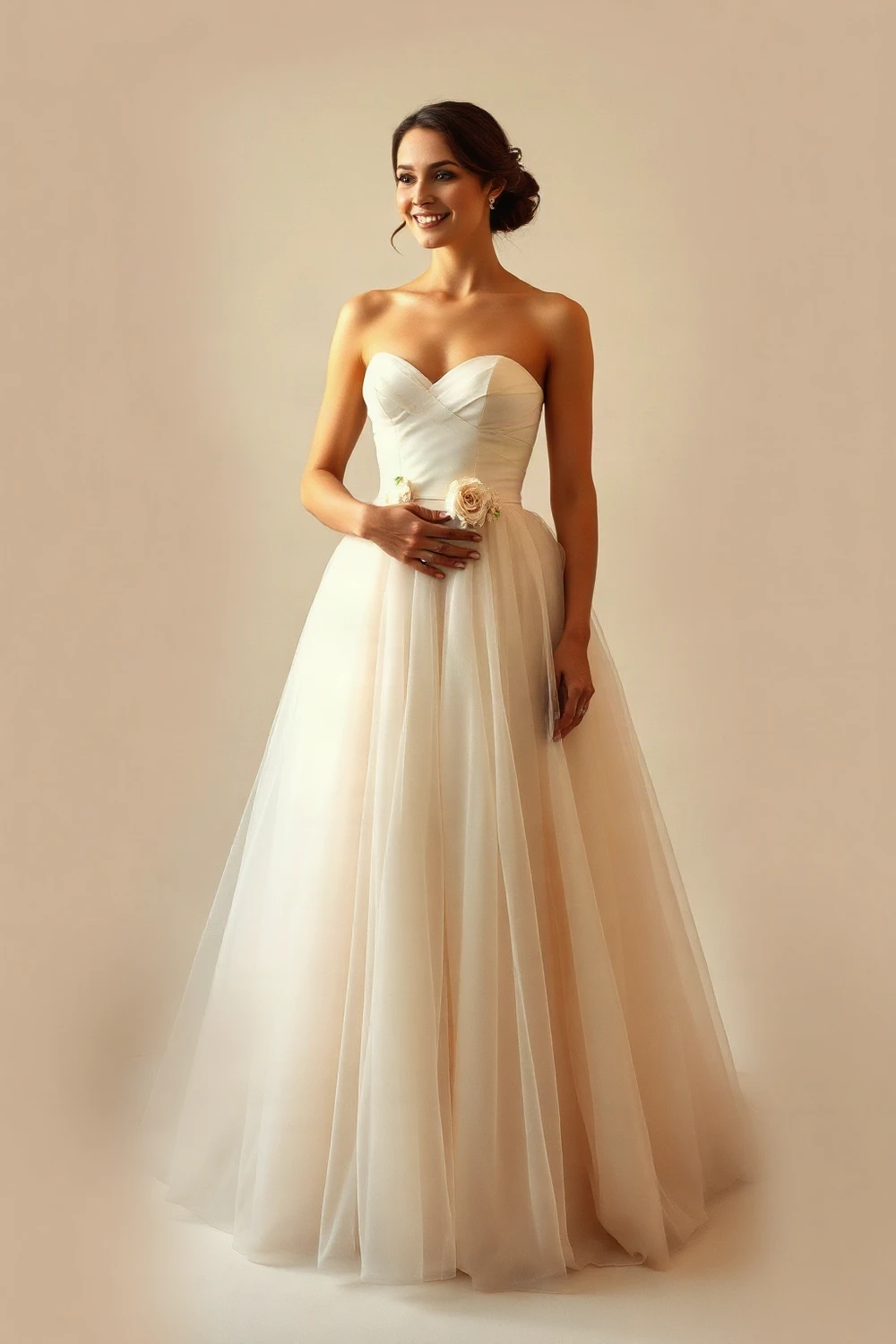
Building asymmetry with one shoulder and layered volume
The second dress finds romance in pronounced asymmetry. A band crosses the upper body toward one shoulder, and fine draping follows its route to a large flower-shaped detail. Layers of varying lengths create softly irregular edges instead of a calm skirt surface. The diagonal upper line and uneven lower tiers make the silhouette appear animated even at rest.
Because several features are active, accessories should not crowd the flower. Instead of a large necklace or very voluminous hair nearby, restrained earrings or hair drawn from the neckline can emphasise the exposed shoulder. At a fitting, raise the arm to test the band, confirm the waist draping does not twist, and walk far enough to see whether layers catch. A simpler A-line skirt would temper the bodice; keeping the tiers preserves stronger movement in photographs and while walking.
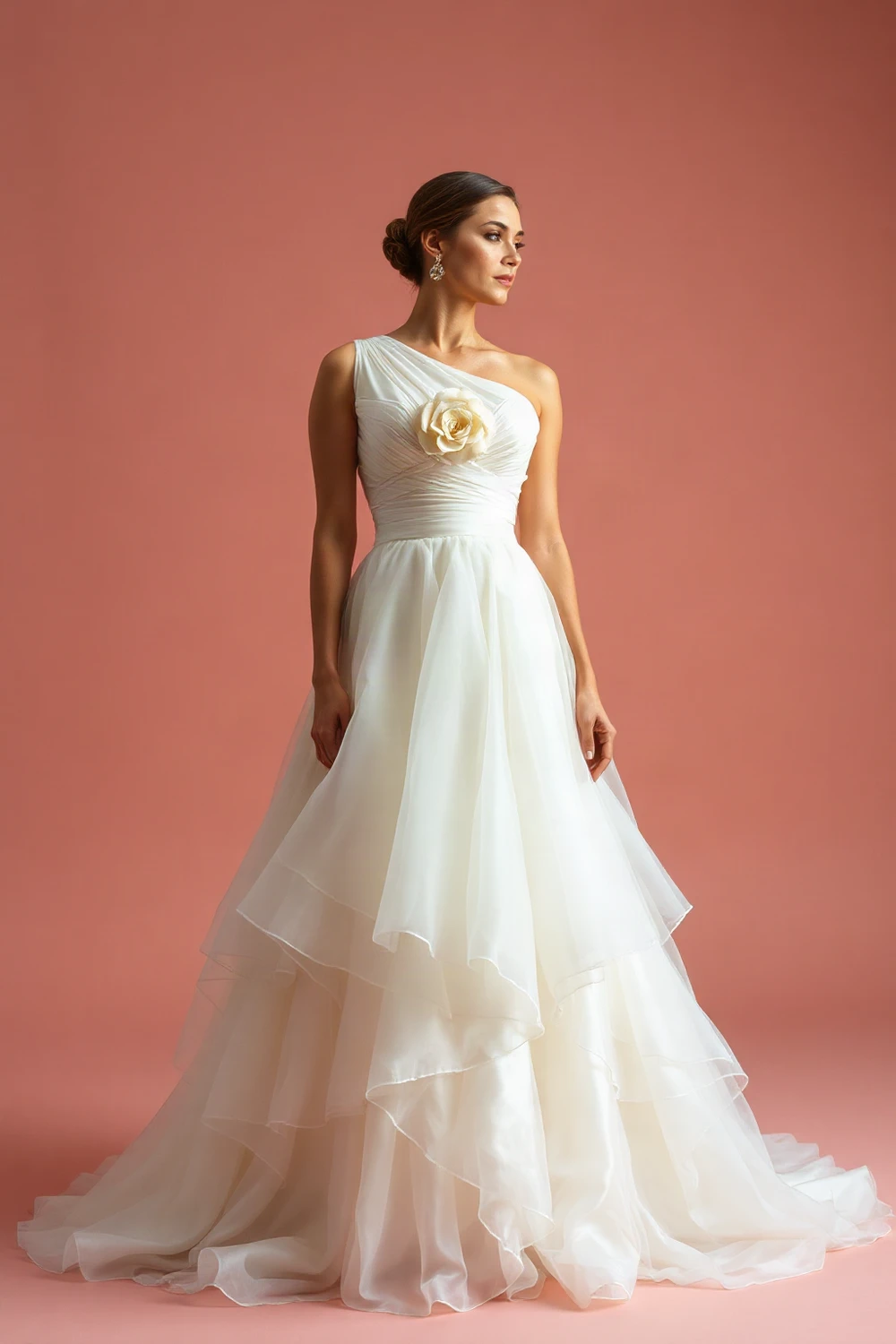
Framing the upper body with dropped shoulder drapes
In the third image, broad off-the-shoulder pieces softly frame a strapless sweetheart shape. Crossed bust folds create a wrap effect, ending at a wide waistband that turns diagonal movement horizontal. The full skirt opens generously beneath it, balancing shoulder volume and combining an open neckline with coverage around the upper arms.
The best-looking position for a dropped panel may not provide the best mobility. Reach forward, raise the arms, sit and imitate an embrace to check whether the panels pull or displace the neckline. The waistband also controls proportion: too high or low, it changes apparent bodice length. Because the neckline creates a strong frame, small earrings may be quieter than a large necklace. A simple veil behind the shoulders can preserve the visible draping.
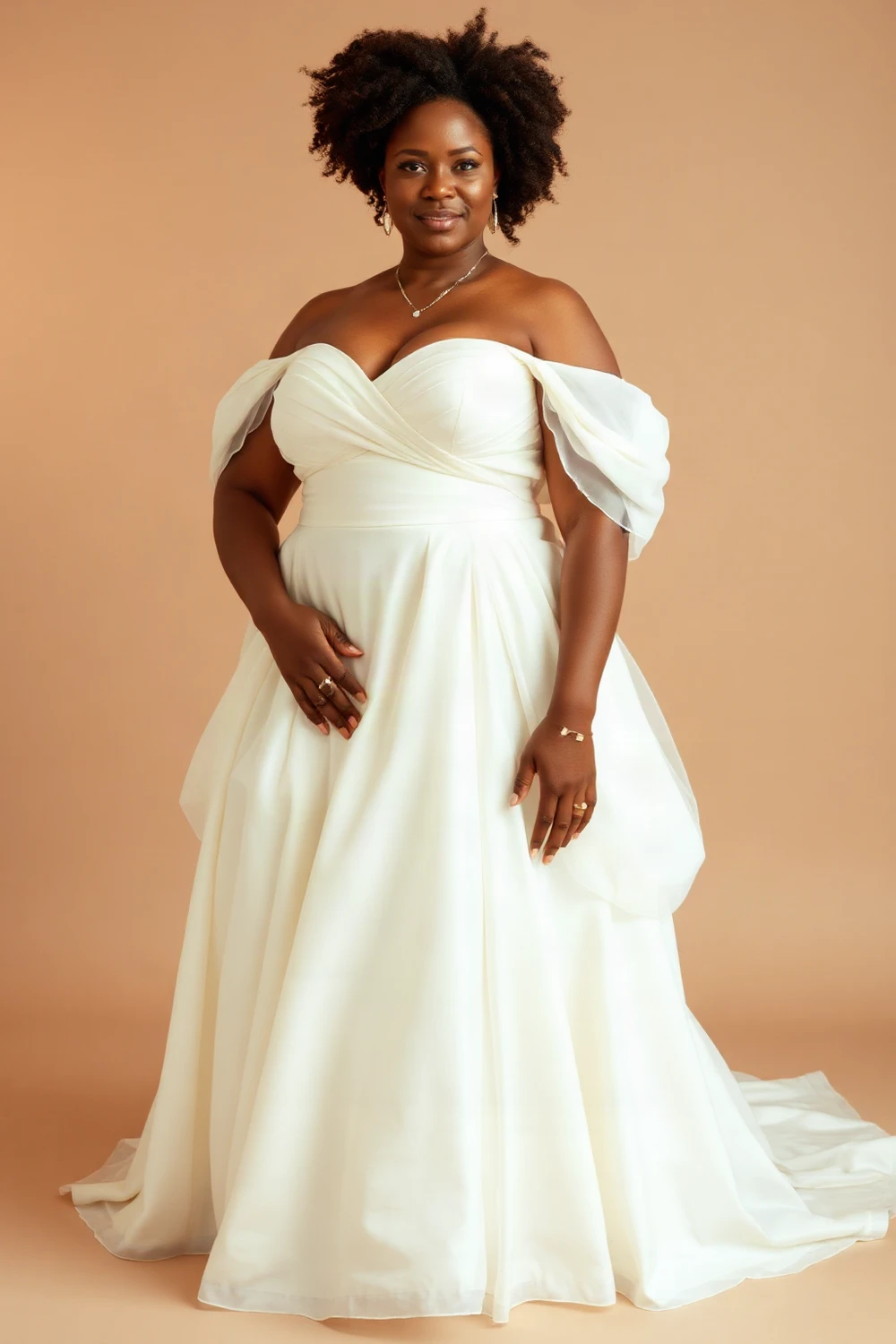
Balancing a clean strapless bodice with flowing layers
The fourth concept uses less upper-body draping, allowing the cut to lead. A defined central line shapes the clean, unadorned strapless sweetheart bodice. From the waist, long overlapping layers spread into a fluid A-line skirt and short rear train. The clear bodice and moving lower half create controlled contrast rather than decoration throughout.
Minimal shaping exposes fit problems. Check that the neckline does not gap when leaning forward, side seams stay vertical and the waist transition remains level. The outer layer should not wrap around the shoes, while the front length must allow an easy stride. The plain neckline can accommodate earrings, a comb or a veil, but enlarging every accessory would dilute its clean effect. Unlike the second dress's active horizontal tiers, these long folds feel calmer and may suit someone preferring clarity to dramatic asymmetry.
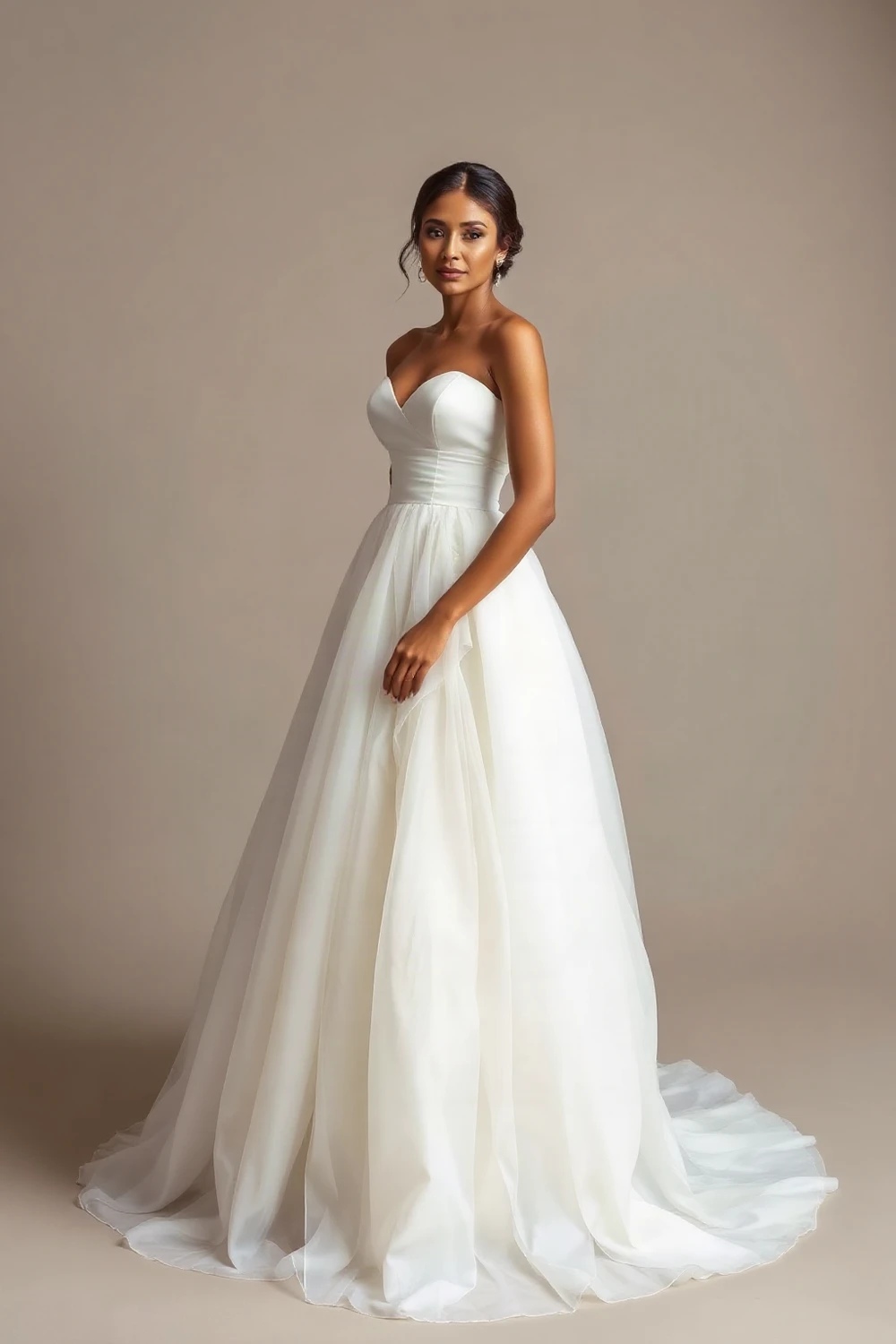
Combining long sleeves with a rear view and broad train
The fifth image shifts attention to a near-rear view. Long sleeves join an off-the-shoulder neckline in a continuous frame, contrasting with the exposed upper back. A plain skirt grows from the narrow waist into a broad train across the dark wooden floor. Window light defines the outer edge and soft folds rather than ornament.
This choice involves more than sleeve length. The shoulder line must remain positioned through turns, embraces and dancing, and the sleeves must bend comfortably at the elbows. The expansive train creates an impressive rear outline but needs space and a movement plan. At a fitting, test where it can be gathered, how lifted weight transfers to the waist, and whether the skirt still looks intentional when secured. Plan hair and veil placement so the composition of sleeves, open back and train does not completely conceal the rear neckline.
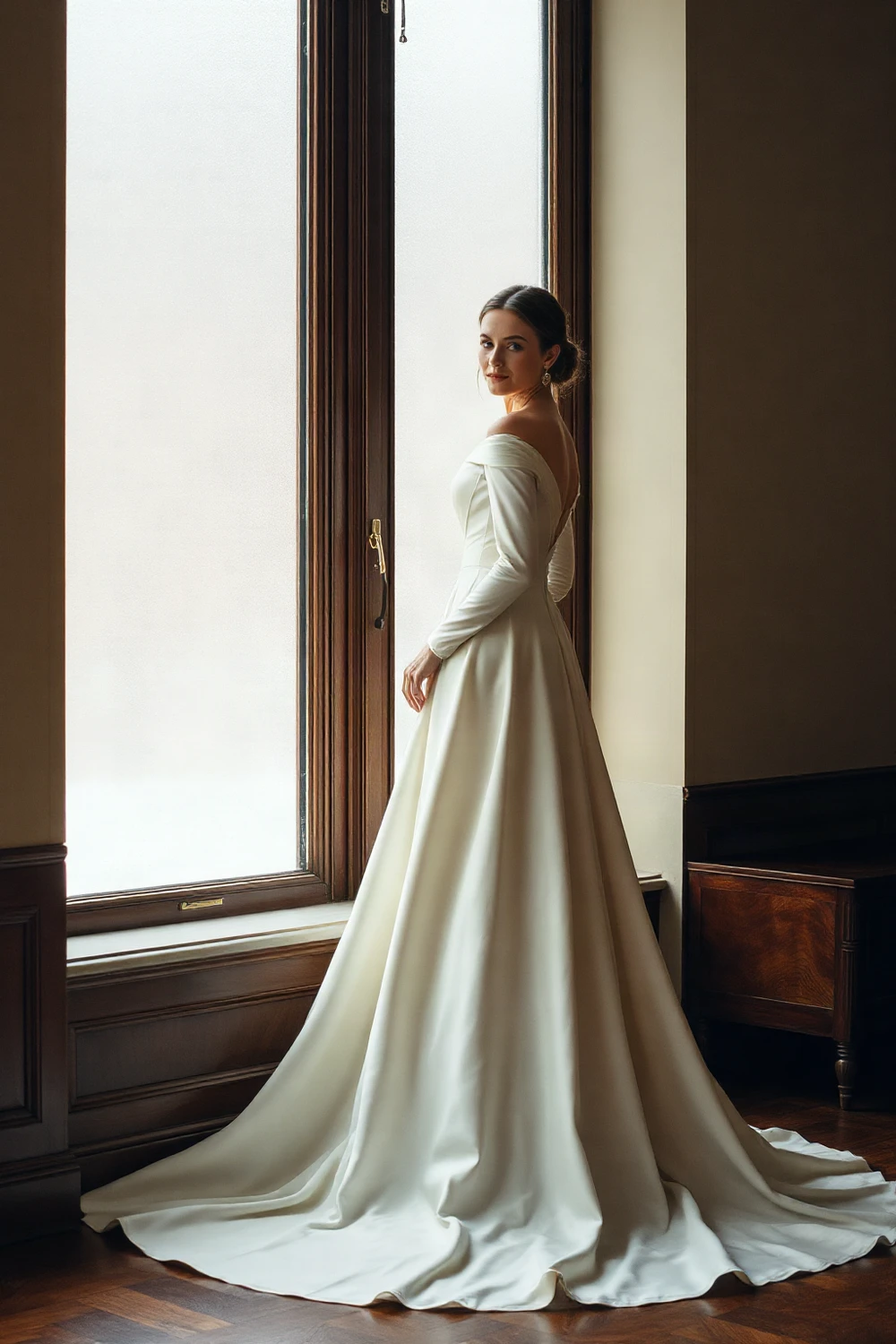
Extending the A-line with disciplined vertical pleats
The sixth look is a more orderly, graphic use of draping. Fine straps frame a nearly square neckline while narrow bodice folds radiate from the centre. A plain waistband separates this diagonal movement from continuous vertical skirt pleats. The pleats guide the eye toward the floor while maintaining the widening A-line. A small front opening breaks the dense rhythm and reveals movement around the feet.
Regular surfaces show fit changes immediately. Excess tension can redirect bodice pleats, while a tilted waistband makes skirt lines look uneven. Confirm that the straps do not slip, the neckline remains level and the folds recover naturally after sitting. Watch how far the opening separates during a normal stride and assess it with the chosen shoes. Since the structural texture is prominent, simple jewellery and a clean hairstyle can support rather than compete with the vertical rhythm.
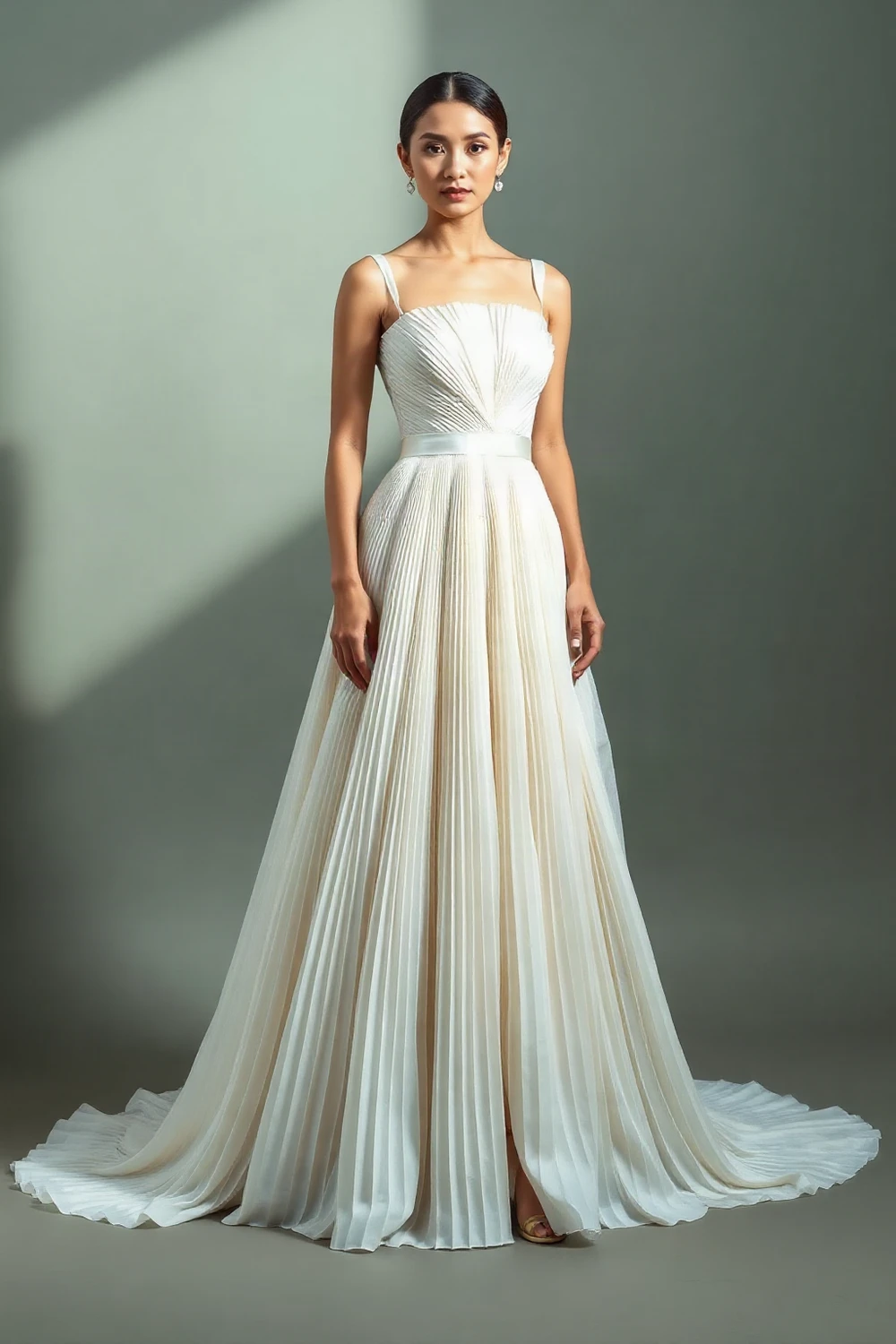
When comparing draped A-line wedding dresses, read neckline, waist and skirt as one rhythm rather than isolating a striking detail. A crossover sweetheart feels restrained; one shoulder and tiers create asymmetry; dropped panels provide a soft frame; and a clean strapless bodice adds calm. Long sleeves and a broad train strengthen the rear view, while regular pleats establish disciplined verticality.
After making a shortlist, test similar shapes while sitting, walking, turning and raising the arms. Neckline security, correct waist placement, shoe clearance and manageable train weight matter as much as a still appearance. The strongest choice matches the preferred romantic expression with the venue and movements required throughout the event.
The direction of the draping, the openness of the neckline, the waist transition and the skirt volume jointly shape a romantic A-line wedding dress. Compare six visual concepts with distinctly different bodice and skirt balances.
Frequently asked questions
How can I tell whether a crossover strapless neckline fits correctly?
Both sides of the sweetheart neckline should remain balanced, the edge should not gap when you lean forward and the crossover folds should not strain. Test the bodice while sitting and raising your arms to ensure security does not depend on excessive tightness.
How should accessories be balanced with a one-shoulder dress?
If the shoulder band and a large bodice detail already create a strong focal point, consider a subtle necklace or none. Earrings and a swept-back hairstyle can emphasise the exposed shoulder without competing with the ornament.
Do off-the-shoulder panels restrict arm movement?
That depends on their cut and the individual fit and cannot be determined from an image alone. Reach forward, raise your arms, sit and imitate an embrace during the fitting to see whether the panels pull the neckline.
Should I choose an asymmetrically layered or vertically pleated skirt?
Irregular layers create livelier volume, while vertical pleats form a more orderly, elongated line. Consider walking clearance, venue space, the desired photographic effect and how much detail is already present on the bodice.
What should I test when fitting long sleeves and a broad train?
Check shoulder and elbow mobility, sitting comfort and the stability of the rear neckline. Also practise lifting or securing the train, walking through a narrow space and confirming that the skirt retains its shape when gathered.