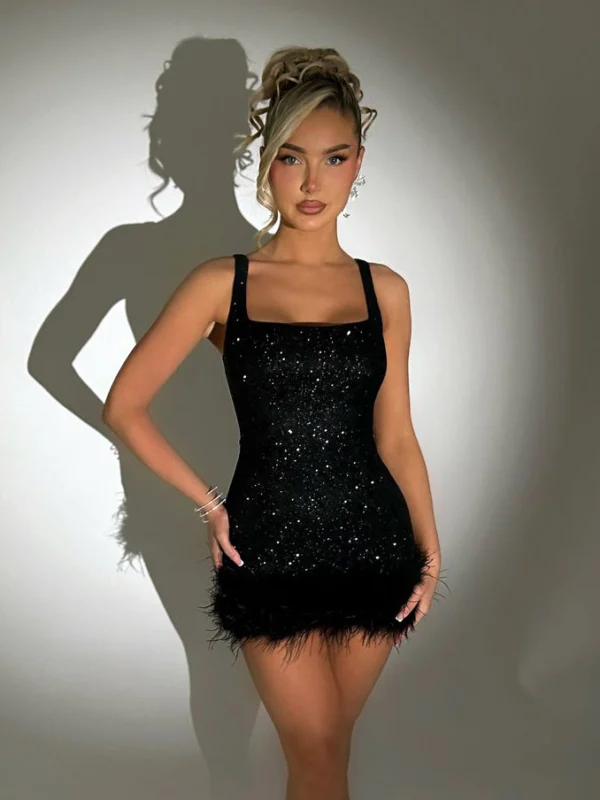
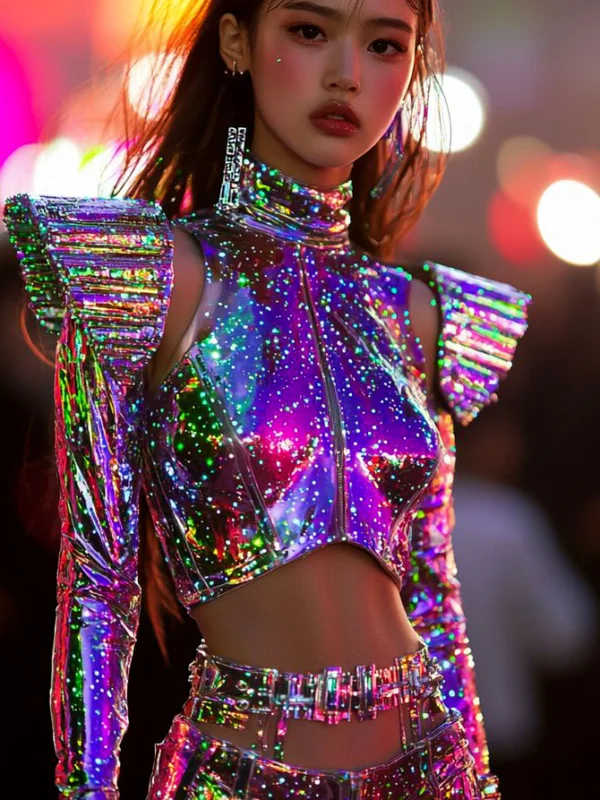
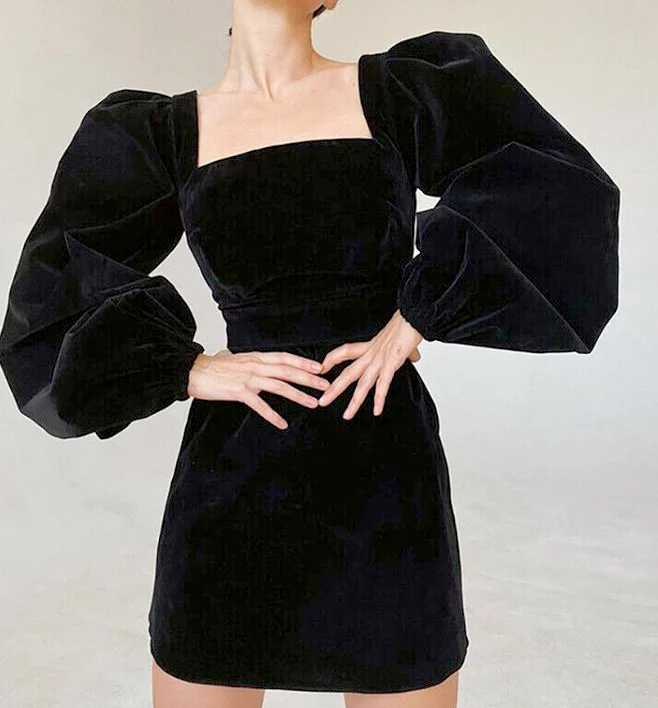
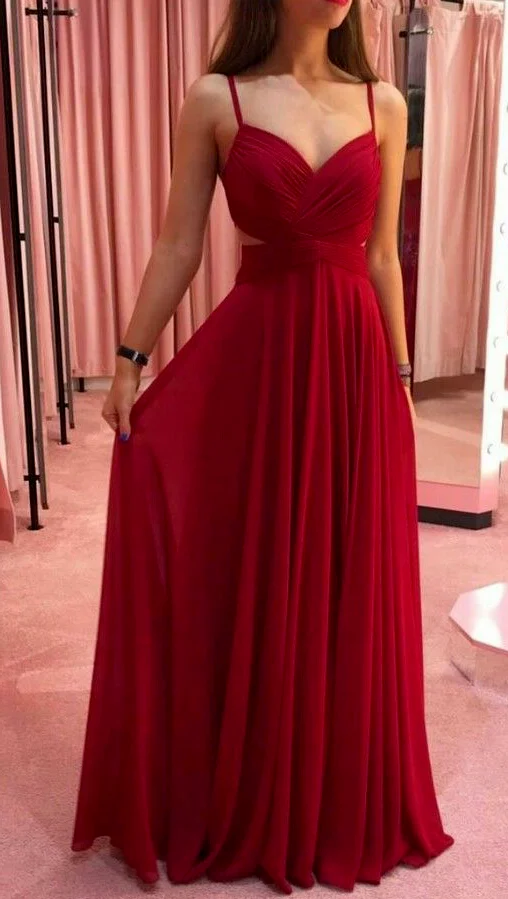
A classic party outfit begins here with your preferred shape rather than a prescribed black colour. The six references show a short black dress with large sleeves, longer red and blue forms, a closer olive-looking dress and a grey trouser look. They supply different relationships between upper border, waist and lower length. Select one property you want to reuse first. Add the evening’s actual requirements and your existing accessories afterwards instead of deriving a wardrobe for everyone from one styling label. Record which component genuinely forms your own starting point.
1. Describe what classic means for your selection
Perhaps you want a clear upper border, quieter colour or a combination beside shoes you already own. Name the preference specifically enough to find it on another candidate. The black mini dress has a rectangular upper line and strongly projecting long sleeves, for example. The grey trouser combination instead shows exposed shoulders with a quieter curved edge. Both can address different personal ideas without sharing an outline. Select the boundary itself without making every component of one photograph compulsory.
Brief historical context places the black dress: the V&A explains the little black dress’s connection to Chanel’s design shown in Vogue in 1926, while noting she was not alone in promoting black in fashion. This makes our black reference neither a Chanel model nor a dated original. The visible line you prefer still matters to your selection. Familiar history prescribes neither that same length nor its accessories and cannot identify this particular photograph’s maker.
2. Select hem and arm area separately
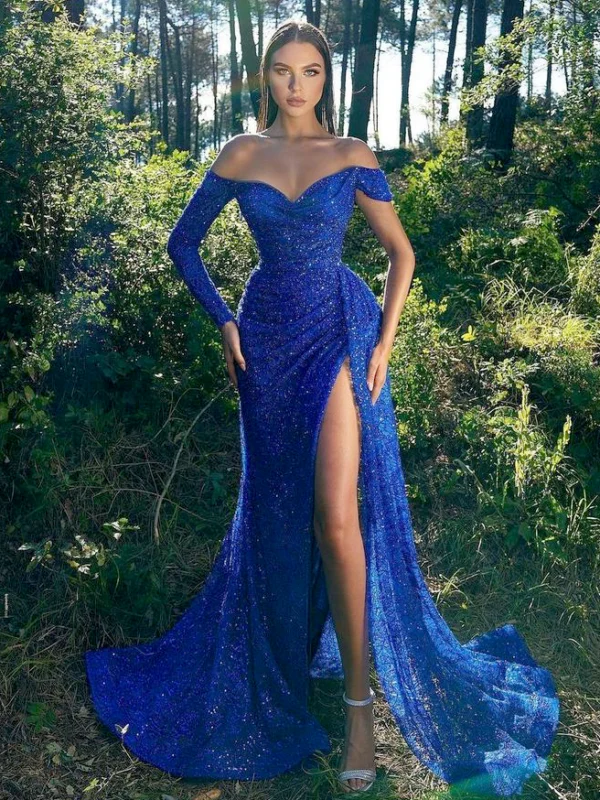
The short black dress places larger sleeves beside a shorter closer lower form. The long dark-blue mirror picture also includes long sleeves, but with a long skirt and high front opening. Compare only the route from shoulder to wrist initially, then the hem. One sleeve length need not accompany the photographed skirt length. Ask about the actual offered connection with your intended lower shape if the larger upper contour appeals. A similar sleeve cannot confirm that another skirt version is available.
The long-sleeve party dress comparison supplements arm-area and finishing questions. Assess where hands and sleeve ends sit while holding a bag on the actual garment. Hands meet before the waist in the black picture, while one hand holds a phone in the dark-blue view. These differ rather than supplying an equivalent movement trial. Add ordinary arm position and hand routes you require. Larger visible volume proves neither warmth nor comfort or a particular fibre; those questions need your own garment and its information.
3. Compare colour beside the same intended line
The long red form shows fine straps and a folded front centre while the blue mid-length dress has broader low shoulder areas. The olive-looking dress places a quieter closer lower line beneath vertical bodice lines. Keep other preferences reasonably consistent if mainly changing colour. Otherwise you inadvertently compare another colour, length and upper shape together. Record which property is currently changing your decision rather than treating one colour preference as a necessary complete model replacement.
Take existing shoes and a bag to two real candidates where possible. Examine the intended shade closely and from ordinary distance. The elegant party outfits guide develops relationships between occasion and complete look. Screen colour supplies no confirmed product version, and a glossy olive impression determines neither satin nor silk content. Ask about such details on the offered model. The styling comparison can initially stay with visible colour, area size and position before the final assessment of actual pieces under similar light.
4. Consider trousers as an independent alternative
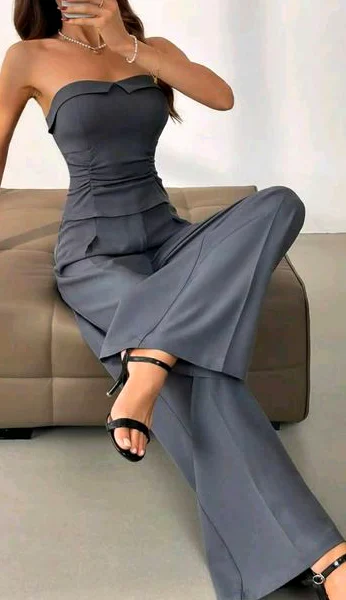
The original featured photograph shows a grey trouser look seated. A strapless-looking upper area with a curved border and shorter overlapping finishes at the waist sits above broad long legs. The legs cross, revealing black open ankle-strap shoes. This creates another lower line from a broad skirt. A jumpsuit is not confirmed; the photograph cannot reliably establish whether upper and lower components connect or remain separate. Matching colour cannot complete that missing construction information itself.
The party jumpsuit guide helps assess a real one-piece alternative. Ask which version and fastenings the actual offer contains. Examine a complete standing front and corresponding back. A seated pose replaces neither trouser length with your shoes nor your own trial of putting on and removing the real model. Decide between dress and trousers through offered components and intended handling instead of crediting one category with greater comfort universally. Observe those questions separately within the same trial.
5. Add accessories beside your selected upper border
A rectangular frame between larger sleeves supplies a different starting point from the blue mid-length dress’s broader low shoulder area. Try your planned hairstyle and a jewellery piece you already own during the fitting first. Assess the upper centre before introducing more components. A small pale jewellery line lies around the neck in the grey reference, while the phone-holding hand obscures part of the face. That photographic pose cannot supply your own complete jewellery comparison. Examine the edge beside your actual hair arrangement too.
Hold the bag beside the body once and in front another time. Its position may obscure the waist centre, particularly where vertical lines or a smaller finish form your preferred detail. Recheck the same spot without the bag afterwards. There is no need for a universal rule demanding exactly one necklace or two accents. Select what should remain visible within the whole outfit deliberately. Include the genuinely planned outer layer and reassess sleeves and upper edge after removing it. Adding each piece separately helps distinguish what the change contributes.
6. Finish selection on the complete real outfit
Clarify your invitation’s setting where still unanswered. A photograph with building, curtains or sofa establishes neither actual occasion nor particular formal approval. Try the favourite with intended shoes standing, seated and during an ordinary turn. Your preferred lower coverage matters on a shorter dress, while real length matters with long trousers or skirt. A side-held photographic skirt surface cannot replace its ordinary position after a step. Record personal observations separately from that arrangement before returning to the final comparison.
Finish by recording actual components, colour, existing connections and discussed work. Read labels for treatment; GINETEX explains care symbols. Dark colour or a velvet-like impression prescribes no particular process. Your classic party outfit may consist of a dress or a clarified trouser combination. It remains a personal selection of shape, colour and actually tested additions. Confirm the final preference within your own complete look.
Establish your preferred shape before treating one colour as compulsory. Compare dress and trouser looks with the same planned shoes, accessories and actual requirements of your evening.
Frequently asked questions
Must a classic party outfit be black?
A classic party outfit is a personal combination here. The selection adds red, blue and olive-looking alternatives and a grey trouser look beside the short black dress; black is not compulsory.
How can I build a classic party outfit with pieces I already own?
Begin a classic party outfit with the shoes and bag you already intend to use. Compare two actual garment options with those same additions, then introduce new jewellery separately.
Is the grey trouser look a confirmed jumpsuit?
The grey classic party outfit comparison does not confirm whether bodice and trousers connect or are separate pieces. Ask about the complete version and included components on the actual offer.
Are large sleeves automatically more formal than exposed arms?
Large sleeves on a classic party outfit initially show another visible form from exposed arms. No universal formality ranking follows; establish the actual invitation’s setting and choose your intended arm line.