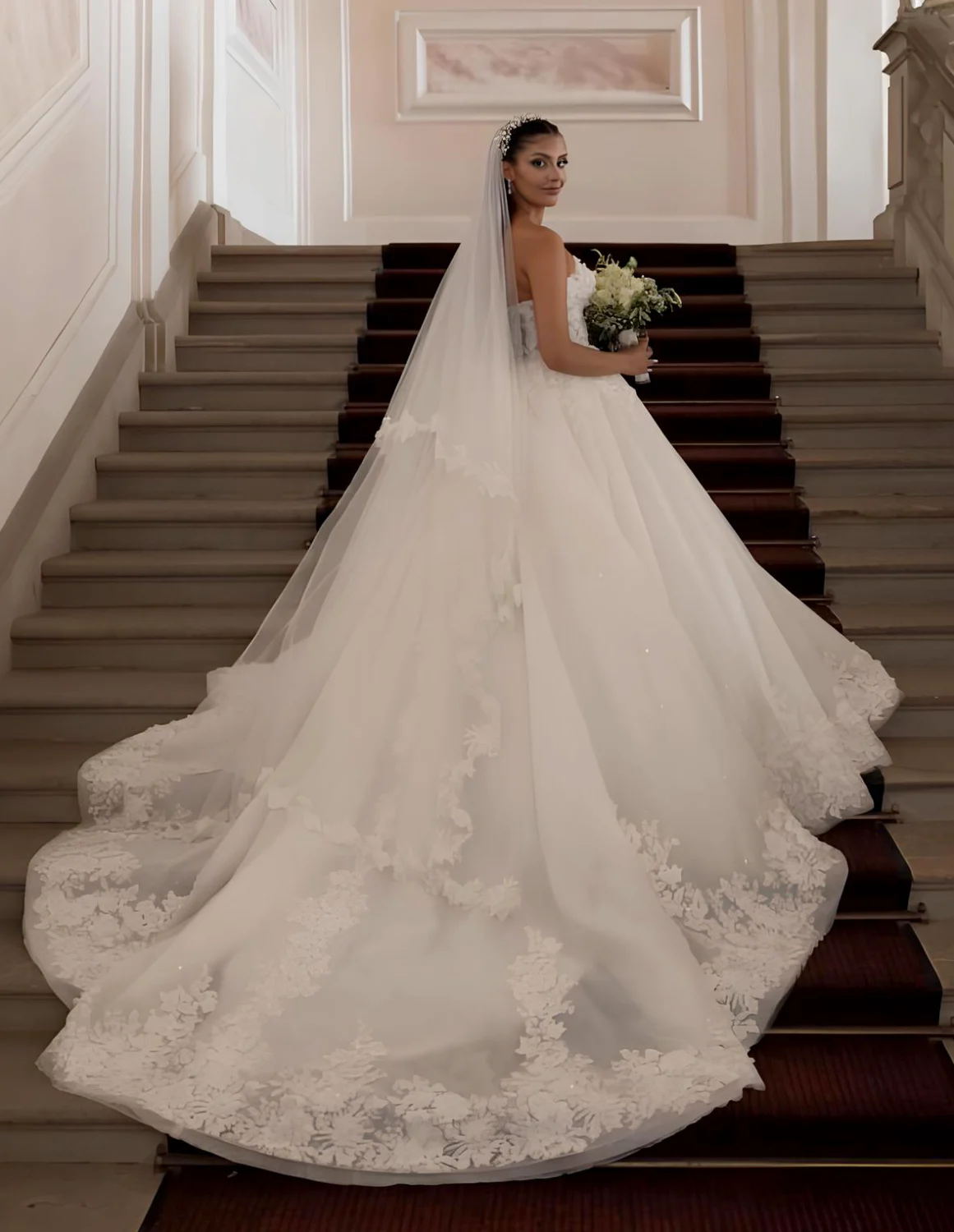
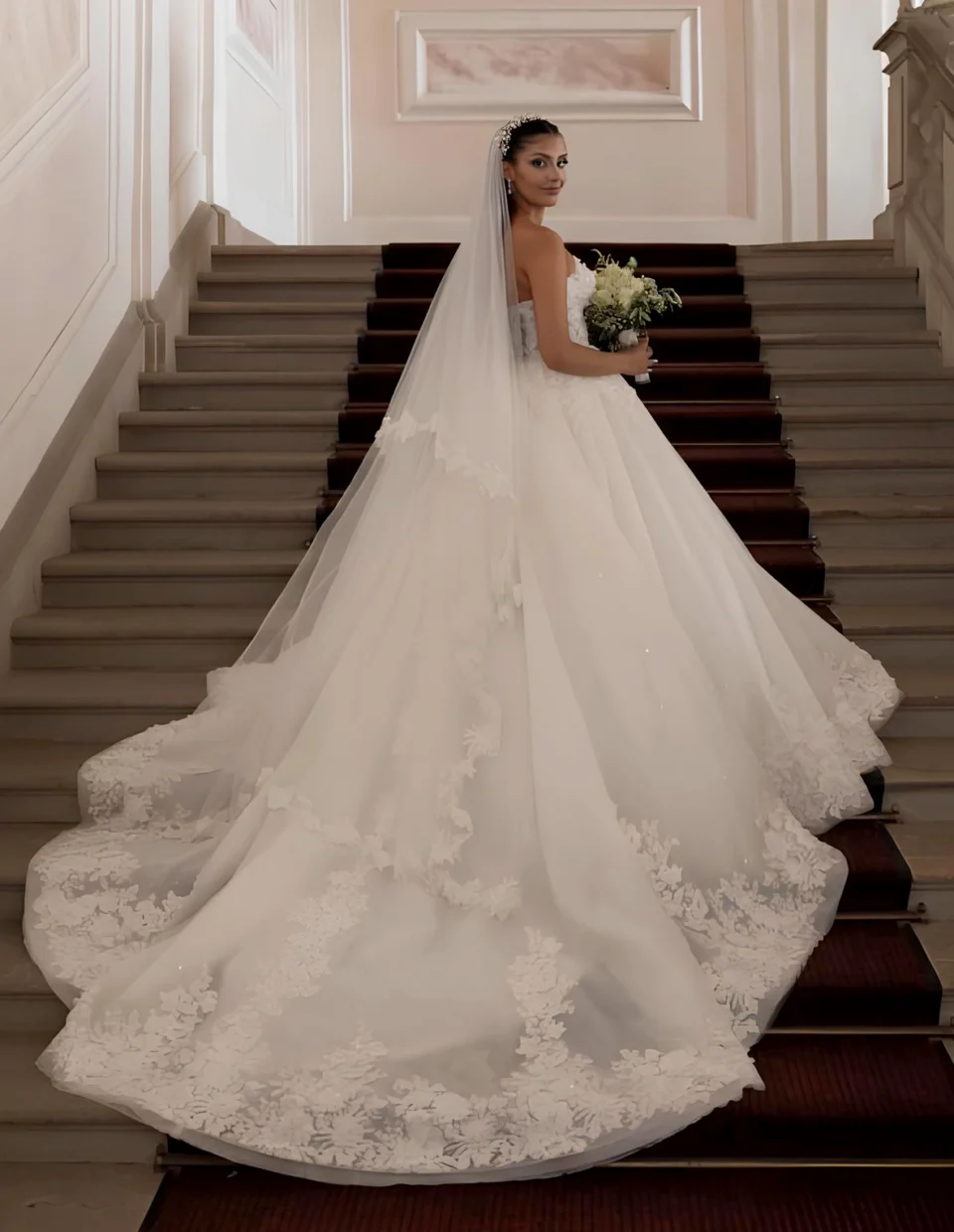
Choose a church wedding dress through two specific questions: what expectations apply at your actual ceremony location, and which combination do you want to wear yourself? The broad pale reference on the stairs shows floral lower borders and a long veil. Two other dresses compare finer sleeves with exposed shoulder areas. Trouser looks deliberately add different upper surfaces. None of these photographs establishes church approval or an actually experienced wedding day. Use visible differences to ask your own church and supplier clearer questions rather than assuming the pictured outfit has already answered them.
1. Ask your own church about the intended setting
Begin the conversation before placing a final order. Show complete front and rear views of the real candidate if useful, describing additions you intend. Ask specifically about colour, upper surfaces and the planned process where those points remain unclear. A general idea about church clothing cannot answer a question about your particular location. Record the explanation beside personal preferences. You can subsequently establish which actual combination considers both rather than allowing one attractive image to replace unanswered questions.
A named example shows why colour need not be assumed a universal requirement: St Neots and Eynesbury Parish Churches explicitly state on their own wedding page that the bride there need not wear white. That is this parish’s statement rather than permission transferable to every church. The blue trouser look in the archive can therefore explain a colour preference without proving its acceptance at your ceremony location. Clarify that question directly with your own church.
2. Treat shoulder, chest and arms as separate surfaces
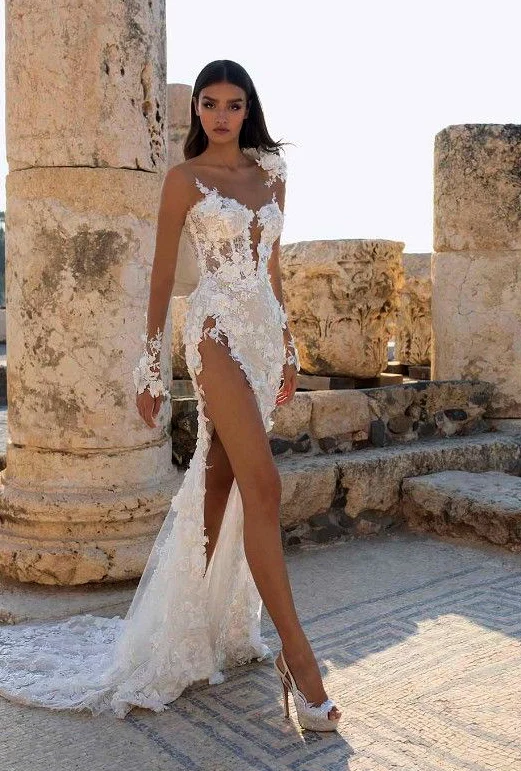
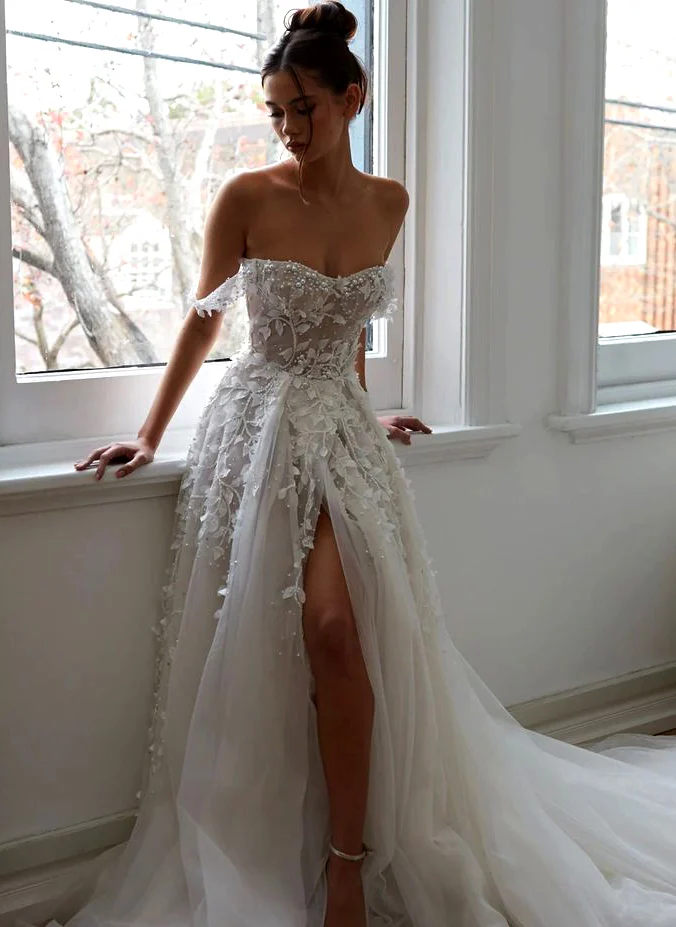
The long floral front among columns has patterned long sleeves and a finer higher upper area. The window front instead exposes more shoulder, with short low floral sections beside it. Decide which line you prefer first. Separate visible length from actual opacity. A long fine-looking sleeve and a dense jacket sleeve do not provide the same coverage. The offered model needs its own material and inner-layer explanation; a photograph supplies no reliable technical specification for that arrangement.
The black jacket illustrates this difference particularly clearly: its long sleeves sit beside a fine net-like front centre. A jacket therefore does not automatically close every visible area beneath it. The off-shoulder wedding dress comparison helps name upper edge and sleeve starting point individually. Try the precise added layer on the real dress if you intend one. Look from front and back rather than noticing only covered upper arms. Establish whether that complete combination corresponds to the expectations you have clarified afterwards.
3. Connect skirt shape to your actual route
The featured photograph spreads a great deal of pale fabric across stairs. This explains its visible lower border rather than demonstrating safe walking. Ask about your actual route to the seat and movements intended during the ceremony. Steps, turns and kneeling where part of your celebration are specific questions. Assess these under available fitting conditions on the real dress. Adopt neither the arranged fabric position nor pictured stance as evidence that every movement has already been tested. Record which transition you still need to examine yourself.
The closer floral dresses add high front openings. Compare their position standing and seated with your own coverage preference. A pictured leg area establishes no universally suitable opening height. Leave longer rear surfaces in their position after an ordinary step before someone redistributes them. Have any intended fastening-up arrangement explained on this particular model. A train laid out on the floor shows neither that connection nor a detachable version. Include only existing or explicitly agreed possibilities in your actual plan rather than transferring function from another picture.
4. Assess shoes and inner version together
Add the shoes you really intend to wear. Their height belongs to the decision about front edge and rear length. A floral reference’s open shoe with a higher front sole provides information about that photographed pair, not a recommendation for your foot. The partly visible ankle connection in the window view cannot replace your own pair either. Assess the offered hem with your shoes and include ordinary planned movements before agreeing a length. Another image’s floor contact supplies no measurement for your combination.
Discuss intended underwear and existing inner layers simultaneously. They may form part of your own outfit beside finer-looking upper or side areas. Ask about the exact offered version instead of deriving a shared solution from a similar bodice. Establish which individual components are actually supplied together for the blue trouser look too. Its photograph alone confirms no one-piece construction. Keep the same upper-surface and complete-length preferences if comparing a dress with trousers, so another shape does not quietly change the original question.
5. Add veil, hair and held objects individually
The stair reference’s veil begins at the head and reaches far behind the person. It initially forms a separate layer beside the long dress surface. The veil and wedding dress comparison develops further questions about border and back. Try the planned veil on your own model once its upper line is established. Notice which drawing stays visible underneath and where hair or a head ornament obscures connections. A separate clear rear view supplements the styled perspective rather than completing it through another person’s veil.
Add the object you intend to hold during the ceremony afterwards. A bouquet may obscure part of the front centre. A hymn book or another intended item creates a different hand position. Examine your actual combination with relaxed arms and the intended hold where the fitting allows. Do not decide exclusively through one successful photograph with arranged hands. Record where an unobscured additional view is still needed. Adding each item separately helps show what changes rather than allowing all accessories to cover the original preferred area simultaneously.
6. Record the complete confirmed combination
Finish with the exact dress or actual individual pieces, colourway, inner version, planned additions and discussed work. The wedding dress buying guide supports the move from a picture preference to a specific offer. Compare your list with the explanation from your church and personal fitting observations. A newly intended layer belongs to the plan only when its availability and connection on the real outfit are established. Similar appearance cannot supply a still-unexplained component.
Subsequent treatment needs each piece’s product information. GINETEX explains textile care symbols; floral drawing or pale colour cannot replace the actual label. Your church wedding dress need not satisfy an ideal shape assembled from different archive pictures. Clarified upper surfaces, the actual ceremony process and a complete assessed combination matter. Photographs help with visible choices; approval, material and your own handling need checking through the respective real sources. Keep those different questions together without treating one as proof of another.
Ask your own church about its expectations first. Then assess visible upper lines, actual inner layers and length in your shoes instead of treating a photograph as permission.
Frequently asked questions
Must a church wedding dress always be white?
Clarify the colour of a church wedding dress with your own church and personal preferences. The named St Neots parish explicitly says its bride need not wear white; that does not create a rule for every church.
Do long sleeves establish particular coverage on a church wedding dress?
Long sleeves on a church wedding dress initially show visible length. Fine or translucent-looking areas establish no particular opacity. Assess the actual offered version and your own church’s expectations separately.
Can a veil replace a jacket I want with my wedding dress?
A veil and jacket are separate pieces with different visible surfaces beside a church wedding dress. Establish intended coverage on your actual combination; a long veil alone cannot answer that question.
How can I decide about a long train for the church ceremony?
Assess the church wedding dress through the actual route, steps and intended movements in your shoes. Discuss any existing train-handling solution on the particular model and have its use demonstrated.


