A wedding dress often makes its first impression through details nearest the face: the neckline, shoulder line and sleeves, followed by the back as the wearer turns or walks away. These elements shape style, support, movement, accessory placement and how the dress reads from different camera angles. The six concepts share a warm ivory palette but offer contrasting approaches: a strapless bodice, a cape over a column, an off-shoulder line with lace sleeves, a high illusion neck above a full skirt, a square neck and a deep open back. Treat them as styling references rather than verified products. Compare each feature with skirt volume, surface texture and the movements required throughout the event to turn visual preference into a practical fitting brief.
Balancing a Strapless Neckline with a Light-Looking Skirt
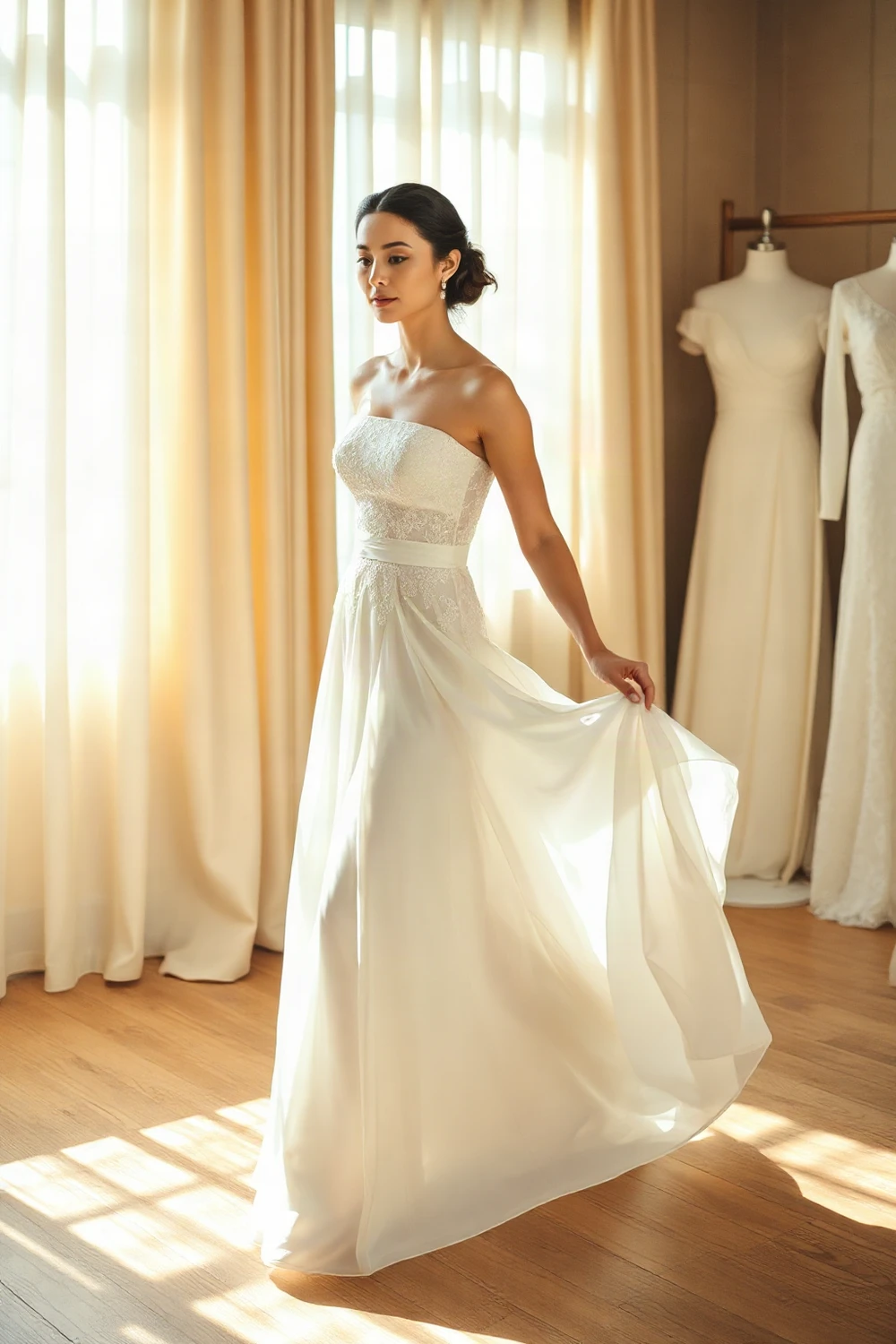
The first image pairs a nearly straight strapless neckline with a textured, closely shaped bodice. A level waistband marks a clear boundary before the skirt opens into broad, smooth folds. When one side is lifted, the edge catches sunlight and responds fluidly, giving the volume a lighter impression than a rigid ball-gown structure.
A strapless design must be judged beyond neckline shape. The bodice should stay stable during breathing, sitting and arm movement, so test it actively. Waistband placement can shorten or lengthen the torso visually. The open shoulders allow a necklace, earrings, hair or a veil, but these should not compete. Compared with the square neck, this line runs more continuously across the shoulders but lacks the framing effect of straps. Comfort means avoiding repeated adjustments to the upper edge.
Transforming a Sweetheart Column with a Cape
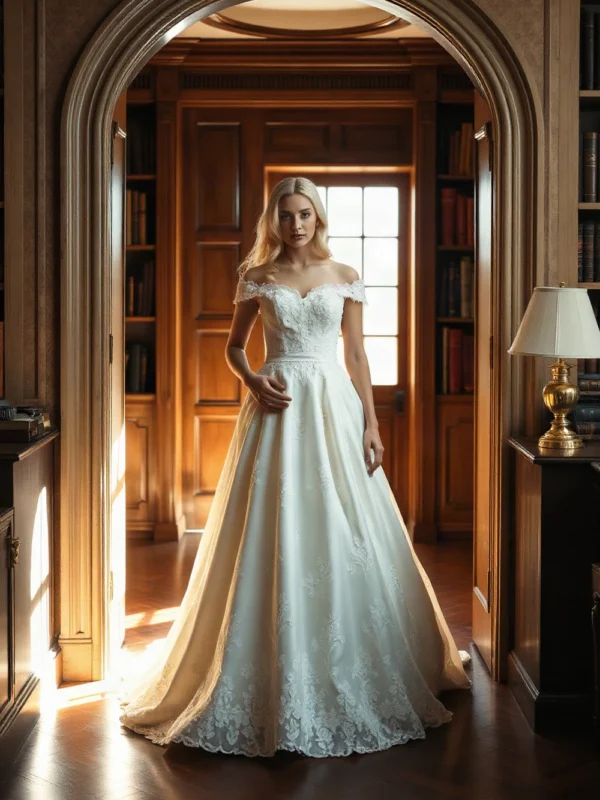
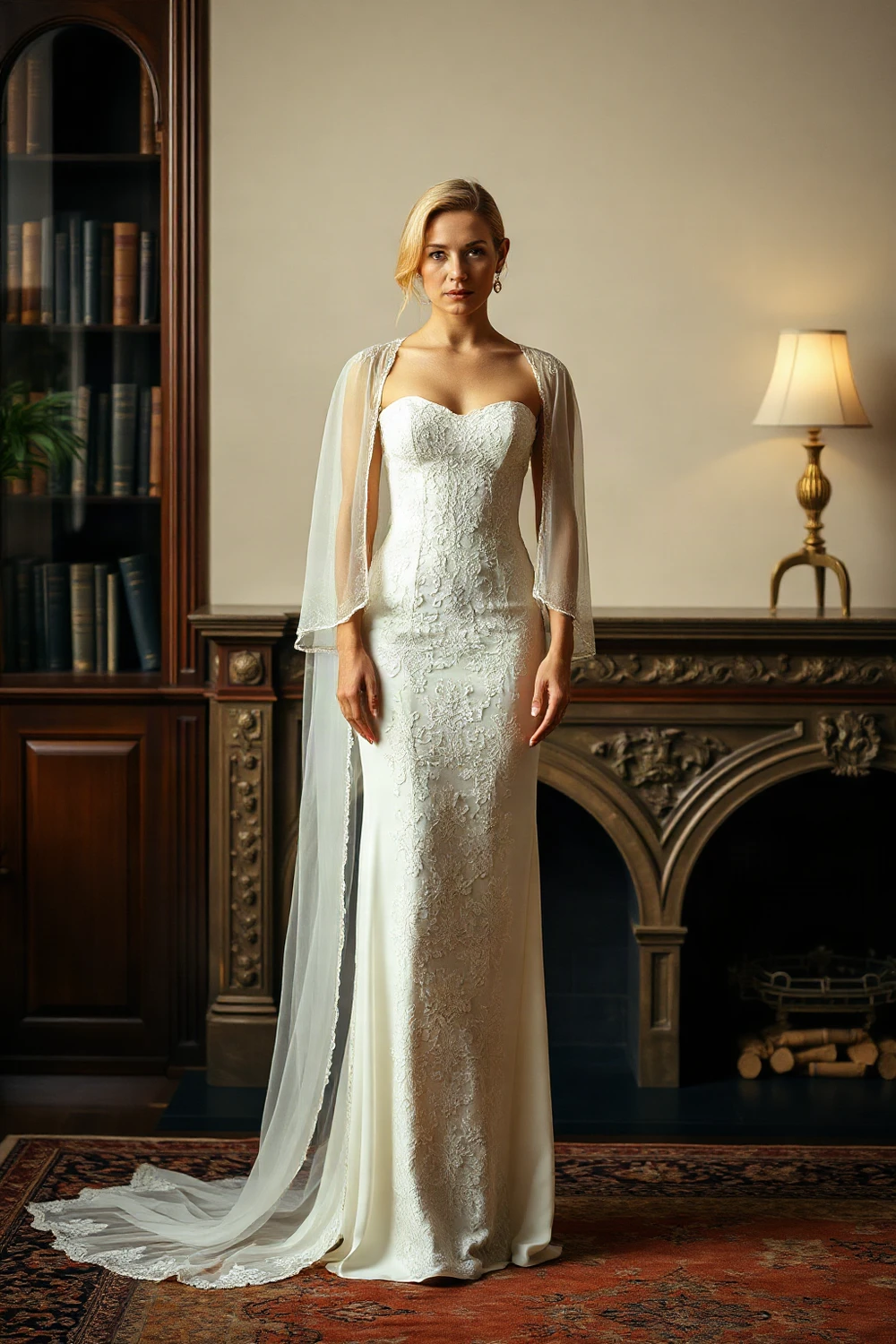
The second concept pairs a sweetheart neckline and floral lace-like surface with a long, open-front sheer cape. Falling from the shoulders without closing over the bodice, it leaves the fitted column visible. Side panels reach the floor beside the short train, adding vertical movement. Dark bookshelves and an ornate fireplace make the pale silhouette feel formal and defined.
Layering creates a dramatic ceremonial entrance and a cleaner dress beneath. The cape may be fixed or removable, but the image does not establish its attachment. Test shoulder movement and its fall around a bouquet, chairs and a dance partner. A column takes less lateral space than an A-line or ball gown, although its stride may feel more restricted. With a veil, ensure the rear layers retain distinct lengths or edges.
Combining an Off-Shoulder Line with Long Sleeves
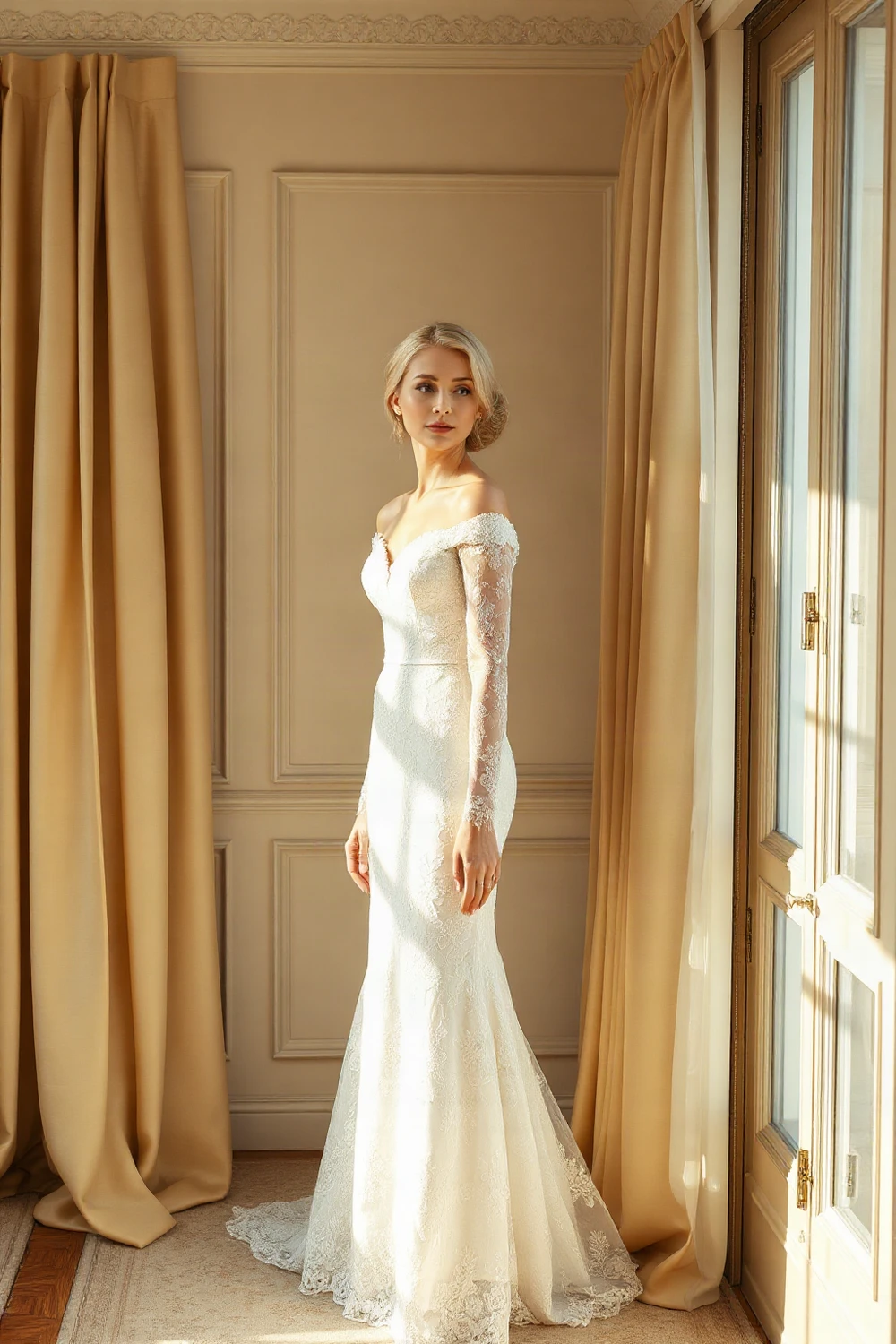
In the third idea, a broad neckline sits below the shoulders and meets translucent floral sleeves. A textured band emphasizes the collarbones, while the fitted body follows the hips before opening below the knees into a fishtail. Warm window light clarifies the contrast between skin and pale motifs, connecting romantic surface detail to a defined silhouette.
Long sleeves do not guarantee easy or secure movement. In an off-shoulder construction, sleeves and neckline can pull together, so test reaching, raising the arms, embracing and a dance hold. Check elbow flexibility and whether the neckline returns. Because a fishtail fits the hips and knees more closely than an A-line, try stairs, sitting and walking. The horizontal neckline may make a necklace unnecessary; modest earrings or a simple hair accessory can support the floral detail.
Pairing a High Illusion Neck with Ceremonial Volume
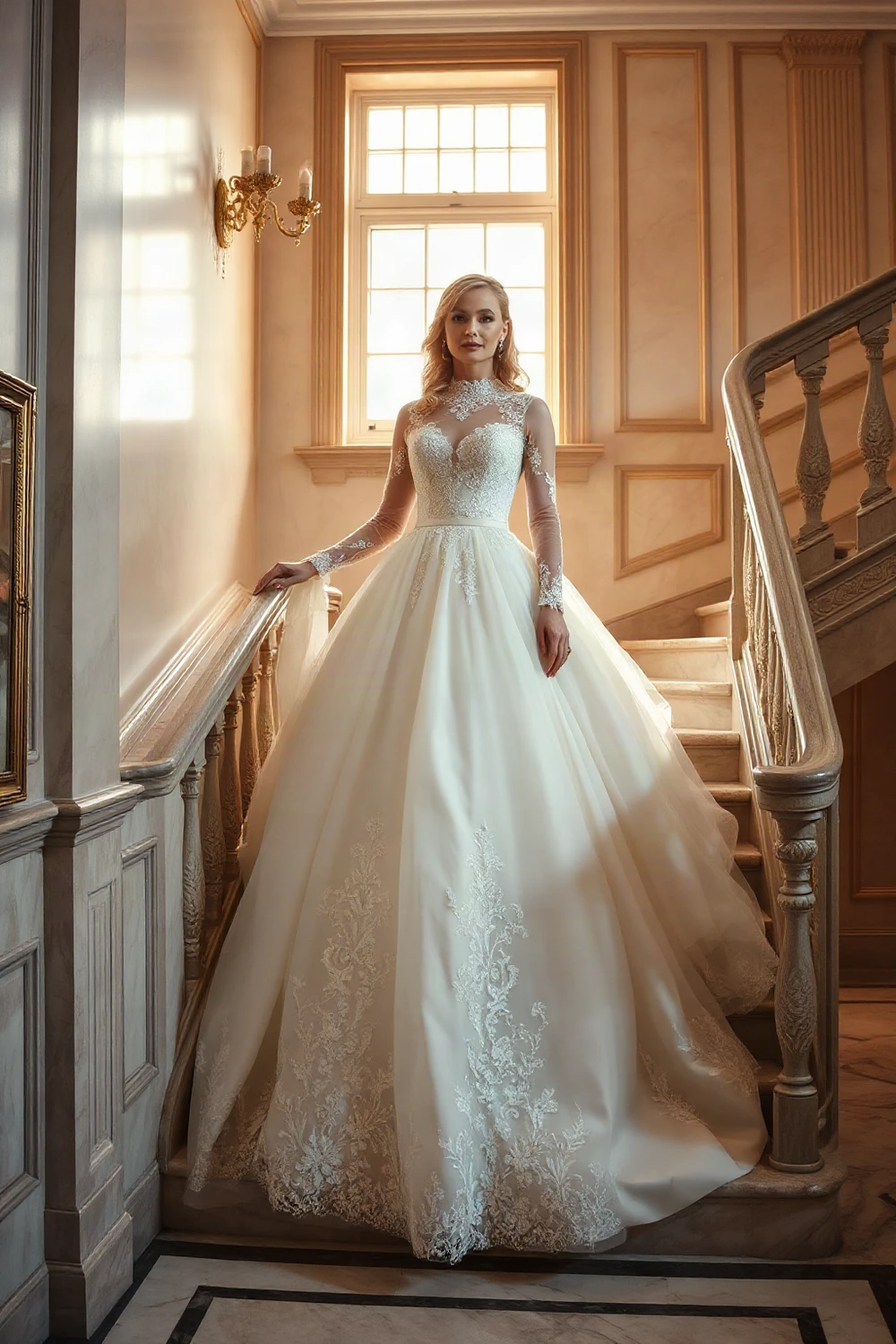
The fourth image combines a high lace-like collar, transparent chest panel, appliquéd long sleeves and a wide ball-gown skirt. Skin above the opaque sweetheart bodice softens the covered neckline. Vertical floral motifs organize the skirt, while a dense border defines its base. The staircase and tall backlit window reinforce its architectural scale and ceremonial character.
Because the neckline resembles an ornamental collar, it may replace a necklace. Check comfort while turning the head, arranging hair and sitting. Ask whether elbow appliqués feel stiff and wrist closures are practical. The skirt requires more planning than a column: consider the vehicle, aisle, stairs, chairs and dance space. Since the high neck and broad skirt are strong statements, keep accessories restrained. Assess the full-length view; the bodice alone misses half the design.
Using a Square Neckline as a Clean Frame
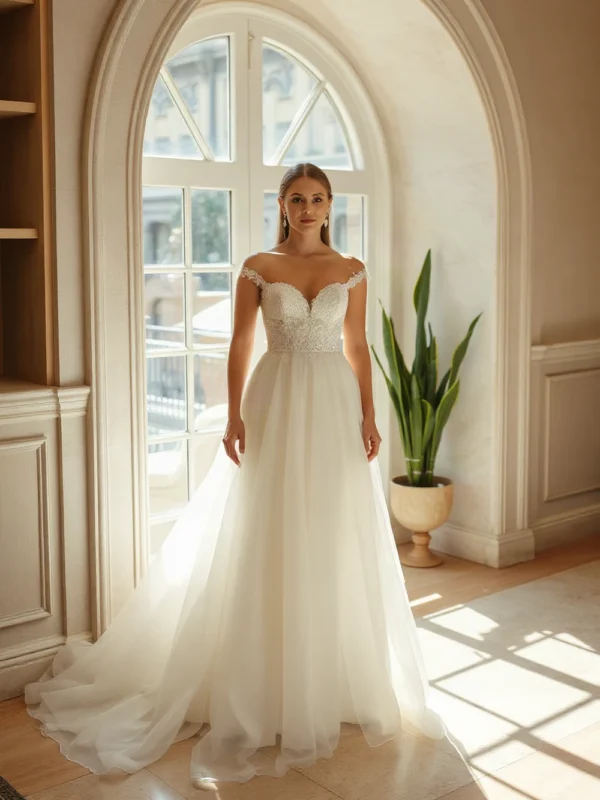
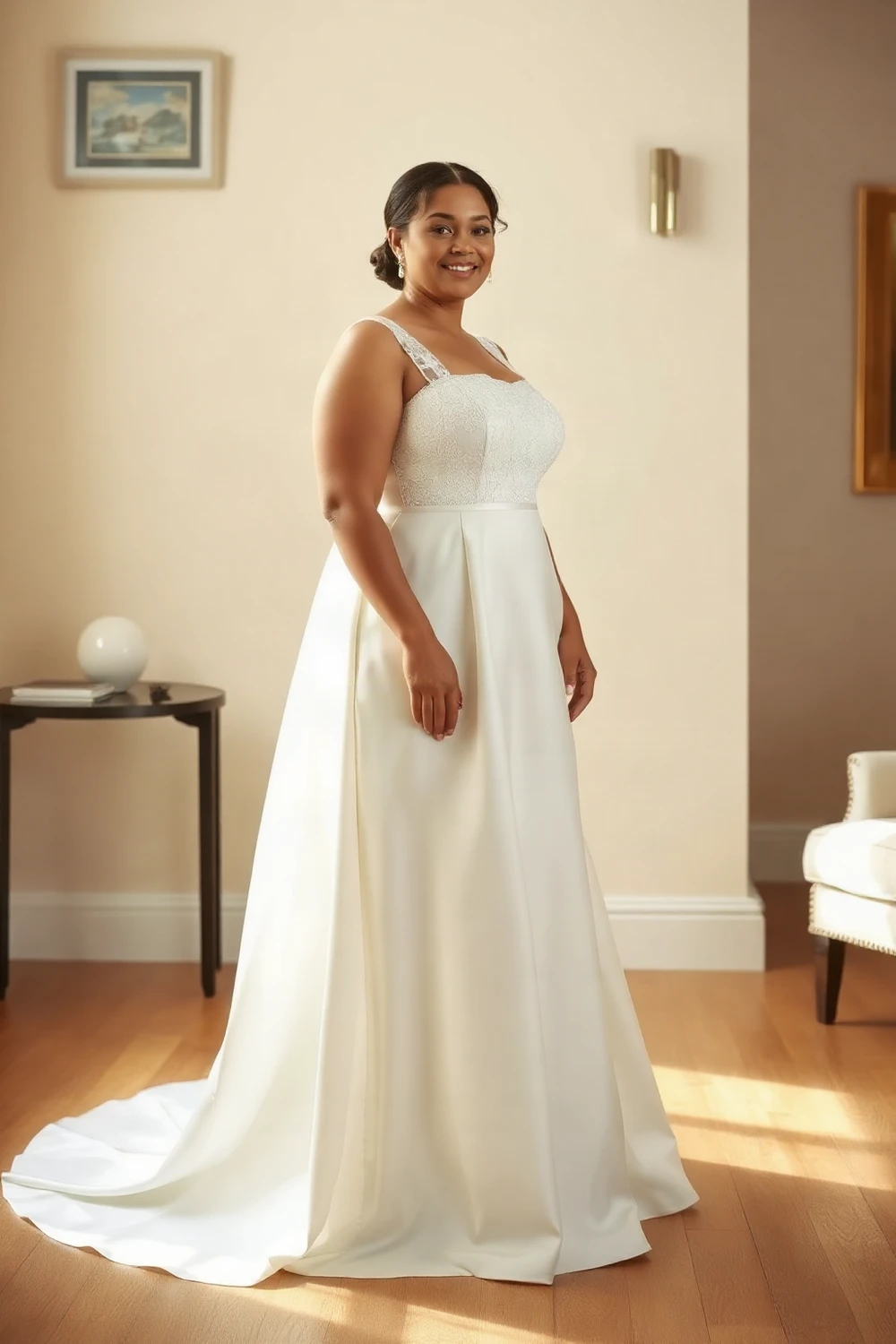
The fifth concept uses broad straps and a square neckline to create an open but bounded chest area. Fine texture covers the bodice and ends at a narrow waistband. A smooth A-line skirt opens in a controlled way and extends into a short train. With little decoration in the room or skirt, its construction lines are easy to read.
A square neck offers strapless openness with a clearer shoulder frame. The image cannot confirm structural support, so check strap length, underarm placement and shifting. Test how the angular neckline works with face shape, shoulder width and hair both up and down. The smooth skirt provides a quiet background for a distinctive veil, bouquet or earrings. Simplicity exposes seams and fit transitions, so inspect the waist, side line and hem with the intended shoes.
Framing an Open Back with Sheer Floral Sleeves
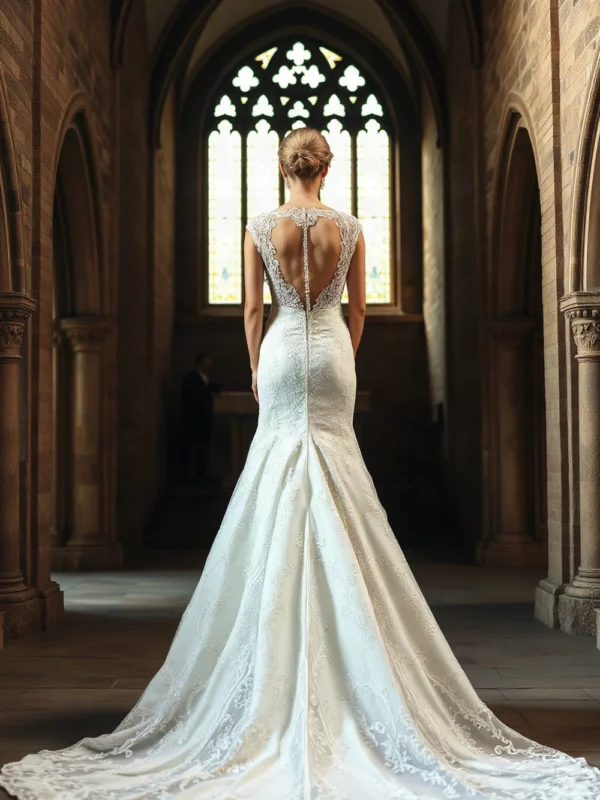
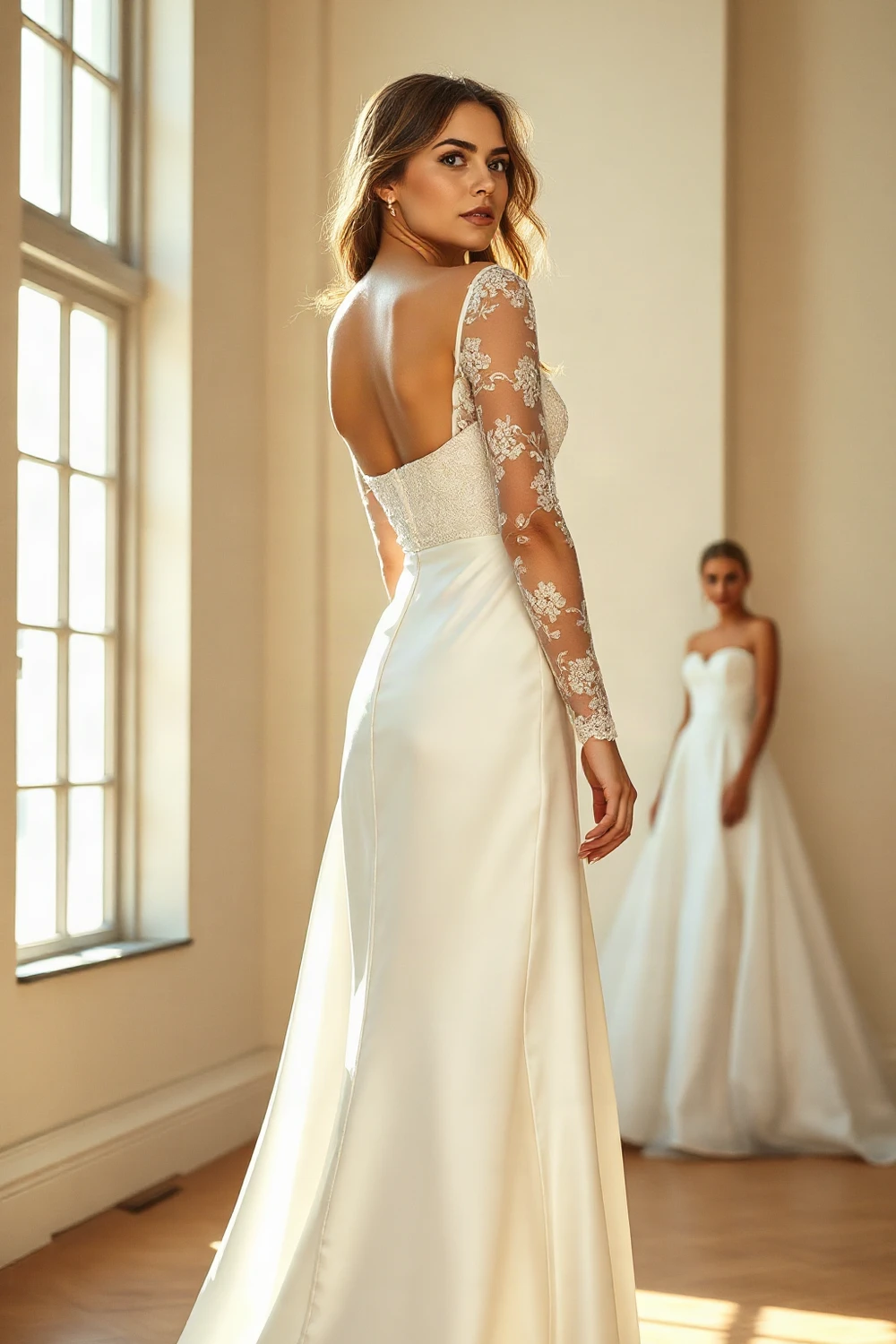
The final image focuses on the rear: a deep rounded opening framed by a textured bodice and transparent, floral-appliquéd long sleeves. Arm detail contrasts with the smooth skirt’s calm vertical fall from the hips. Side light separates skin, raised motifs and subtly reflective fabric, while the blurred background figure sharpens the silhouette.
For an open back, ask how support fits the exposed area. Test whether the bodice edge stays close when bending, sitting, embracing and turning; an upright mirror view is incomplete. Loose hair may cover the opening, while an updo reveals it. Try a veil with the sleeves because both share the rear view. Compared with the high neck, this covers the arms but releases the back. Balance depends less on formality than on comfort, support and the rear view’s importance in photographs and the aisle walk.
The best option is not necessarily the most dramatic, but the one whose neckline, sleeves, back and skirt work together in appearance and use. Before fitting, rank priorities for openness, support, arm mobility, skirt volume and the rear view. At the appointment, walk, sit, use stairs, embrace and request photographs from several angles rather than staying in one pose. Bring likely shoes, the undergarment solution, a hairstyle reference and the veil when possible. Strapless lightness, cape-led drama, off-shoulder romance, high-neck grandeur, square-neck simplicity and open-back emphasis can all work. Movement tests and complete styling comparisons show which idea can remain comfortable and coherent throughout the day.
Explore strapless, sweetheart, square and high necklines alongside sleeves, capes and back details. Six wedding dress concepts show how neckline choices relate to the whole silhouette.
Frequently asked questions
How can I tell whether a strapless dress will stay in place?
Breathe normally, sit, lean forward and raise your arms several times. If the bodice slips, gaps at the upper edge or repeatedly needs adjustment, its fit or internal structure should be reconsidered.
Can a cape and veil be worn together?
Yes, but compare their lengths, borders and shoulder attachments from behind. If both layers gather at the same point, a shorter or visually quieter veil can leave the cape legible.
Which movements should I test in an off-shoulder long-sleeved dress?
Reach forward, lift both arms, embrace someone and take a dance hold. The neckline should not climb, the elbows should not feel excessively restricted and the shoulder edge should return to place.
Does a high neckline need a necklace?
Not necessarily. A high collar with appliqué already creates a strong frame around the face. Try earrings or a hair accessory first, then judge the complete look with the intended hairstyle.
How should support be planned for an open-back dress?
Consider the depth of the opening together with the bodice’s internal construction. The chosen solution should remain hidden while sitting, bending and walking, and the back edge should continue to lie close to the body.