A bow tie with a suit places a short accent immediately below the face. Unlike a long tie, it leaves more shirt front visible, bringing the collar, button line and jacket opening into consideration. The references show a grey checked bow tie against a pale suit, black versions with white and black jackets, and two open shirt collars for comparison. Choose the combination relevant to your planned occasion first, then assess real size on your own shirt. The pictures provide distinct shirt-and-jacket references for your own styling choices.
Choose a bow tie with a suit as a complete outfit
Look beyond the grey reference’s pattern alone. It sits against a white shirt and pale grey jacket, with a broad related patterned band visible at the waist below. Together these create a quieter colour relationship than black against white. Decide whether you want that closeness or a stronger contrast. Try a pale patterned option and a darker plain one against the shirt you will actually wear, rather than comparing both on a neutral table where collar points and lapels play no part in the decision.
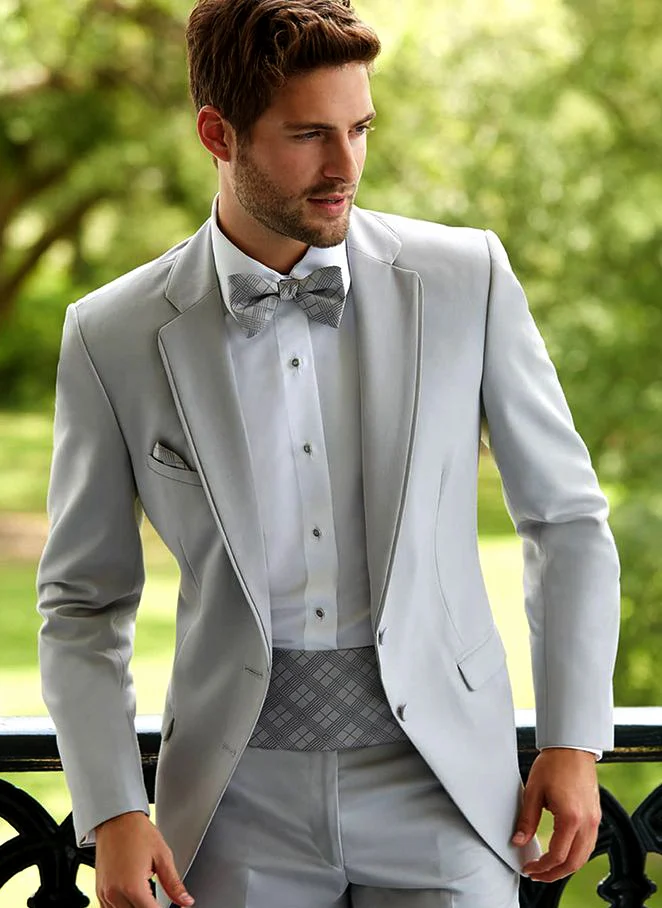
Confirm the invitation before copying an outfit solely from a photograph. An expressly stated dress code may have different expectations from a celebration you are planning yourselves; ask about the requested pieces if terms are unclear. A bow tie is one visible component, not automatic confirmation of the whole outfit. Choose jacket, shirt and trousers together. The grey close view provides no complete footwear information, so add your own full-length picture with the intended shoes to assess the candidate rather than allowing a successful collar to settle the lower half.
Test width and height on the actual shirt collar
Put two different sizes on the same closed shirt in turn. From the front, compare their ends against collar points and lapels. A larger shape occupies more space under the chin; a smaller one reveals more collar. No body rule copied from another person’s picture is needed. Select the relationship you enjoy on your real shirt and look with relaxed arms at the upper body, rather than judging only a close mirror view of the neck. If the shirt changes, check its collar with the same bow tie separately.
Turn your head, look down and speak a few sentences. Check whether you repeatedly want to straighten the bow afterwards or notice an uncomfortable edge. Ask how the real product is put on, fastened or adjusted; these pictures do not show its back. Use each model’s intended handling when comparing several candidates. This assesses the visible knot and your own movement together without assuming a particular fastening from the front shape. If only a front product picture is supplied, request the closure and measurements before treating the fitting question as answered.
Weigh black-and-white contrast against a closer pattern
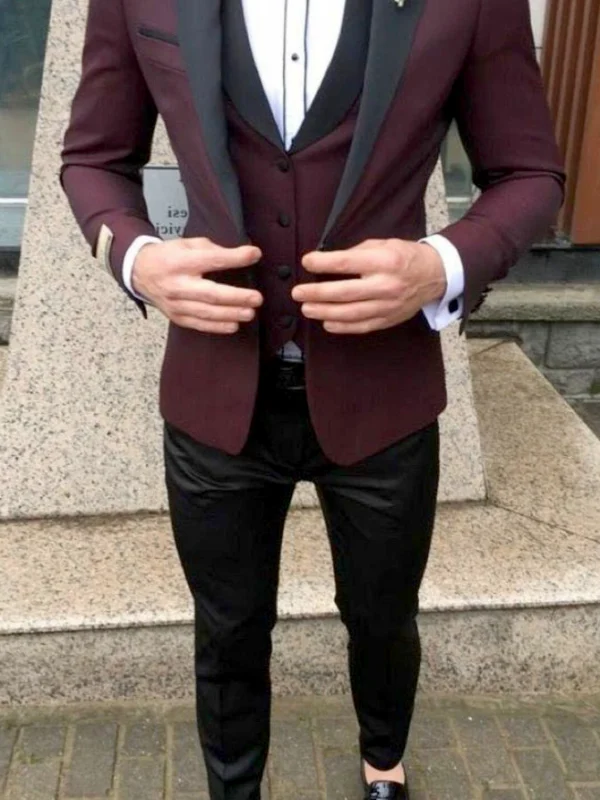
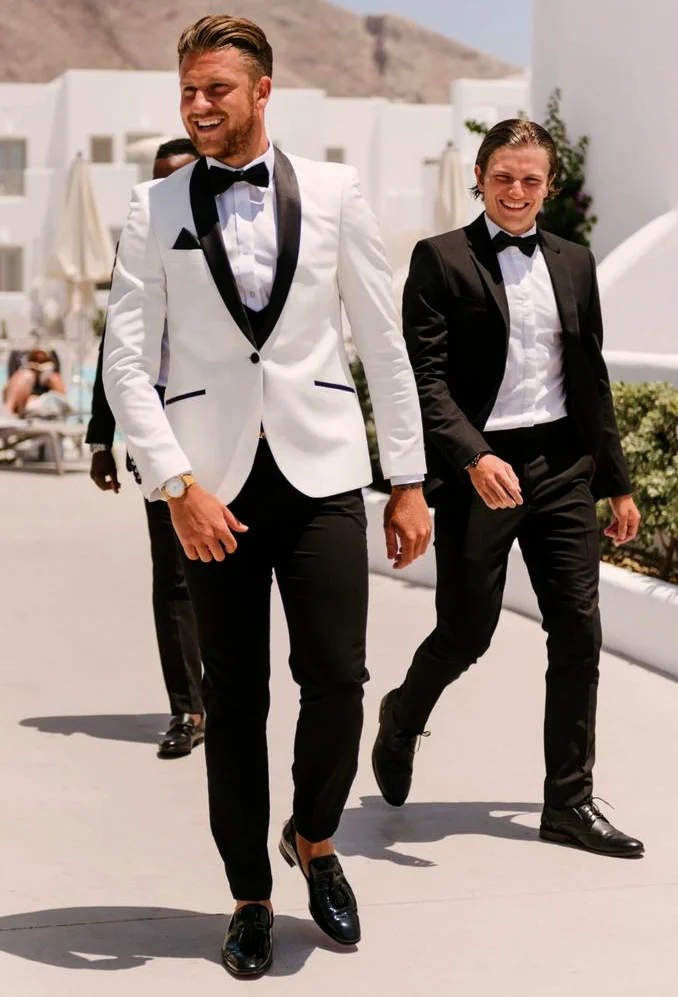
The foreground white jacket with black lapel edges continues the dark bow tie through a clear frame. The other white jacket leaves its bow tie more as an isolated dark point against shirt and jacket. Compare those routes: should the neck colour return on the lapel or remain primarily at the top? Wear your real bow tie with the intended jacket and look across the whole chest. A shared colour name cannot describe that distribution fully. Begin without square or flower so the collar-and-lapel relationship can be assessed first.
A grey pattern supplies another route. Small checks can sit beside a quiet jacket without the same sharp light-dark contrast. If the shirt will be patterned too, look at it alone first and add the bow tie next. Decide whether both patterns should remain distinct or one should recede. Judge the checks on the actual piece; a small product picture does not reproduce their scale beside your collar. A close and more distant photograph helps distinguish a detail noticed only nearby from a pattern that remains prominent at conversation distance.
Treat square and waistcoat as separate accents
A bow tie with a suit does not automatically require an identical pocket square. The white references keep the square dark or restrained, while the grey example repeats pattern at neck and waist. Choose which position should lead. Establish the neck first, then add your intended square. A small plain piece can serve a different purpose from another prominent pattern. Look at both from conversation distance so the result works beyond a tight crop. Changing the amount of square exposed also lets you compare options without replacing every accessory.
If you want a waistcoat, fit its opening with the bow tie and real shirt. Unlike a long tie, the bow does not extend a dark centre downwards, making the shirt front between neck and waistcoat part of your choice. The contrast waistcoat guide helps compare pale and dark inner areas. The grey picture’s broad patterned waistband does not confirm a related waistcoat or interchangeable pieces; ask to see what is actually supplied. View the proposed waistcoat standing and seated instead of imagining a finished three-piece set from the upper crop.
Compare the jacket open and closed
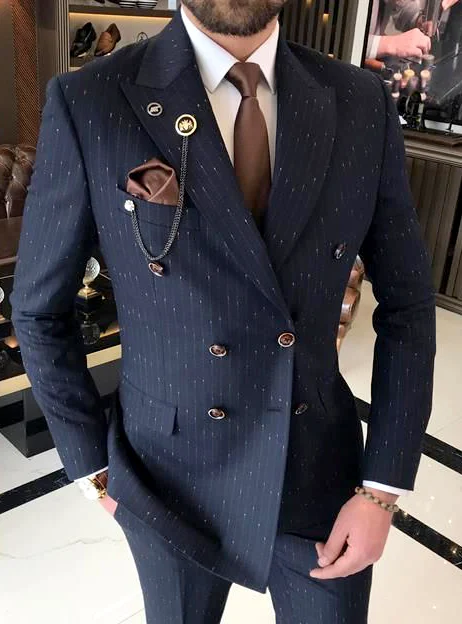
Closing the jacket or leaving it open changes the shirt opening you see. Photograph both states with the same bow tie. Notice how far the pale button line remains visible and whether a pocket accent sits too close to the neck centre. A double-breasted jacket makes different front edges from the pictured single-breasted references. If you are considering that route, the double-breasted jacket guide develops the broader front decision. Check the intended fastening state rather than judging only a front pulled into shape by your hands.
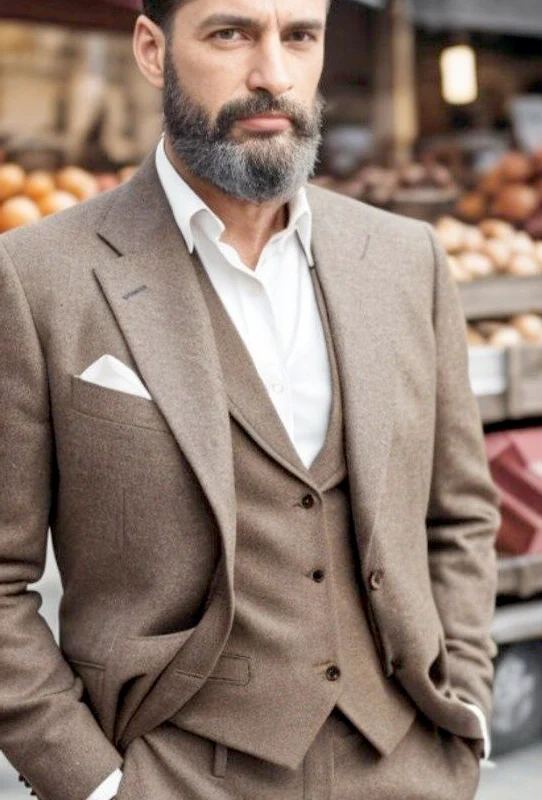
The grey-green and stronger teal outfits provide an open white collar without a bow tie as a comparison. They do not establish that switching between the two is suitable for every invitation. Within an appropriate setting, however, they help answer a styling question: do you want a short closed neck accent or an open shirt line? Compare both on your own outfit only if you intend to wear both. Check the open shirt’s real fall under your jacket rather than simply imagining the bow removed from a close-up, including the button arrangement you actually prefer.
Try the final selection during real use
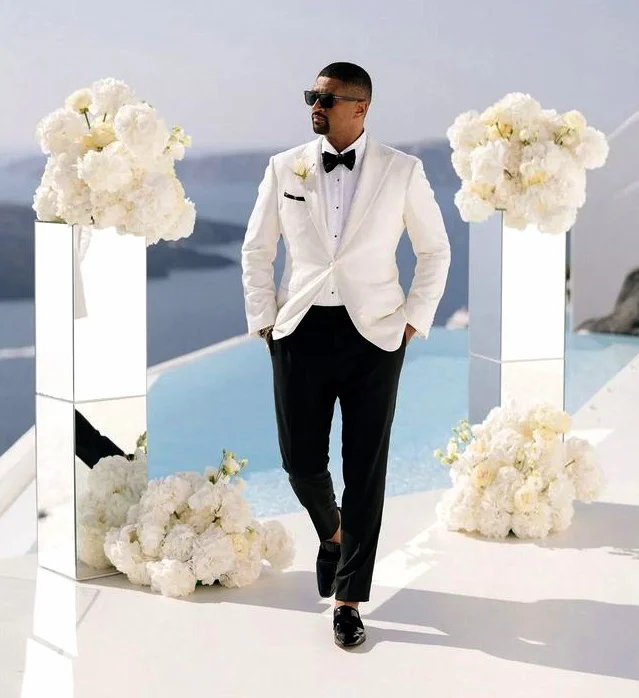
Wear the complete set for a few minutes in relevant positions: standing, seated and holding the objects you actually need. Add any intended lapel flower or prominent glasses afterwards. The white full-length reference combines a bow tie and flower; this is one possible distribution, not a requirement for every celebration. Decide whether a clear neck accent is enough or another lapel detail has its own place. Assess the additional object with the real jacket rather than as an isolated product image, including any other pieces you intend to wear near the face.
Before cleaning, obtain separate information for bow tie and shirt. GINETEX explains care symbols; the individual garment label is decisive. Your bow tie with a suit is then selected through specific criteria: suitable handling, the desired collar proportions and a deliberate relationship with lapels, square and inner layer. A black or checked front does not establish a particular fibre. Use the product information for those questions and a complete fitting for your style decision, so an attractive close-up does not replace knowing the actual model’s dimensions and use.
Choose a bow tie with a suit on the actual shirt collar. Compare size and colour, check how it is worn and add square, lapel details or waistcoat individually to the complete outfit.
Frequently asked questions
How large should the bow be against the collar?
Compare two sizes on the same closed shirt and view ends, collar points and lapels together. Choose the real proportions rather than a blanket body rule.
Can the bow be patterned when the shirt has a pattern?
Fit the shirt first and add the real bow tie. Compare close up and at conversation distance to decide whether both patterns should remain distinct or one should recede.
How do I assess it with a waistcoat?
Wear the waistcoat with the real shirt and bow tie. Assess the shirt front visible between neck and waistcoat opening standing and seated.