Choosing a beach wedding dress requires more than finding a light-looking white silhouette. Sand, wind, the walking route, seating and changing daylight affect how details perform, from bodice support to hem position. These six looks explore distinct ideas in a quiet coastal palette: a strapless high-low shape, an open back with a large bow, geometric openwork, a deep V-back with a flowing train, floral embroidery and an ornate lace-effect edge.
The comparison is about matching appearance to use, not naming one ideal style. A raised front can reveal shoes and ease the stride; a train strengthens the rear composition. Dense pattern may replace accessories, while a smooth surface emphasizes cut. Support, coverage and clearance should be judged in motion under the venue’s conditions. The best choice connects the preferred detail with the day’s actual movements and surfaces.
Balancing a high-low hem with movement and shoes
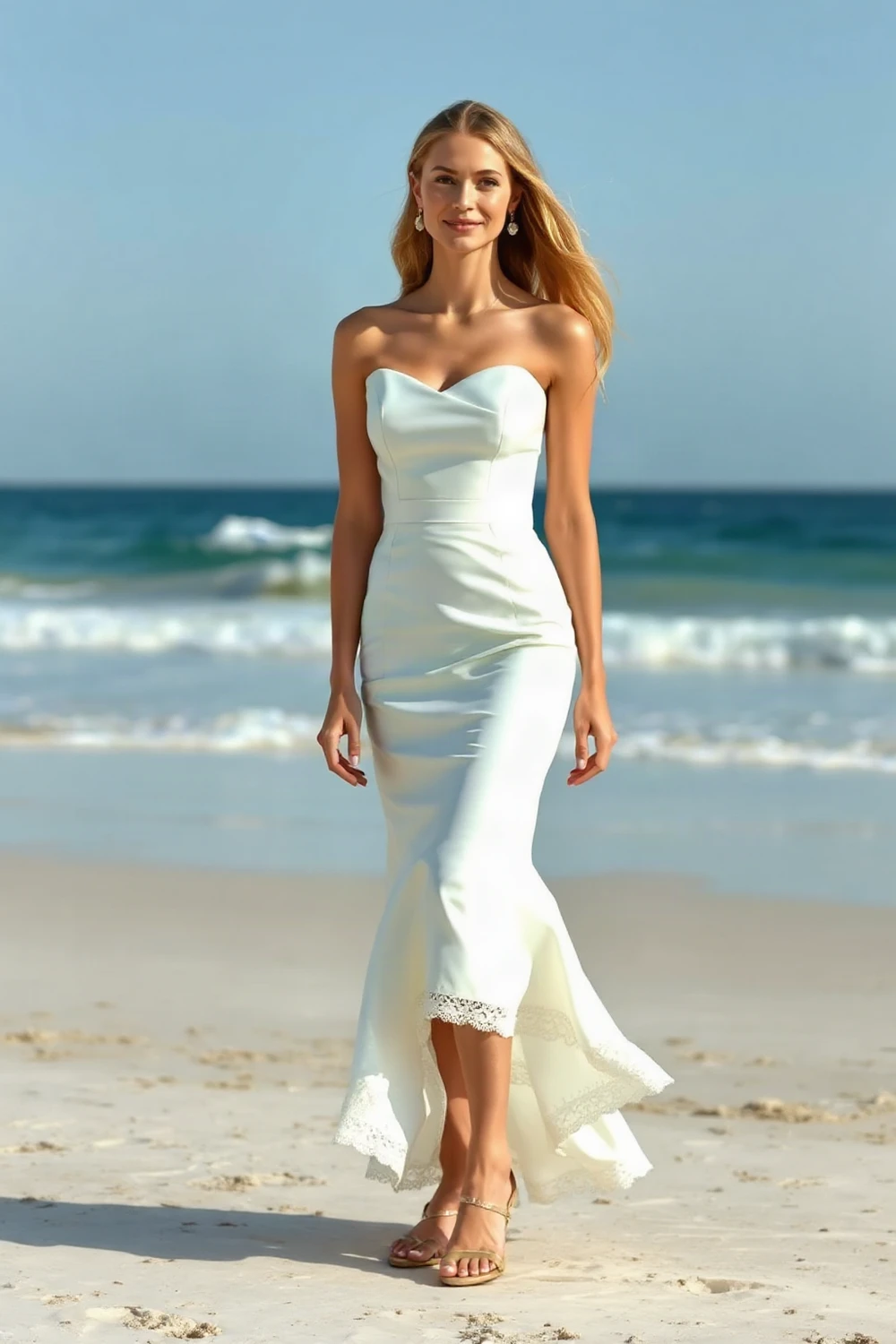
The first look pairs a strapless sweetheart neckline and smooth fitted body with an asymmetrical skirt that reveals the lower legs in front. Longer white panels trail behind, and narrow lace-effect edging adds detail without covering the clean surface. Visible shoes therefore become part of the silhouette, not merely a practical choice.
The shorter front may make steps easier to see and control than a uniformly long skirt, but the close hips and moving rear layers still need testing while sitting, turning and using stairs. Observe whether the longer panels stay clear of the feet during brisk turns. The slender metallic heels appear refined on firm sand; a lower or wider-based shoe may be steadier on soft beach sections. Test the strapless bodice by raising the arms, leaning forward and walking briskly, checking support without making the fit excessively tight.
Planning seating around an open back and bow
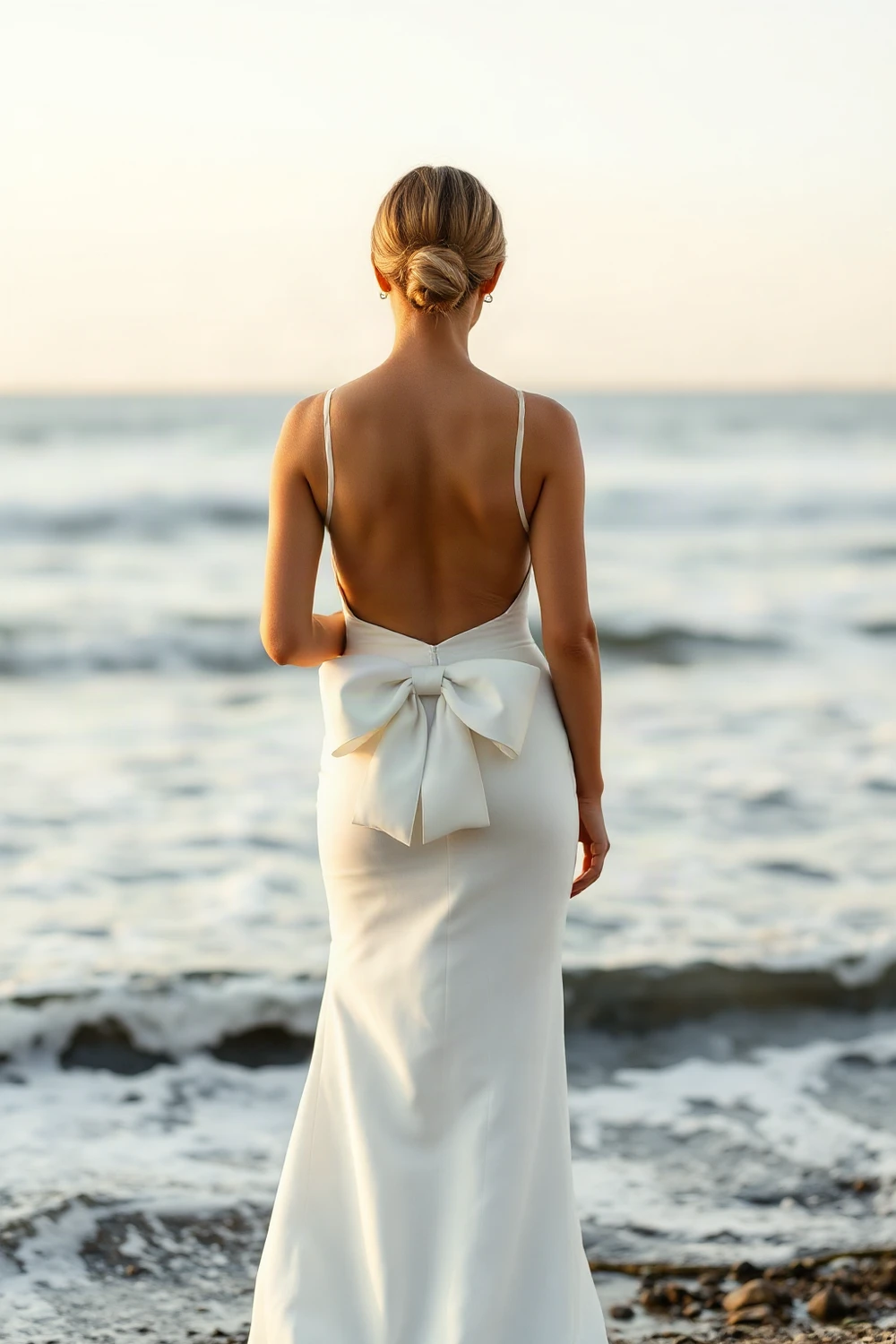
Slim straps frame the second dress’s deep open back, with a large bow placed at the waist. The long, smooth, narrow skirt keeps attention on this feature, creating a strong rear view. A low bun exposes the full outline, especially effective when the ceremony entrance or key photographs face the sea.
The bow is also a three-dimensional feature that affects seating. A firm chair back may fold it, press at the waist or flatten it after prolonged contact, so sit during the fitting rather than relying on a mirror. Loose hair can cover the opening; an updo reveals both the design and skin to wind and sun. Also test the skirt’s stride on stones or a sloping approach, particularly in shoes with limited grip. Check the selected footwear alongside the skirt rather than separately.
Using geometric texture without visual overload
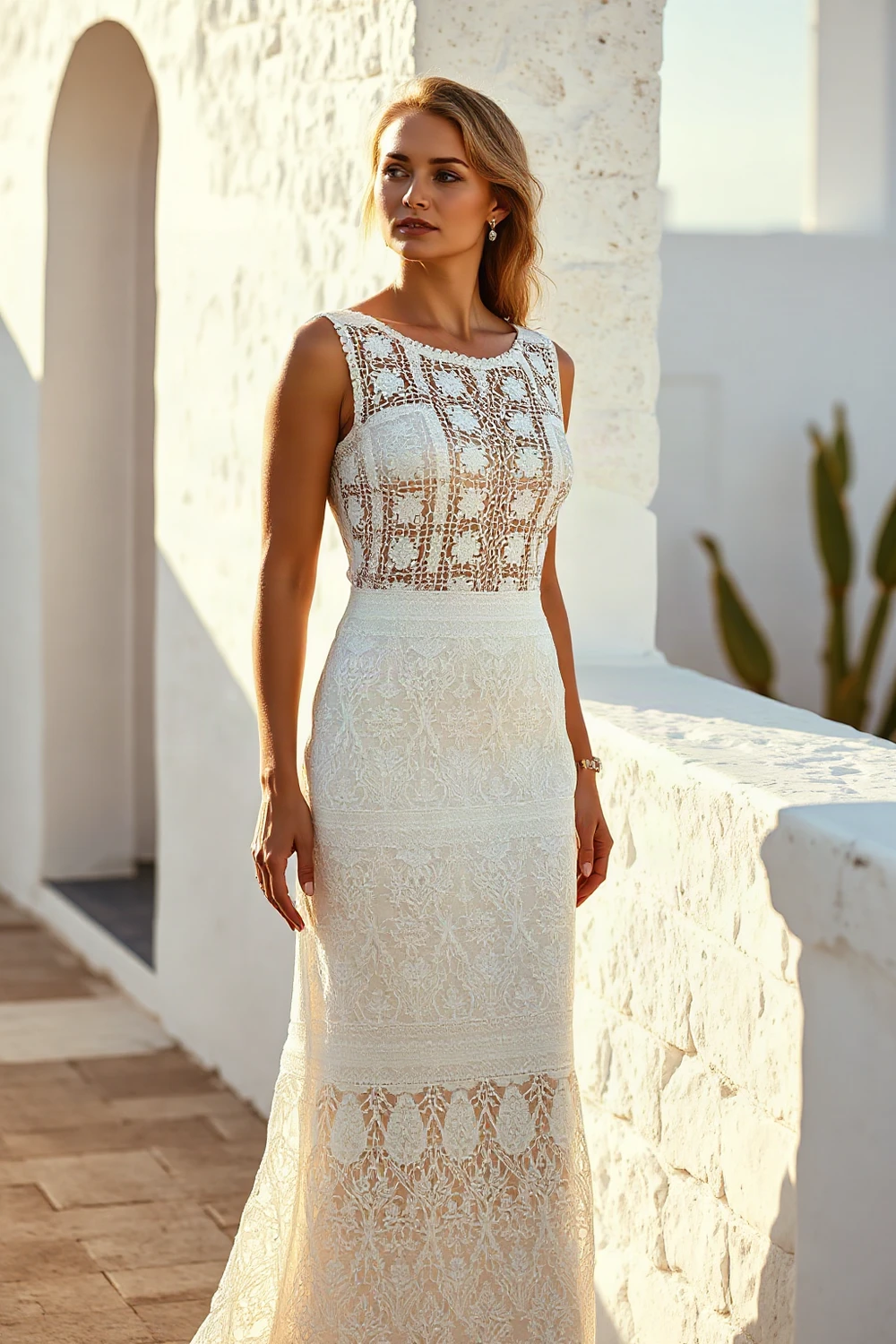
The third look organizes extensive geometric openwork with a sleeveless round neckline and defined waistband. A gridded structure intersects organic motifs across the bodice, and dense pattern continues down the long skirt. Side light and white stone architecture emphasize the openings, producing a graphic effect suited to someone who prefers structured texture to scattered flowers.
Because the surface already works like an accessory, an elaborate necklace could crowd the neckline. Small earrings, a simple bracelet or hair kept off the shoulders preserve clarity. Assess the open areas in direct sun, shade and backlighting, as perceived coverage can change. The long, narrow line feels composed on a paved terrace but may drag through loose sand. If both settings are involved, test stride and edge clearance on each instead of relying on a smooth fitting-room floor.
Managing wind with a V-back and long train
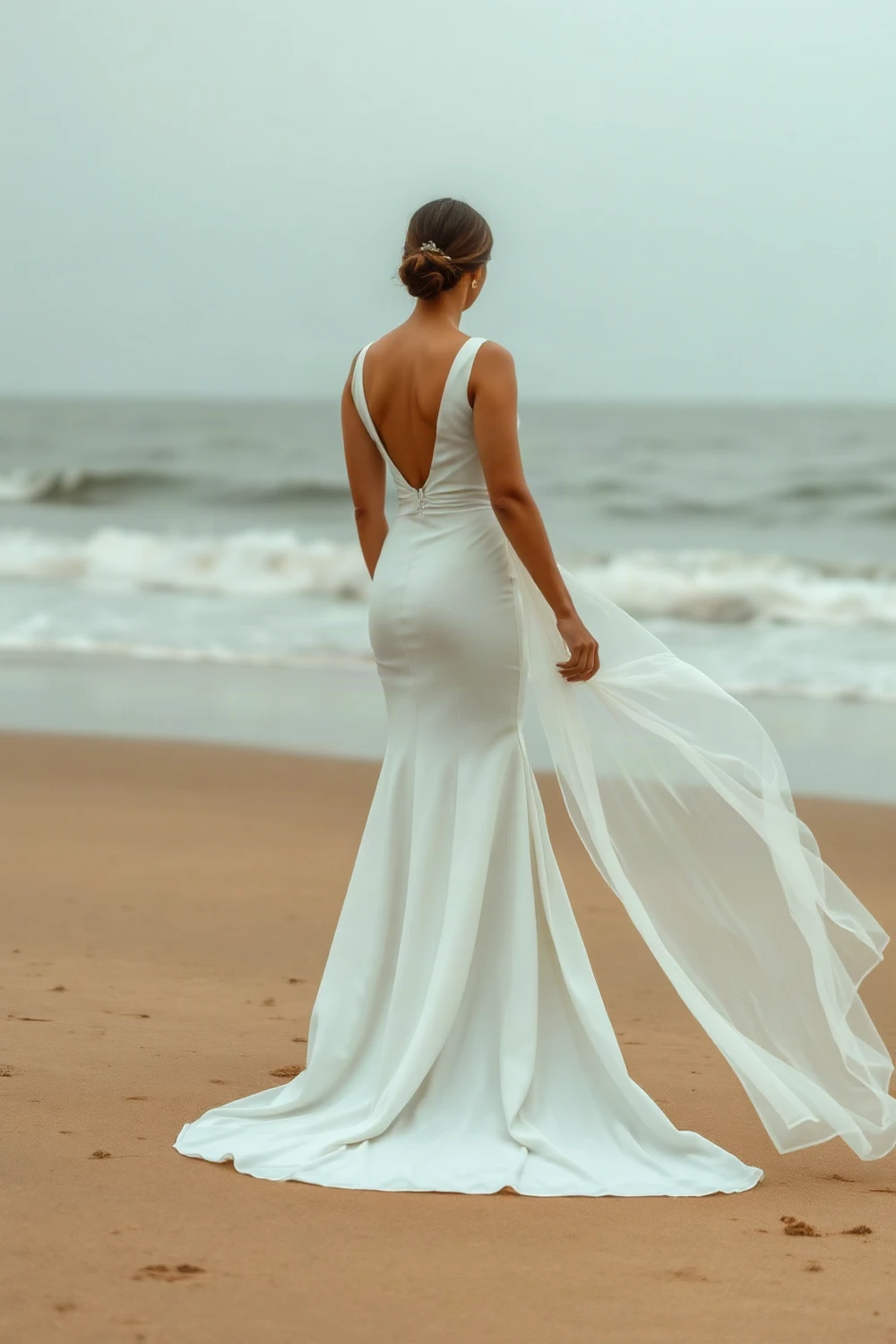
Broad straps outline the fourth dress’s deep V-back. Its fitted shape widens below the knees into a long train, while a translucent-looking side layer lifts in the breeze against the main skirt’s smooth fall. The contrast can enliven coastal photographs, although wind direction and strength cannot be controlled like a stationary pose.
A floor-length train may trail through dry sand and grow heavier near damp ground. Walk the route from the preparation area to the ceremony position, identifying where it must be carried or temporarily secured. Observe the train during straight walking and changes of direction. Check that the straps stay stable through turns and the waist closure does not pull while sitting. An updo fully displays the V; a loose style kept clear of the center back softens it without hiding it. This look favors a continuous rear silhouette over maximum freedom of movement.
Reading floral embroidery from near and far
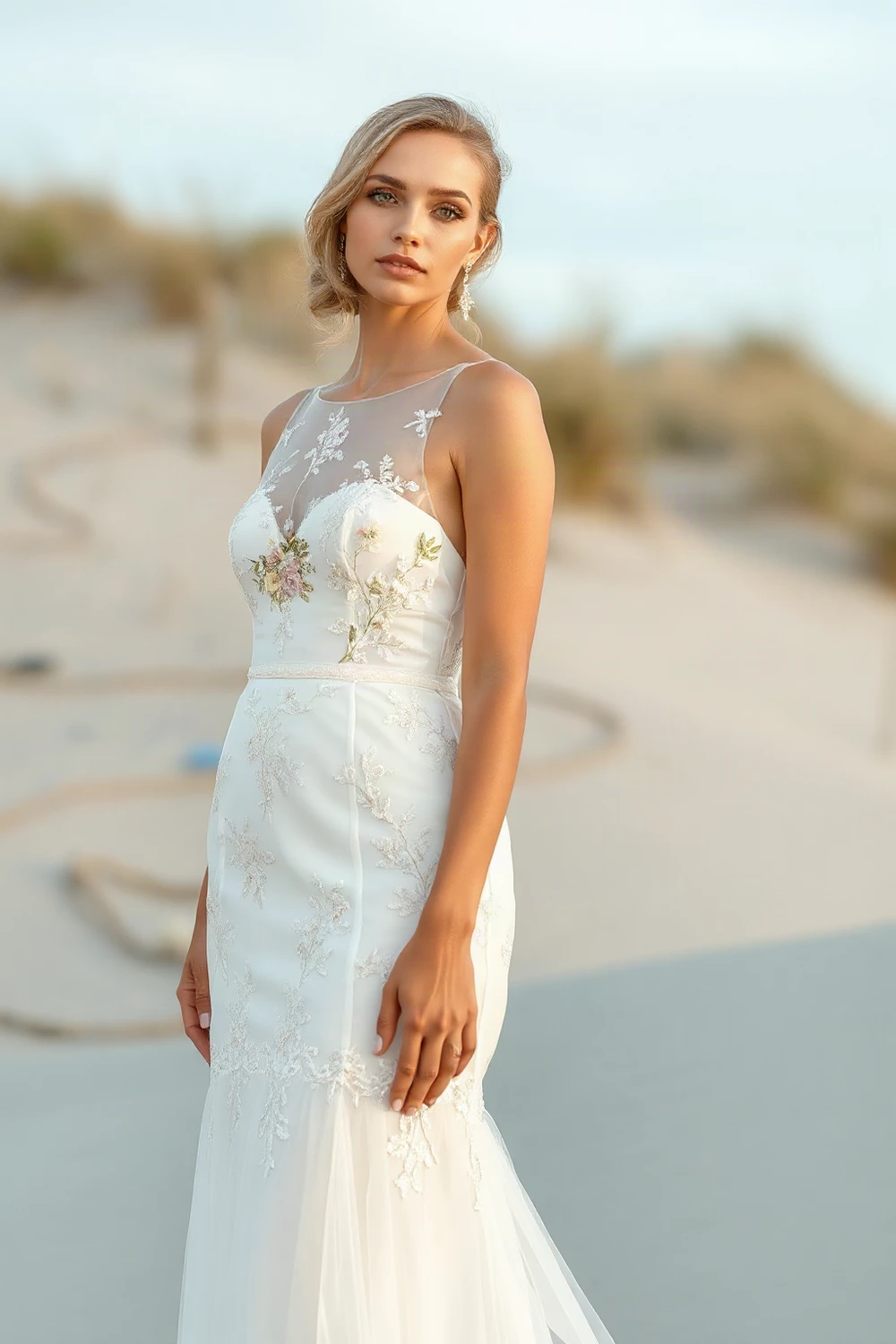
The fifth style combines a sheer-looking round neckline with white branches and small, softly colored blossoms. Motifs cluster on the bodice and continue more sparingly down the skirt, while a narrow waistband defines proportion without sharply interrupting them. Compared with the geometric look, the placement is more organic and open, offering detail close up but a quieter white impression from afar.
This change of viewing scale can guide photography and accessories. Wide photographs emphasize the silhouette; portraits reveal pale pink, green and raised white elements. If the bouquet or hairpiece also has flowers, compare their size and color with the dress rather than adding an equally busy pattern. Check the illusion upper area for arm rubbing, curling edges and visible inner layers as daylight changes. Since decoration surrounds the neckline, small earrings may frame the face more cleanly than a large necklace.
Testing an ornate hem against sand and stride
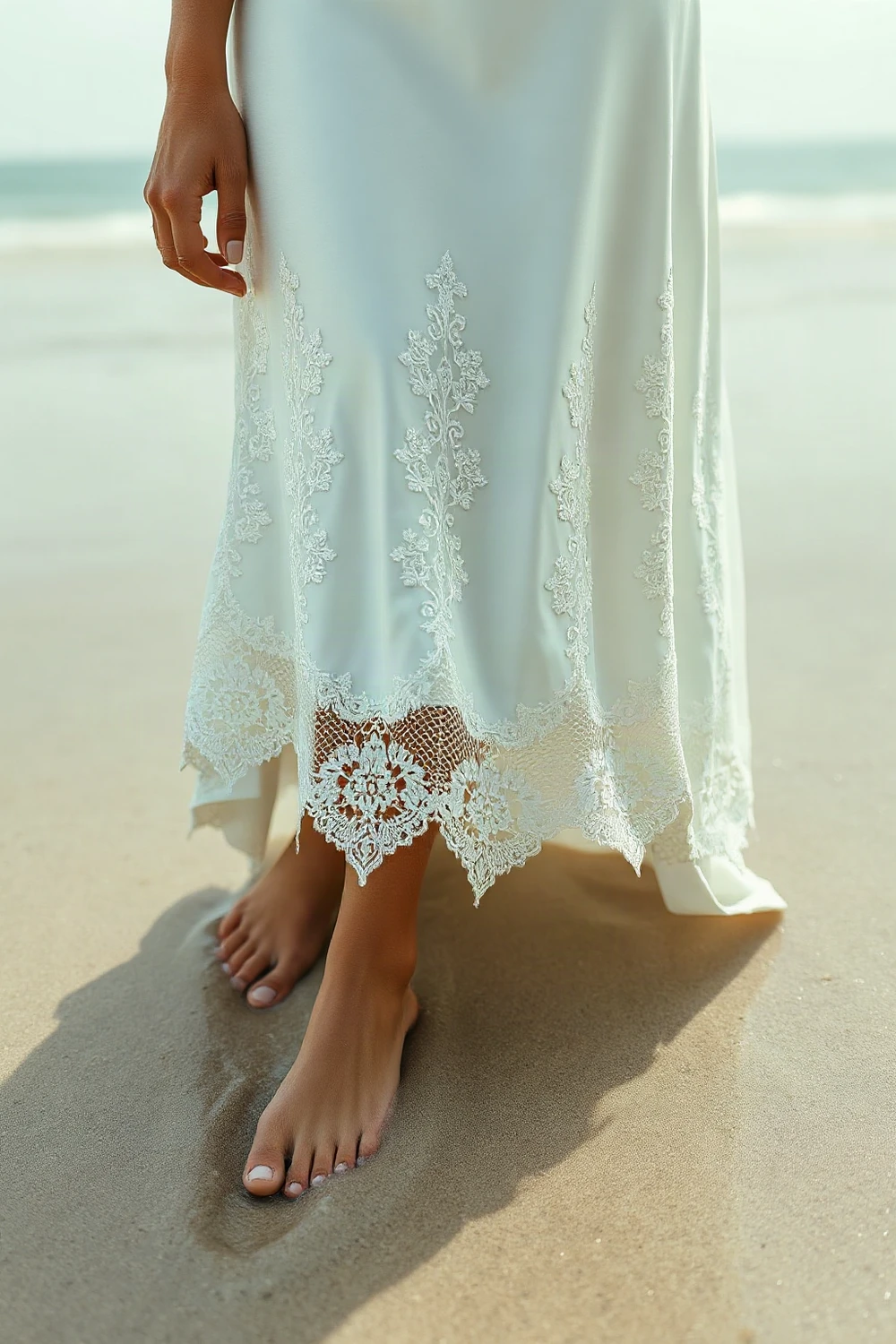
The final image focuses on where the skirt meets the beach. Raised white appliqués descend a smooth surface into a broad lace-effect border of open mesh, floral forms and pointed ends. Bare feet on wet sand make the shoreline relationship immediate. The character comes from an edge that moves with each step rather than a train or exposed back.
Ground-level decoration needs careful testing: pointed sections can catch underfoot, and open areas may collect sand. Practice short and long strides on a surface resembling the venue’s firmness, not only a polished indoor floor. Going barefoot also requires checking heat, shells, stones and hard transitions between the ceremony and other areas, with discreet backup shoes available. If wearing shoes, reassess the finished length in them. The broad border already suits close photographs, so minimal ankle jewelry keeps its rhythm clear.
Start with the movement that will occur most often, not only the first attractive detail. A long shore walk may favor an exposed or asymmetrical hem; a ceremonial entrance can give a train, bow or open back greater purpose. Geometric density and scattered floral branches also read differently from a distance.
For the final fitting, wear the intended shoes, underlayers and hairstyle. Sit, turn, raise the arms and walk on multiple surfaces. Rather than copying one image, combine the back, texture and hem ideas that fit the route and schedule. The result can retain coastal character while supporting the day’s practical rhythm.
Compare beach wedding dress styles through asymmetrical hems, open backs, statement bows, geometric lace effects, floral embroidery and trains, with practical guidance for movement and coastal terrain.
Frequently asked questions
Which hem length is easiest to manage on soft sand?
A shorter front or ankle-revealing hem can make foot placement and footwear easier to monitor. If a long train is preferred, walk the route in advance and practice how it will be carried or temporarily secured.
How should a strapless beach wedding dress be tested?
Check the bodice while raising the arms, leaning forward and walking, not only while standing. The goal is stable support that still permits comfortable breathing rather than simply choosing the tightest possible fit.
Which hairstyle works with an open-back dress?
A low bun or other updo keeps a V-back and waist bow visible. Loose hair provides a softer frame but may cover part of the design, so photographs from the rear during the trial can help with the decision.
What accessories suit a densely patterned dress?
Geometric openwork or a broad ornate border already provides a strong visual focus. Small earrings, a simple bracelet or an understated hair detail can complement the texture without adding another competing pattern.
What should be checked before going barefoot on the beach?
Inspect sand temperature, wet and dry sections, shells, stones and transitions to hard paths. Keeping discreet flat backup shoes nearby can make movement between different surfaces safer and more comfortable.