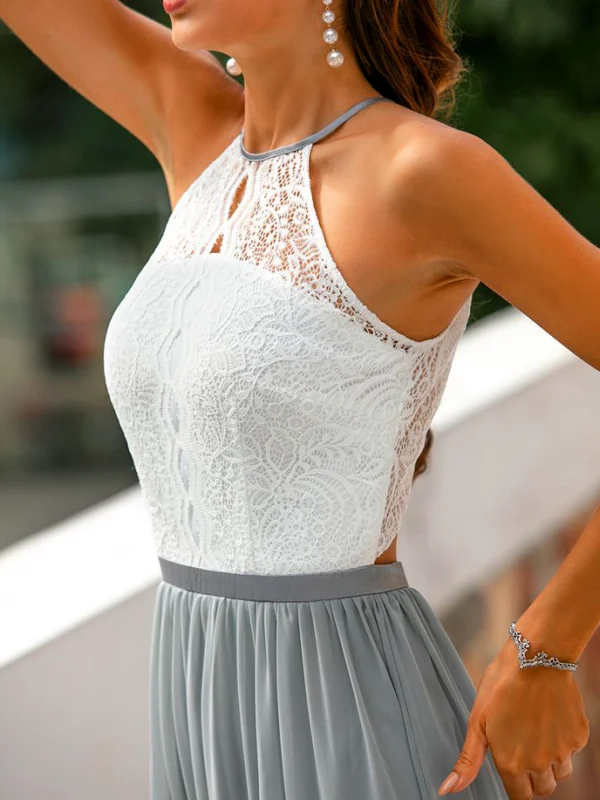
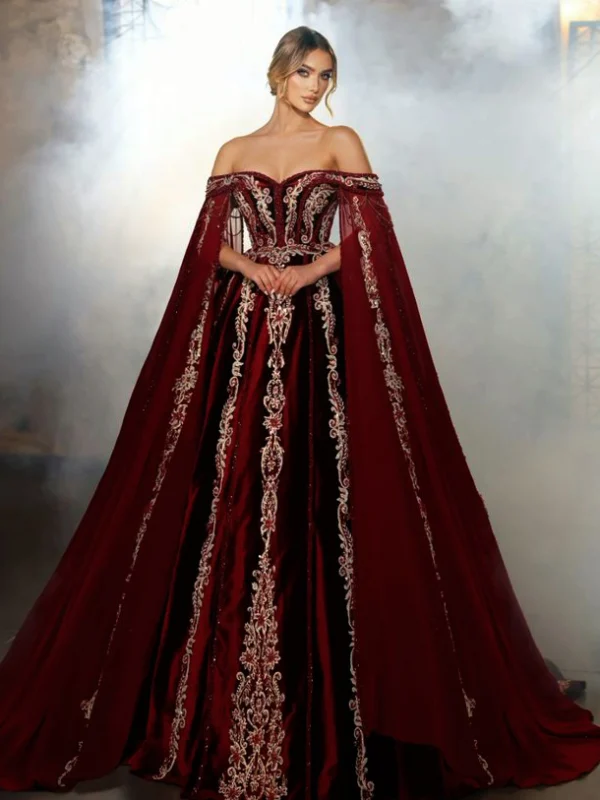
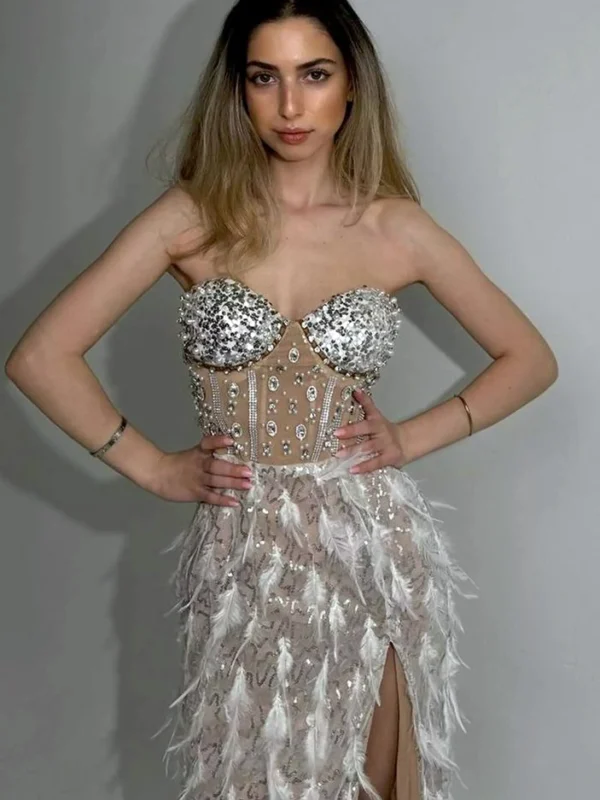
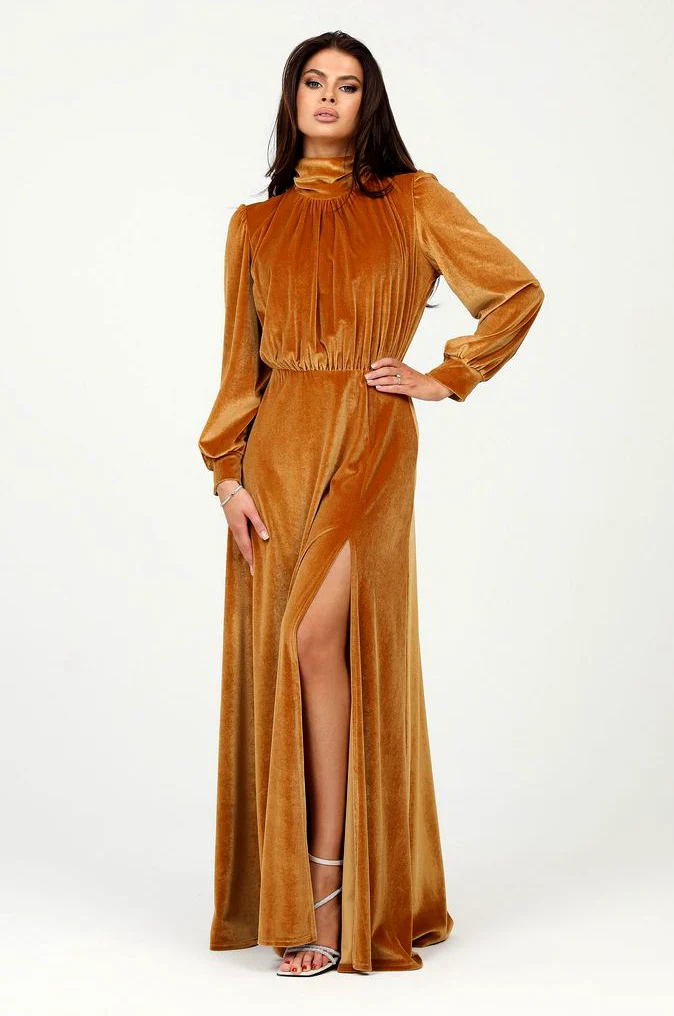
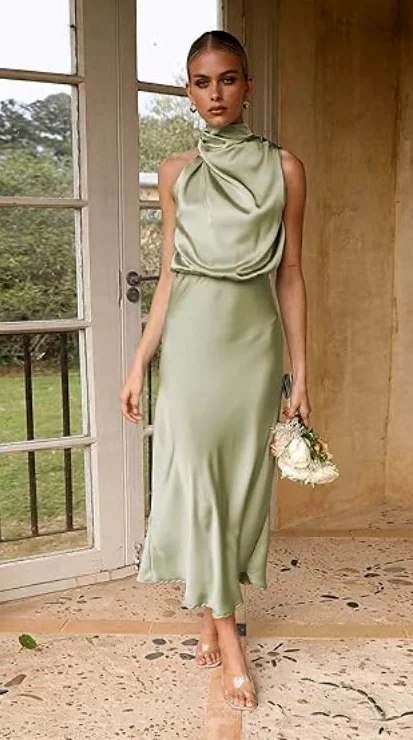
An autumn evening dress often has two visible roles during one event: the layered outfit for arrival and the dress worn inside. They can complement each other without looking identical. These four pictures suggest different comparisons: a pale long-sleeved dress with a prominent belt, an ochre high-necked design, a sleeveless green look with draping at the neck and a rear view with wide short sleeves. The useful question is which outer layer accommodates those shapes, and how easily you can move from the arrival outfit to the indoor look.
1. Plan your autumn evening dress around the actual route
Start with the invitation and your travel plan. Will there be a long walk, an outdoor reception or only a short transfer from a vehicle to the entrance? List those stages and ask the venue whether a cloakroom is available. This gives your fitting a practical purpose: you may need an outer layer that closes fully, or an addition that can be removed quickly. Base the choice on your particular evening. Neither a sunny photographic setting nor the colour of a dress answers the question of what you need for the journey.
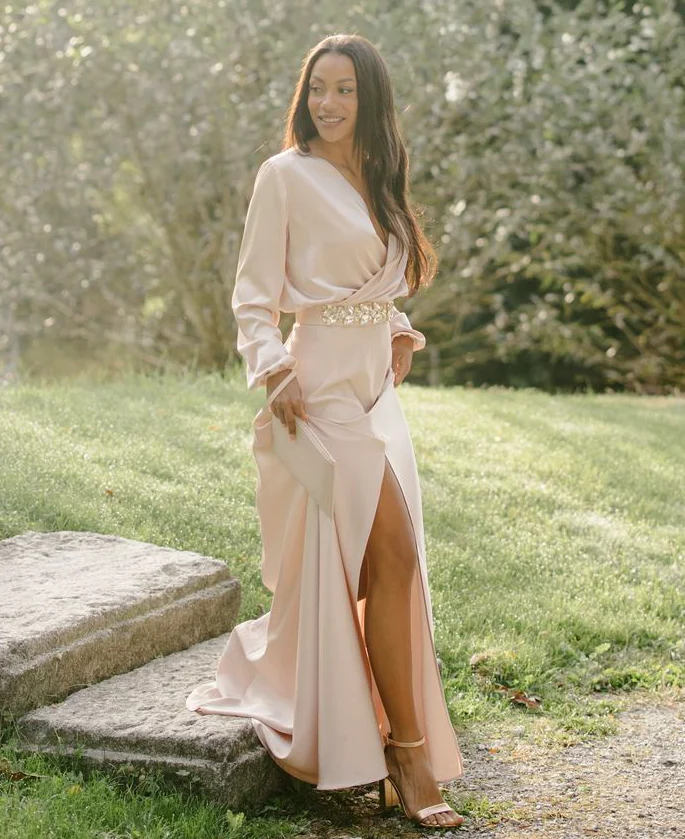
Create two complete views for the comparison. In the first, wear the dress, outer layer, shoes and bag together. In the second, set the coat aside and arrange the jewellery as you intend to wear it in the room. Photograph both from a similar distance. This reveals whether the whole combination works, rather than only the dress. An existing coat can be your starting point: its shoulder width, length and fastening position will influence which dress shapes sit comfortably underneath, before you consider buying an additional piece.
2. Compare coat length with the dress outline
A shorter coat above a long dress creates a visible interruption, while a longer outer layer accompanies more of the silhouette. Try both on the actual outfit rather than assuming the hems must match. In the pale example, diagonal skirt draping and a slit are important parts of the design. A closed coat initially reveals only their lower section. Decide whether you like that partial view, then open the coat to see how its vertical edges sit beside the angled draping. The closed and open versions may create quite different outlines.
For an autumn evening dress, the fastening area also deserves attention. A prominent belt like the one in the pale picture occupies visible space at the waist. Close the coat while standing and sitting instead of judging it at the shoulders alone. If the outer fabric pulls over the belt, try a different fastening height or a roomier cut. This lets you choose around the actual shapes of both garments. You do not have to discover just before leaving that the detail you liked on the dress makes the outer layer awkward.
3. Test long and wide sleeves under the outer layer
The first two dresses have long sleeves with volume, while the rear view shows a wide short-sleeved upper area. Those shapes may need room when you put another garment over them. Raise your arms, reach for your bag and remove the coat again during the fitting. Check whether the sleeves have twisted or need rearranging. A dress that feels comfortable on its own can behave differently inside a narrow coat sleeve. The direct test is more useful than assuming that long sleeves are automatically the simplest solution for an autumn occasion.
4. Give high and open necklines different additions
The ochre dress brings fabric high around the neck; the sleeveless green design has soft draping in that area. A scarf would add another surface in the same place. Try the coat without one first, then add it as a separate comparison if needed. The more open pale neckline leaves a different space between neck and dress. Check jewellery and any extra layer in relation to that opening rather than applying one formula to every neckline. The line you chose should still look intentional after the coat is removed and the dress is seen alone.
5. Check the slit and hem while moving
An autumn evening dress needs to work beyond a still mirror view. The long slit examples show how an opening highlights the leg line, but walking and sitting can reveal a different amount from the photographic pose. Take a few steps, try a step or stair and sit down in your intended shoes. Repeat part of that sequence with the outer layer on. Notice whether you have to hold several fabric sections at once. If an alteration is needed, discuss the particular opening and worn hem length before approving work on the actual garment.
6. Coordinate bag and jewellery for the change indoors
The bag should be manageable both with and without your coat. Put the items you really plan to carry inside it and rehearse setting it down while removing the outer layer. A handle or strap may sit differently over a voluminous sleeve. Keep jewellery comparisons equally specific: the high collar, the neck draping and the shimmering upper surface in the rear view already create focal areas. Add one piece first. The corset-look evening dress guide and ruffled evening dress comparison offer further silhouette references when considering alternatives.
The four dress colours do not have to follow a fixed autumn palette. Pale pink, ochre, green and champagne provide different options for an event. Compare them with the coat you own as well as with each other. Similar lightness can create a quieter combination; a marked contrast makes the boundary between garments more visible. Either can be a deliberate choice. Place your shoes and bag beside them so you judge the colours as an outfit, rather than predicting the eventual effect from a small image on a screen.
7. Finish the fitting and care plan before the date
Make the final fitting a short sequence: put on the complete outfit, close the coat, walk, sit, take the coat off and arrange the sleeves. Set the bag down and look at the dress alone. Record only unresolved points, such as a tight fastening over the belt or sleeves that are difficult to place under the coat. That list supports a specific outer-layer search or alteration discussion. Additional purchases then answer an observed need instead of adding attractive items with no clear purpose in the combination you already have.
Do not treat visible shine or a soft-looking surface as a care instruction. The GINETEX care-symbol explanation helps you read the actual garment label, which should guide treatment. Ask the shop or intended care service about anything unclear in good time. Your autumn evening dress is fully planned when both states work: the journey to the venue and the silhouette you want in the room. The right outer layer supports that arrangement without needing to remain the centre of attention throughout the evening.
An autumn evening dress works as part of an arrival outfit and as a separate indoor silhouette; test both with the outer layer you intend to wear.
Frequently asked questions
Are long sleeves automatically warm enough?
No. Assess the actual garment and outer layer for your route; a photograph establishes neither fibre composition nor the protection you need.
Does an autumn evening dress have to be dark?
No. The pale, green and ochre looks provide personal colour options. Compare them with your existing coat and the event setting.
How should I test wide short sleeves under a coat?
Put the intended coat on, move your arms and remove it again. Check whether the dress sleeves return to the shape you want or need rearranging.