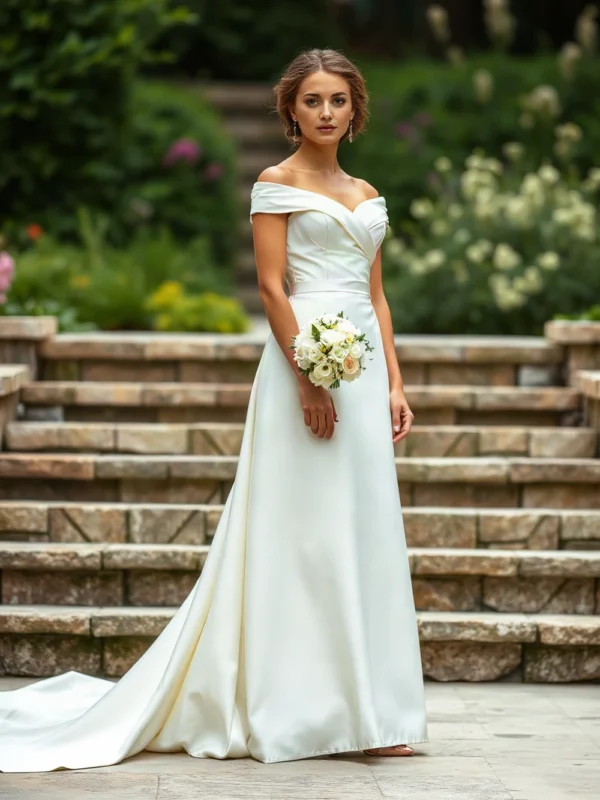
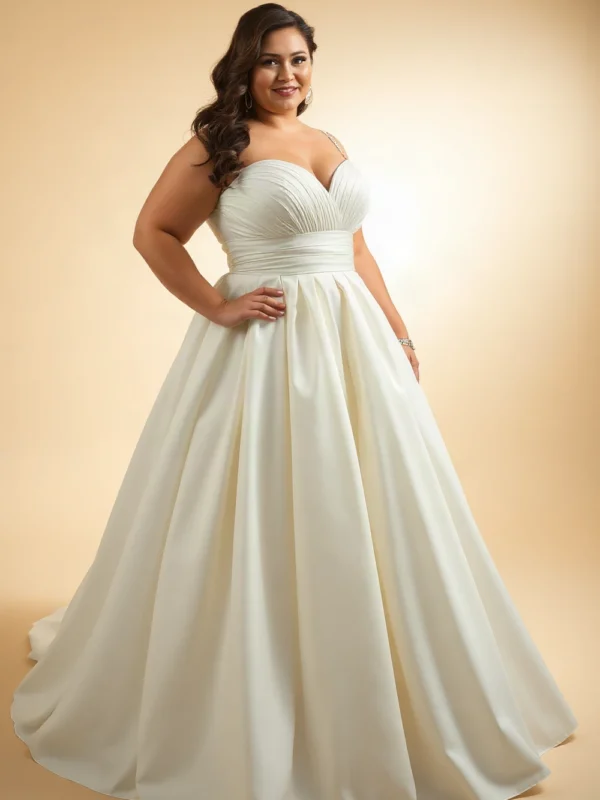
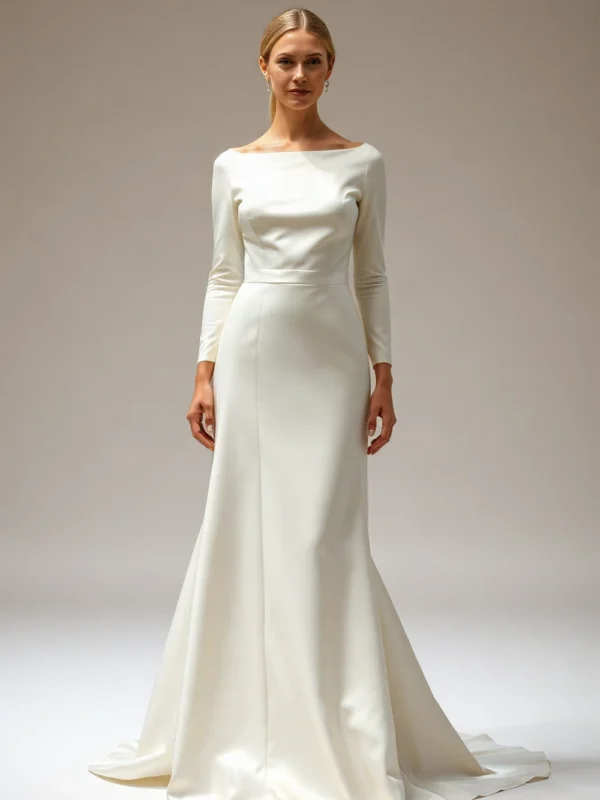
Minimalism in 2027 wedding dress styles is not defined only by an absence of embellishment. Across these six visual concepts, quiet surfaces allow a cape, train, draped neckline, wrapped bodice or pocket to determine the character of the entire silhouette. The shared white and warm ivory palette makes those structural contrasts easier to compare. One restrained dress gains an architectural frame from the shoulders, another creates ceremony through a train, and another turns an everyday feature into a visible design statement.
Choosing among them requires more than selecting a favorite front view. Venue layout, walking distance, seating, hairstyle and accessories can all change how useful a detail feels throughout the day. The comparisons below treat each image as style inspiration rather than a purchasable product, using its visible proportions to identify practical questions worth asking during a fitting.
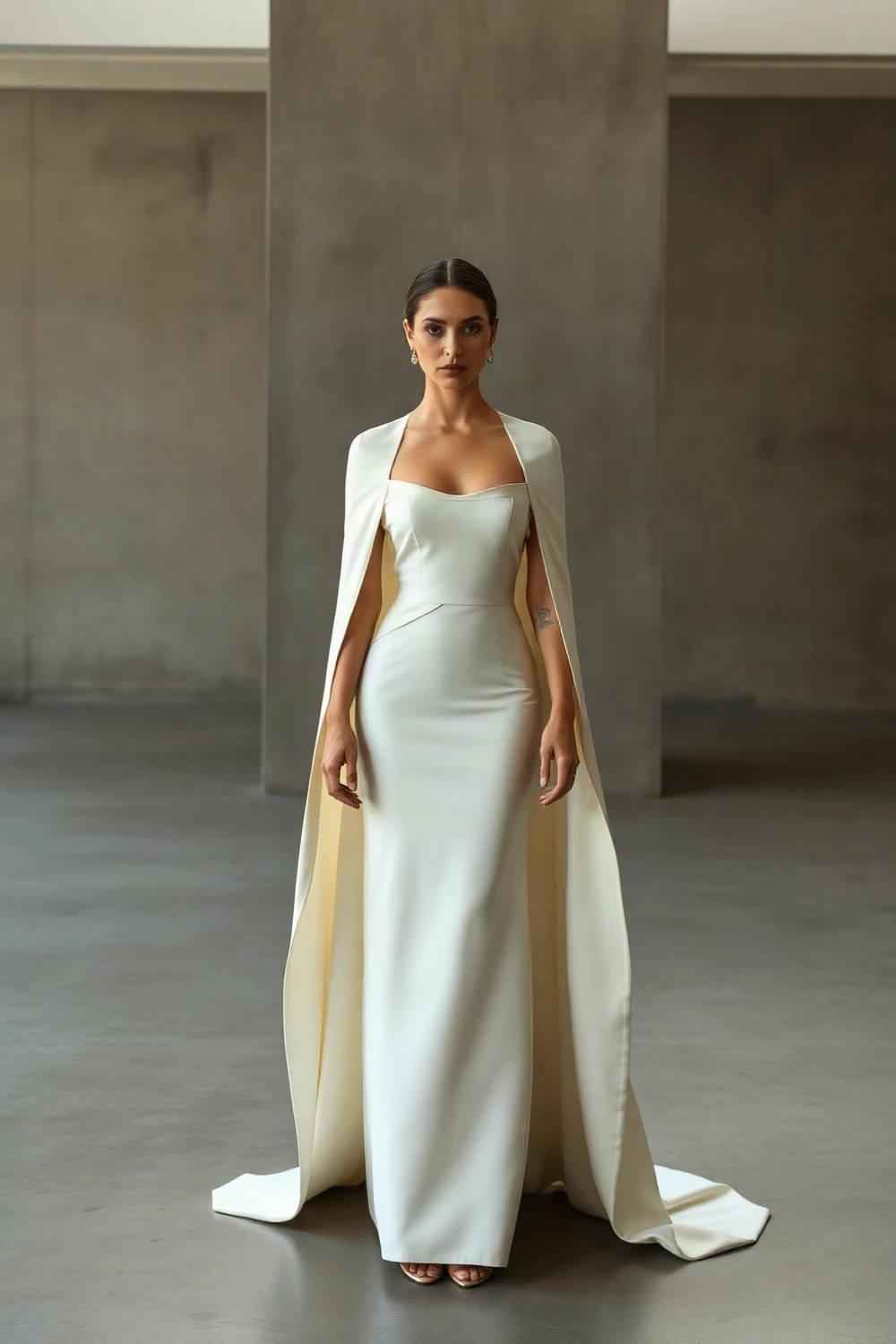
Creating a second silhouette with a cape
The first look begins with a controlled column shape, a softly squared neckline and an angled seam at the waist. Its character changes when long panels descend from the shoulders beside the arms. Instead of making the skirt fuller, the cape draws a separate outer contour, increasing the sense of verticality and coverage from the front.
This is different from a veil because the emphasis starts at the shoulders rather than behind the head. Panels that look striking in an open corridor may require more handling in a narrow aisle or at a chair. Raise the arms, turn and sit during a fitting to learn where the lengths settle. If a veil is also planned, compare both layers from the rear so one does not unnecessarily hide the other.
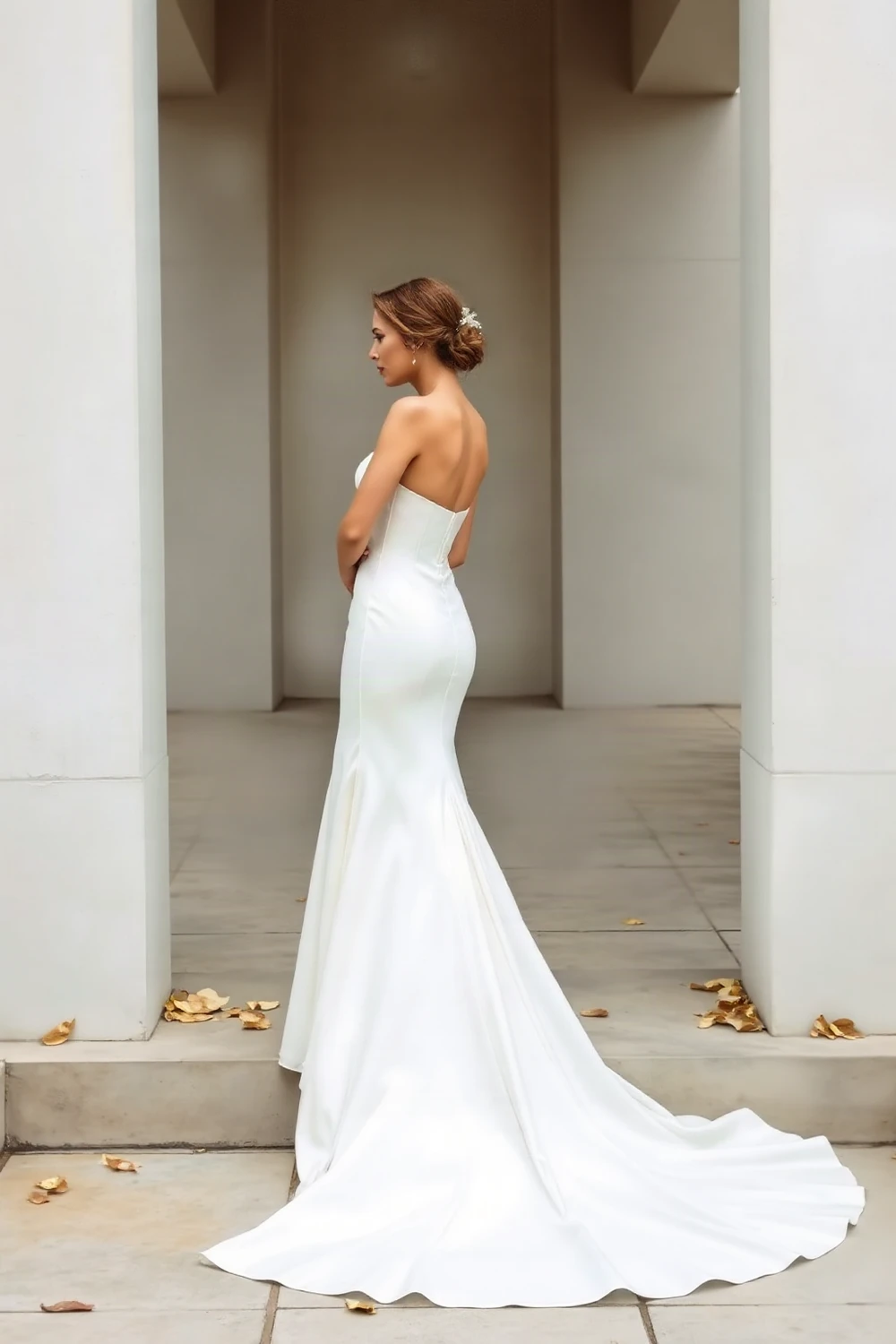
Balancing a fitted body with a broad train
The second concept combines a strapless, body-following upper line with a train that widens dramatically behind the figure. With little detail around the shoulders, the eye moves cleanly from the back toward the lower flare. The caped dress begins its width above; this version places almost all of its visual weight below the knees and across the floor.
It can inspire someone who wants a ceremonial rear view while keeping the bodice restrained. The trade-off is the combined movement of a narrow skirt and substantial train. Test regular and faster steps, stairs, turning and sitting rather than judging it in a static pose. If the train must be secured later, establish how that change affects the skirt. Hair and veil choices should also preserve, rather than completely conceal, the decisive back line.
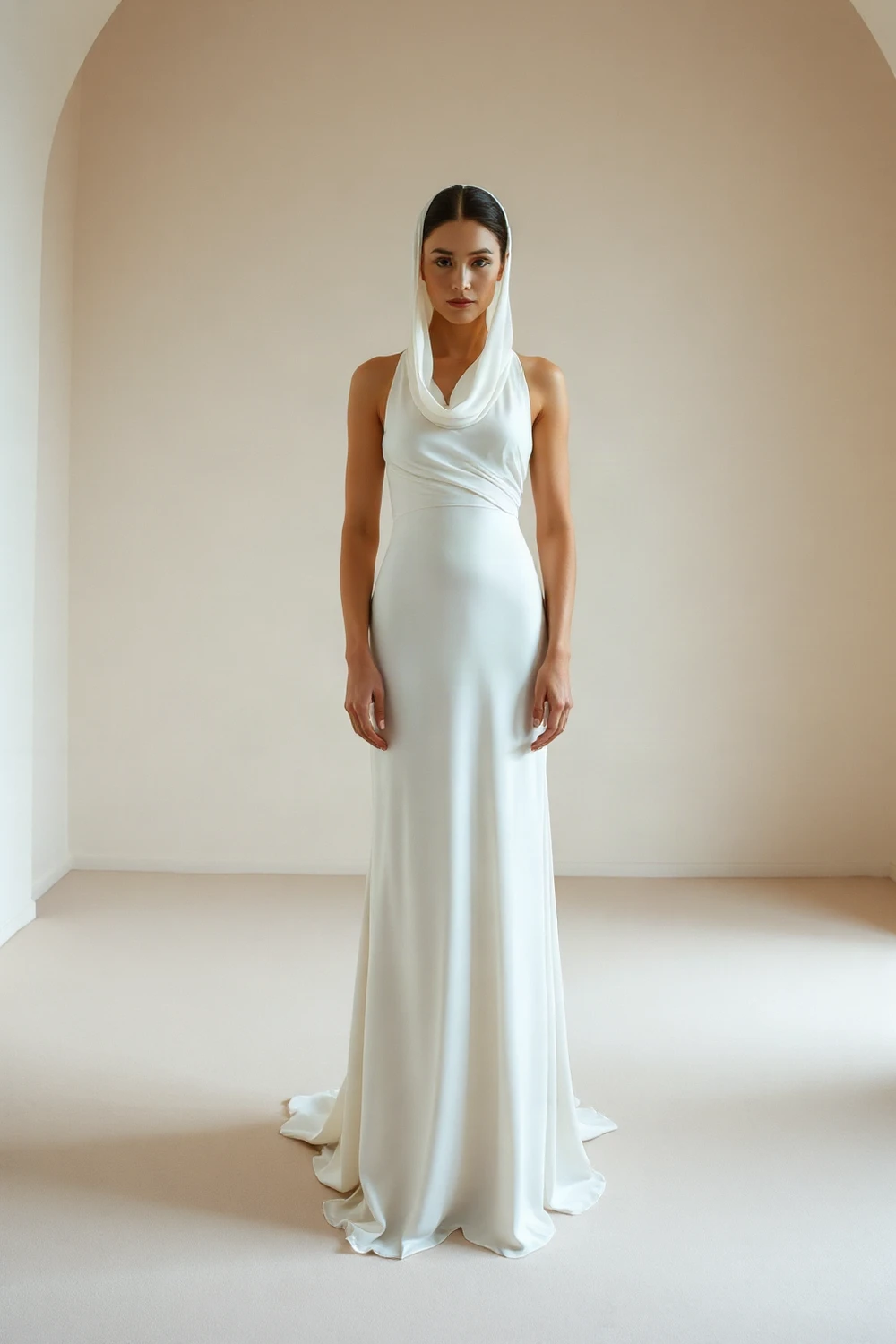
Framing the face with a hooded drape
In the third look, draping extends beyond the chest to rise around the head like a soft hood. It continues into diagonal folds across the bodice, forming a sculptural focus above the otherwise long, calm skirt. Although the shoulders remain open, the pale frame beside the face gives the composition more enclosure than the slender-strapped options.
The feature directly shapes decisions about hair and jewelry. Voluminous hair, large earrings and an additional veil could all occupy the same limited area. Try the neckline with a hairstyle close to the intended shape, since height and placement can alter the drape. Turning the head and bending forward will reveal more about its behavior than standing still in front of a mirror. The goal is to preserve the face-framing line without restricting natural movement.
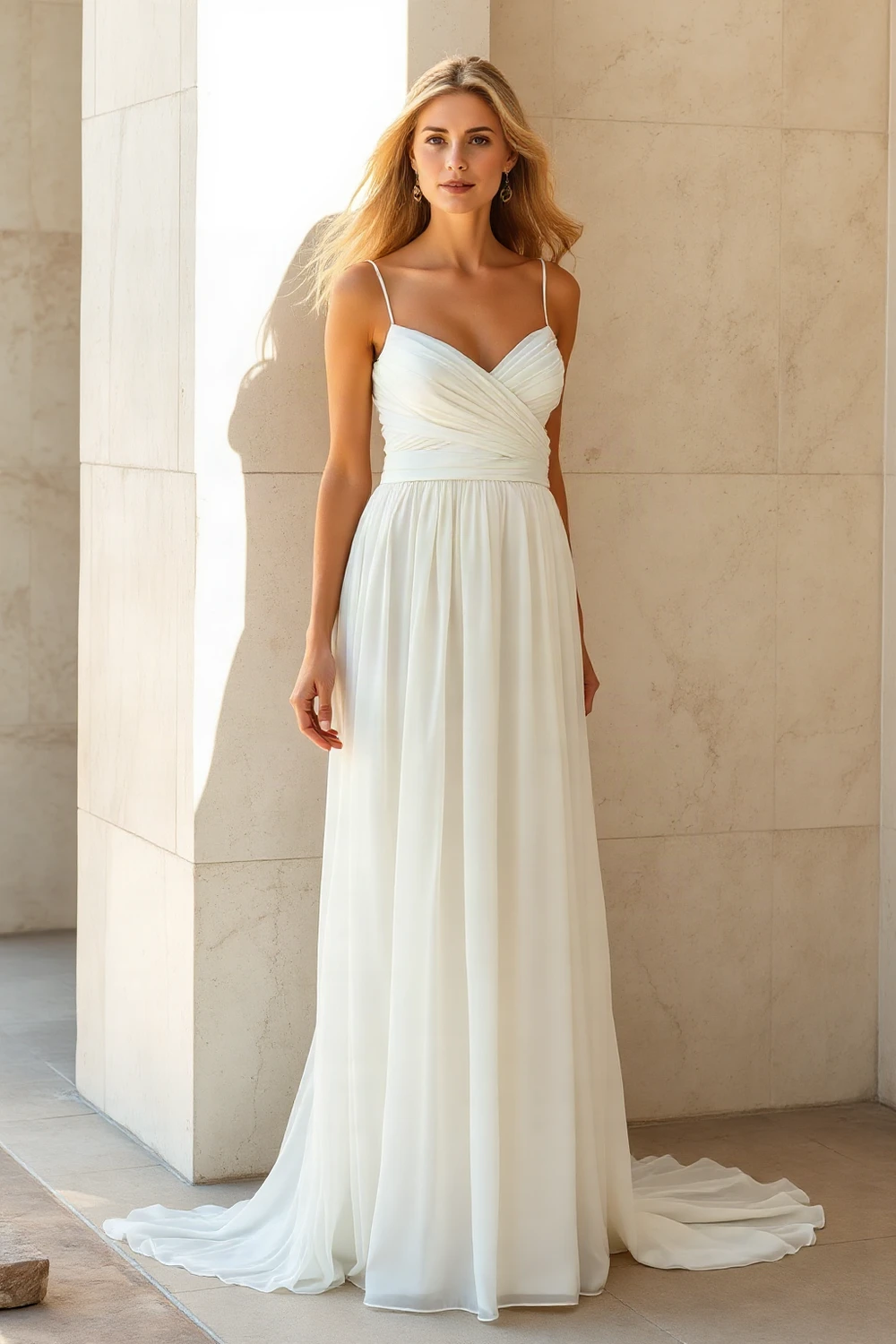
Pairing a wrap bodice with a soft A-line
The fourth dress uses slender straps to support overlapping folds across the chest. Those folds gather at a defined waist before a softly gathered A-line skirt expands toward the floor. The upper half has clear direction and movement, while the quiet lower half spreads visual weight through the skirt instead of following the hips closely.
This combination can suit someone seeking a pronounced waist and a less confined-looking hem. Even so, comfort cannot be inferred from width alone. Check that the straps remain stable, the wrap retains its arrangement while breathing and the waist does not buckle when seated. Walk with both short and long strides. Since the bodice already contains several visible lines, restrained jewelry can keep the neckline readable rather than introducing another competing focal point.
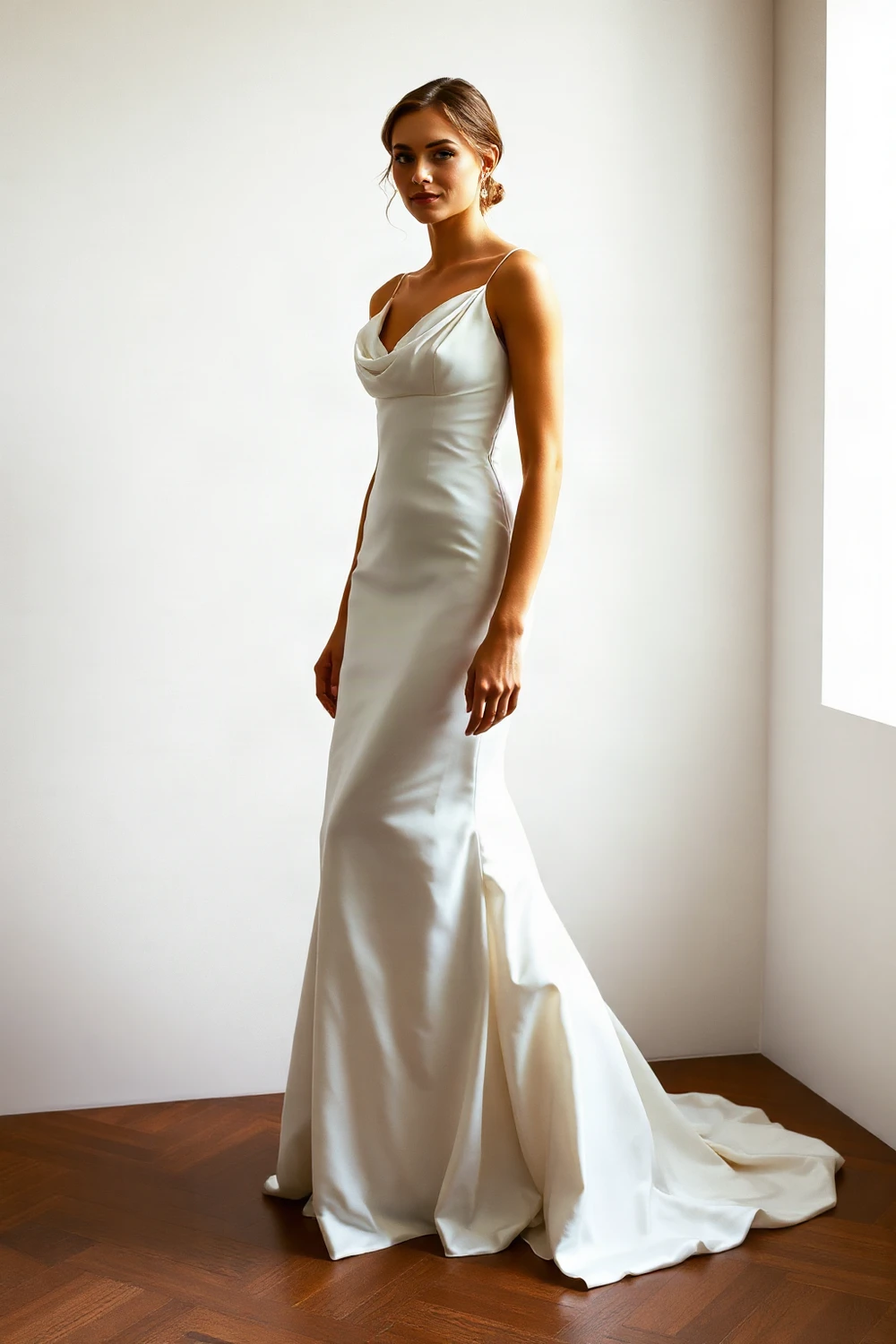
Softening a fitted line with a cowl neck
The fifth concept adds a small cowl fold to a slender-strapped dress that follows the torso and hips. The drape softens the uninterrupted surface without breaking the long vertical line. A slight flare near the floor and a moderate extension behind provide a quieter finish than the broad train of the mermaid silhouette.
Compared with the hooded drape, the face remains more open; compared with the wrap bodice, there are fewer crossing lines. This restraint leaves room for accessories, although a large necklace could cover the neckline's defining fold. Examine the cowl while bending and sitting as well as standing. Its depth and strap placement can shift with motion. The fitted skirt should also be tested through normal strides, longer steps and turns so its visual simplicity does not conceal an impractical restriction.
Treating the pocket as part of the silhouette
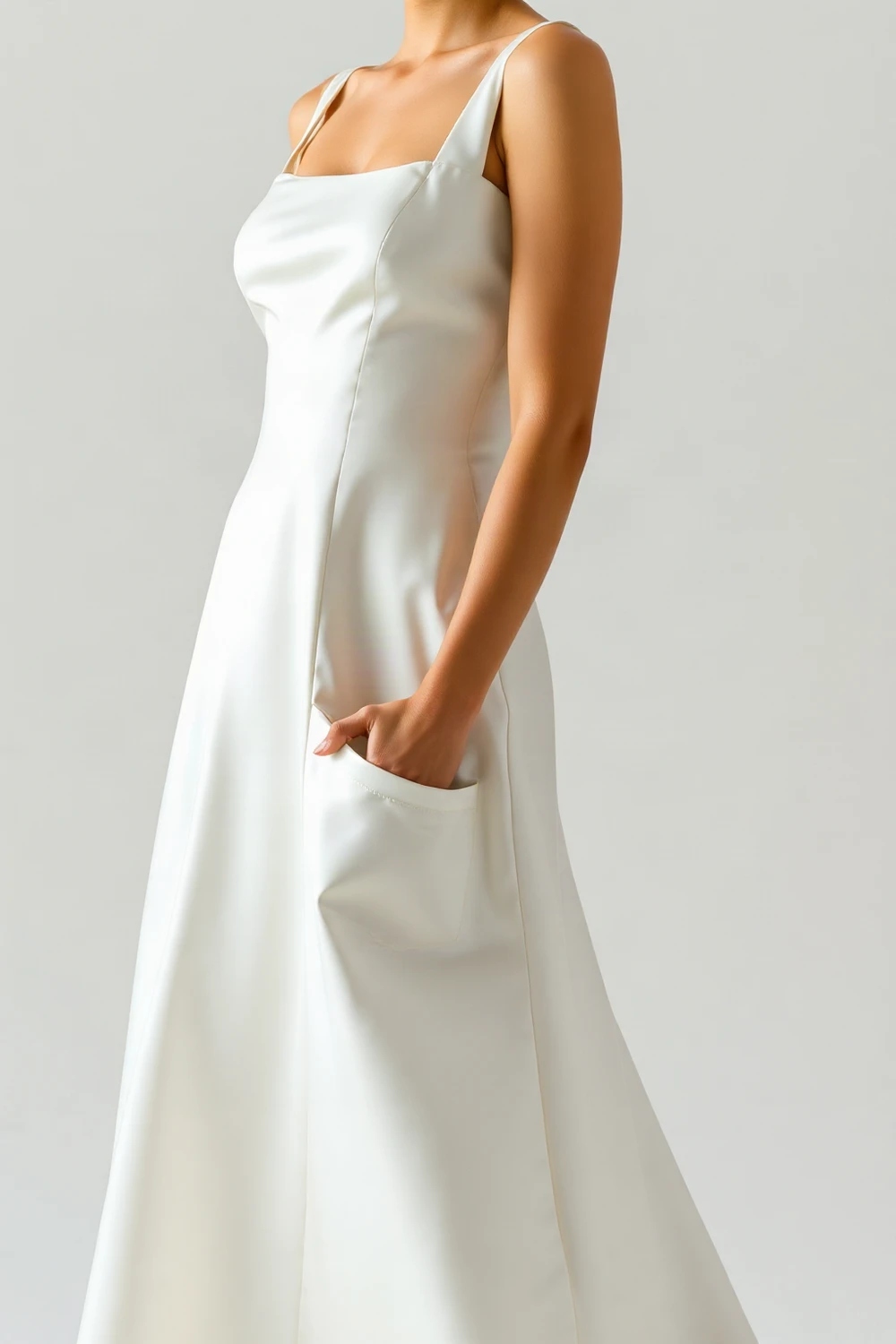
In the final image, the large pocket is deliberately visible rather than concealed within a side seam. Wide straps and a softly square neckline frame the upper body, while long princess seams guide the eye into the A-line skirt. Placing a hand in the pocket changes the side plane slightly, making the feature influence posture and photography as well as storage.
Pocket height and opening should be assessed in relation to a natural hand position. An empty pocket may lie smoothly while a heavy object pulls the outline, so test any small item you genuinely expect to carry. This approach feels more graphic and structured than the slender-strapped draped designs, bringing a familiar sign of practicality into a ceremonial silhouette. The pocket is successful only if it remains useful without distorting the clean skirt line.
These six minimalist wedding dress ideas show that restraint is not tied to one cut. A cape provides an architectural frame, a broad train directs attention behind the wearer, hooded and cowl necklines offer different degrees of softness, wrap folds emphasize the waist, and a pocket adds a functional focal point. Before choosing the most striking feature, consider how the full event will actually unfold.
View a favored silhouette from the front, side and back, then walk, turn, sit and try stairs. Recreate the intended proportions with a similar hairstyle, shoes and accessories during a fitting. The strongest choice is not simply the dress that commands one photograph; it is the combination of line and detail that supports natural movement and personal expression across the ceremony and celebration.
Compare six minimalist wedding dress ideas, from a caped column to a pocketed A-line, with practical guidance on necklines, movement, trains and accessories.
Frequently asked questions
Can a veil be worn with a caped wedding dress?
Yes, but their starting points, lengths and rear layers should be viewed together. Two long elements may overlap beautifully, or they may obscure one another and require more handling than expected.
Which movements should be tested with a fitted dress and long train?
Try ordinary and faster walking, turning, stairs, sitting and standing. If the train will later be secured, test or discuss that arrangement because it can change the skirt's line and weight distribution.
How should a hooded draped neckline be tested with hair?
Use a hairstyle with height and volume close to the intended wedding look. The position of a bun or the fullness of loose hair can change how the drape sits around the head and neck.
How can the security of a cowl neckline be checked?
Do not assess it only while standing. Bend forward, sit, lift the arms and walk, observing the depth of the fold and whether the straps remain in their intended position.
What can be carried in a wedding dress pocket?
That depends on its construction and the skirt line. Test small, lightweight items during a fitting; a heavier object such as a phone may pull the pocket and visibly alter the silhouette.