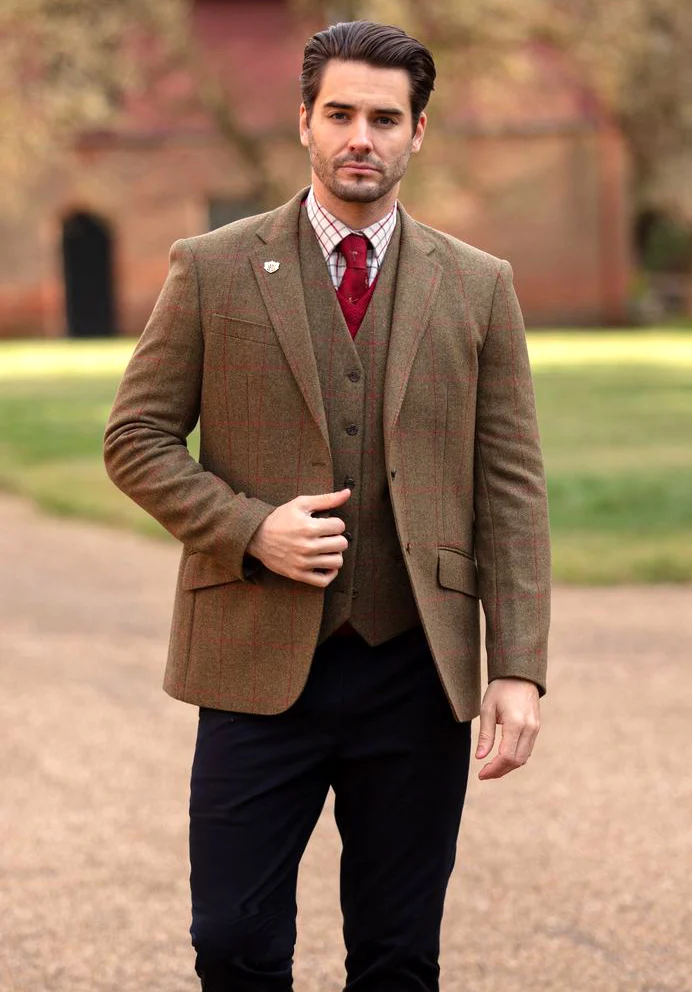
Red windowpane checks draw larger rectangles across the brown-olive jacket and waistcoat. A pale shirt with smaller checks and a red long tie accompany them. The dark trousers clearly separate from the upper brown areas. A small pale lapel detail appears higher on the left, with one hand near the front. No shoes are shown. This combines distinct upper and lower colour areas, rather than establishing an entirely matching three-piece surface. Related patterns cannot confirm that the actual pieces have identical fibres or were supplied as one set.
Use the reference when comparing several grid scales. Try a plain pale shirt under your actual checked jacket first. Replace it with the intended smaller shirt pattern while keeping everything else unchanged. You can see whether the added sequence of lines at the collar interests or distracts you. Assess the red tie as a connecting colour accent afterwards, rather than changing the shirt simultaneously. For trousers, deliberately choose between continuing the brown area and making a separate dark block. Both routes need a complete view of the real candidate including the shoes before the final decision.