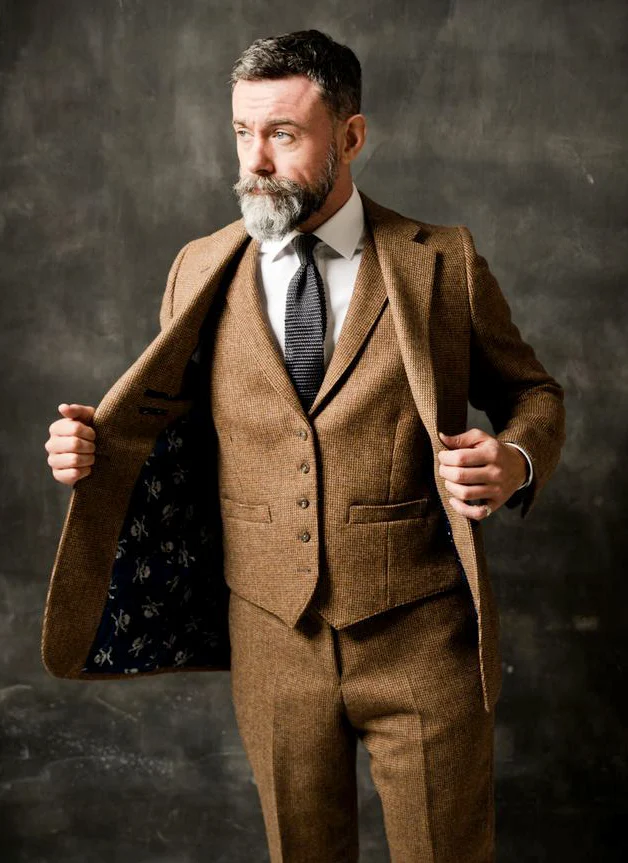
The brown textured surface continues across jacket, waistcoat and trousers, divided by a white shirt and dark small-patterned tie. Both hands hold the jacket sides apart. This reveals a dark patterned lining that would occupy a different area in a naturally closed position. The crop ends below the hips, leaving footwear and the complete trouser finish missing. The visible surface can be described as a fine-scale brown styling idea, but establishes neither fibre nor provenance nor a particular cloth name. The jacket’s natural drape needs a separate view with the hands relaxed.
Use this reference principally for the size of the continuous inner area. Put your real waistcoat under the intended jacket and compare a pale shirt with the planned dark tie. Let your hands hang for the decisive picture so you assess the normal fall. Check the real lining too if you plan to wear the jacket open or place it over a chair. Add a complete view with shoes; the upper crop cannot establish a suitable hem length. Cloth information remains a separate question about the actual product.