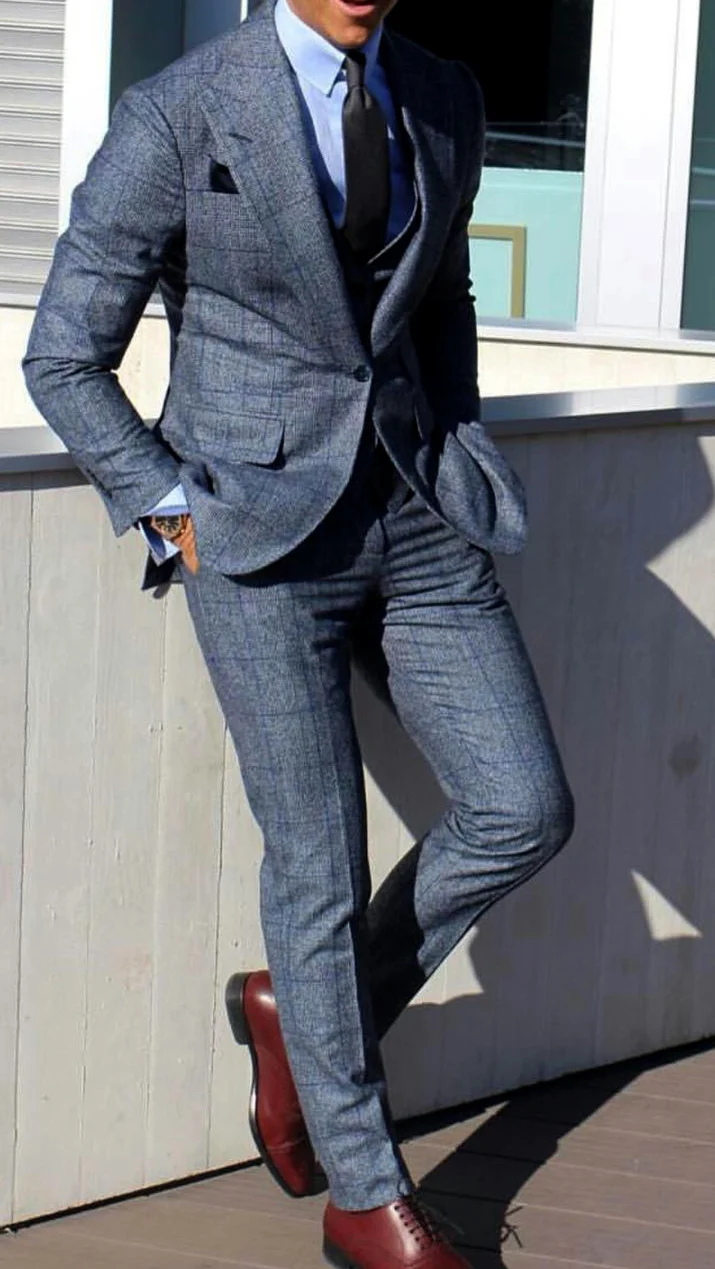
Blue-grey checks spread fine lines across the jacket and trousers in this head-cropped full-length photograph. A similar-looking waistcoat sits over the pale blue shirt, while a plain black long tie provides a quiet dark centre. A small dark square appears at the upper pocket. The legs cross below, and the lace-up shoes look reddish to burgundy. The picture therefore shows both a patterned upper area and a distinct footwear colour change, but does not offer a neutral stance with the feet placed side by side.
When considering this direction for your own celebration outfit, compare the tie first: a plain dark area allows the checks to remain uninterrupted. Decide separately whether you want the reddish shoe accent, changing only one of these points at a time. Stand with your feet together comfortably and let your hands hang to assess the hem and front without the pose. For a close colour relationship with another person’s outfit, real samples help more than the name blue-grey. Visible lines establish neither a particular fibre nor a specific cloth provenance.