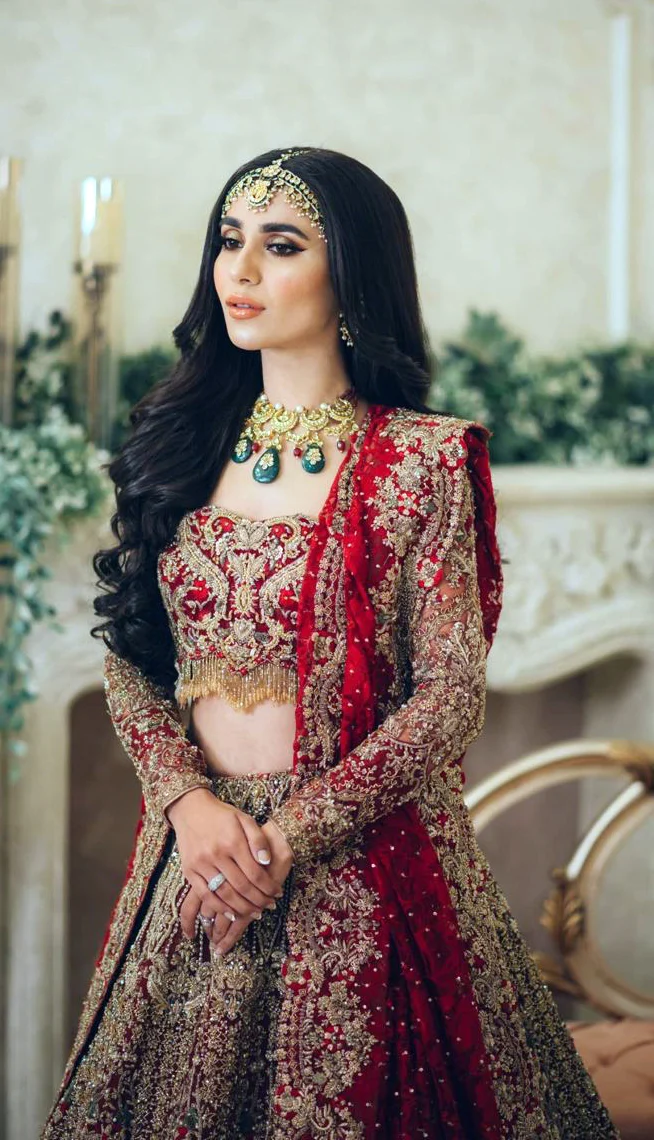
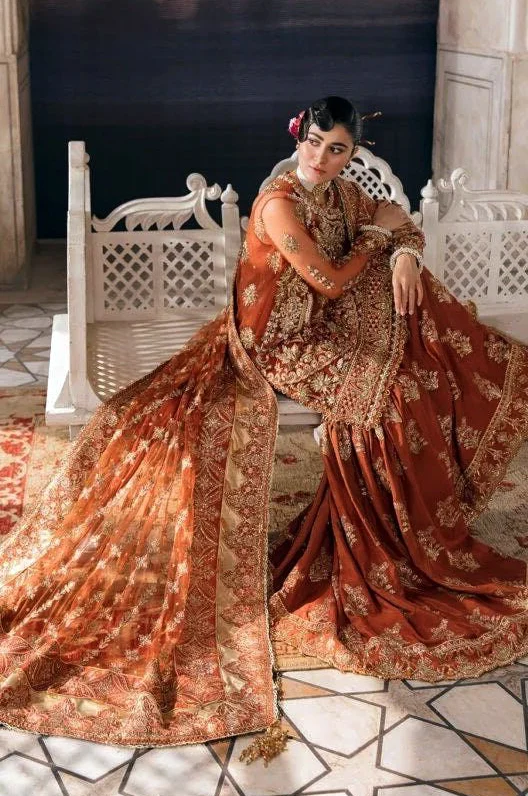
A two-piece bridal outfit lets top and skirt read as separate pieces, connecting them through a deliberately chosen middle. The red cropped top with its decorated lower edge shows a gap above the visible skirt waist. Other references obscure the transition through longer upper areas or additional fabric layers; the burgundy form supplies a continuous-looking middle as a comparison. Do not begin with a general amount of jewellery. Choose how top hem and waistband should look together first, adding the remaining fields afterwards.
Choose a two-piece bridal outfit through top hem and skirt waist
Inspect the red cropped top’s lower edge independently of neckline and sleeves. A decorated finish with small hanging elements sits above a separate decorated waist. An exposed field remains between them. Ask which boundary should lead: top hem, waistband or their shared frame. A quieter boundary is another possible answer. You need not adopt dense decoration to enjoy a cropped top over an independently visible skirt, and naming that preference helps seek the same proportion in another colour or pattern arrangement.
Try two real combinations with as similar a lower piece as possible. Change top length initially instead of switching colour, pattern and waistband together. You can then see which new boundary appeals more. Inspect front, side and back rather than only the upper close view. A two-piece bridal outfit is selected as a pair. Each piece being attractive alone does not explain where its edge sits beside the other or what area the two leave visible together during the actual wearing sequence.
Compare visible separation with overlap
A gap between the pieces is an option, not a requirement. Perhaps you want the middle open standing but less exposed in other positions; perhaps overlap appeals more from the start. Request actual candidates for both preferences. The seated rust-red reference does not reveal its precise connection completely and therefore cannot prove a particular waistband height. It reminds you that a seated view can supply its own information about the middle rather than merely repeating what appeared in a standing photograph.
Sit in the real top and skirt and stand afterwards. Raise your arms and bring them forwards too. Inspect the boundary before immediately rearranging it. Describe the preferred state with both pieces on your body if another height is wanted. Establish whether another pair or a specific adjustment suits better. A two-piece bridal outfit need not advertise itself through the largest possible gap; a deliberately overlapping middle can be exactly your choice, giving a readable relationship between edges without requiring the same exposed area as the reference.
Choose pattern transition and edge density at the middle
The red upper finish and skirt waist both carry many pale golden-looking details. A broad additional shoulder field repeats the colour and pattern family. Choose whether you want that dense frame or a quieter transition. Compare a decorated top hem with a simpler waistband and the reverse. Two meeting patterns can have different scales. Do not automatically seek an identical motif; look for the relationship you want in the complete combination, keeping the amount on each piece a separately selectable preference.
Inspect both pieces from conversational distance and then close to the mirror. Which boundary reads first? Do small details disappear in overlap or form the edge you specifically want? Record position rather than only total decoration. Have the result on the actual pattern explained before considering adjustment. The lower top finish supplies its own visible area, whose details can matter as much as the skirt’s larger pattern. A quieter alternative deserves the same attention, rather than being rejected simply because the photographed combination is elaborate.
Test both pieces with the actual planned inner layers
Visible separation establishes neither the top’s internal construction nor the waistband’s execution. Try your specific inner layers with the complete pair. Notice which edges remain visible standing, after sitting and with arms raised. Name your preferred state rather than expecting one general solution for every cropped top. You can retain the idea of separate pieces while choosing another top or waistband route if the actual combination does not match it. The photograph provides an idea, while your own trial supplies the missing information.
Compare the back of the same combination as well. An appealing front gap does not determine the rear boundary. Request the necessary angles of the real offer when choosing online; assess them directly during a fitting. Bring the other piece for a shared assessment if one needs changing. Selection concerns two adjacent visible edges rather than one isolated length. For a two-piece bridal outfit, the coordinated pair view therefore matters more than an independently flattering top photograph whose relationship with the skirt has never been shown.
Arrange an additional shoulder layer beside the division
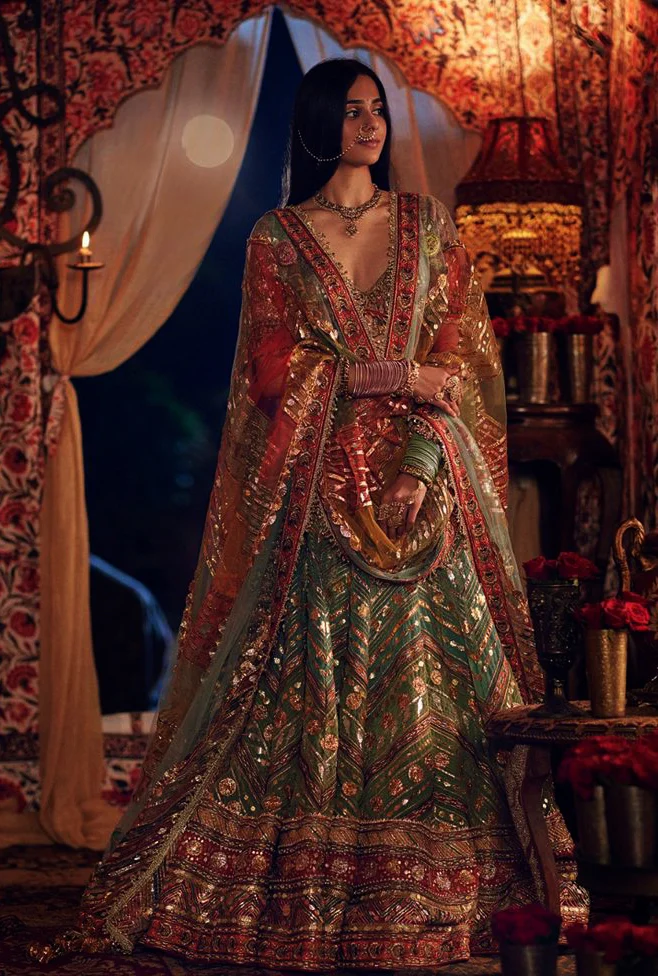
The green-red reference carries broader edges before the body and around the arms, making the connection underneath less definite. Use it to compare the position of another layer: should it reveal the top-skirt gap, partly frame it or cover it? Establish that on the actually worn pair. An overwrap can provide its own designed state rather than merely a colour-matched last accessory. Its front edge changes which clothing boundaries remain visible and can be tried in more than one arrangement before adding another piece.
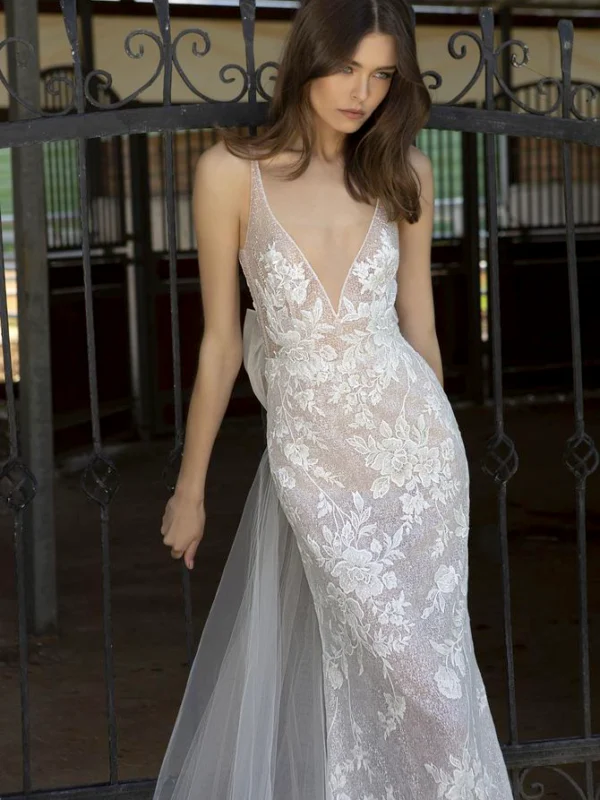
The continuous-looking burgundy form offers a different counterquestion. Vertical ornament continues across its waist while long cape-like side areas surround the middle. Perhaps that uninterrupted route appeals more than visible division. Choose without committing to the initial idea. If keeping separates, test the extra layer with bag and extended hand. Inspect the state without it afterwards. Both should independently match your preference if you genuinely intend to change between them during the day, rather than letting the covered state conceal an unresolved choice underneath.
Compare two complete pairs with the same accessories
Record two exact descriptions, such as a cropped decorated top above a visible waistband and a longer quieter top with an overlapping middle. Bridal accessories helps plan neck and ear accents beside the upper edge; our boho wedding dress guide adds personal pattern questions. Take the relevant question rather than mixing both looks with ever more detail. Keep shoes and bag unchanged during the first direct comparison so a different accessory does not obscure the effect of the top hem.
Check both actual pieces’ care information before treatment. The GINETEX guide explains symbol groups; shared colour does not determine a shared process. Record top length, waist height, preferred coverage and tested additional layer afterwards. Your two-piece bridal outfit is specifically chosen when both pieces work together in every genuinely planned state. Its division then serves your own design for the middle rather than being dictated solely by a particularly elaborate photograph, grounding the choice in the complete pair you have actually compared.
Choose top hem and skirt waist as a shared boundary. Try both actual pieces together before adding pattern, an outer layer and jewellery.
Frequently asked questions
Must skin show between top and skirt?
No. Compare a visible gap with an overlapping solution on the actual pieces. Choose the middle you want in different positions.
Do all four pictures establish a two-piece construction?
No. The red cropped top supplies the clear comparison idea; other layers and a continuous-looking dress ask different questions about the visible middle.
Should each piece only be tried separately?
Individual views can help, but choosing top hem and waistband requires both actual pieces worn together.
Do colours or patterns determine cultural provenance?
No. The images supply visible design features. Provenance, wearing context and precise construction must be established separately on the real offer.