Shoes with a suit change more than the colour point at the bottom. Their shape affects how the trouser hem sits and whether the combination feels connected from top to bottom. Four full views offer specific comparisons: a pale suit with white low lace-ups, blue with black lace-ups, a darker blue outfit with brown boots and another blue combination with black footwear. Begin with the suit you own or plan to wear and choose footwear as a visible part of that relationship. A photograph alone establishes no mandatory office standard.
1. Compare shoes with a suit through the complete leg line
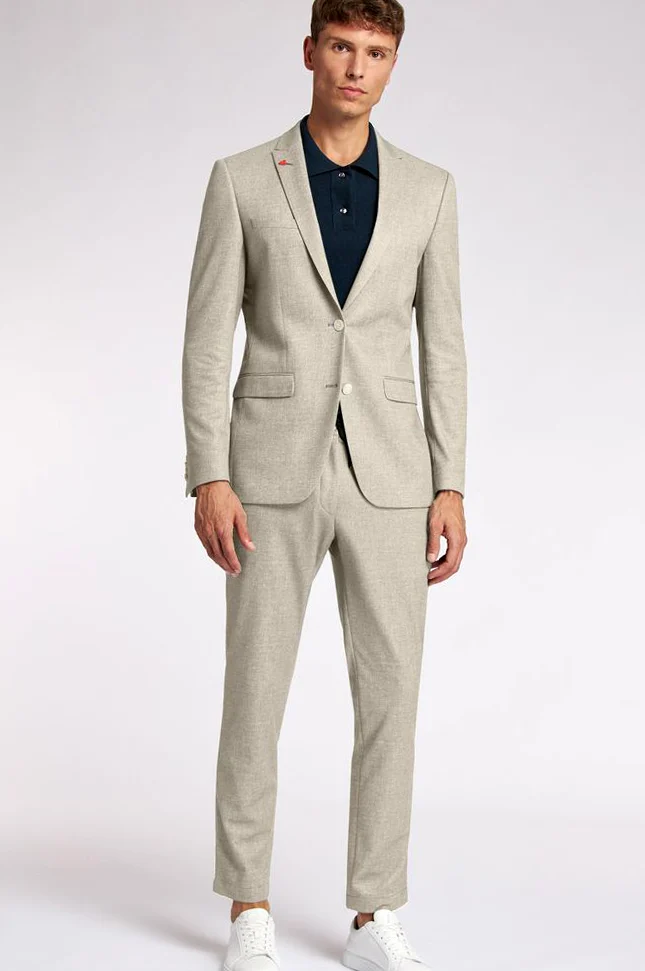
Stand before a full-length mirror with the actual trousers and two shoe options. Compare the entire line before inspecting individual seams or laces. In the pale example, narrower trousers finish above the white shoe, leaving a small interval visible. The light footwear therefore remains clearly separated. In the blue combination with black lace-ups, the trousers reach closer to the shoe. These are different finishes that cannot be explained through a colour list alone. Decide how much shoe and intervening space you actually want beneath your own trousers.
Keep jacket and upper garment unchanged during this first comparison. Changing the shirt and pulling the waistband to another height makes the shoe’s contribution harder to identify. Record whether you want clearly visible footwear, a quieter transition or a deliberately cropped finish. Request a fitting with the shoes you intend to wear when selecting new trousers. A length that looks appealing on a hanger has not yet answered the question about the worn transition. Keeping one change identifiable also makes a later hem discussion more precise.
2. Choose white footwear as a distinct finish to a pale outfit
The pale suit sits beside a dark polo and white low lace-up shoes. A dark middle appears above, with a light area below. Footwear need not share the trousers’ exact colour to create an understandable connection. Compare this arrangement with a darker pair on the same trousers. Decide whether you enjoy the clearly visible pale finish or want the lower area to recede. These are initially choices about your own intended appearance rather than universal instructions attached to a particular suit colour.
Inspect the white shoes from the side too. Their visible volume, sole and toe shape may sit differently beside the trousers than in a front photograph. Walk several steps and inspect the hem again in an ordinary stance. Do not automatically shorten trousers merely to reveal more shoe. Another footwear shape might supply the accent you want. Establish your workplace’s actual clothing expectations before planning this combination for a particular office day. The photograph supplies a visual idea without explaining what a specific organisation expects you to wear.
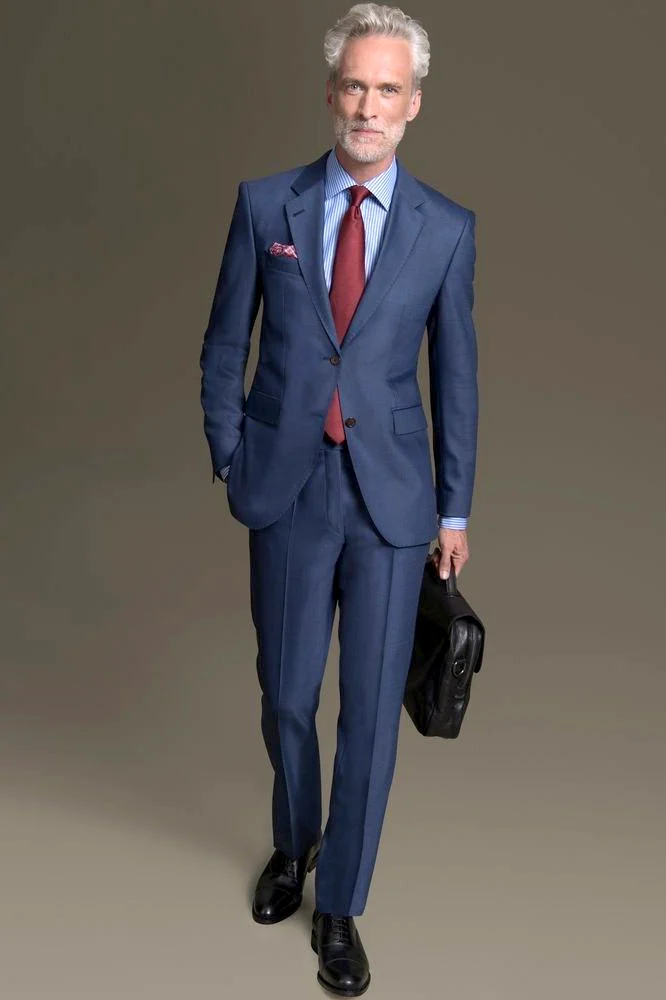
3. Compare black lace-ups beside different upper areas
Two blue references have black lace-up shoes, but their upper combinations differ. A pale striped shirt and red tie meet a dark bag in one image. A white shirt, striped tie and small pale pocket accent sit beside blue in the other. Footwear can supply the dark lower finish in both. Assess its relationship to trousers and bag before deriving a shoe rule from one tie colour. The same lower colour can belong to more than one upper arrangement without requiring every component to be copied together.
If choosing between two black pairs, keep colour consistent and inspect shape and apparent size. A rounder or longer toe can create another transition beside the same trouser width. View both from the same distance and add a side view. Our modern men’s suit guide helps include the complete front in the comparison. Use it to think about visible areas while selecting the specific shoe shape on your actual trousers. That wider question supports the fitting rather than replacing a real comparison of the pairs you are considering.
4. Assess brown boots at the trouser leg as well as the top
The darker blue reference combines a black shirt and dark tie with brown ankle-height boots. The warm lower colour differs from the black lace-ups elsewhere. In a similar outfit, inspect the meeting point between trouser leg and higher footwear especially closely. Do you want a small visible interval or trousers falling nearer the shaft? Keep the waistband in its ordinary position while deciding. Pulling it upwards afterwards changes the entire leg length as well, so establish the real wearing position before identifying a possible adjustment.
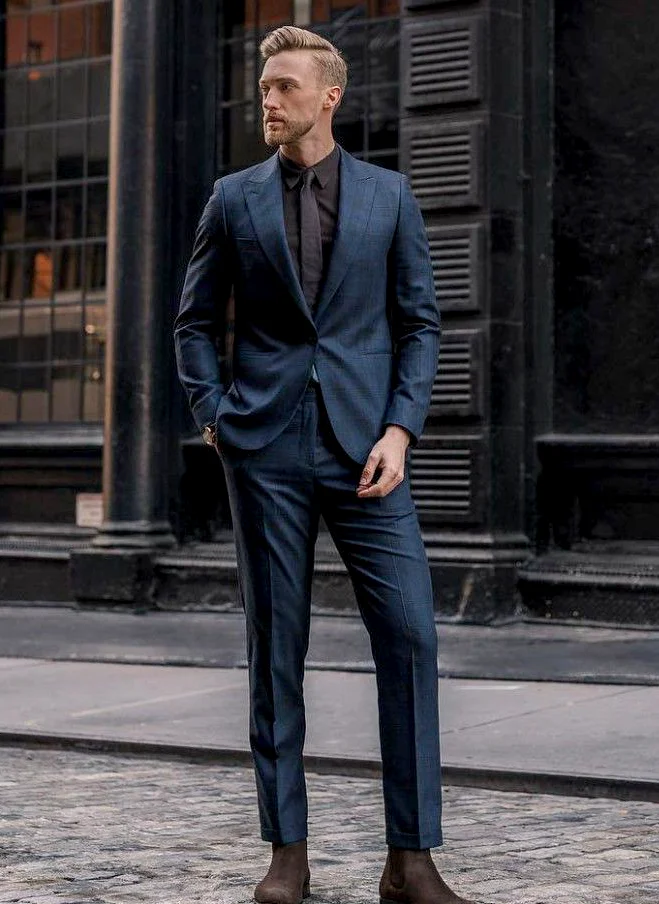
Sit, stand and walk in the boots. Inspect the hem afterwards before rearranging it. Decide whether the line still supplies your intended appearance after those movements. If the same trousers will accompany lower shoes too, try both pairs during the length discussion. One front picture cannot answer that switching task. Our two-piece suit guide adds questions about jacket and trousers as a shared foundation; the footwear fitting makes its lower finish concrete. Compare the actual alternatives rather than assuming one satisfactory shoe pairing settles every later version.
5. Test footwear through your own daily movements
Shoes with a suit deserve a full-outfit trial when you move between workplace, journey and different rooms. Describe the actual sequence: a short route, longer walking, stairs, seated desk work or a meeting involving substantial standing. Try those actions in the intended pair instead of holding only a fixed pose. The photographs supply a visible shape idea; whether a real pair fits and feels suitable for your route is established on your own feet. Another person’s photographed stance cannot settle that practical choice for you.
Bring the intended socks to the fitting and try both shoes. If another pair is used for the journey, record that change as part of the arrangement too. Consider where removed footwear and any different bag will remain. You need not add further accessories to make the combination feel complete. Often the useful task is connecting the chosen pair clearly to trouser length and intended use. Assess your own movements and requirements rather than assigning general comfort to a pose, keeping appearance preference and actual wearing experience connected but distinguishable.
6. Record the final shoe and trouser relationship
Compare two candidates with the same trousers, jacket and bag finally. Photograph front and side after brief walking and sitting. Shoes with a suit are deliberately selected when you can describe the colour point and hem finish you want. Record any required change on the real garment and ask about scope and another fitting. A different pair may suggest a different length; alter trousers only after comparing the planned alternatives together. This keeps a small unresolved transition from triggering unnecessary changes to an otherwise suitable outfit.
Keep care information separate. The GINETEX care-symbol explanation supports reading labels on the garments. For footwear, follow information for the actual pair; white, black or brown appearance establishes no shared cleaning method. Save a complete photograph of the confirmed combination. Later you can replace a shoe or upper piece deliberately and check whether the relationship between leg width, length and lower colour point remains suitable. A new idea need not erase an earlier good choice when the record explains which feature should stay.
Compare shoes with a suit on the actual trousers: inspect colour, shape and the hem junction standing, walking and seated.
Frequently asked questions
Must shoes share the trousers’ colour?
No. Compare the visible transition on the worn outfit and decide whether you want a distinct colour point or a quieter finish.
Can the same trousers accompany boots and low shoes?
Try both actual pairs during the length discussion. The higher shaft and different shoe shape can change the visible finish.
Are photographed white shoes automatically suitable for an office?
No. The image supplies an outfit idea. Establish your workplace’s actual clothing expectations and try the pair through your intended sequence.
Does garment care also apply to footwear?
No. Read clothing labels and instructions for the actual shoes separately; colour alone establishes no shared treatment.