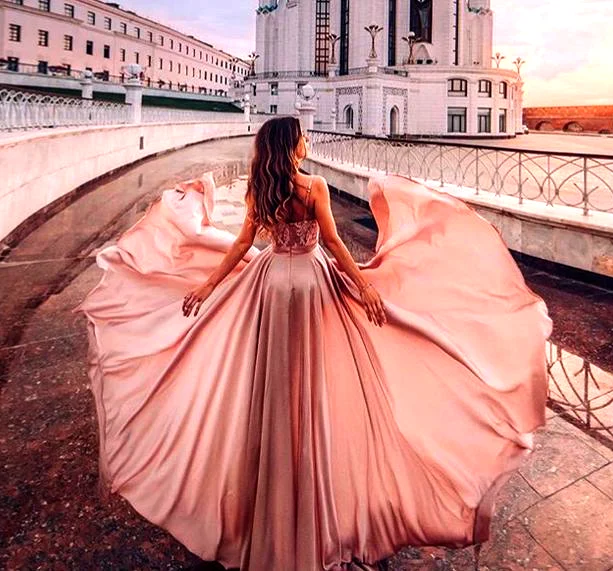
The pink skirt area is the main subject here. Both sides are held up to form an almost circular expanse. Long folds travel down from the waist, while the decorated upper back occupies a much smaller area. Warm light falls across the dress and surroundings. Use this reference to consider the amount of visible colour rather than to specify an exact pink shade.
If you like this effect, compare a similarly wide candidate without a veil first. Let the skirt fall normally and look at the rear from several steps away. Then briefly lift one side. This separates your preference for the colour from your response to the especially expansive photographic pose. A narrower pink alternative can create a different impression even when its shade belongs to a similar family.
Add a veil or back detail individually later. Keep the large coloured area visible if that is the feature you want to lead. Request an ordinary front view of the actual candidate as well. This rear image cannot answer every question about its neckline or the distribution of decoration across the front.