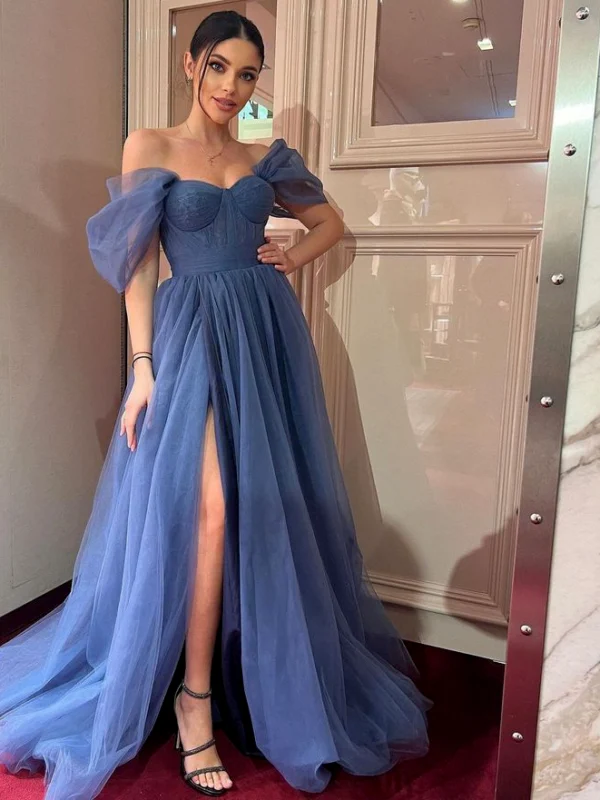
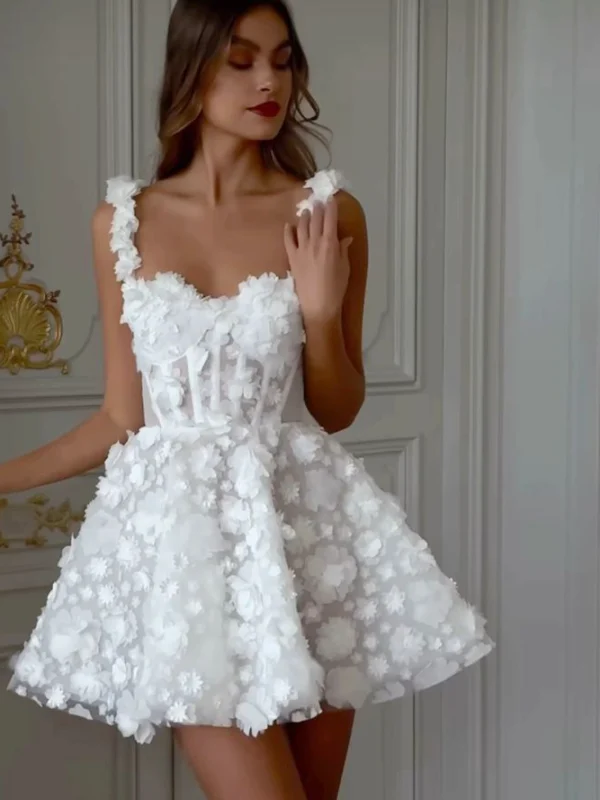
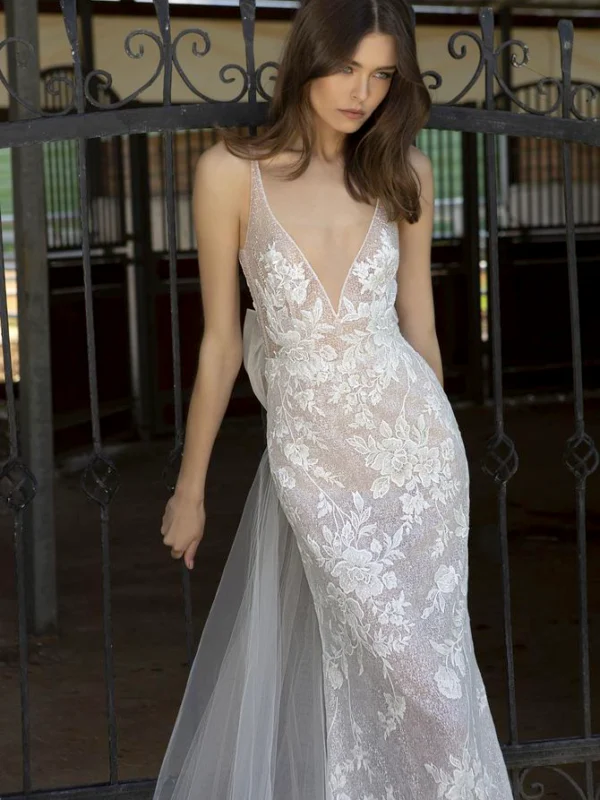
A long-sleeve wedding dress depends on the relationship between your arms, shoulders and bodice. The five references show very different versions: closer patterned sleeves, gathered fullness, layered wrist frills and a smooth long line beside an open back. Choose more than a sleeve length. Consider which areas you want visible, how much volume you like around your arms and which movements the wedding will involve. An appealing silhouette while standing is a useful starting point. The next step is finding out how those parts behave together during an ordinary, active day.
Long-sleeve wedding dress: choose coverage before volume
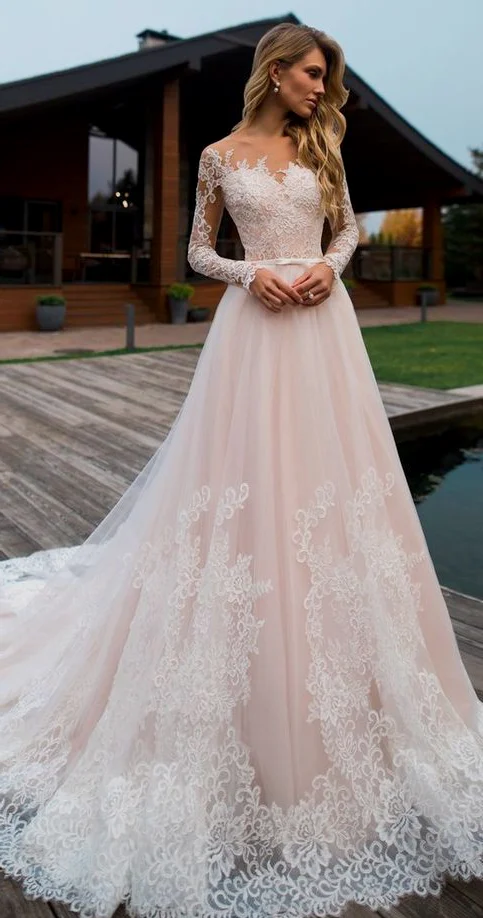
Separate length from transparency. The pale front view has light motifs with skin visible between them, while the smooth back view presents a more continuous-looking sleeve surface. Both extend down the arm but create different coverage. At a fitting, hold your forearm against light and darker backgrounds. Look from normal conversation distance as well as close to the mirror. Decide whether you prefer a pattern visible over skin, a quieter uninterrupted area or a fuller shape around the arm. These are distinct choices even when every option is described as long sleeved.
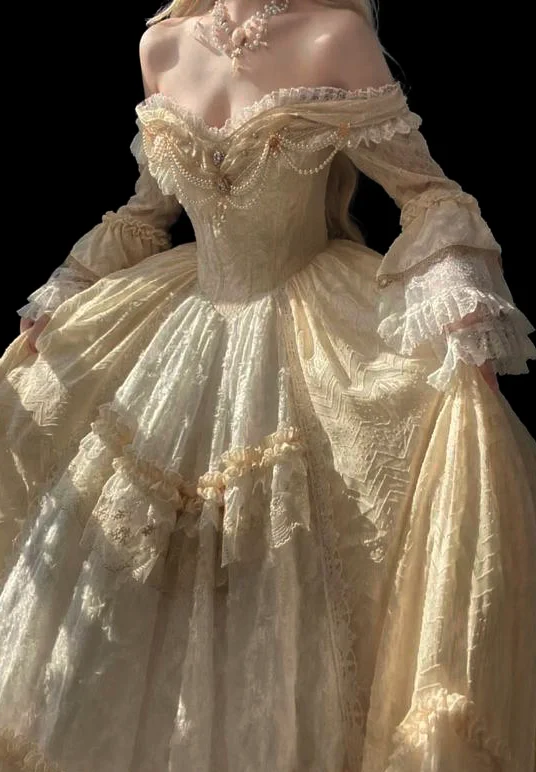
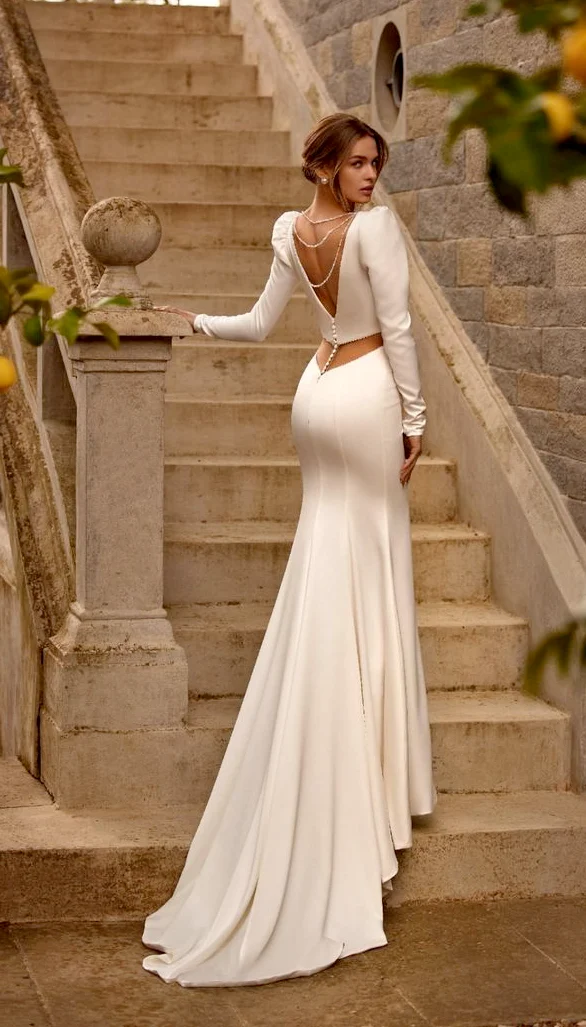
Next consider shoulders, neckline and back. The cream-coloured reference leaves the shoulders exposed despite its long sleeves. The smooth dress has a deep back opening and a narrow exposed area around the waist. If you want particular areas covered, the whole arrangement needs to support that preference. Be precise: covered shoulders with transparent sleeves, quiet sleeves with an open back, or more continuous coverage all around. This turns a broad wish for long sleeves into a clear brief you can use when comparing actual dresses.
Test close and full sleeves differently
A closer sleeve follows the arm more visibly. Test it with a bent elbow, while reaching for a glass and while hugging someone. Watch whether the neckline remains where you want it. Check for twisting and for fabric collecting around the wrist. Avoid pulling the sleeve end to force room that is not there. Ask about possible adjustments on that particular dress and which neighbouring areas they would affect. A photograph cannot tell you whether a sleeve will allow your own comfortable range of movement.
A fuller shape needs a different assessment. In the white square-neck reference, the sleeves narrow again around the wrists. Try the available volume with your arms at your sides, at a table and underneath an outer layer. Raise your hands, lower them and check whether the folds return to a comfortable position without constant rearranging. More visible fullness does not automatically establish greater mobility or a particular level of warmth. Let the actual wearing experience and your preferred outline determine whether this arrangement works for you.
Treat the cuff, jewellery and hands as one decision
The cream-coloured dress places several layers of frills around the wrist. This creates its own focal point and deserves a different approach from a narrow plain cuff. Hold a bouquet, small bag and glass during the fitting. You can see how far the edge falls over your hand and whether you keep wanting to push it back. Decide whether you want a ring or bracelet clearly visible. A shorter finish or less wrist jewellery might answer that wish without requiring you to abandon the sleeve idea altogether.
Add jewellery one piece at a time. A quiet earring may be enough beside a detailed sleeve, while a plainer surface gives you the option of emphasising another feature. There is no obligation to decorate neck, ears and wrists simultaneously. Test edges and clasps against the actual dress before deciding. The boho wedding dress guide offers further comparisons between decoration and a more relaxed overall appearance. Use relevant styling questions without assigning the photographed dress a particular history, origin or manufacturing method.
Include the back, skirt and outer layer
The garden back view combines patterned sleeves with a wide skirt and a substantial spread of fabric behind. The smooth back reference stays closer above before opening out towards the floor. Compare where you want volume overall: around the arms, in the skirt or in both areas. Stand with relaxed hands while making that decision. A lifted skirt or carefully arranged train changes the outline in a photograph. Look at the actual dress without a pose and from behind before deciding that the proportions are right.
Try any jacket or cape with your chosen sleeves before the wedding day. Compare the arrangement while covered and after removing that layer. Full arms and raised surfaces can be uncomfortable beneath a close outer garment, so evaluate the actual combination. The bridalwear collection of guides complements neckline and skirt comparisons. Bring shoes, underwear and jewellery to the final fitting. Note concrete unresolved details, such as elbow pressure or an overlong cuff, so that any alteration discussion has a clear purpose and addresses your own experience.
Rehearse dressing and small hand movements
A close cuff can frame the hand attractively while requiring a particular dressing sequence. Ask to see how the actual sleeve fastens and whether you will need help. Try the steps with clean hands and the planned jewellery. Consider not just whether the fastening works, but whether you expect to open it again during the day. A later bracelet change, for example, makes that small action relevant to your choice.
Compare two favourites through a short scene rather than mirror views alone. Sit at a table, take a pen and sign a sheet of paper. Then hold the bouquet at a comfortable height. Notice whether a full finish gets in the way or a closer sleeve shifts the upper edge. Record a specific observation, such as elbow room or cuff length. If an alteration is proposed, repeat the same action afterwards and check that you still enjoy the changed outline. Removing discomfort and preserving the shape you like are both part of the decision.
Confirm the final choice on the real dress
Compare favourites in the same order: preferred coverage, relaxed overall view, arm movement and handling small objects. With permission, take matching views so you are comparing like with like. Ask for composition and construction information about the product itself; visible motifs cannot establish a fibre. GINETEX explains care symbols; follow the actual garment label when choosing treatment. The useful result is a sleeve you enjoy looking at and whose interaction with the bodice you have tested yourself.
Sleeve length is only one choice. Compare width, transparency and cuffs together with the neckline and back, then test the complete dress in motion.
Frequently asked questions
Do long sleeves always make a wedding dress warm?
No. Check transparency, the actual layers and any outer garment; sleeve length alone does not establish warmth.
How do I test a fitted bridal sleeve?
Bend your elbow, reach forwards and hug someone. Check whether the neckline is pulled out of position or pressure develops around the wrist.
Can I wear a bracelet with full sleeves?
Try it with the real cuff. The bracelet should neither compress the sleeve nor catch on its decoration as you move.
How should I assess long sleeves with an open back?
Choose front and back coverage separately and test the whole bodice in motion. Covered arms do not provide coverage over an open back.