A shimmering party dress need not reflect equally strongly from neckline to hem. You can distribute fine bright points across the whole garment, concentrate stronger decoration on the bodice or choose a quieter dress with reflective accessories. These five long dresses make those differences visible. Decide on the distribution first, then compare neckline, sleeves and skirt opening. That creates a personal selection without requiring a seasonal ranking or a particular year. A surface you enjoy need not come with every other detail in the photograph.
Shimmering party dress: locate the reflective area
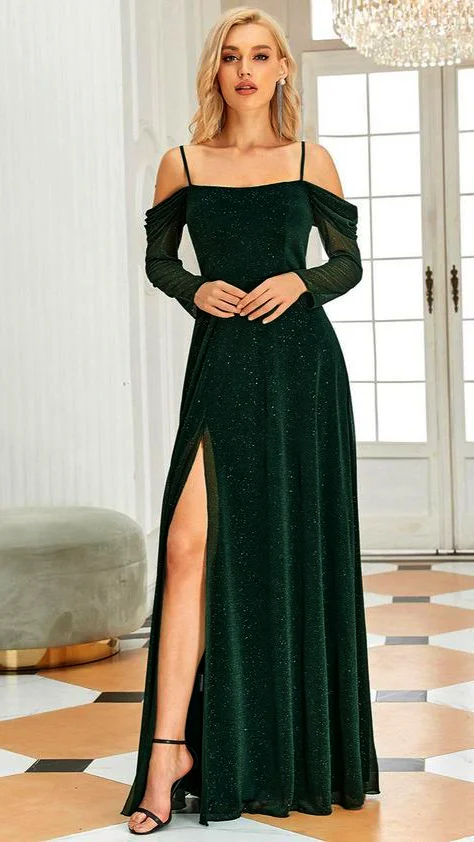
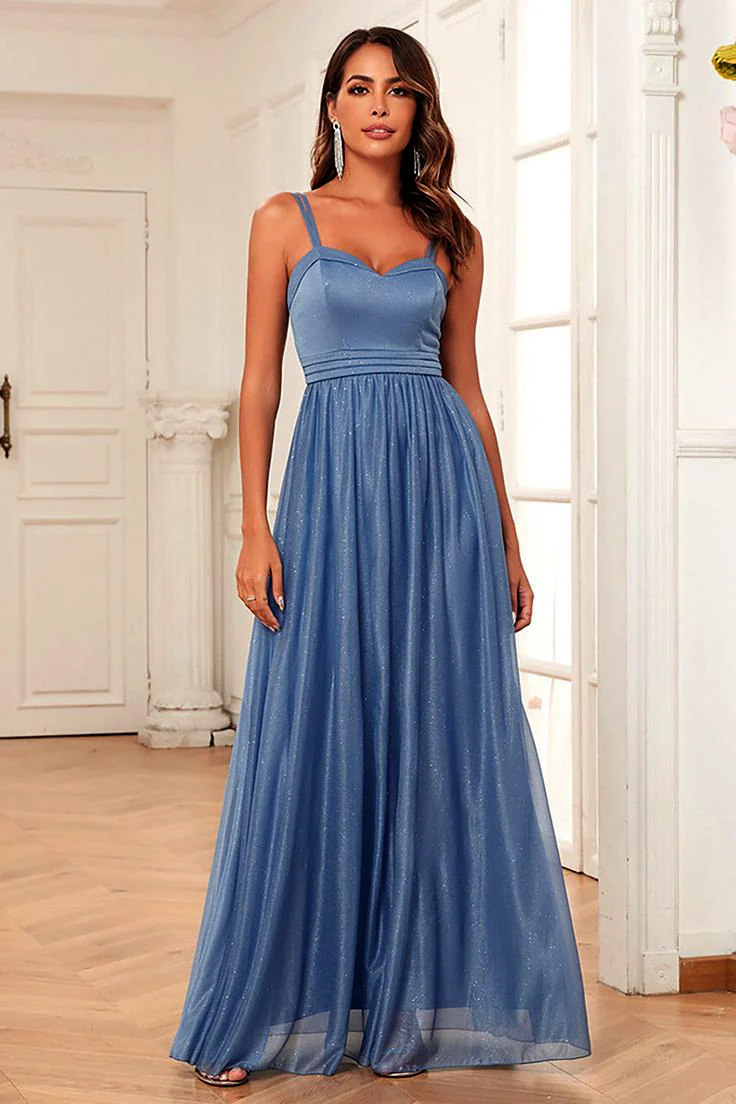
In the dark green dress, small bright reflections spread across bodice, sleeves and long skirt. The blue strapped dress also has finely distributed shine, but without long sleeves and with a wider lower area. The dark blue version puts much denser reflections on its bodice above a quieter-looking skirt. Compare these three arrangements separately from their colour. Ask first whether you want reflections across the whole dress or a more concentrated upper accent before choosing additional pieces.
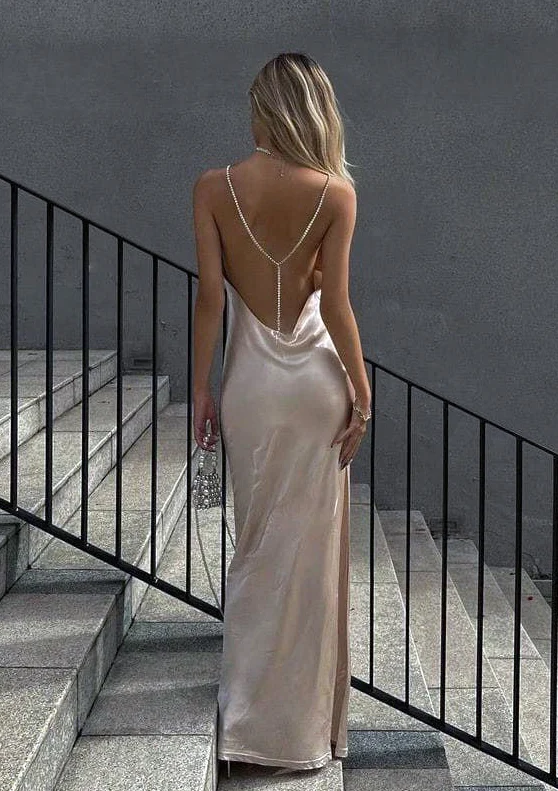
The black asymmetric dress and the pale draped version provide quieter counterpoints. Perhaps you enjoy the outline of a shiny example but want a less reflective surface. Or you might prefer one accent supplied by earrings and a bag. Compare real candidates under the same lighting. Bright photographic illumination and a darker party setting do not necessarily show the same effect. Assess the offered garment under the conditions you can actually check rather than treating one screen image as every possible setting.
Compare fine reflections across the full length
The green dress combines thin straps with lower-set long sleeve sections. A high side slit opens the skirt. In the lighter blue version, the arms stay bare; fine double-looking straps lead to a shaped upper edge. Several horizontal lines mark the waist, with a wide skirt beneath. Although both surfaces show small reflections, the distribution of exposed areas and the width of the lower garment differ clearly. Those distinctions remain useful even if your preferred real candidates have other colours.
Do not choose through shine alone. If the evenly reflective surface appeals most, try different shoulder arrangements alongside it. Start with similar shoes and leave other large reflective surfaces aside. Look at the arms moving and the skirt while walking. Ask whether you prefer a narrower long outline or more width at the sides. Shine can appear within either idea without requiring the same straps or slit. Select those shape decisions deliberately rather than inheriting them from the surface reference.
Concentrate decoration on the bodice
The dark blue dress has a densely reflective bodice with a sweetheart-looking front edge. Narrow straps and short lower shoulder bands frame the open neck area. The long skirt carries less clearly visible reflection and several vertical folds. A clear middle separates upper decoration from lower fall. Compare it with the blue dress that shines finely along the length: the colour direction is similar, but the location of the focal area differs. You can keep a colour preference while changing the distribution.
Try an upper accent like this with a quiet bag initially. Add earrings individually rather than immediately introducing more dense decoration at the neck. If you want a necklace, assess its distance from the bodice edge. Decide whether both lines should remain visible together or whether the existing decoration is enough for you. Our party outfit guides add ideas for arranging the pieces. Choose additions that support your preferred distribution rather than changing every area at the same time.
Give a quieter surface equal attention
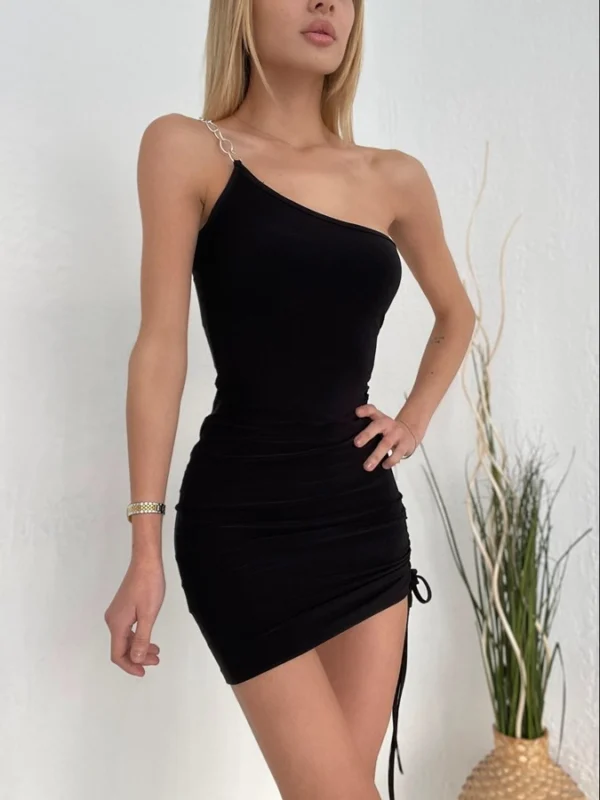
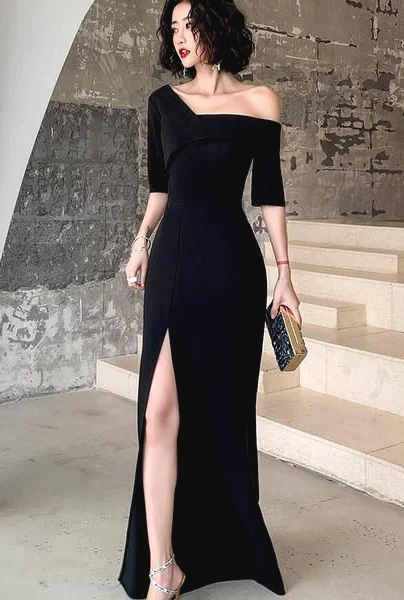
The black dress has an asymmetric upper line, sleeves around elbow length and a long narrower skirt with a slit. This view does not show comparable dense shine decoration across the garment. Bag and shoes provide smaller light accents instead. Compare this approach if you prefer to emphasise the neckline or cut. A quieter dress is a complete party option: it allows you to place the focal point elsewhere. Decide which part you want noticed first rather than assuming every surface needs reflection.
The pale beige-gold-looking version directs folds towards the waist and has a loosely falling fabric edge at the front skirt. Thin straps sit beside lower shoulder bands. The photographed stance opens the lower area and reveals the shoes. Compare this drawing made by folds with the drawing made by reflections in the green and blue examples. Draping may be the feature you are seeking. The photographed colour effect alone establishes neither a particular fibre nor a special product category.
Choose skirt opening and occasion separately from shine
A high side slit, a narrower front slit and a widely falling skirt raise different movement questions. The green and black dresses show clearer leg openings, while the pale draped example has a differently falling front edge. Decide where you want an open line and test the actual version walking and seated. Do not automatically adopt the same slit because you enjoy the reflective surface above it. The location and form of the opening remain their own decisions within the outfit.
Clarify the actual information for the celebration too. A long dress can be appropriate where invitation and your own plan support it; the photographs do not determine the dress code. Bring your proposed shoes to the fitting and check the hem when changing direction. For a deliberately different length idea, the high-low party dress guide adds front and rear finish questions. That comparison does not assign uneven hems to these long models. It lets you assess another option consciously.
Decide through two complete outfits
Finally, build one outfit with stronger and one with quieter reflection distribution. Keep hairstyle, shoes and viewing distance reasonably consistent. Record which surface is noticed first and which you want to emphasise yourself. When changing a bag, inspect the complete outfit again instead of judging only the new object in your hand. You can then see whether the addition creates a desired new accent or alters the distribution you had already chosen. Similar comparison conditions make that difference easier to assess.
Read the care label of the actual dress and ask about the affected area if alterations are proposed. The GINETEX care-symbol explanation helps interpret markings; visible shine does not determine treatment. Record the final decision as a short design preference: fine shine along the length, a denser upper accent or a quiet dress with selected reflections in accessories. That concrete preference makes later suggestions easier to compare while leaving neckline and skirt decisions available for separate consideration.
Choose whether you want shine across the dress, concentrated on the bodice or supplied by accessories. Assess neckline and skirt opening separately afterwards.
Frequently asked questions
Do these photographs show short party dresses?
No. The five selected views show long dresses. A slit or visible shoe area does not turn the skirt into a mini dress.
Must the entire dress shine?
No. The dark blue example concentrates stronger reflections on its bodice, while the black and pale draped dresses provide quieter surface comparisons.
Does a shiny photograph establish a particular fabric?
No. It shows reflections under particular lighting conditions. Establish composition and treatment through the actual garment’s information and label.