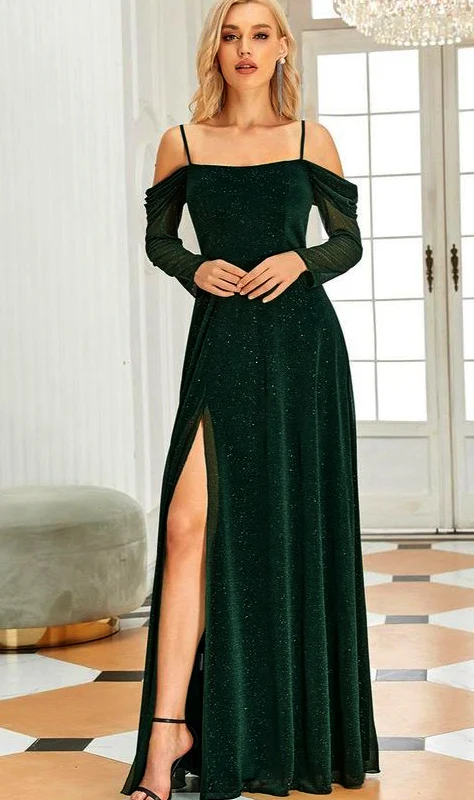
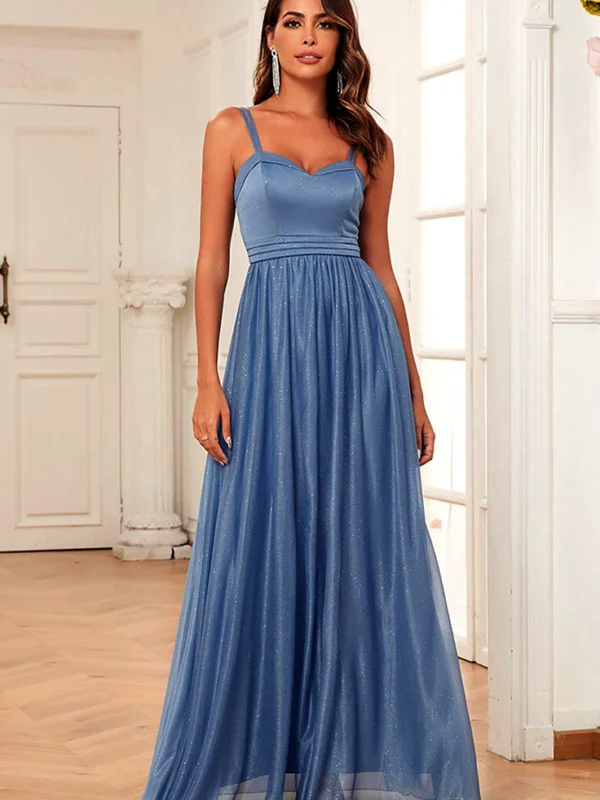
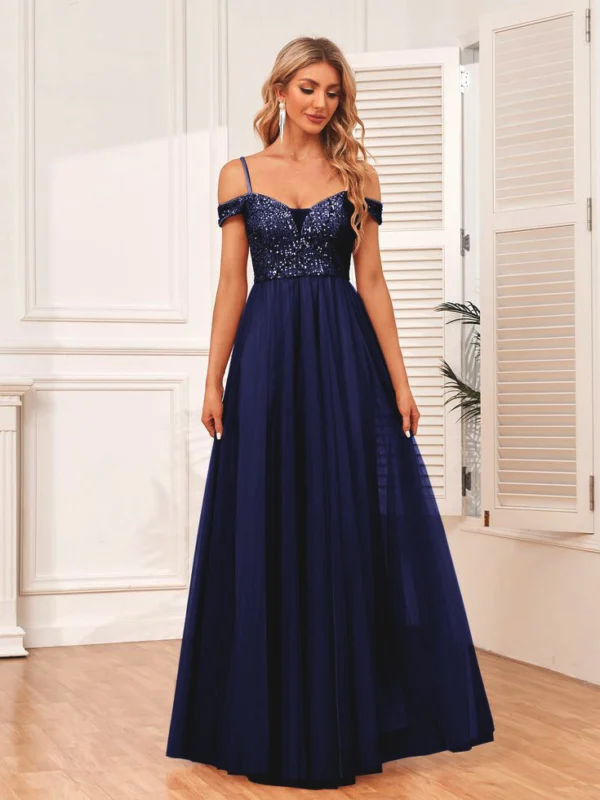
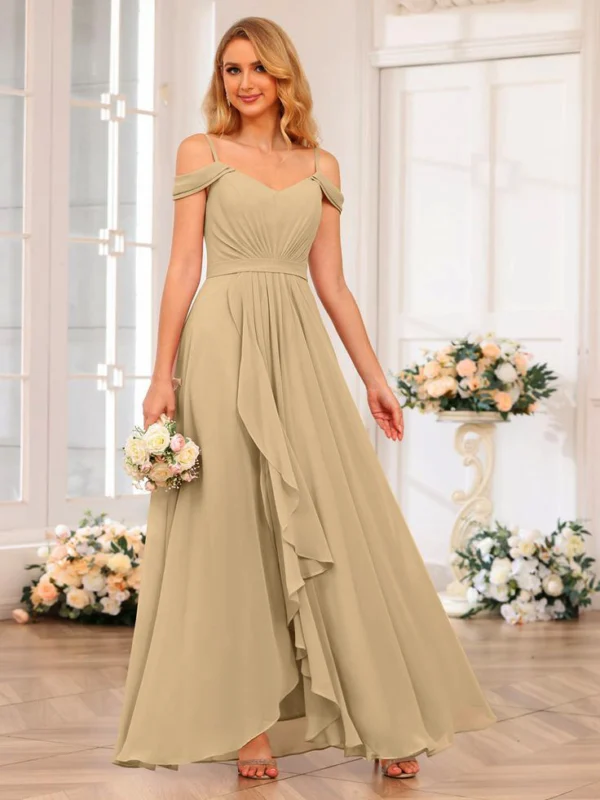
Shine placement on long dresses provides the common comparison point across these five views. The dark green version carries small reflections over bodice, long sleeves and skirt. They are also finely distributed on the lighter blue dress, but the arms stay bare and the skirt falls wider. The dark blue example gathers its stronger reflective impression on the bodice above a quieter long skirt.
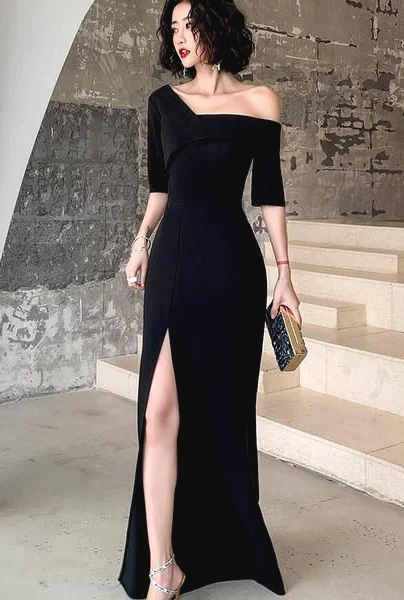
The black version provides an asymmetric upper line and a narrower long shape. The pale beige-gold-looking dress draws its middle through folds and a loose front edge. Both help you compare whether you want reflections on the garment or another visible focus. None needs to be called a seasonal favourite or ranked to serve that purpose.
Choose the distribution first and a shoulder and skirt arrangement afterwards. The green dress’s high slit is a different decision from its shine. The blue example’s fine straps need not accompany every reflective surface either. Compare your preferred idea on a real dress with initially similar additions, so the difference created by the surface stays visible.