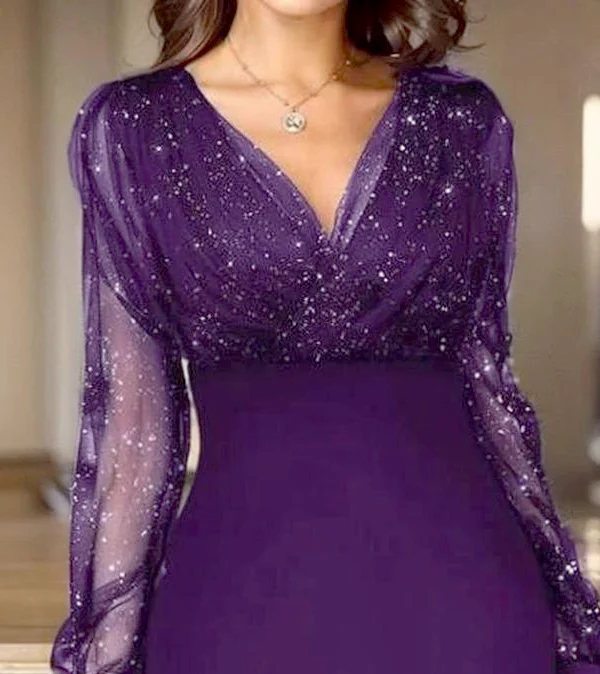
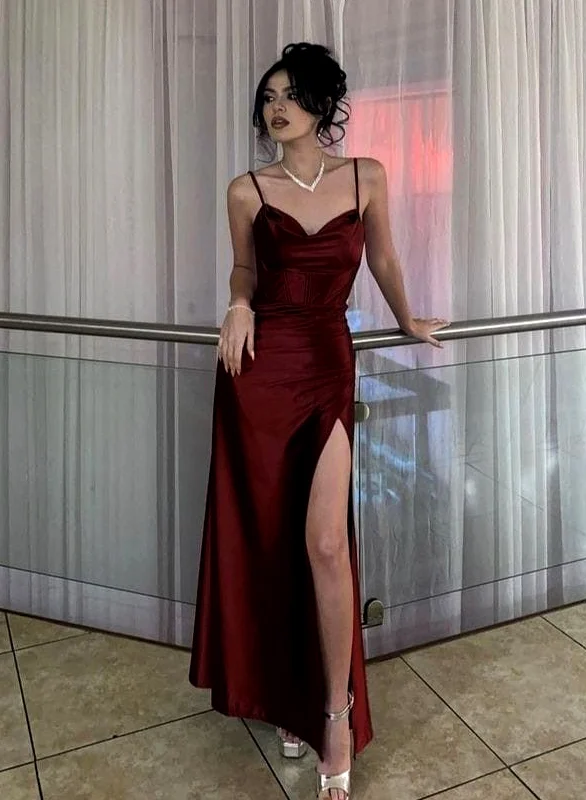
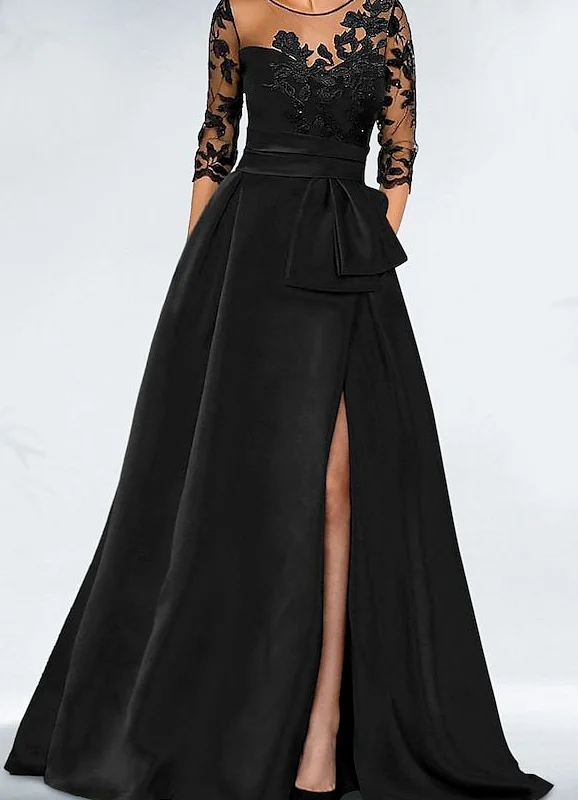
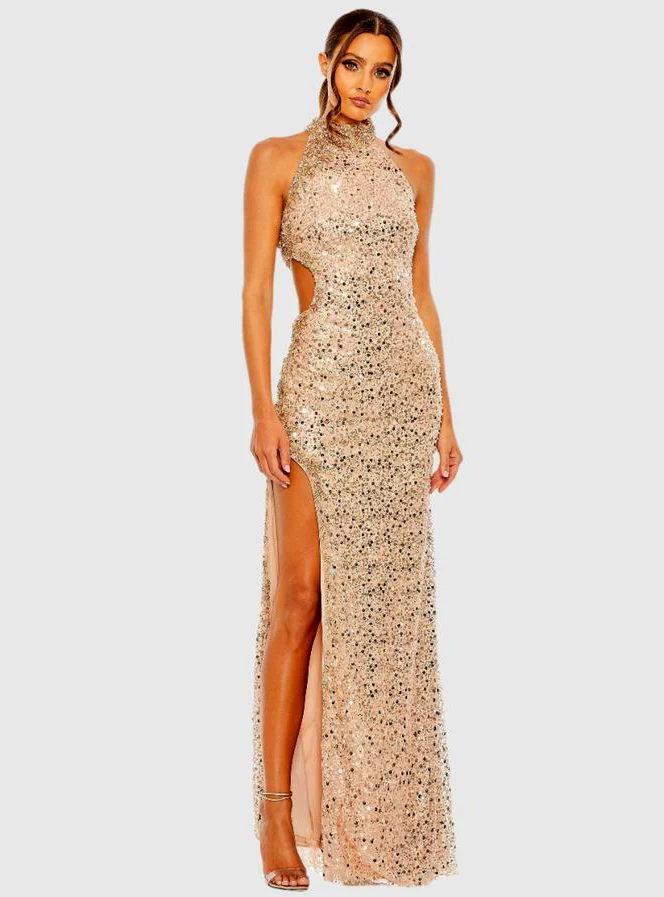
A cut-out evening dress directs attention towards a deliberately exposed part of the upper body. Selection therefore starts with the opening you actually want and how it relates to the other garment lines. The first reference shows a side-waist opening beside a high neckline and skirt slit. The remaining pictures provide other solutions: an asymmetric shoulder line, voluminous side sleeves and a V-neck above a slit blue skirt. Compare them as different placements of open space. This lets you seek one particular opening without treating every exposed detail as the same cut.
1. Name the opening on a cut-out evening dress precisely
Look at the side middle of the first dress. An open area remains at the waist between upper and lower sections, while the front fabric line continues. The high neck finish and long slit skirt are additional, separate features. Describe your preferred opening precisely: at the side waist, smaller or larger, and beside which surrounding fabric area. A shop can then show appropriate real candidates rather than offering another deeply cut neckline as though it necessarily answered the same request. The location matters as much as the amount of exposed space.
Compare the opening from ordinary distance before moving closer. Decide whether it should appear as a small interruption within the full outfit or a clear feature of the middle. Inspect the entire front and request a rear view too. One partly side-facing photograph does not explain how the form continues behind. Record these as separate questions. You can enjoy the size of an opening while preferring a different back arrangement; the first appealing reference need not settle every later decision about the whole garment at the same time.
2. Consider the relationship between high neck and open waist
The first dress leaves shoulders and arms bare while bringing fabric high around the neck. Its side-waist opening places exposed space elsewhere. If that distribution appeals, try the high neckline without another necklace first. Examine the relationship between face, covered front and open waist afterwards. You might want to compare the same opening with a lower neckline. Use similar colours or surfaces where possible so that a new shade does not obscure the decision about actual lines. Changing one quality at a time makes the preferred upper arrangement easier to identify.
Try a cut-out evening dress with the inner pieces you actually intend to wear. Ask which layers belong to the offered version before fitting. Examine the side area with relaxed arms and again while reaching. Decide whether you enjoy the visible relationship and whether adjoining edges feel comfortable. The decorative surface establishes neither internal support nor a particular fibre. Those questions need an explanation on the real model rather than only a magnified photograph of reflective outer details. Keep appearance preference and construction information distinct while bringing both into the final choice.
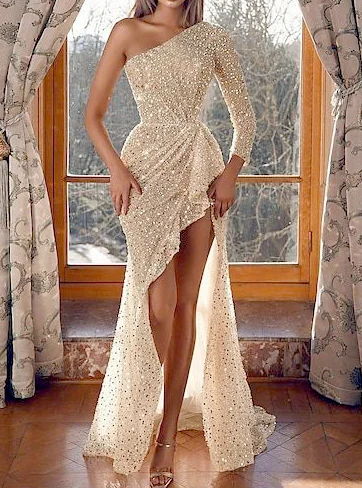
3. Compare an asymmetric neckline instead of a side opening
The second picture has one bare shoulder and a long sleeve on the other side. Side folds travel across the waist towards a diagonally open skirt area. A bounded waist opening like the first reference is not its visible emphasis. Use this version for another question: do you want exposed space mainly at shoulder and neck, or at the side middle? Both may appeal but answer different design preferences. Try corresponding actual candidates in the same stance with the same shoes, keeping the upper-line comparison clear before changing colour or accessories as well.
4. Choose shoulder space and sleeve volume as another alternative
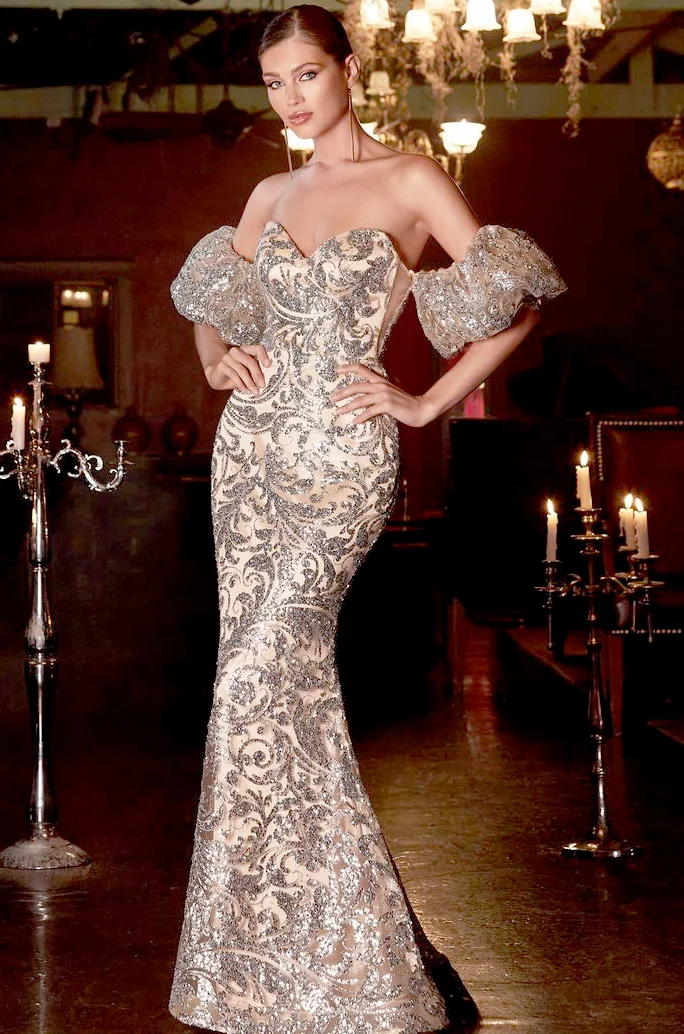
The third reference has a shaped upper edge and larger side sleeve areas. Dense pale-and-dark pattern draws a continuous torso. Here, open neck and shoulder space beside voluminous sleeves becomes the subject instead of a side-waist opening. Compare this arrangement if you want a clearly open upper line but are unsure whether the middle should be exposed too. Our corset-look evening dress guide adds questions about visible bodice divisions without establishing the interior of this photographed garment. Transfer the useful shape idea to a real candidate you can inspect.
Relax your arms first during the fitting, then reach towards a glass. Look at the upper edge and side sleeves before rearranging them. Hands placed at the waist in a picture give a different distribution from ordinary standing. Decide whether you want that volume or prefer a quieter shoulder solution. Choosing a cut-out evening dress can also end in discovering that you prefer exposed space somewhere else. The comparison should clarify your intention rather than make a particular feature compulsory, leaving you able to judge new options through the arrangement you actually enjoy.
5. Assess a skirt slit independently of the waist opening
The blue dress combines fine straps and a decorated V-neck with a narrow emphasised waist. The long skirt opens at the side, with a finely dotted sheer-looking area across the leg region as well. No exposed waist opening is visible in this view. Use the picture as a lower-section comparison: do you want a largely covered torso with the opening at the leg, or is the side middle specifically what interests you? You can ask this independently of which photographed colour appeals, keeping shade preference separate from the distribution of openings.
Try the intended slit walking and seated with your planned shoes. Check any existing inner area on the actual garment and ask how it is supplied. A sheer-looking image surface cannot explain coverage under every lighting condition. Our high-low party dress guide adds questions about front and rear lengths. Transfer the relevant question without automatically assigning an uneven hem to your candidate. Keep leg opening and waist opening as two distinct points in the comparison notes, then assess how each works in the complete silhouette you intend to wear.
6. Complete the opening choice in the full outfit
Choose two actual candidates and repeat one short sequence: stand neutrally, move your arms, walk and sit. Inspect the waist opening from front and side afterwards before straightening the fabric. Add bag, jewellery and planned outerwear only then. A cut-out evening dress is selected through the opening as actually worn. If a detail needs changing, indicate the exact position and ask which areas would be affected. Clarify intended result, scope, cost and another fitting rather than assuming a simple intervention. Use the same important pieces again when checking the finished result.
Read the care label for the offered version too; the GINETEX care-symbol explanation helps interpret its markings. Reflective surfaces and decorated edges do not prescribe treatment themselves. Finally record where you want exposed space and which other lines should remain deliberately quiet. You can assess new suggestions through that relationship: not by counting their open details, but by asking whether placement, silhouette and your actual additions create the arrangement you wanted to find on a real garment.
A cut-out evening dress makes waist-opening placement its own decision; compare neckline, sleeves and skirt slit separately afterwards.
Frequently asked questions
Are a deep neckline and high slit the same as a waist cut-out?
No. They occupy different parts of the garment outline, so the first picture’s waist opening is compared separately from neck and leg areas.
Does a cut-out dress need a high skirt slit too?
No. The pictured combination is one option. Compare actual models where your preferred waist opening can be assessed independently of the skirt arrangement.
Can any cut-out simply be closed later?
That cannot be promised generally. Discuss the actual area, existing layers, intended result, scope and cost on the real garment.