A floral wedding dress can draw attention towards your face or make a feature of an entire train. The useful choice goes beyond liking flowers: consider where the pattern starts, how large its shapes appear and where it stops. These four images offer distinct arrangements, from a strapless floral bodice above a slit skirt to motifs extending down a long train and two different treatments around a neckline. Use them to describe what you want to compare at a fitting, rather than treating every floral surface as one interchangeable style.
1. Choose the focal area of your floral wedding dress
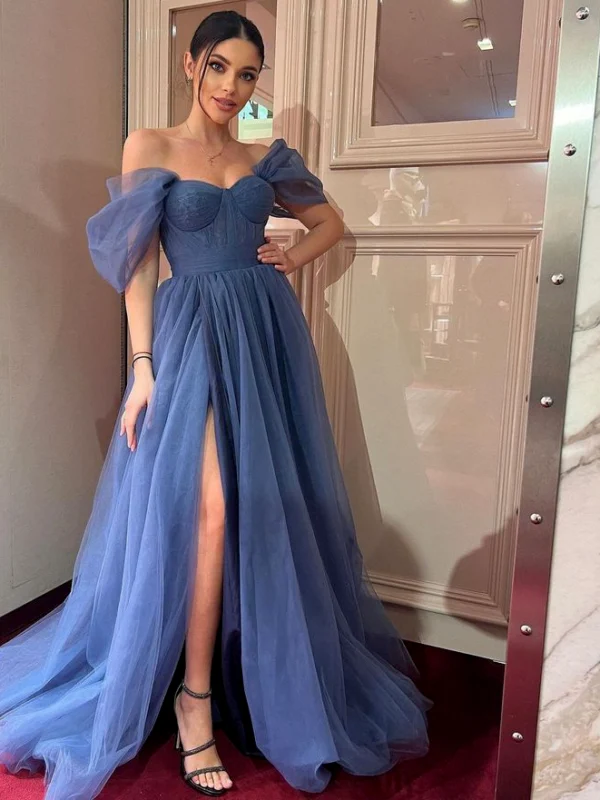
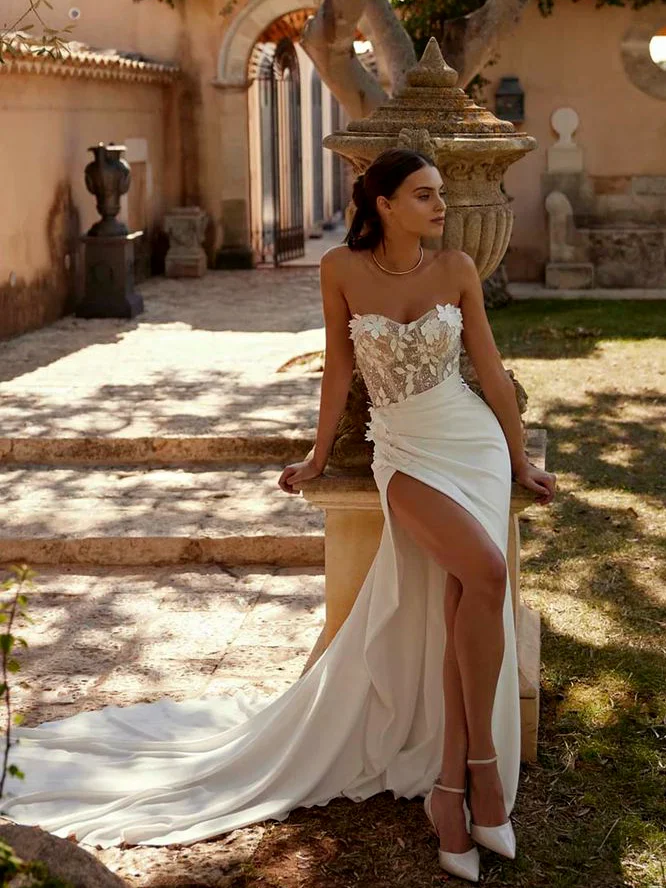
Begin with a full-length view and a closer bodice view of each actual candidate. In the first image, the floral area is concentrated between the bust and waist, with a comparatively plain, gathered skirt below it. This is a useful reference if you want a decorated upper section while letting drape and a slit shape the lower half. At the mirror, notice whether your attention goes first to your face, the flowers or the leg line. Then decide whether that order reflects the outfit you had in mind.
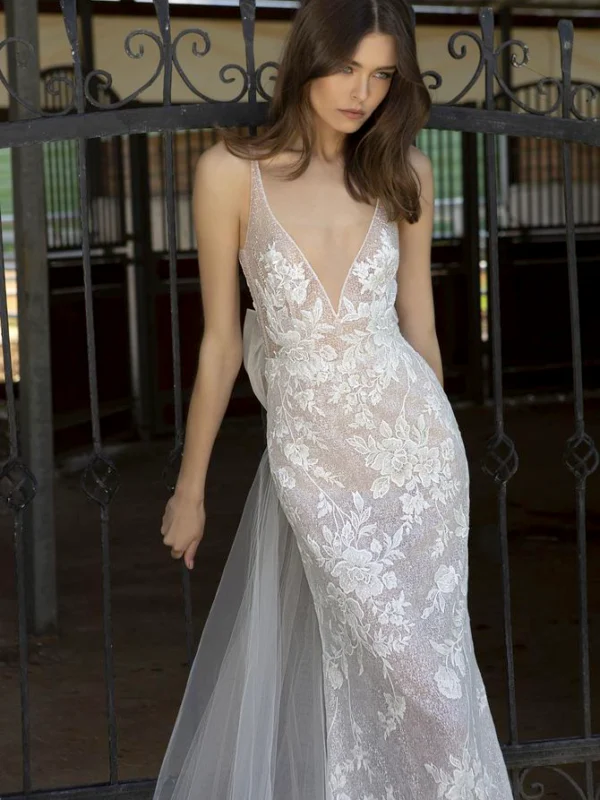
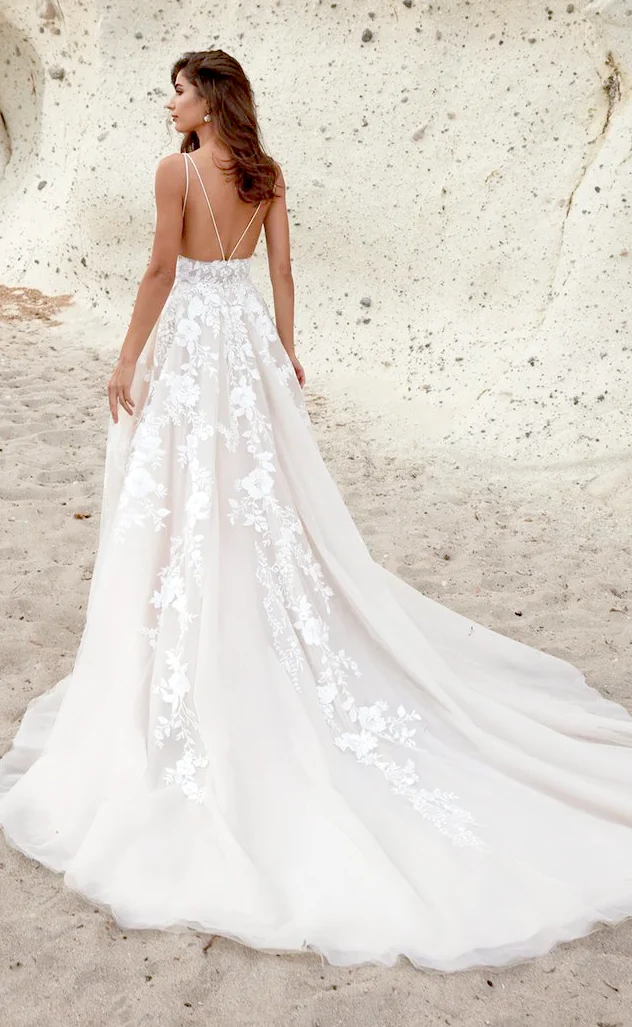
The rear-view image offers a different arrangement. Pale flowers and leaves continue from the waist over the skirt and into the train, connecting the upper and lower sections across a much larger area. Look at this option from a distance similar to the view guests might have. A close photograph cannot tell you whether individual flowers will remain recognisable farther away or merge into a pale patterned field. Either result may appeal to you; the point is to choose deliberately and request full views as well as detailed product photographs.
2. Compare motif scale with the spaces around it
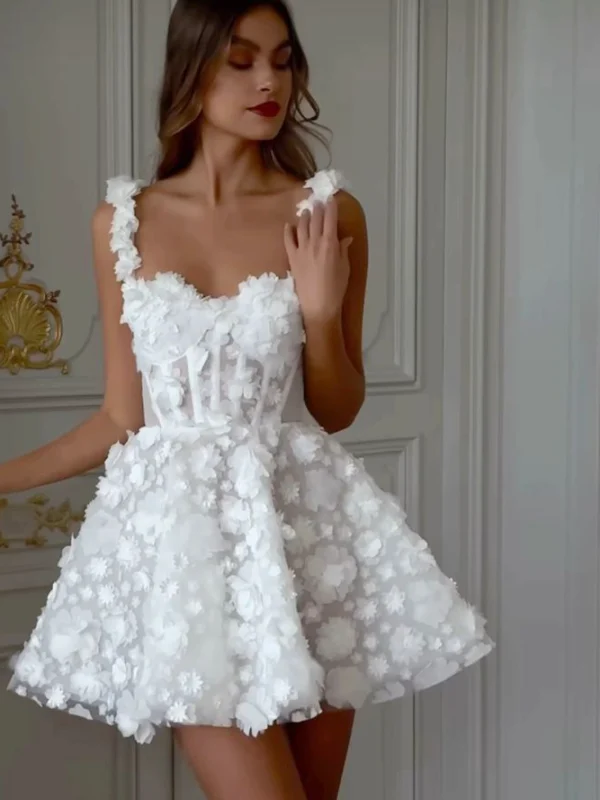
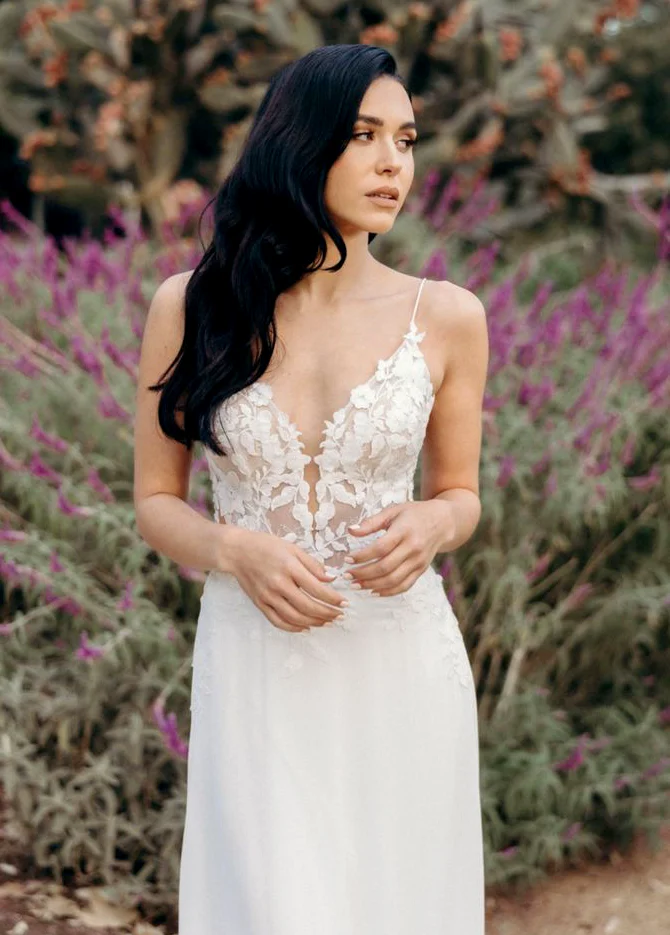
When selecting a floral wedding dress, compare the intervals between motifs as carefully as their shapes. The thin-strapped close view shows distinct leaves around a deep neckline, separated by areas through which a skin-toned background is visible. In the waterside image, the pale decoration looks denser and smaller in scale, with wider decorated straps framing the neckline. Describe these differences before calling both dresses romantic. That gives a consultant practical information: you might want larger leaves, more space around each shape or a more continuous decorative surface at the bodice.
If photography is permitted, take a picture from an ordinary conversational distance. Keep the camera position and lighting reasonably similar across the garments you compare. Resist zooming in straight away; first look at the complete image and identify which shapes still stand out. If one particular flower is the reason you like a design, check where it sits on the worn garment. A favourite motif may have little effect on the overall look if it falls beneath an arm or disappears under the veil you plan to wear.
3. Read the neckline and floral edge together
The strapless example has an irregular upper edge formed by floral shapes, creating a different outline from a smooth, continuous neckline. In the closer plunging-bodice view, motifs instead follow the centre of the torso and the narrow straps. Decide whether you prefer a clearly drawn neckline or a softer, uneven floral boundary. On the actual garment, inspect the inner surface and test the area beneath your arms. A decorative edge should remain comfortable when you speak, hug someone and sit, rather than working only in a still photograph.
4. Give the waist transition its own comparison
A close look at the waist helps you understand the floral wedding dress as a complete design. In the first image, the decorated bodice meets a diagonally gathered plain skirt. In the close view, individual leaf shapes extend towards the beginning of the skirt, while the waterside dress has a more clearly defined narrow waist area. Compare these transitions without a bouquet or jacket obscuring the front. Add those elements afterwards and see which details remain visible. That sequence makes it easier to choose between an abrupt boundary and a pattern that gradually trails away.
5. Examine the train before adding a veil
The long floral sequence in the rear-view image deserves a separate stage of the fitting. Ask to see the train spread out without a veil first, then follow the direction and spacing of the motifs. Add your intended veil, or a close sample, for a second comparison. A decorated veil edge can create another visible line across the flowers, while a plain surface may leave more attention on the dress pattern. Photograph both states from the same angle. If the train will be lifted later, ask to see the proposed arrangement on the actual dress.
6. Treat jewellery as another patterned element
Flowers already introduce several shapes and directions into the outfit. Start with one jewellery element, such as earrings, and add a necklace in a separate comparison. The waterside photograph shows a necklace beside a decorated neckline, but it does not establish a formula you need to follow. Check whether the necklace occupies the open neckline or lands directly over the flowers. For broader silhouette comparisons, use the boho wedding dress guide; the crochet-look bridal guide offers another way to think about surface pattern. Keep the visual priority you selected at the start.
7. Confirm construction, alterations and care in person
Floral pattern describes visible design before it describes any construction method. The V&A explains appliqué as sewing a piece of one fabric onto another, including a separately embroidered motif. This distinction helps with terminology but does not identify how the pictured dresses were made. Ask how the motifs on your actual candidate are attached and whether shortening the skirt requires them to be repositioned. Before committing, request the proposed work, its cost and an explanation of the expected result at the hem and waist.
Your chosen floral wedding dress should work in the full-length view as well as in its appealing close details. Record your preferred motif scale, the area you want decorated and the veil and jewellery combinations you actually tested. Keep agreed alterations in writing and follow the real garment label for care; the GINETEX care-symbol explanation helps interpret those instructions. This gives you a useful basis for choosing between dresses: a pattern you enjoy at different distances and a clear plan for any changes, rather than a favourite photograph alone.
A floral wedding dress can concentrate its motifs at the bodice or carry them into the train; compare scale, spacing and transitions together.
Frequently asked questions
Does a floral bridal dress need an all-over pattern?
No. A decorated bodice above a plain skirt creates one focal area, while motifs extending down a train carry the eye farther through the silhouette.
Do white floral shapes establish an embroidery technique?
No. Confirm embroidery, lace or applied motifs from the actual product information or an explanation of the garment construction.
Which veil should I bring to the fitting?
Bring the intended length and a similar edge treatment so you can compare how the veil overlaps the dress pattern.