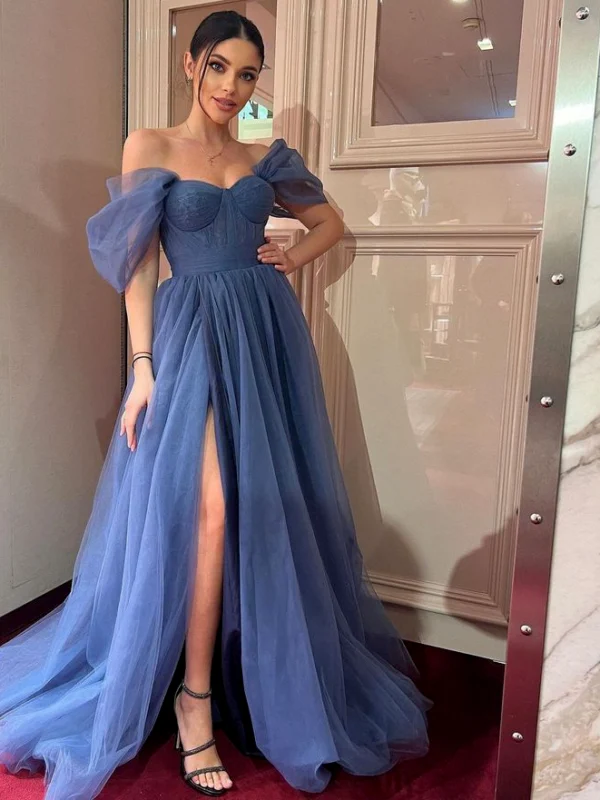
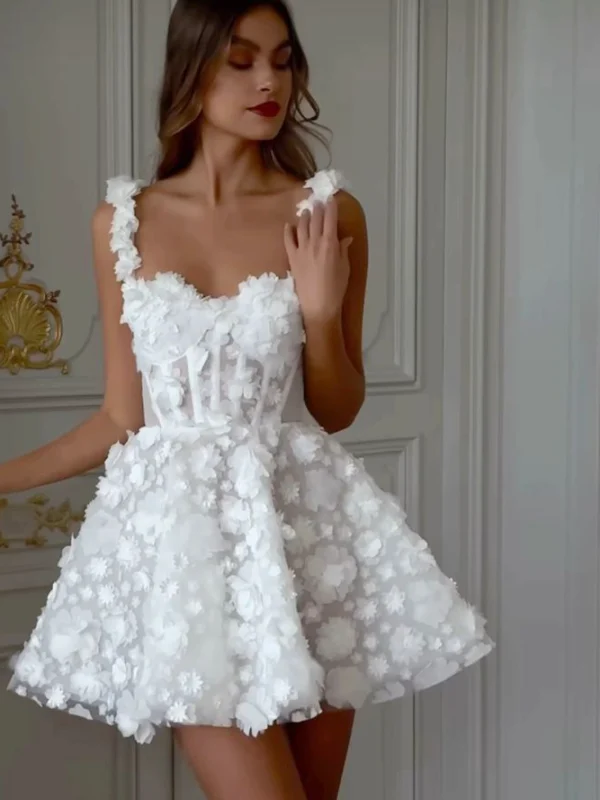
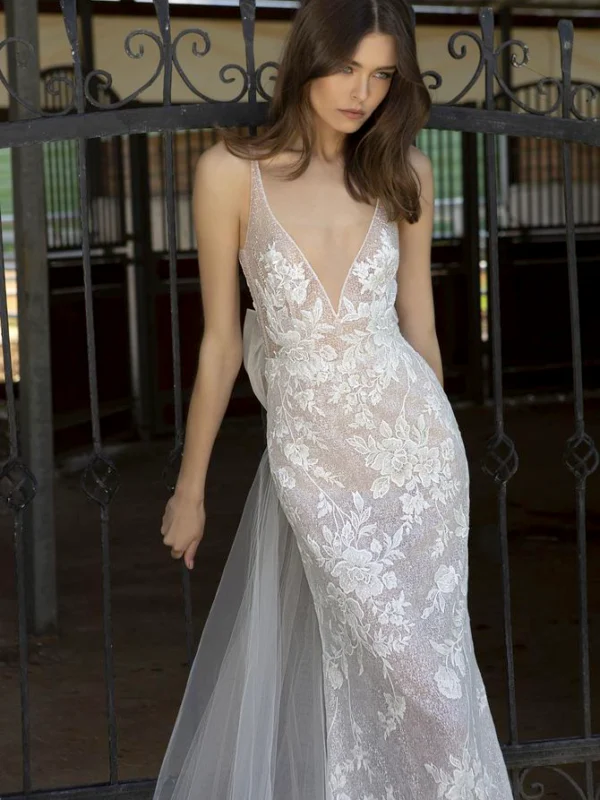
A romantic wedding dress begins with your own idea of romance. You may want a fine floral motif on the bodice, a quieter broad skirt or deliberate colour. The five references offer different directions: pale patterned tops, fine straps, side shoulder details and a coloured floral contrast. No single feature has to feel romantic to you. Choose the relationship of pattern, open area and silhouette you actually enjoy. This creates a useful fitting request rather than requiring you to accept an entire photographed atmosphere unchanged.
Describe a romantic wedding dress through concrete preferences
Write three visible wishes and rank them. For example: flowers mainly above, a broad quieter skirt below and a narrow shoulder line. Someone else may want stronger colour and larger pattern. Both descriptions are understandable without turning romantic into one fixed cut or particular fibre. Point to the exact area in a reference that appeals. A shop can then show related ideas on other models, preserving the leading feature instead of searching only for a complete photographic copy.
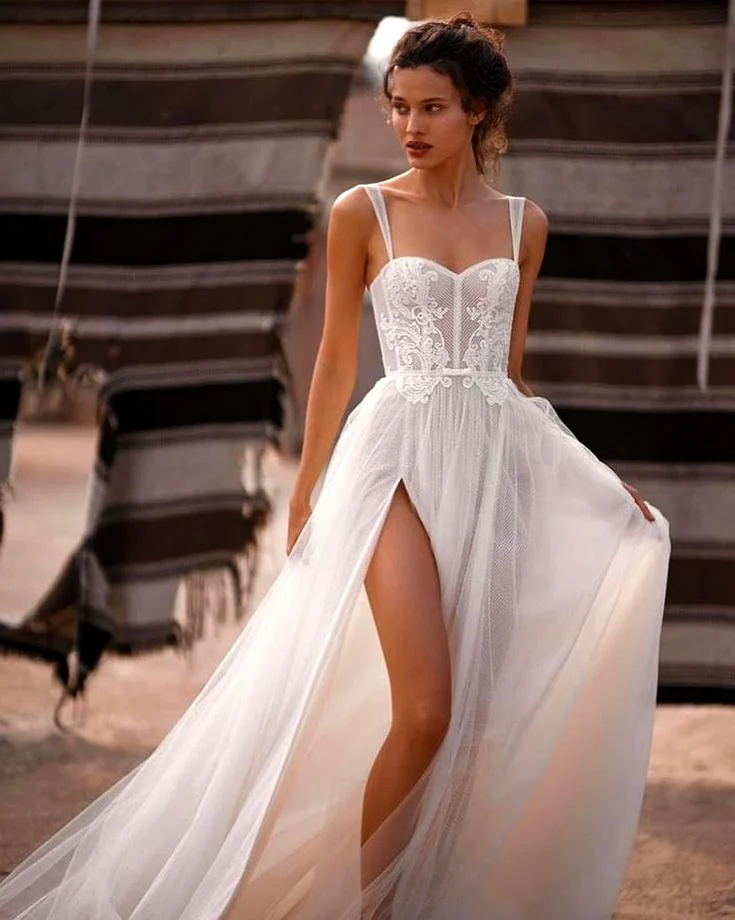
Add a decision that can remain open. Perhaps you do not yet know your skirt width or want to compare two necklines. That space helps when a real garment expresses your first preference differently from the picture. View the front from ordinary distance before examining details. Ask whether you would enjoy the combination without the photographed surroundings too. This separates your shape preference from flowers at the entrance, old masonry or specially chosen light, keeping the garment itself involved in the decision.
Balance floral pattern against quiet skirt areas
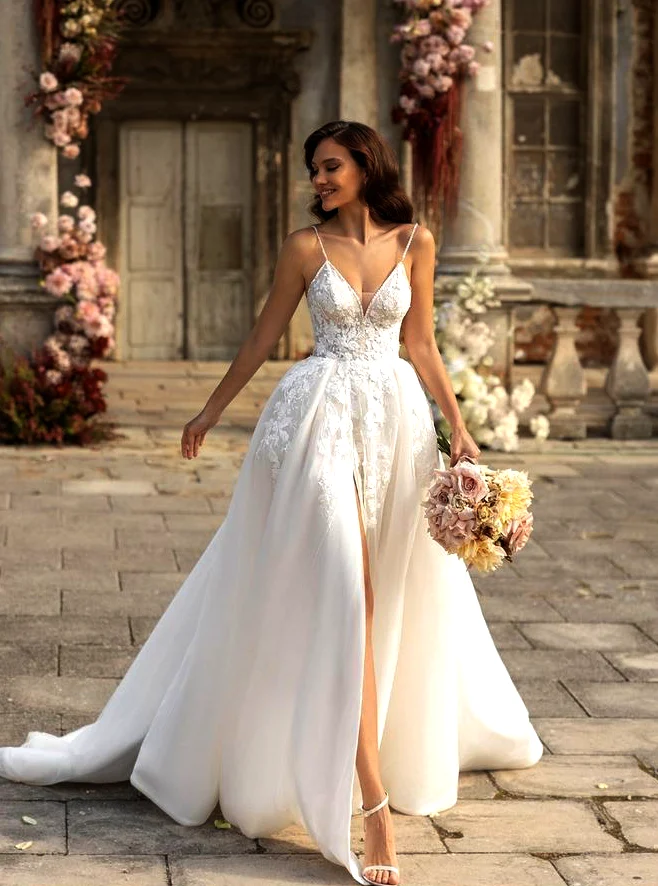
The first pale reference places a strongly designed bodice above a broader open lower area. In the second image, visible motifs continue partly into the skirt. Compare where you want pattern to stop or become quieter. A small transition may appeal as much as continuous decoration. Wanting flowers need not mean choosing dense motifs across the entire dress. Decide visible distribution before adding jewellery and veil. Trying the same pattern idea with more open lower space can reveal which area you especially want to retain.
Compare two actual dresses with similarly broad skirts and different pattern arrangements. Look at the middle first and the back afterwards. A romantic wedding dress can work for you through a quieter large area even if the first reference is detailed. Our crochet-look wedding dress guide adds questions about visible structure and underlying layers. Use only the comparison that helps. A similar motif establishes neither the same making method nor shared composition; ask about the actual model separately from enjoying its pattern.
Try coloured flowers as a separate alternative
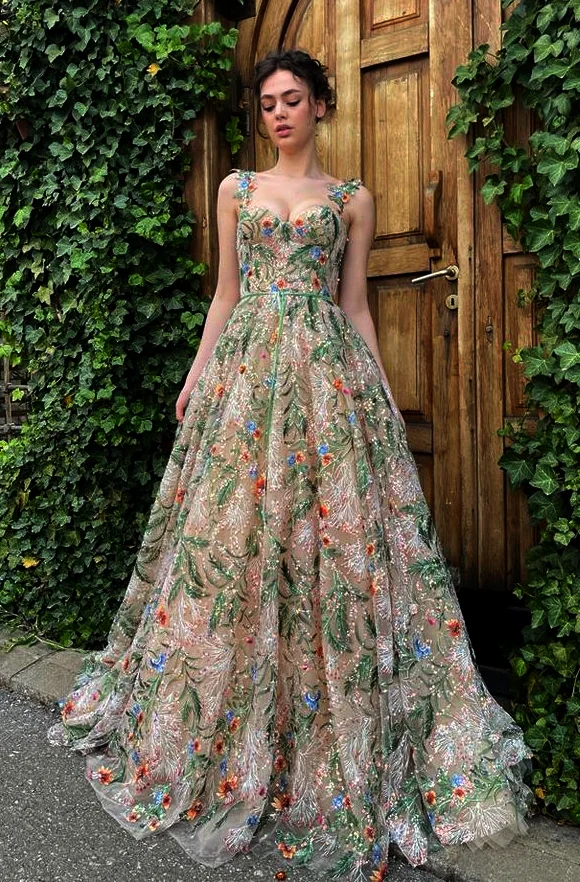
The coloured reference distributes green lines and smaller multicoloured blooms across a broad long shape. It offers a contrast to the pale pictures without establishing a particular product use. If that direction interests you for your wedding, clarify the actual offer and preferred colour share. You may want a few coloured motifs or a larger patterned area. Describe those wishes without inventing a fixed meaning for a colour. The appearance you want at your celebration is a concrete preference apart from the setting’s associations.
Compare the surface with your planned bouquet and any veil. Hold flowers where you would actually carry them, rather than only at a convenient photographic edge. Can you see the bodice as you want? Coloured pattern and hand-held flowers may both appeal, or you may prefer one quieter. Keep other additions unchanged for the first comparison. This reveals whether colour itself or mainly the larger decorated area interests you. Changing only one feature keeps the reason for your choice clearer than replacing everything simultaneously.
Choose shoulder line and neckline independently of pattern
The pale images offer different upper boundaries. Broader visible straps frame the first middle, finer shoulder lines accompany other front necklines, and the closer final reference has side details at the upper arms. Decide which distribution you want with your hairstyle. You can enjoy one picture’s pattern while seeking another upper finish. Shared pale colour does not make these shapes interchangeable. Each creates another visible relationship to neck and shoulders and deserves its own comparison on an actual garment.
Try the preferred options with your intended underwear. Greet someone, reach for the bouquet and sit. Watch the top edge and side pieces before rearranging them. A romantic wedding dress should fit your intended movements rather than only the turned posture of a picture. Have real connections and rear construction shown where absent. The boho wedding dress guide provides more questions about the day’s sequence and additions. It is a comparison aid rather than a rule for your style; transfer only the action relevant to your own outfit.
Decide skirt opening and fullness through your use
Several references combine floral motifs with a clear leg opening. Treat it as its own choice. You can enjoy the bodice while wanting more lower coverage. Walk, turn and sit in the actual model with your shoes. Include a side view and decide which arrangement you want in those postures. The first reference holds fabric with one hand, so add an ordinary free-handed stance before judging the skirt’s fall. One attractive pose cannot establish every action in your day.
Compare the space needed by a broader and less spreading form along your intended route afterwards. Think about doorway, seat and travel. If you want to gather fabric, see a proposed arrangement demonstrated on the actual dress and practise the action. Visible fullness cannot explain the complete sequence. Your idea of romance requires no specific train length. Choose which lower form you want to handle yourself and when a helper would join the plan, connecting the broad surface you enjoy to a sequence you can actually use.
Connect the personal brief to the finished garment
Summarise your choice in a few clear points: pattern position, colour share, shoulder line, skirt fullness and preferred coverage. Add underwear, shoes and important accessories individually. A romantic wedding dress then becomes your own concrete outfit. Try two actual candidates with the same additions. For an alteration, show the patterned area that should remain and clarify scope, cost and final fitting on the real model. Explain an area you particularly want preserved before agreeing to the work, so you can assess the intended result clearly.
Ask about composition and inner layers instead of deriving them from the photograph. Read the care label too; GINETEX explains the symbols. Repeat walking, sitting and upper movement after changes. Your personal romantic idea remains the starting point without assigning universal meaning to every colour, flower or silhouette. The finished choice connects deliberately selected visible details to garments and actions you have really tried together. The atmosphere you imagined becomes understandable decisions within your own use, rather than a promise made by one reference image.
A romantic wedding dress follows your personal idea. Choose pattern and colour share, then shoulder line, skirt width and coverage with actual additions.
Frequently asked questions
Must a romantic dress have dense flowers everywhere?
No. Choose where motifs sit and where a quieter area remains. Compare similarly broad skirts with different pattern arrangements.
Is the coloured reference confirmed as a wedding product?
No. It shows a visible alternative. Clarify the actual offer and decide whether you want that colour direction for your wedding.
Must I repeat the leg opening?
No. Pattern preference and desired coverage are separate decisions. Test walking and sitting on the real model.
When should I add the bouquet?
After the first pattern comparison. Hold it in its actual carrying position and see which bodice area remains visible.