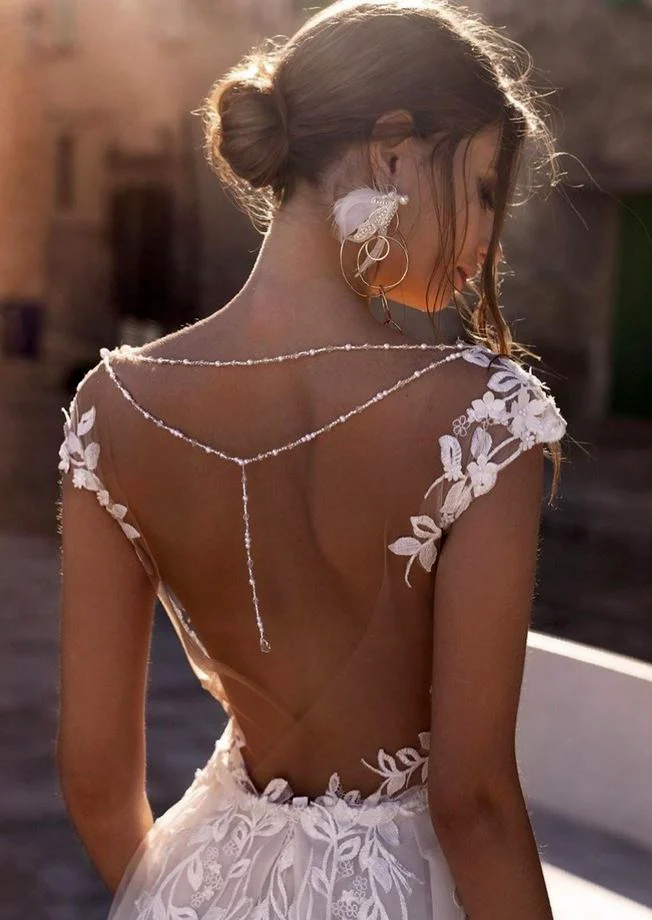
A backless wedding dress is often chosen from behind even though you wear it from every direction throughout the day. Begin with the back idea, then bring in the front, hairstyle and veil early. The five references offer different arrangements: a deep V-shaped line with fine jewellery strands, a sheer patterned area with a central pale row, a very low quiet edge and two more decorated rear views. Decide whether exposed area, a clear outline or decorative framing should lead. Compare the remaining pieces as a complete bridal outfit rather than letting one beautiful rear photograph settle every decision.
Choose the backless wedding dress through its back line
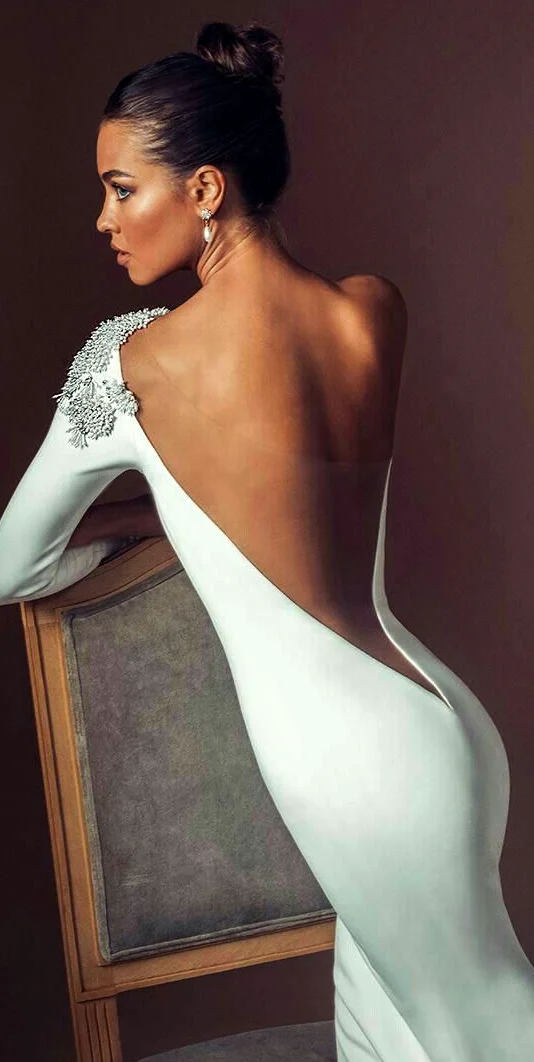
Sketch the outline you prefer: broad between the shoulders, narrowing towards the waist or extending lower down the back. Try at least two shapes before adding jewellery and a veil. The very low quiet reference directs attention differently from the floral frame with fine strands above it. You do not need maximum depth to create a clear rear design. Write down the exact area you enjoy. That gives you a useful search criterion if you like one dress’s back but want a different skirt or front, keeping your preference separate from the entire pictured outfit.
Compare a sheer surface with an open edge
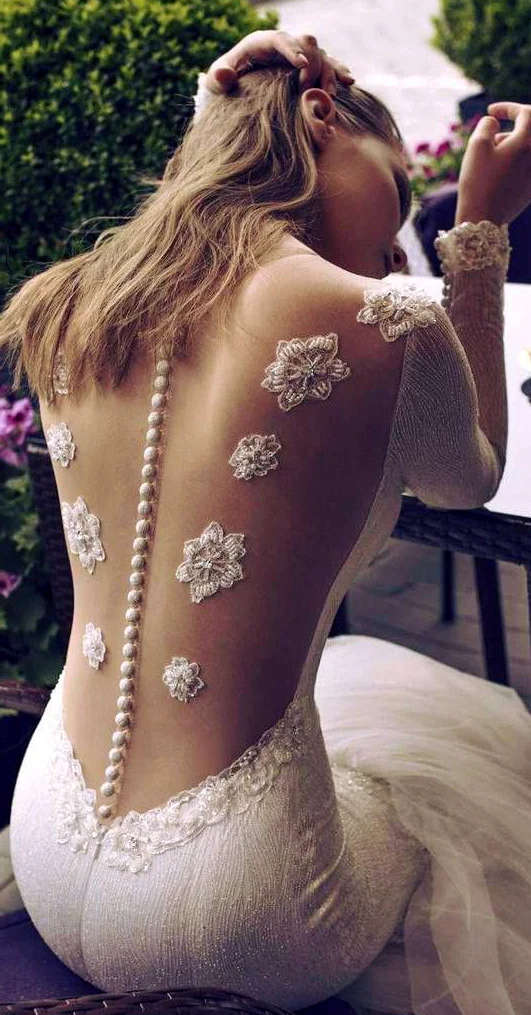
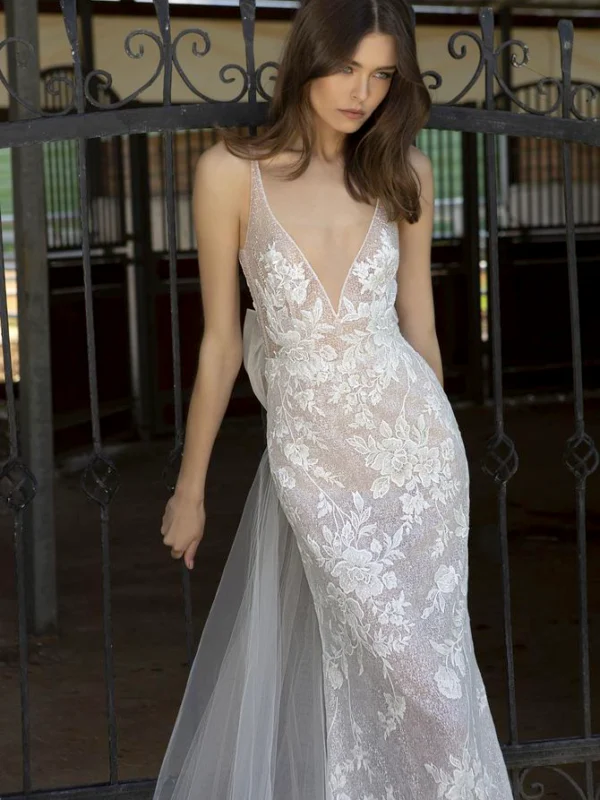
The photograph with floral motifs and a central pale row can appear open from farther away. Close up, a translucent surface is visible. Compare more than how much skin seems exposed: inspect transitions at shoulder, side and waist. Ask to see the layers and fastening on the actual garment. If a quiet surface matters more than the impression of complete openness, another construction may suit your idea. Inspect front and back under similar light, instead of allowing one close view to set the standard for every option you consider.
Try hair and the rear detail as one arrangement
Hold your hair back first, then let it fall in the hairstyle you intend to wear. In the long-haired reference, some upper back detail disappears while the lower line remains visible. That is a possible arrangement rather than a mistake. A backless wedding dress need not display every decoration continuously. Assess earrings beside existing rear jewellery lines, especially when both sit near shoulder height. Photograph the preferred combination from an ordinary distance. You can then see whether the appeal lies in a broad area or a smaller detail between hair and dress.
Plan the veil before and after the ceremony
Place the intended veil over the back during the fitting. Another layer can soften a clear edge or partly cover a pendant. Look while standing and seated, then decide how you want the outfit to appear without the veil. If you expect to remove it for the reception, that second state belongs in the selection process rather than the final preparations alone. Practise the change with the person who will help you. The hairstyle and fastening need explaining on the actual accessories; their behaviour cannot be assumed from a different photographed arrangement.
Bring the front and bouquet into the back decision
Request a complete front view as soon as a model reaches the shortlist. Do you want a similarly quiet front neckline or a deliberate counterpoint? Hold an object close to your intended bouquet size. Look from front and side while another person assesses the back from an ordinary distance. Carrying the bouquet can alter posture and the overall emphasis compared with standing empty-handed. Choose a backless wedding dress as a whole silhouette. An appealing rear line does not replace a decision about neckline, waist and skirt volume, and those features may change which version you prefer.
Test the internal solution on the actual garment
Explain the support and coverage you personally want. Ask which parts already belong to the dress and which are proposed additions. No single type of underwear is automatically right for every open back. Put the actual pieces on together, sit and stand again. Check edges and comfort afterwards without deliberately stretching your back for a photograph. If an adjustment is proposed, ask what it changes about the visible rear shape. The chosen outline and internal arrangement need assessing together, using your observations rather than a general promise about what an open-back dress should feel like.
Compare jewellery lines during ordinary movement
The two references with fine rear strands and hanging details offer a useful reason to test accessories deliberately. Turn your torso, reach for a bag and greet someone. Notice where the detail rests afterwards. Try a jacket or wrap over it too if those belong to your plans. Ask about attachment and possible removal on the actual model. Decorative lines should not automatically be treated as structural connections. Decide whether their contribution matters to you or whether the back shape already provides the effect you enjoy without another layer of detail crossing it.
Include the skirt and seating in the day’s sequence
Seated pictures show much of the back but cannot reliably establish the complete skirt in ordinary standing. Walk in your intended shoes, turn beside a chair and sit without recreating a photographic pose. With a backless wedding dress and a longer lower section, the route between ceremony and reception matters too. Ask to see an actual train arrangement if you need one. Finally compare the rear appearance with your outer layer and without it. This produces tested combinations for several parts of the day rather than one attractive standing view that leaves the practical transitions unresolved.
Resolve backless wedding dress alterations and care
Discuss any strap or waist changes in relation to the back outline. Arrange a final trial with hair comparison, veil, shoes and underlayers. Read the label before cleaning or pressing; the GINETEX care symbols help explain those instructions. For further surface ideas compare our crochet-look wedding dresses and boho wedding dress guide. Record the complete versions with and without the veil. You then know which back line you selected and how it will appear within your actual sequence, with each accessory contributing to a choice you have seen together.
For a backless wedding dress, compare the real back construction with hair, veil and underlayers. Test the outfit before and after removing the veil.
Frequently asked questions
Is a sheer covered back the same as an open back?
No. A translucent layer can reveal skin while still forming its own surface, edge and fastening line. Ask about the actual construction.
Must the hairstyle expose the entire back?
No. Compare loose and gathered hair with the chosen back line and decide which details you want visible and when.
When should the veil join a backless wedding dress fitting?
As soon as its length and position affect the decision. Try it over the garment and then assess the outfit after removing it.
Can a rear photograph establish support?
No. Ask about construction on the actual garment and test it with your intended underlayers and ordinary movements.
Thoughts on this article