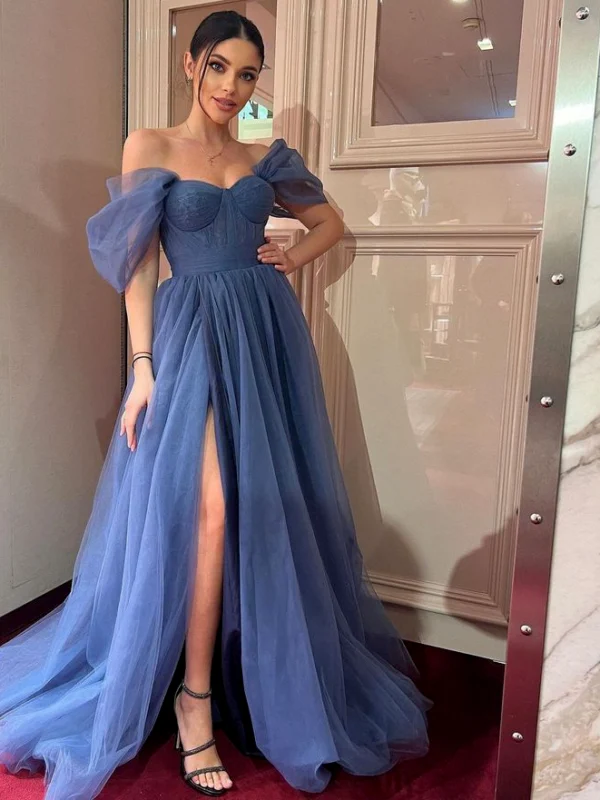
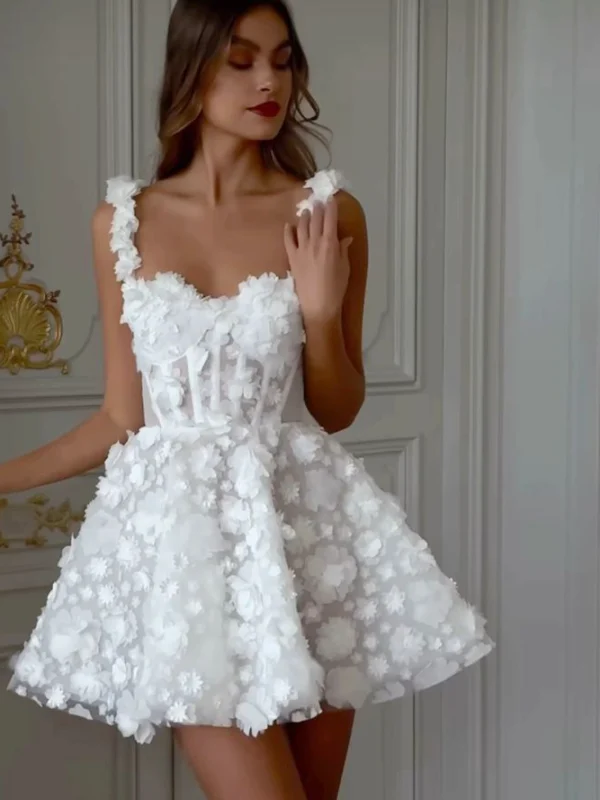
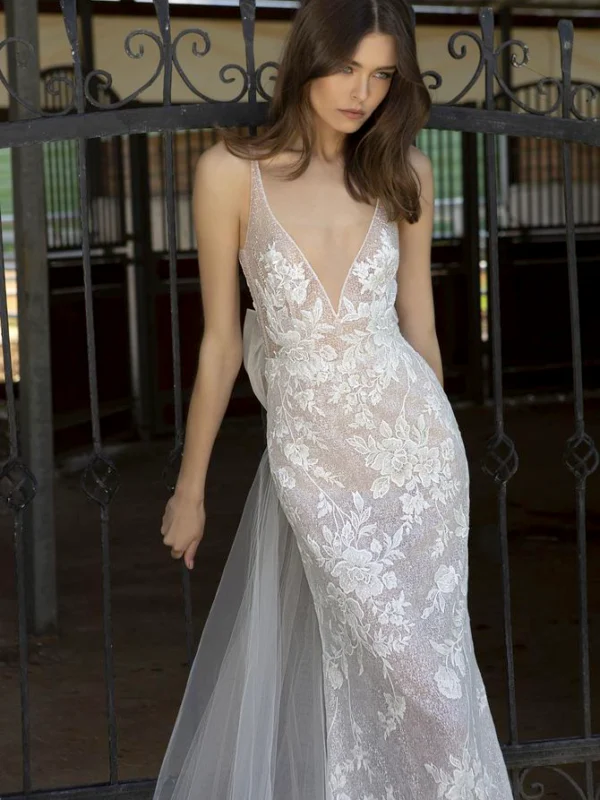
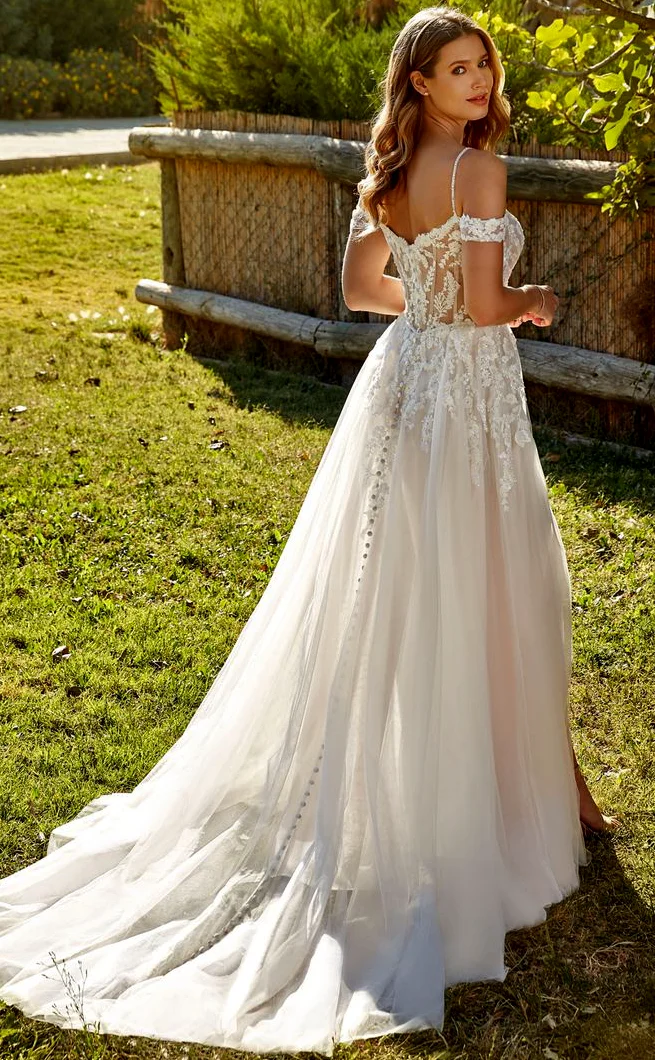
To reuse a wedding dress, you might adapt one already available, buy a previously worn gown or rent a dress for the celebration. The useful starting point is what you need to wear and how you want to handle it afterwards. A photograph cannot establish a dress’s production history or environmental impact. The four references here offer different necklines, backs and skirt shapes, rather than evidence of a particular environmental claim. Use them to identify a shape worth trying, then examine the actual garment and the arrangement being offered. A workable choice includes fitting, alterations, cleaning, transport and a realistic plan for the day after the wedding.
Reuse a wedding dress with a clear brief
Write down the movements and settings your outfit needs to accommodate. Will there be outdoor paths, a staircase, a seated meal or several hours of dancing? A train may be a welcome feature for the ceremony and need a separate handling plan later. An open back changes which underwear you can consider, while a high neck deserves a turning and sitting test. Decide whether keeping the dress matters to you. Someone who wants a family keepsake and someone who wants to return everything the following week have different requirements. Establishing that difference before browsing makes it easier to recognise a suitable offer and to leave an unsuitable bargain alone.
Start with a dress that already exists nearby
If a relative or friend offers a gown, ask for a viewing without committing to wearing it. Before you reuse a wedding dress from someone close to you, separate the emotional offer from the practical condition and fitting questions. Discuss which changes, if any, the owner would welcome. Shortening a treasured dress, removing its sleeves or changing its colour should never be assumed acceptable.
With permission, record its original shape and identify the details that matter to both of you. Try it before planning new accessories: a different belt can change the visual emphasis, but it cannot resolve a tight shoulder area. Consider whether borrowing, receiving or purchasing the garment is actually being proposed. A clear conversation now protects the relationship and helps you judge the dress as clothing you will need to move in.
Assess secondhand condition beyond the listed size
Ask a seller for current garment measurements, previous alteration details and close views of the hem, fastenings and underarm areas. The size on a label is particularly limited when a gown has already been adjusted. Compare measurements with a garment that fits you and arrange an in-person fitting where possible. Look for loose decoration, uneven closures and signs of use where the skirt touches the ground. These are questions to investigate, not reasons to reject every previously worn dress. Bright or heavily edited listing pictures may obscure small details. Request evenly lit photographs and an honest description before travelling a long distance or making a final purchasing decision.
Match rental terms to your wedding schedule
Renting suits the intention to return the garment afterwards, but the practical terms need attention. To reuse a wedding dress through a rental arrangement, you also need permitted adjustments that work with your fitting plan. Check collection and return dates, deposits, permitted adjustments and what happens if something is damaged. Ask whether cleaning is included and how late returns are handled.
A dress with a well-fitting bodice can still be unsuitable if its hem cannot be adjusted for your shoes. If you are leaving on a trip immediately after the wedding, arrange who will return it. Compare the complete written offer rather than its headline hire price. These details help you evaluate a service for your event; they do not demonstrate that renting always has a lower environmental impact than every purchase.
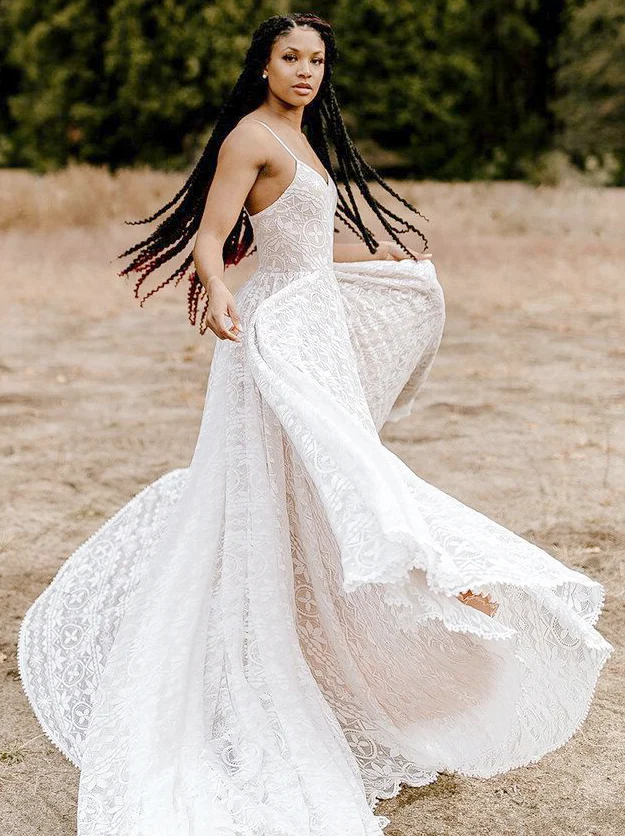
Reuse a wedding dress: assess alterations before committing
Before relying on a substantial redesign, ask an alteration professional to inspect the garment. Separate your questions about length, waist, straps, back shape and attached decoration. Each is a different task, and the answer may depend on construction that a listing photograph does not show. Ask to see where an adjustment would be made and which features would remain. A rented dress also needs the provider’s permission for any intervention. Record the agreed work, timing and quoted cost, and leave room for a follow-up fitting in the wedding shoes. Do not assume that cutting a hem or changing an embellished panel can be reversed later without affecting the original appearance.
Compare complete solutions for two different occasions
For a short civil ceremony followed by lunch, a relatively narrow dress that already fits may be a convenient choice. For a larger ceremony where a long train is part of your plan, practise how that train will be carried or secured. Ask the person helping you to attend the fitting if possible.
Put complete options side by side: a secondhand gown with alterations and cleaning, for example, against a rental with collection and return arrangements. List unanswered questions next to each. A low starting price is less useful when necessary work remains unassessed. The comparison should make your next decision clear: book a fitting, seek a quotation or set an offer aside.
Make care and handover part of the plan
Read the actual garment’s care label. GINETEX symbols distinguish washing, bleaching, drying, ironing and professional textile care. There is no single care instruction for all white wedding dresses. Discuss existing marks and decoration with an appropriate professional before treating them. When borrowing or renting, agreed condition photographs can record what was present at collection.
Plan a specific time for returning, cleaning or passing on the gown after the celebration. If you later sell it, provide the measurements, alterations and known signs of wear that you would have wanted as a buyer. A useful description allows the next person to assess the garment without relying on a vague claim that it is perfect.
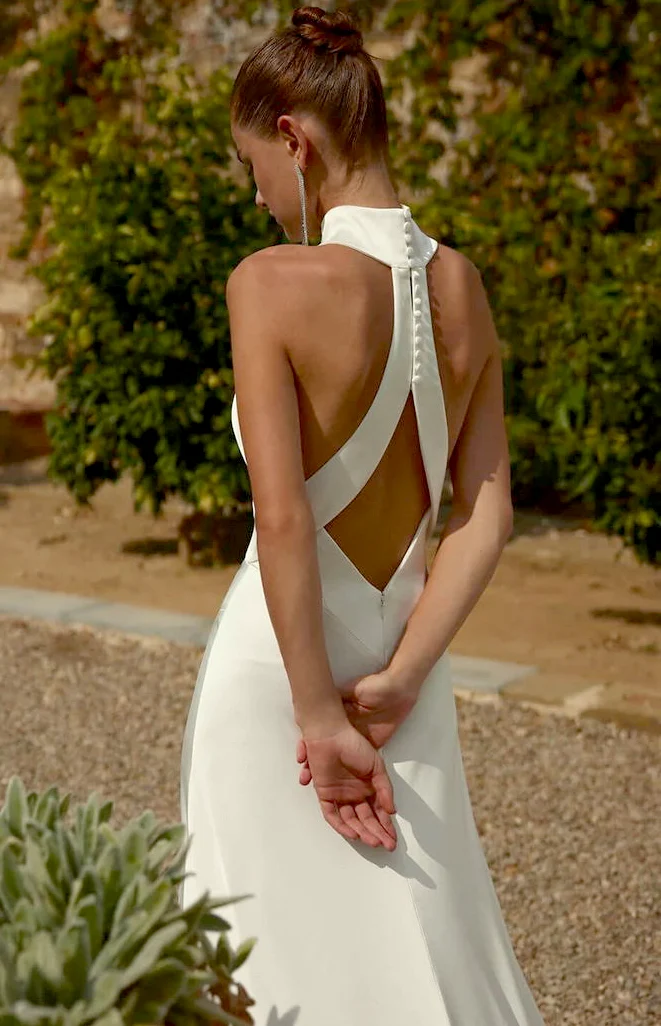
Ask what an environmental description actually means
The US FTC’s Green Guides caution against broad, unqualified environmental benefit claims. A practical response is to ask what specific feature is documented. This guide does not calculate footprints or treat a garden setting as evidence about a garment. When you reuse a wedding dress, that describes a planned use, and its suitability still depends on the actual arrangement. For more shape comparisons, see our boho wedding dress guide and crochet-look wedding dress references. Consult GINETEX’s care-symbol explanation when reading the label, and the FTC guidance for the narrow point about environmental wording. Your final choice should leave you with a wearable dress and an achievable plan.
To reuse a wedding dress, compare condition, fit and permitted alterations. Include cleaning, handover or return in the same practical plan.
Frequently asked questions
Is renting always the better environmental choice?
That is not established here. An image or rental arrangement alone cannot demonstrate an overall environmental comparison; assess the actual offer and process.
What should I ask a secondhand seller?
Request current garment measurements, previous alterations and close views of hems, closures and known wear. Arrange an actual fitting where possible.
Can I alter a borrowed wedding dress?
Discuss each change explicitly with the owner or provider and have its scope and feasibility assessed on the actual garment.
When should care and return be arranged?
Before committing: clarify included services, deadlines, transport and who will handle the dress after the wedding.