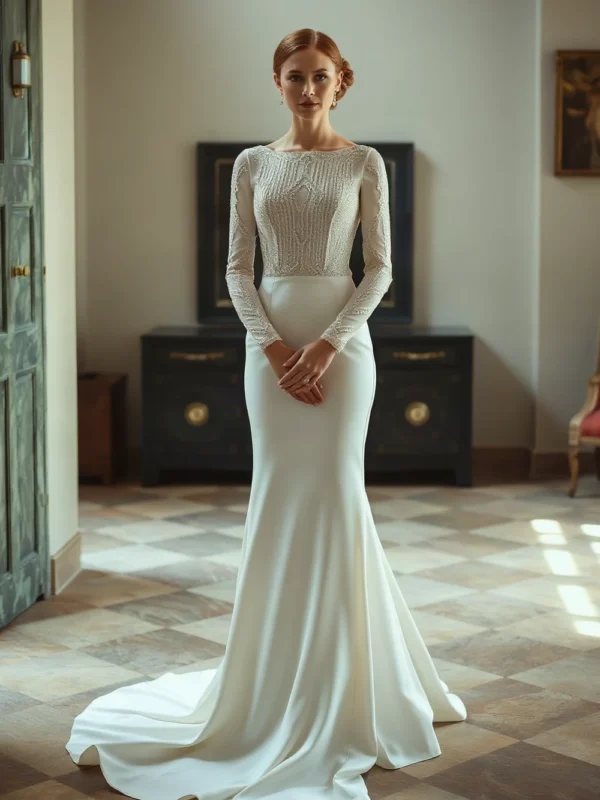
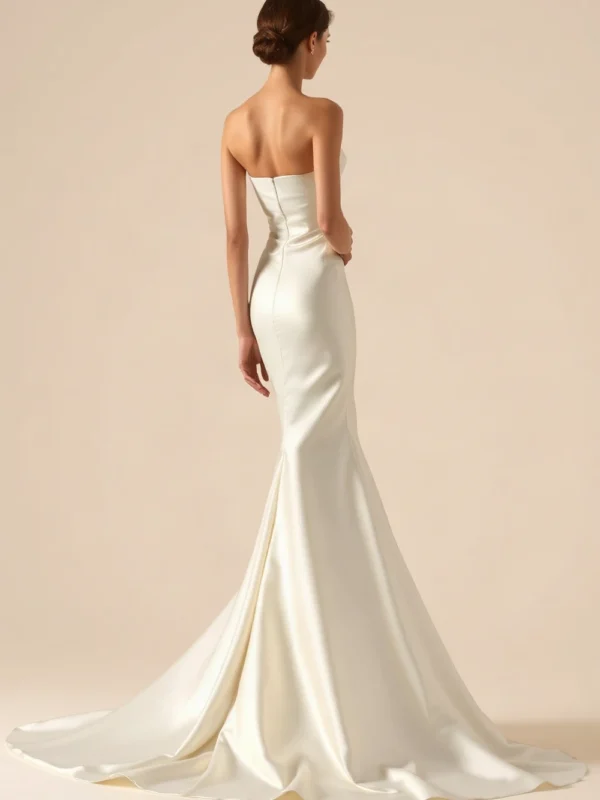
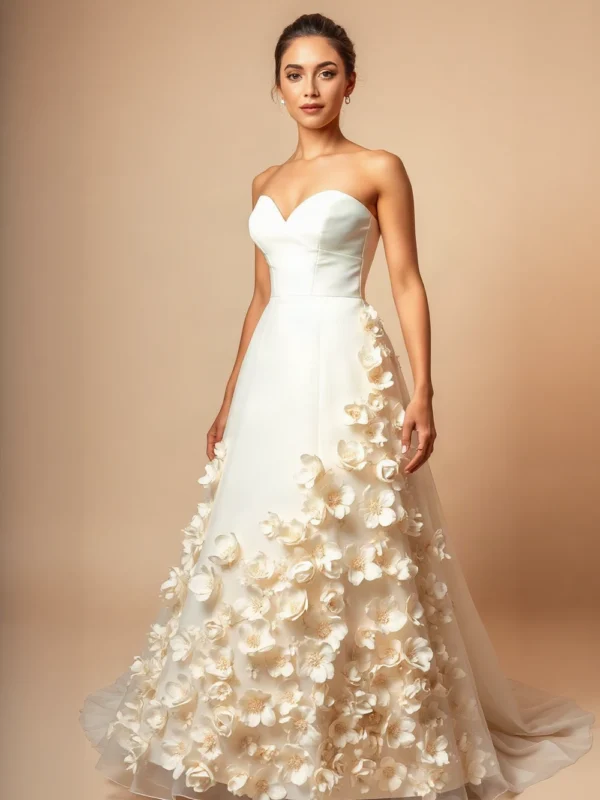
A romantic wedding dress is not defined by lace, flowers or a full skirt alone. The shape of the neckline, the point where a skirt begins to widen, the movement of a sleeve and the way a smooth surface receives light can create very different versions of the same mood. These six images provide a broad comparison: a fitted mermaid dress, tea-length and mini alternatives, two interpretations of a column silhouette, and a dramatic flower-covered skirt.
The most useful way to choose among them is to evaluate a silhouette beyond its stationary front view. Flooring, stairs, seating, dancing and transitions outdoors all influence how a hem or trailing detail functions. Necklines and sleeves concern support and range of movement as well as appearance. Rather than assigning shapes to particular body types, this guide examines the role each feature plays. The aim is to help you identify which balance of length, structure, motion and embellishment fits the atmosphere and practical rhythm of your celebration.
Softening the Structure of a Mermaid Silhouette
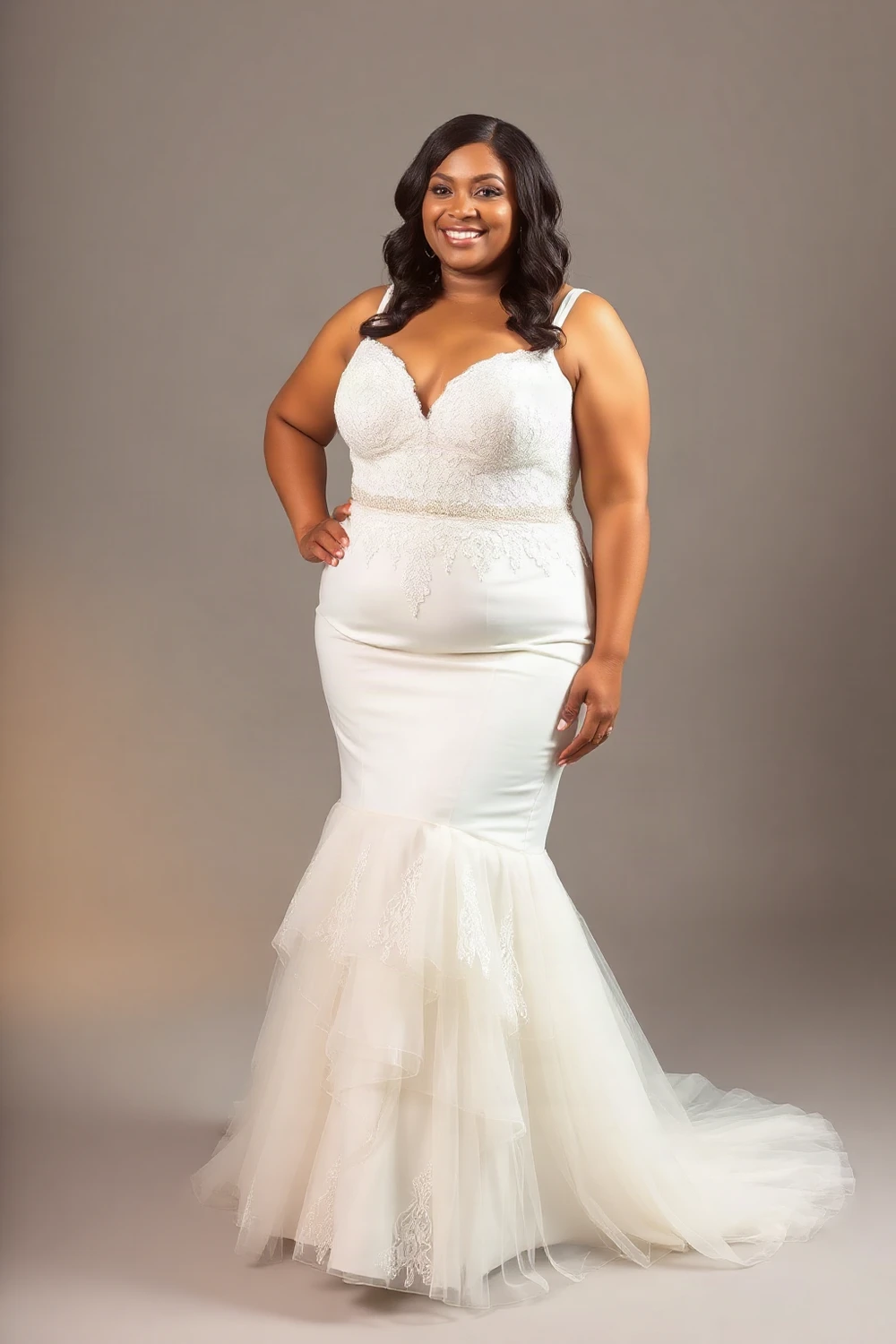
In the first concept, the textured bodice and smooth upper skirt follow the figure closely before translucent-looking layers open below the knees. A narrow waist band and motifs trailing onto the skirt prevent an abrupt break between the two surfaces. The mermaid outline remains clear, but its lower section feels rippling and romantic rather than sharply engineered.
When trying this shape, walk while observing exactly where the flare starts. A very close fit around the knees may restrict a long stride, whereas a slightly higher opening can provide more room without losing the essential silhouette. Check whether the layered edges meet the shoes, how the small train behaves during a turn and whether the bodice maintains its support when seated. These practical details reveal more than a still mirror pose.
Balancing a Tea-Length Hem with Shoes
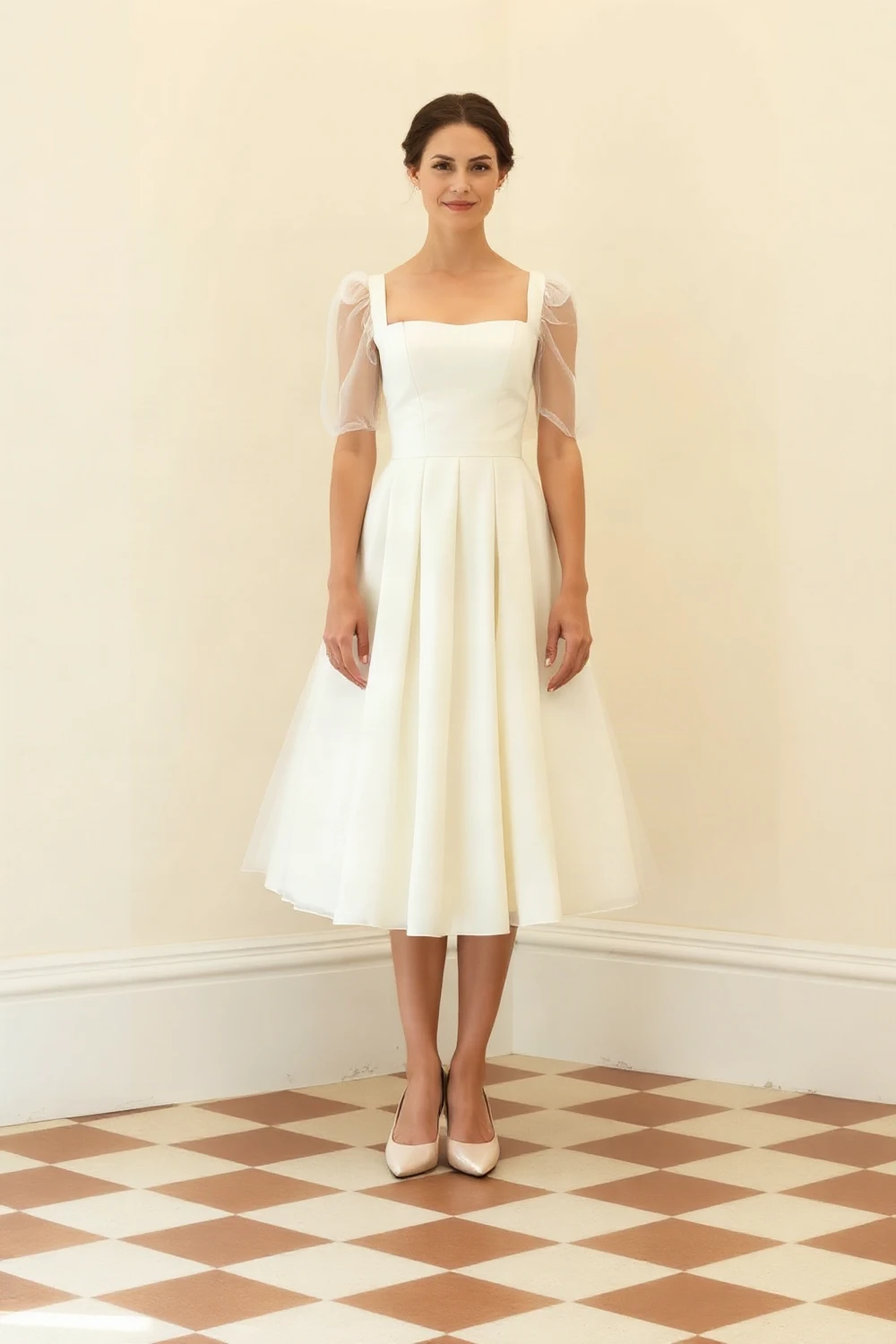
The second look combines a square neckline, lightly puffed transparent sleeves and a regularly pleated tea-length skirt. Geometry and softness share the upper section: the neckline creates a firm frame, while the sleeves and petal-like shoulder edges relax it. Because the hem ends around the calf, the shoes become a visible design element rather than a hidden necessity.
Test the precise finishing point rather than treating tea length as one fixed measurement. A small adjustment can alter the relationship between skirt, calf and shoe. Pale closed-toe footwear extends the quiet tonal line, while colour, texture or ankle straps introduce a stronger lower focal point. With such a defined neckline, small earrings and swept-up hair can retain the open frame. Extra neck jewellery may be unnecessary when the sleeve edges already contribute detail.
Balancing a Mini Skirt with Sheer Sleeves
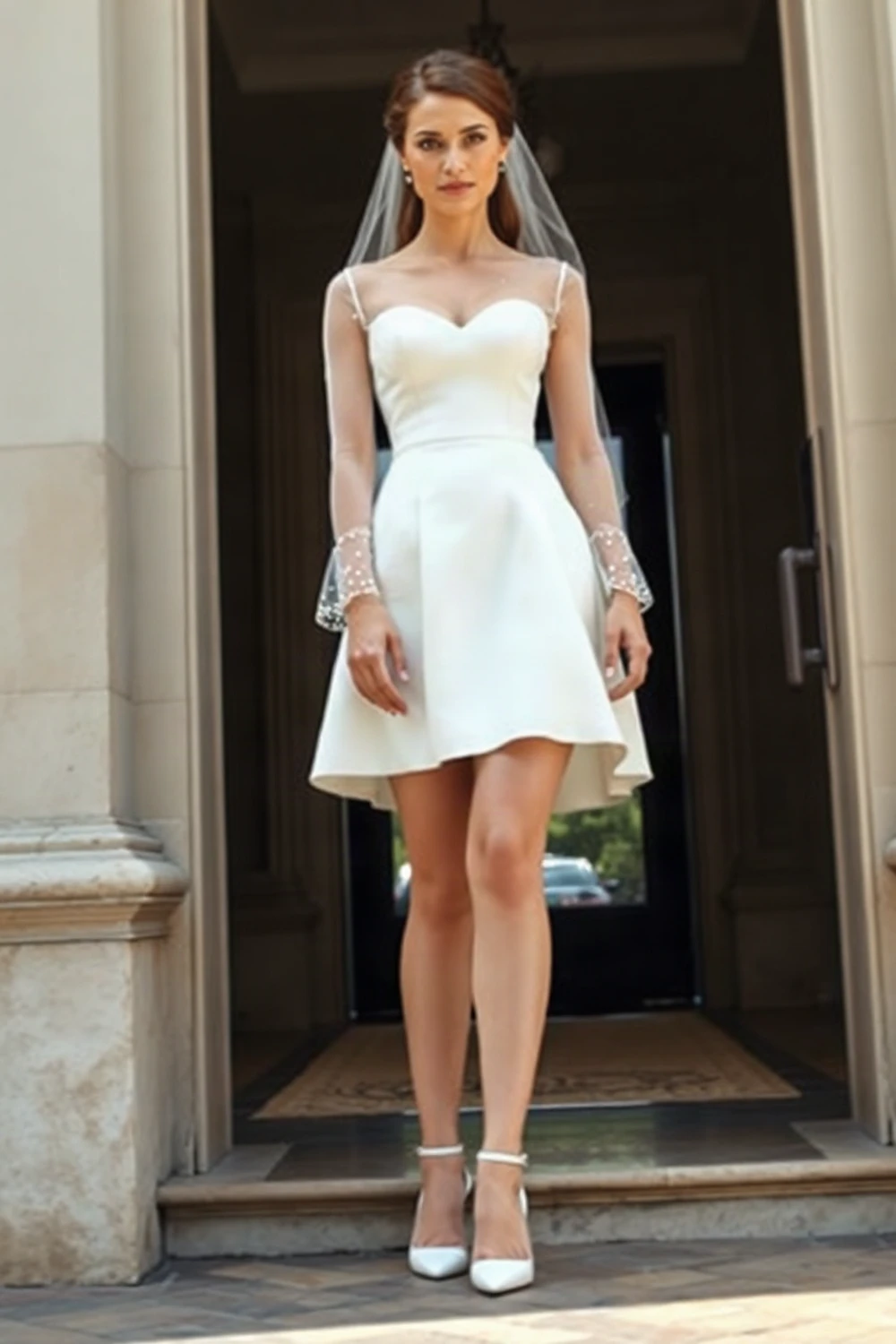
The third dress pairs a short front hem and slightly longer back with a sweetheart bodice and full-length transparent sleeves. Dotted, flared cuffs add rhythm without requiring heavy ornament. A fine veil and formal doorway shift the mini silhouette away from an everyday party-dress reading, showing how styling and setting can change the character of a compact shape.
A short hem can make walking easier, but sitting, bending, stairs and wind still require a realistic fitting test. The longer back softens the side profile; a level mini hem would look more graphic and direct. Long sleeves visually balance the exposed legs and may also change how warm the dress feels. Since every part of the shoe is visible, consider where an ankle strap interrupts the leg line as carefully as you consider heel height.
Adding Motion to a Column Dress with Capes
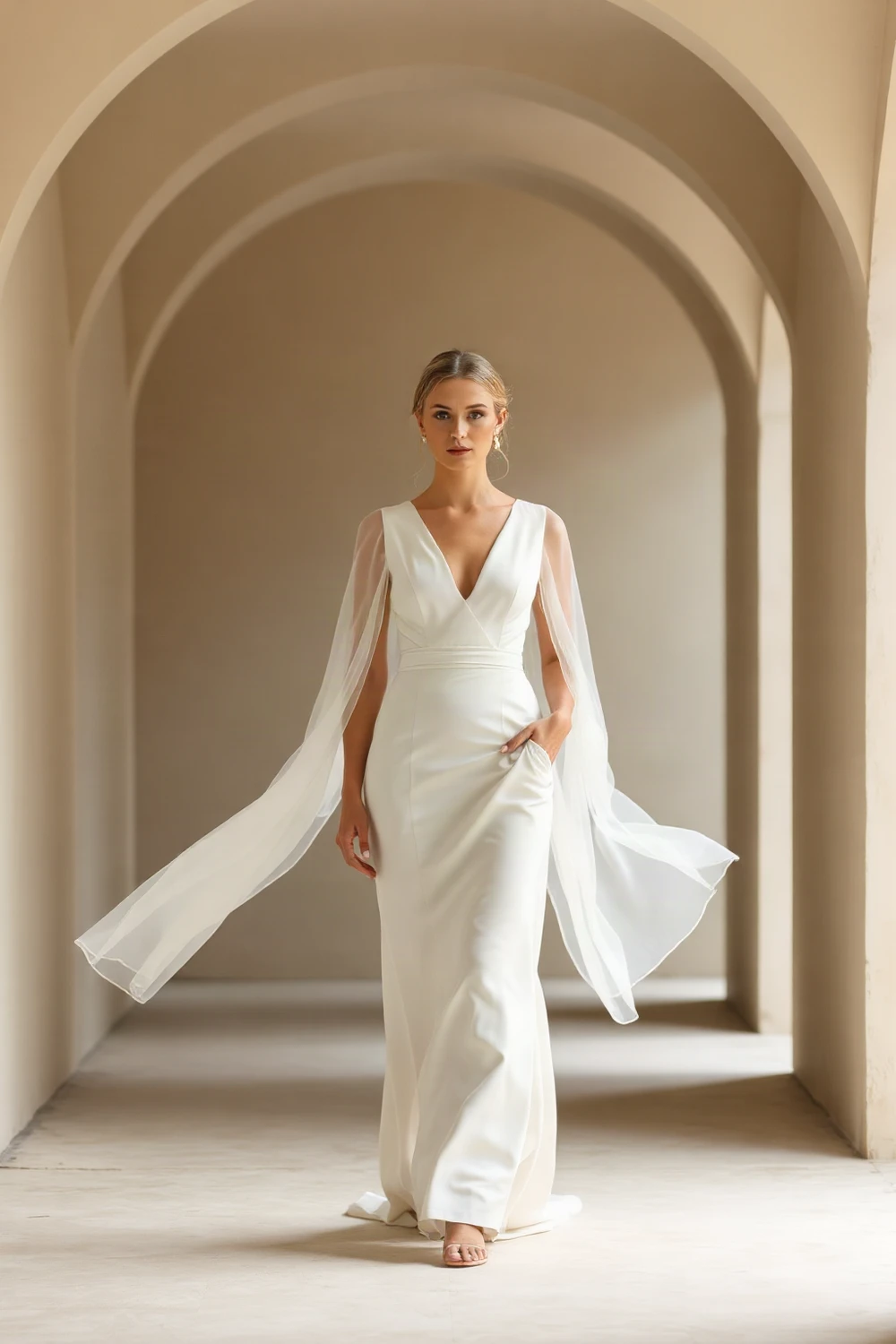
The fourth design contrasts a narrow column skirt with two long, transparent panels falling from the shoulders. Wrap-effect sections lead the deep V-neck toward a banded waist. When the panels spread outward, they create sweeping motion around a skirt that otherwise remains controlled and vertical. The repeating arches strengthen this long, symmetrical visual arrangement.
The effect is compelling in motion, but the panels can interact with their surroundings more than fitted sleeves would. Raise your arms, sit beside chair arms and turn in a narrow space to assess the cape length properly. Test the neckline while walking and leaning as well as standing. If shoulder movement is already the focal point, keep hair away from the panels and select restrained jewellery so their translucent edges remain clear.
Softening a Minimal Line with Scarf Draping
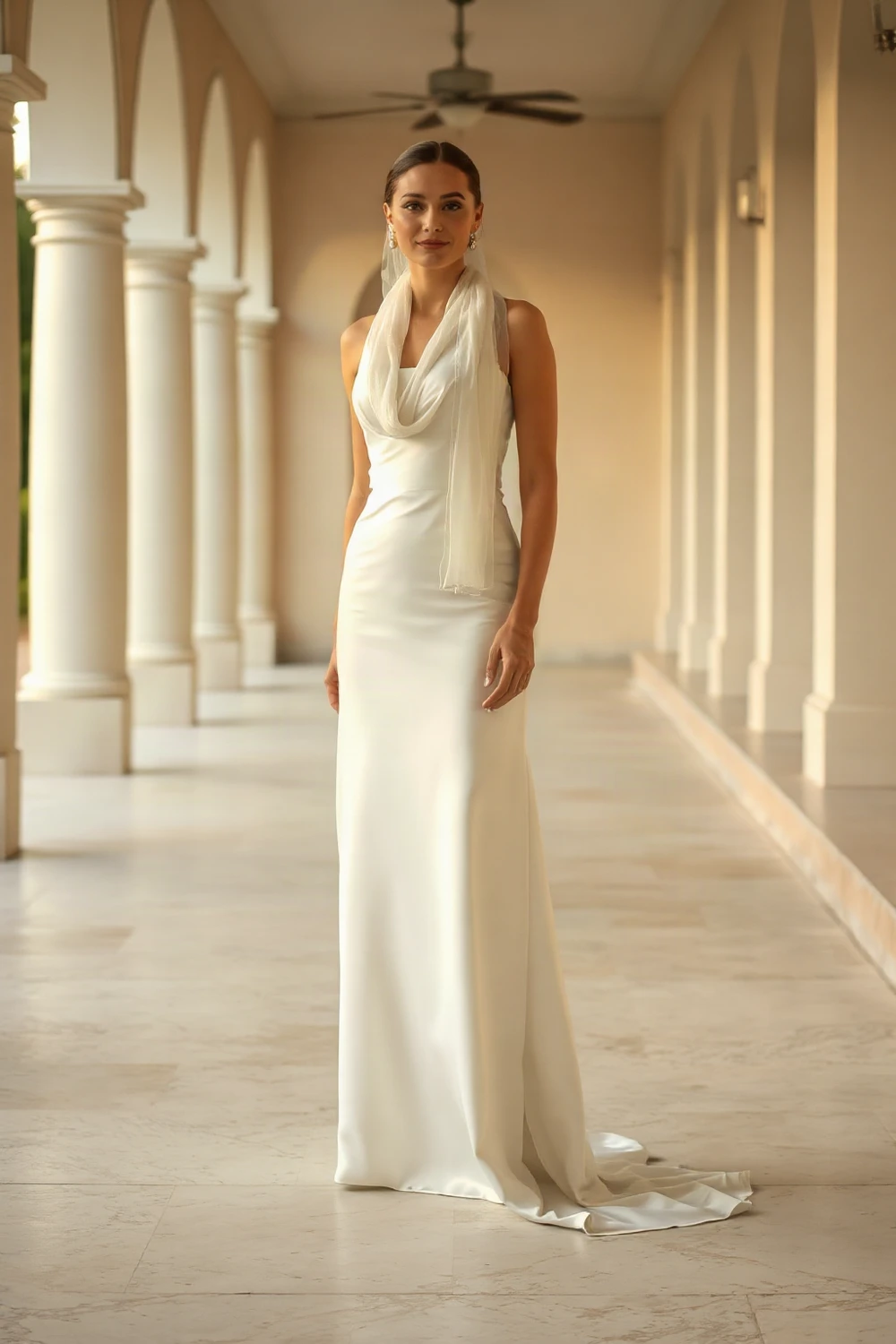
In the fifth look, a smooth sleeveless column dress gains its romantic character from a long scarf looped loosely around the neck. Its semi-transparent layer softens the area near the face, while the descending ends repeat the garment’s vertical direction. A small train and the colonnade’s repeated lines extend the same restrained rhythm without adding dense surface decoration.
This is a useful comparison for someone who prefers drape over applied ornament. Remove the scarf and the dress becomes more minimal; replace it with a cape and the outline occupies more width. If using a loose piece, check whether it stays comfortable at the neck and avoids catching on hair or earrings. Letting one end fall forward and one behind creates asymmetry, while arranging both in the same direction produces a more orderly result.
Managing Volume and Oversized Floral Details
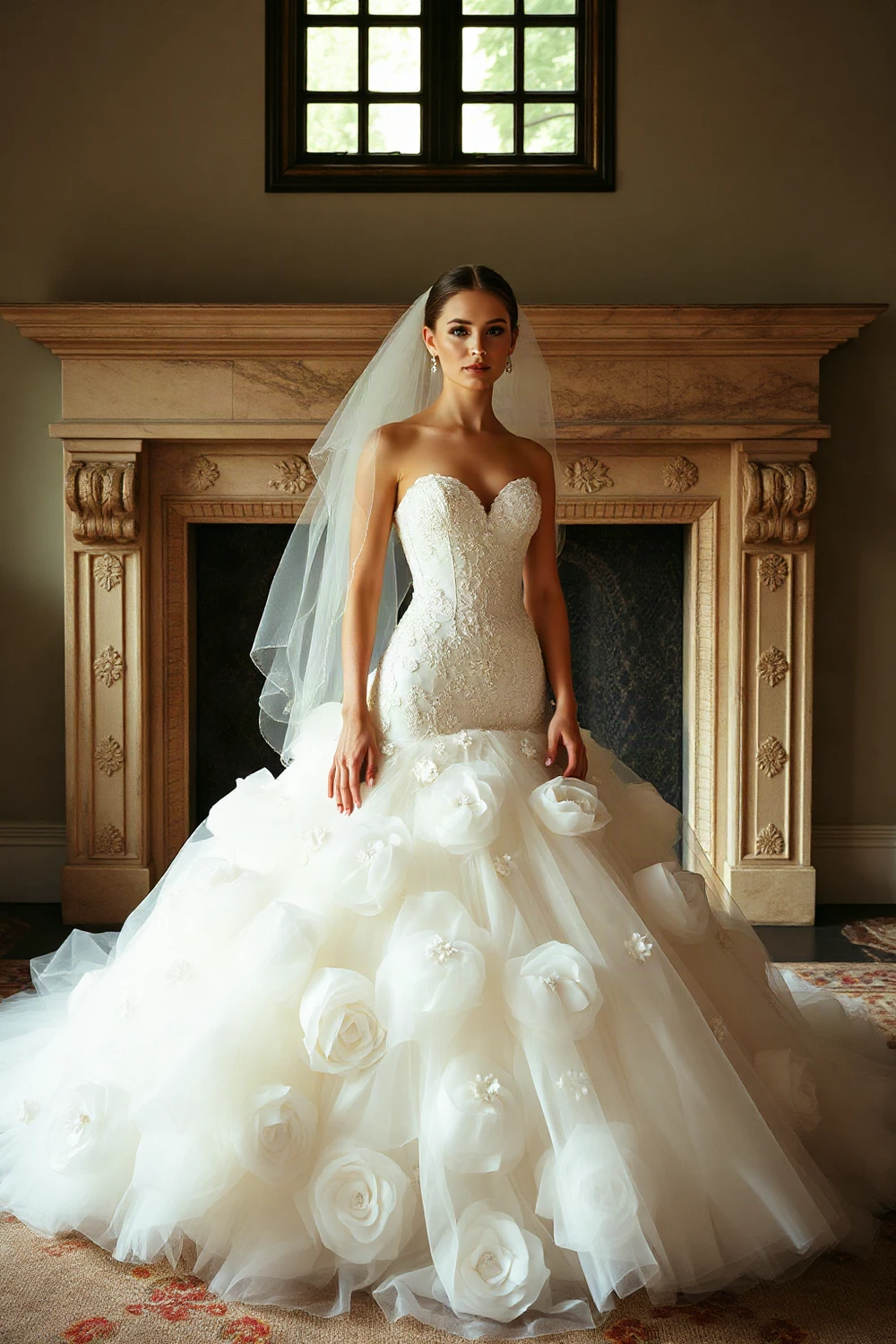
The final concept moves from a fitted, textured bodice into a broad layered skirt carrying flowers in several sizes. The raised blooms create depth, and the pale volume becomes especially prominent against the fireplace’s dark centre. Compared with the quiet romance of the two column dresses, this is a sculptural option designed to command more visual and physical space.
Assess such a skirt by the room it needs, not only by its reflection in a mirror. Door widths, table spacing, transport and the dance floor all become relevant. During a fitting, check whether dimensional flowers catch on the shoes or one another and observe how they settle while seated. Since both bodice and skirt are visually active, fewer accessories can improve balance. A compact bouquet allows the floral surface to remain distinct.
These six approaches show that there is no single formula for a romantic wedding dress. Layers can soften a mermaid shape, long sleeves can balance a short skirt, and a minimal column can gain movement through a cape or scarf. Even the most dramatic flower-covered skirt finds balance when its setting and accessories are considered carefully.
Begin with the hem length and range of movement that suit the real conditions of the day. Then refine the neckline, sleeves and surface detail. At the final fitting, walk, sit, turn and try the intended accessories together. Romance comes less from the number of decorative elements than from a coherent relationship between silhouette, motion and personal comfort.
Compare mermaid, tea-length, mini, column and voluminous romantic wedding dress styles through their sleeves, necklines, movement and relationship with the setting.
Frequently asked questions
How should shoes be chosen for a tea-length wedding dress?
Try the shoes with the dress because the toe shape, colour and ankle treatment remain fully visible. A tonal pair extends the line quietly, while colour or embellishment turns footwear into a focal point.
Can cape sleeves and a veil be worn together?
Yes, but test how the two sheer layers overlap around the shoulders and back. When the cape already creates strong movement, a simple, manageable veil usually provides clearer balance.
What should be tested when fitting a mini wedding dress?
Sit, bend, climb steps and consider wind as well as standing still. A slightly longer back hem can offer additional coverage and give the side view a more ceremonial line.
Is a scarf or a cape better for a column dress?
A scarf creates adjustable softness around the neck, while a cape begins at the shoulders and occupies more space in motion. The better option depends on the venue and whether you want the detail secured.
How can a skirt with oversized flowers be balanced?
Keep jewellery restrained and consider a simple veil and compact bouquet. Also test the skirt in doorways, between chairs and while seated so its dimensional flowers have adequate space.