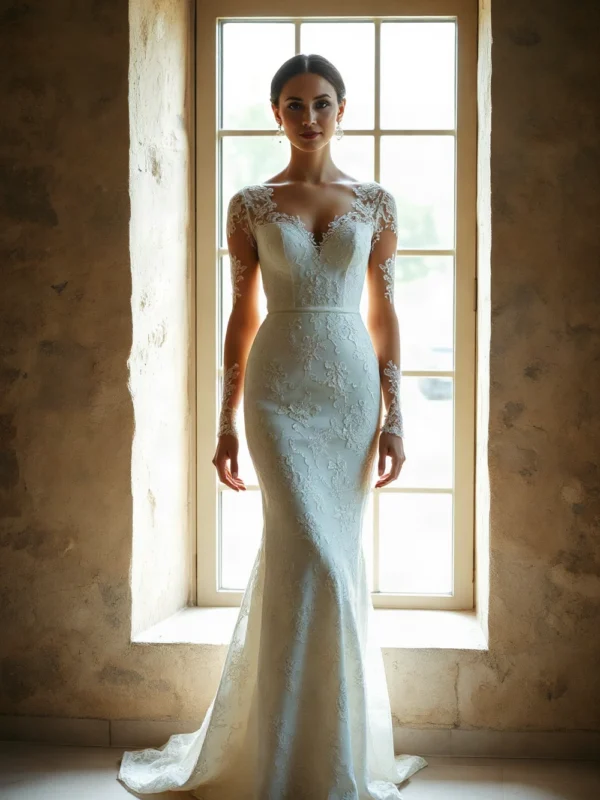
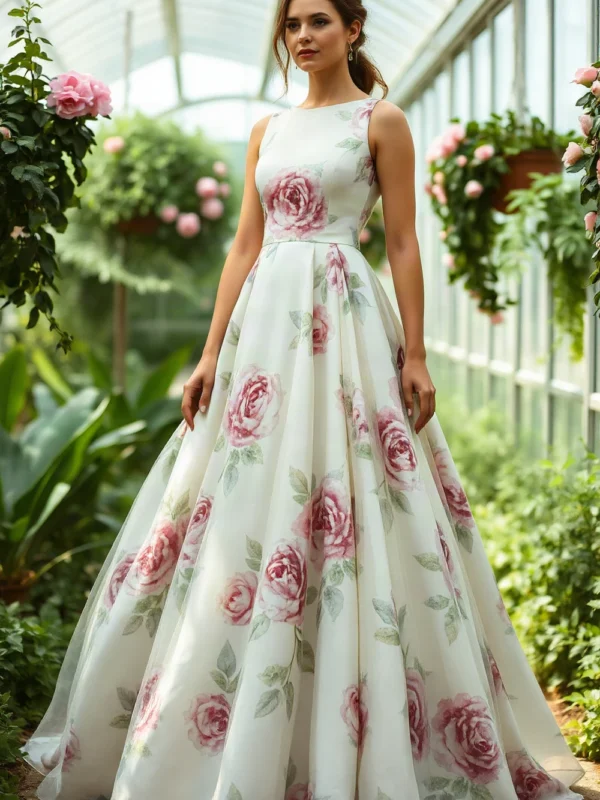
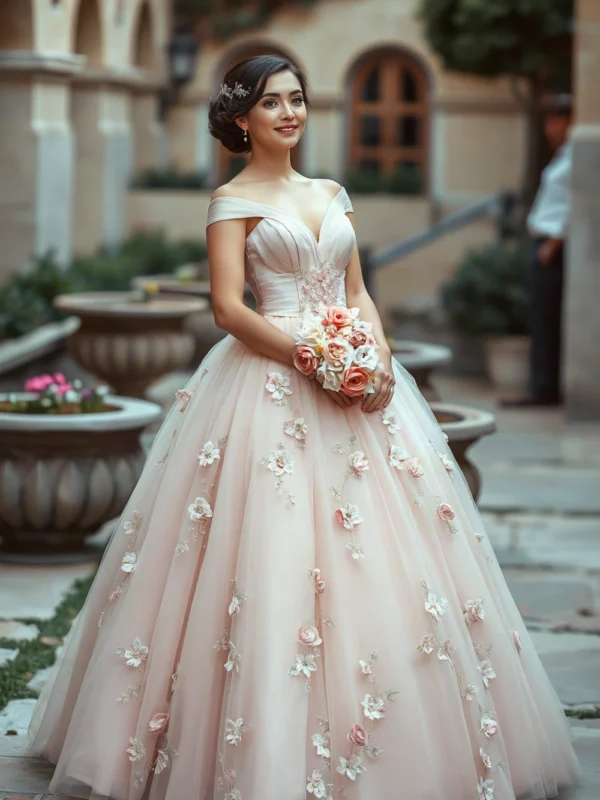
Off-the-shoulder lace wedding dresses may share an open shoulder line, but band width, neckline depth, waist position and skirt volume can create very different silhouettes. These six visuals move from densely floral bodices to nearly unembellished A-line skirts, from pointed waist transitions to natural waist seams, and from lightly pooled hems to a broad, decorative train. Together, they show where detail can be concentrated.
Comparison should not stop at the front. Shoulder treatments affect arm movement, an open back influences support and veil planning, and motif placement directs attention in photographs. The images establish visible shape, surface and composition, but do not verify fiber content or real construction. Identify the features you prefer, then test whether they remain balanced together during typical ceremony movements.
Framing a Deep Neckline with an Illusion Layer
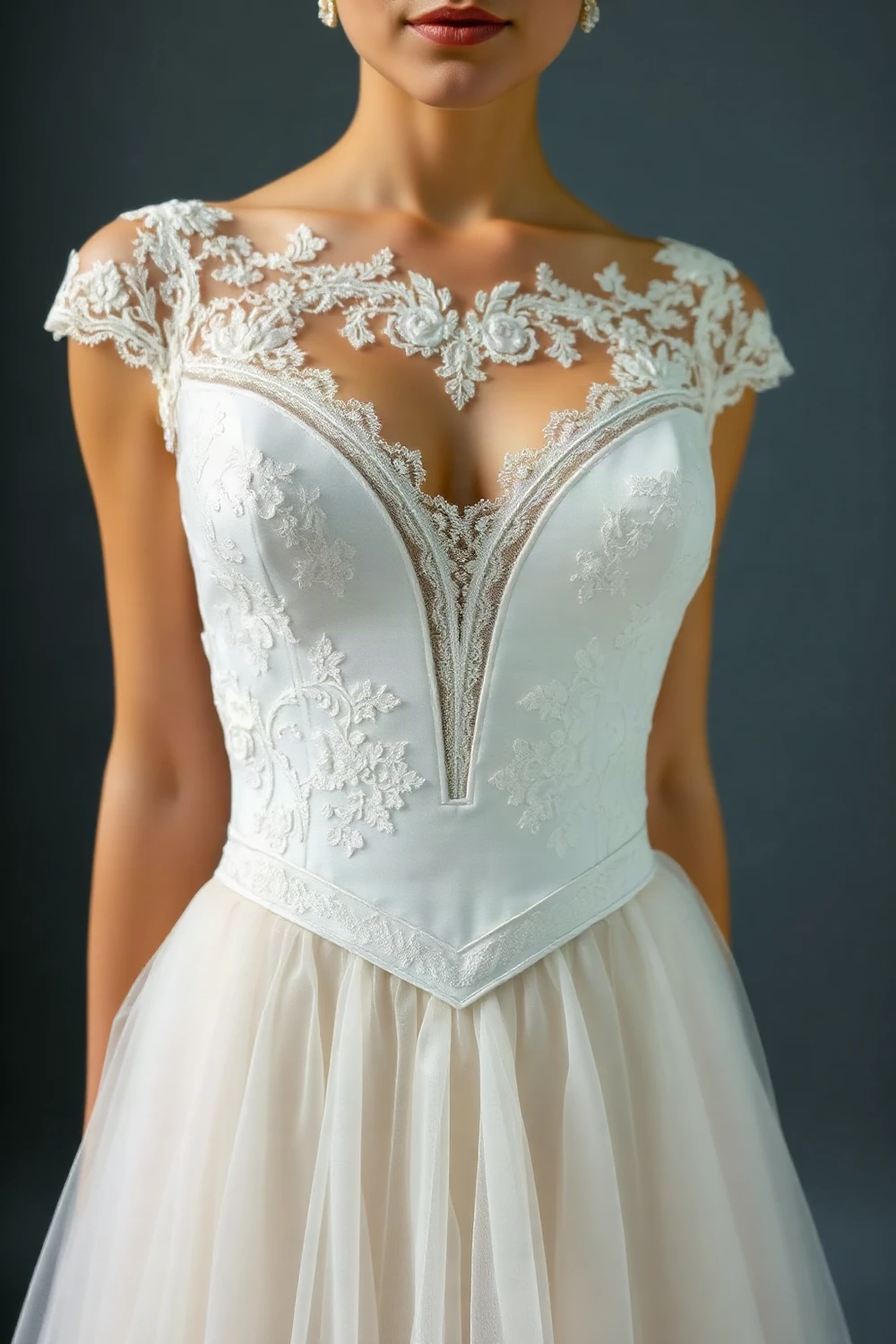
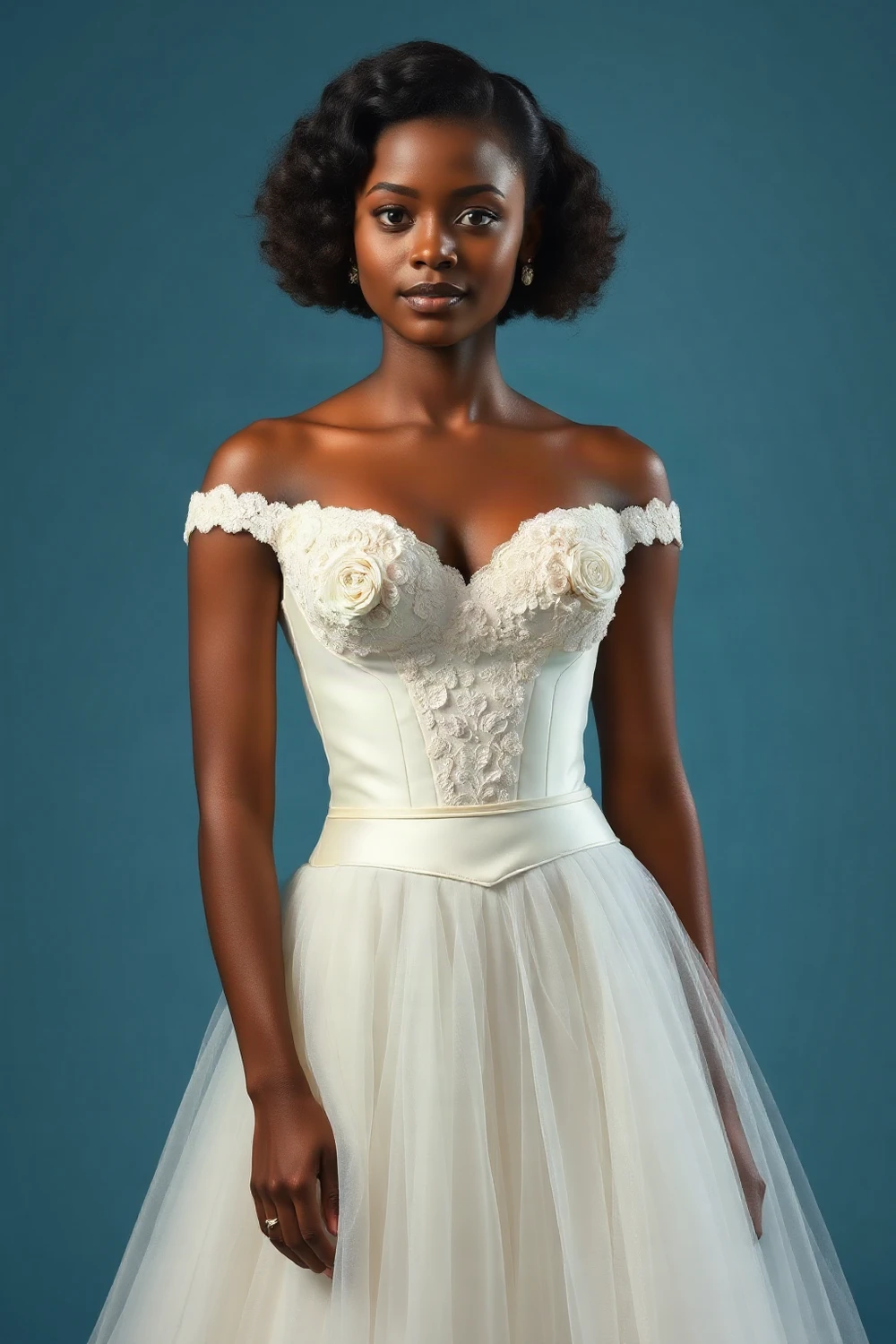
In the first image, a sheer-looking upper layer crosses the shoulders and forms a broad floral frame. Beneath it, a deep central plunge contrasts coverage with exposure. The smoother bodice makes the raised motifs more noticeable, while its pronounced pointed edge draws the eye below the natural waist and into the softly gathered skirt.
When considering this approach, decide whether the illusion area gives the coverage you want. Strong contrast with the skin can make it read as a separate yoke from a distance. The pointed waist creates a longer downward line than a straight seam, but emphasizes where the gathers begin. At a fitting, sit, lift your arms and imitate an embrace to check whether the plunge, shoulder edges and upper layer stay in place. View the waist transition from both the side and front.
Making Raised Flowers the Neckline Focus
The second image combines narrow off-the-shoulder bands with large rose-like forms and a defined sweetheart neckline. Concentrating the motifs around the bust keeps attention between the face and upper bodice, while the descending center section connects that focus to a pointed waist. Smooth side panels and a softly full skirt provide visual rest beside the active floral surface.
If sculptural flowers appeal to you, compare them at portrait distance and from farther across a ceremony space. Because they create a strong focal point, assess earrings, necklace and veil edging together to avoid competition. The shoulders are more exposed than in the first image, and the neckline boundary is more definite. At a fitting, check band stability, motif symmetry and natural-waist alignment. Smaller, flatter motifs could retain the silhouette with less visual volume.
Balancing an A-Line Skirt with a Long Center Panel
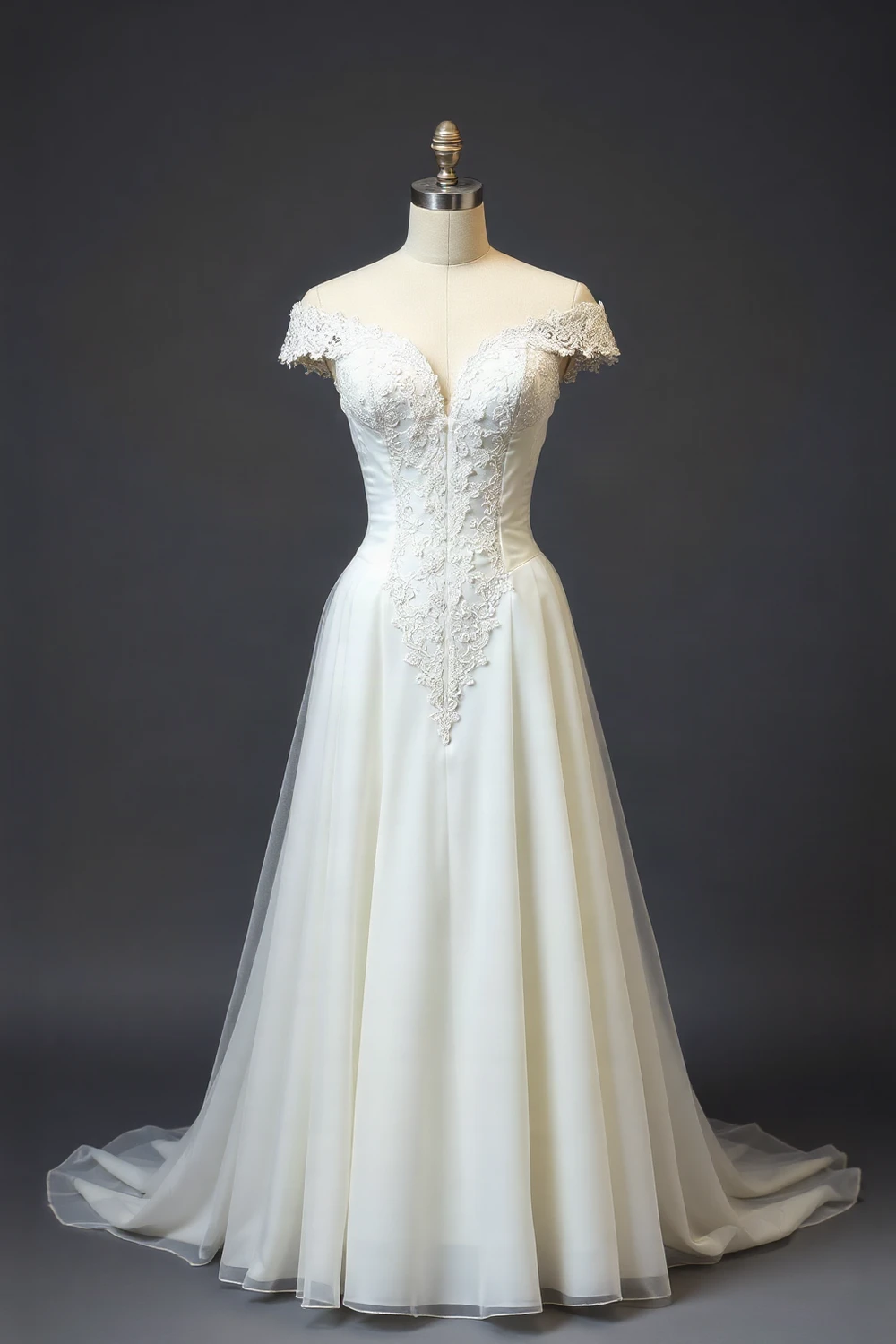
In the third image, lace-look decoration begins at the shoulder pieces, follows both sides of the plunging V-neck and extends into a long pointed panel over the skirt. With the surrounding surface relatively plain, this vertical route is especially clear. The soft A-line balances the detailed bodice without creating the breadth of a very full ball-gown skirt.
This arrangement provides an elongated motif direction without covering the whole skirt. Unlike the second image, where attention stays near the neckline, the center panel continues below the waist. A plain or lightly edged veil can preserve that contrast rather than add another dense pattern. At a fitting, confirm that the panel stays centered, the V-neck remains stable and the shoulder pieces allow raised arms. Test the hem with the intended shoes, since height affects the skirt’s fall and the amount that pools behind.
Connecting an Open Back to the Train
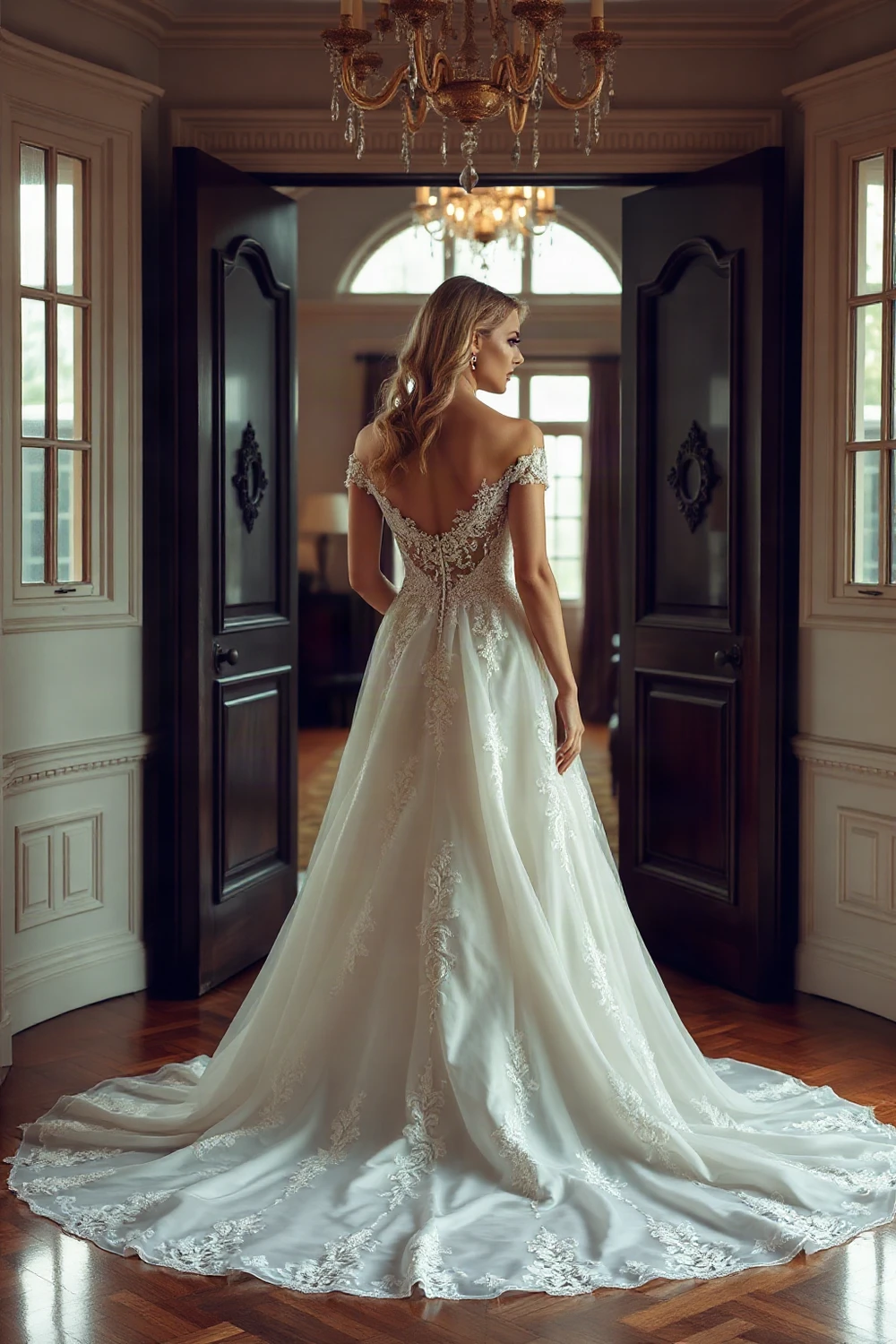
The fourth image shows why the back deserves as much attention as the front neckline. A low, motif-covered shoulder edge traces the deep V-back and joins denser decoration at the waist. Floral-looking paths become more widely spaced as they descend into the broad train, connecting the exposed back to the floor-level spread rather than treating them as separate features.
A wide train creates a defined ceremonial entrance and strong rear composition, but needs management in narrow aisles, on steps and during extended movement. Choose the veil after deciding how much of the V-back and descending motifs should remain visible. At a fitting, test the opening with the intended support, then turn your shoulders and raise your arms. Also try the method for lifting or securing the train while walking. Venue flooring matters to movement and appearance, especially with a broad hem perimeter.
Contrasting a Textured Bodice with a Plain Skirt
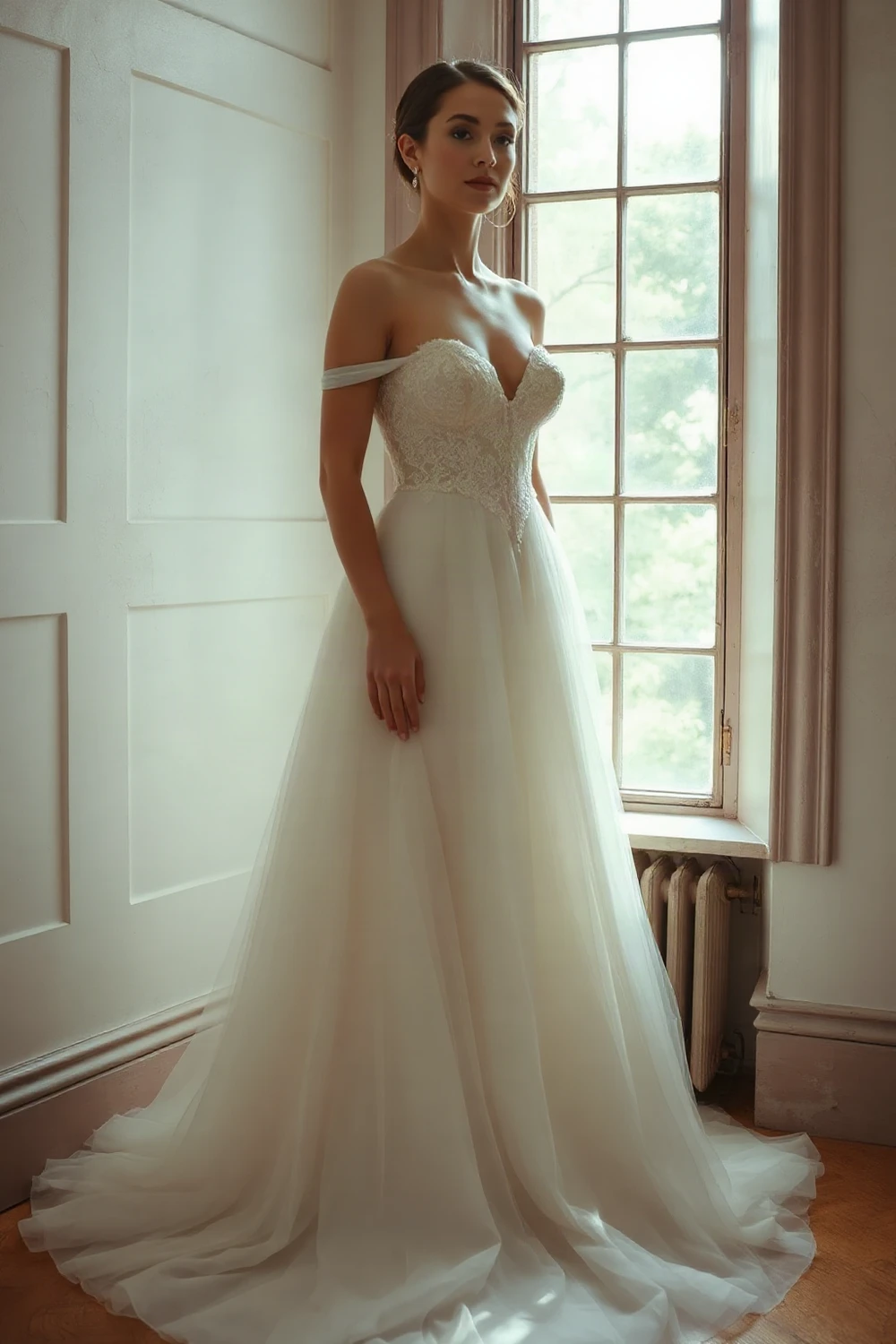
The fifth image pairs slim dropped bands and a densely textured sweetheart bodice with a layered A-line skirt that appears almost undecorated. This contrast keeps attention on the upper body and creates lighter, uninterrupted movement below the natural waist. The skirt ends in a soft pool rather than the expansive train shown in the previous visual.
This distribution suits someone who enjoys lace detail without wanting an active pattern across the entire silhouette. The quiet skirt leaves room for an embellished veil, although a border matching the bodice’s density could make the upper half feel crowded. Because daylight reveals overlapping layers more clearly, examine the lining and apparent transparency under different lighting. During the fitting, reach forward, sit and walk while monitoring the narrow bands. The waist seam should remain comfortably settled without pulling or shifting.
Coordinating Sparse Motifs with Simple Accessories
The sixth image combines broad folded-looking shoulder bands, a gentle sweetheart neckline and a smooth A-line skirt. Motifs create a restrained frame around the neckline and waist, then return in a few vertical groups near the skirt’s sides. A plain veil and compact pale bouquet complement the pattern without hiding its open spaces or making the front appear densely decorated.
This direction is a controlled alternative to raised flowers and heavily patterned skirts while keeping the off-the-shoulder line distinct. The clear center front also leaves the bouquet and waist shape legible. A compact bouquet can relate to the motif scale without copying every floral shape. At a fitting, test whether the folded bands rotate with arm movement, whether the veil catches against the bodice and how far the short train spreads while walking. Assess every accessory together for the most accurate view of balance.
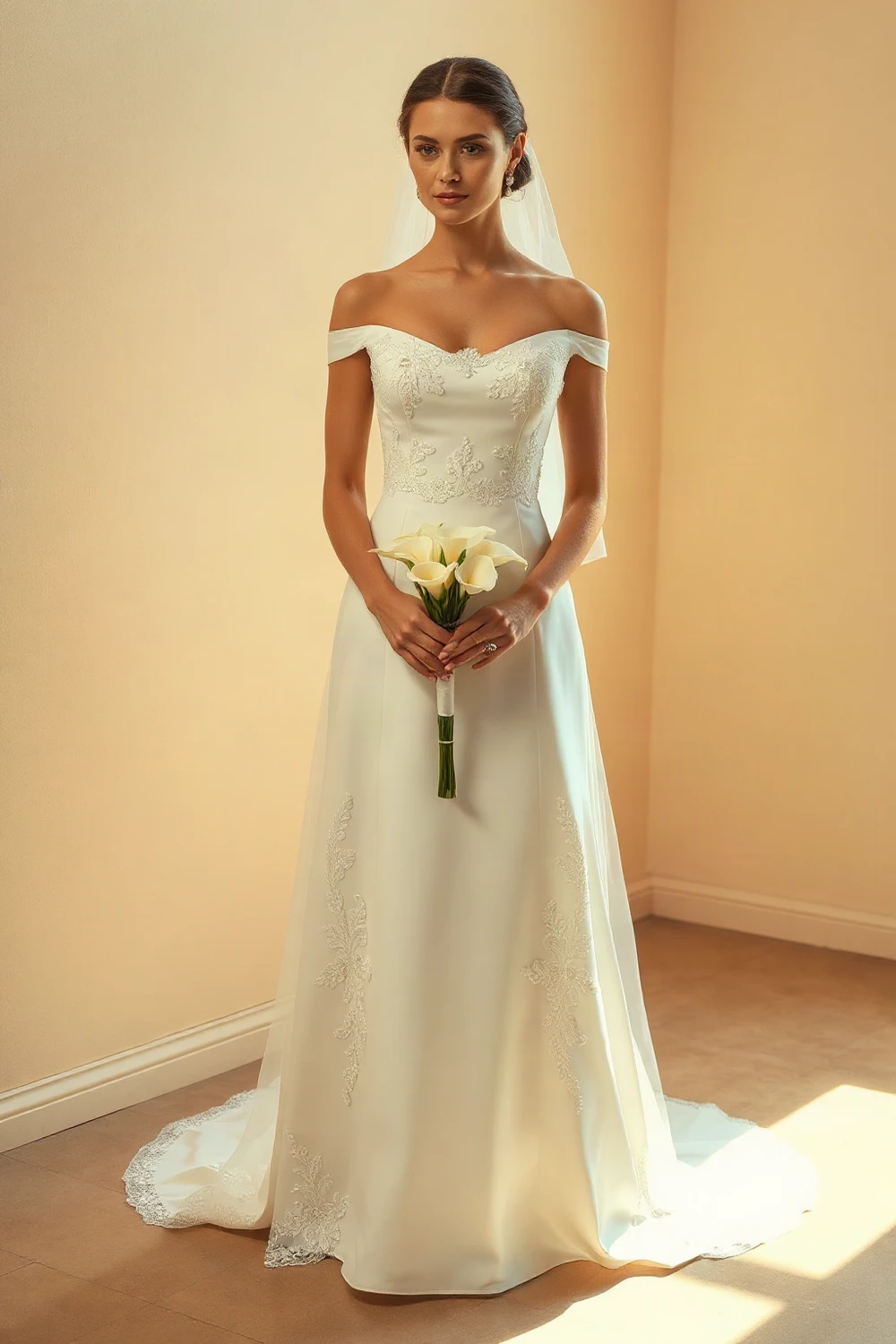
Choose an off-the-shoulder lace wedding dress by assessing the combined direction of its neckline, waist, motifs and skirt. An illusion layer can frame a deep plunge with more visual coverage; raised flowers emphasize the portrait area; a long center panel adds verticality; and an open back with a broad train creates a pronounced rear view. Plain skirts leave more space for accessories, while sparse motifs offer controlled continuity.
List practical priorities such as arm mobility, neckline depth, waist height, train handling and the back details a veil should reveal. Try comparable silhouettes with the intended shoes, under different lighting and while sitting, walking and greeting. The strongest option is not simply dramatic in a still image: its proportions and focal points remain coherent with the venue and the event’s movement pattern.
A visual guide to off-the-shoulder lace wedding dresses, comparing neckline coverage, motif placement, pointed and natural waists, A-line skirts, open backs and trains.
Frequently asked questions
How should off-the-shoulder bands be tested during a fitting?
Reach forward, lift the arms, sit and imitate a greeting or embrace. The bands should not pinch, rotate or pull the neckline downward. Repeat the movements with the support layer you intend to wear.
Should I choose a pointed waist or a natural waist seam?
A pointed waist creates a stronger vertical direction through the torso, while a natural waist seam defines the skirt transition more horizontally. Compare both from the front, side and in a seated position.
What veil works with a densely detailed lace-look bodice?
A plain veil or one with a fine edge can frame the bodice without adding another dense pattern. If you prefer a motif border, check at the fitting where it overlaps the back and shoulder decoration.
What should be tested with an open-back wedding dress?
Assess the opening with the intended support, veil placement, hairstyle and shoulder movement. If the dress has a train, test its gathering point and confirm that the rear motifs remain visible as intended.
How do I choose between a broad and a short train?
Consider aisle width, steps, floor texture and the amount of walking planned. A broad train creates a stronger rear composition, while a shorter finish needs less space for turns and transitions.