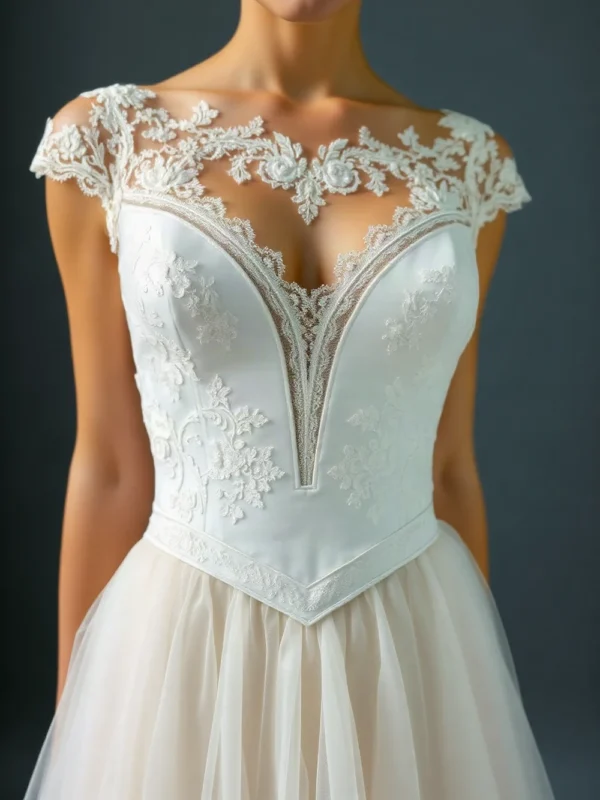
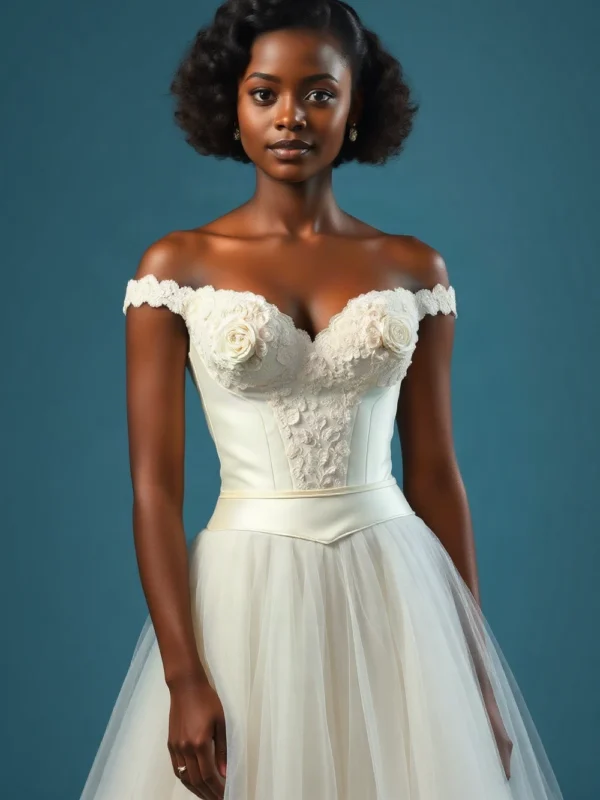
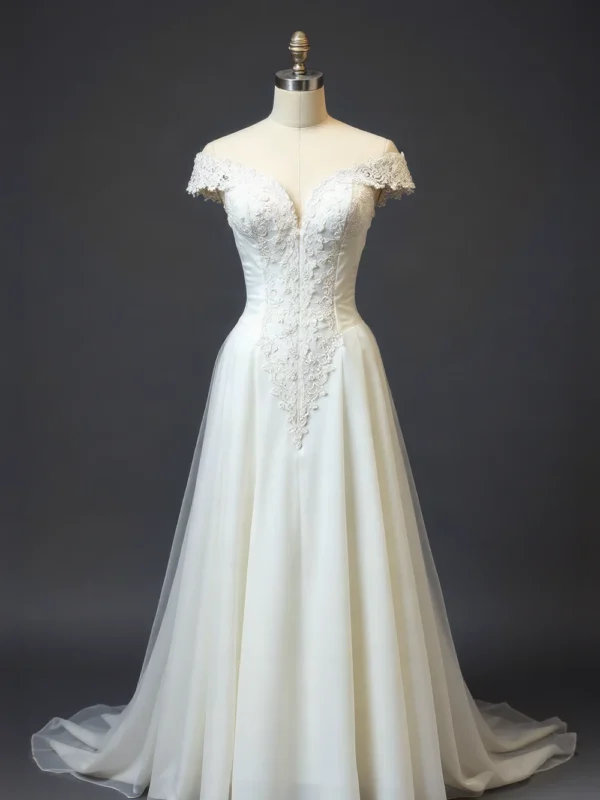
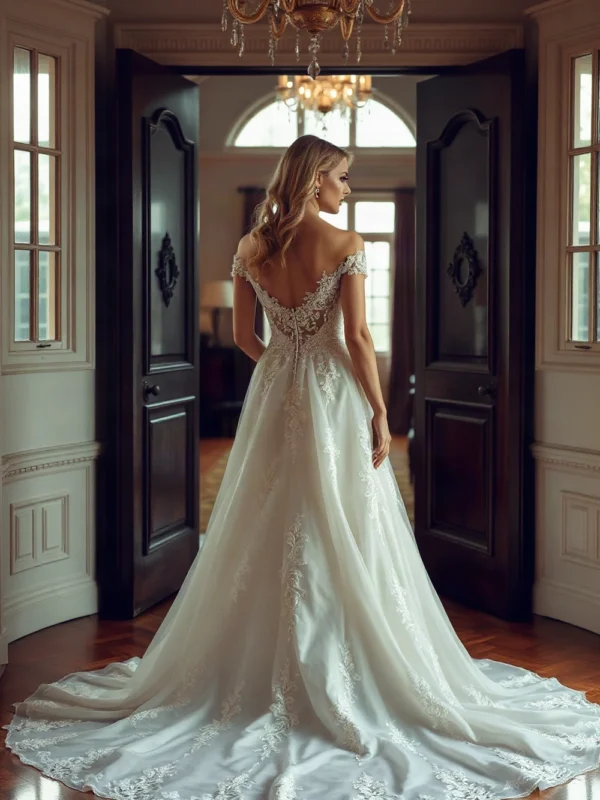
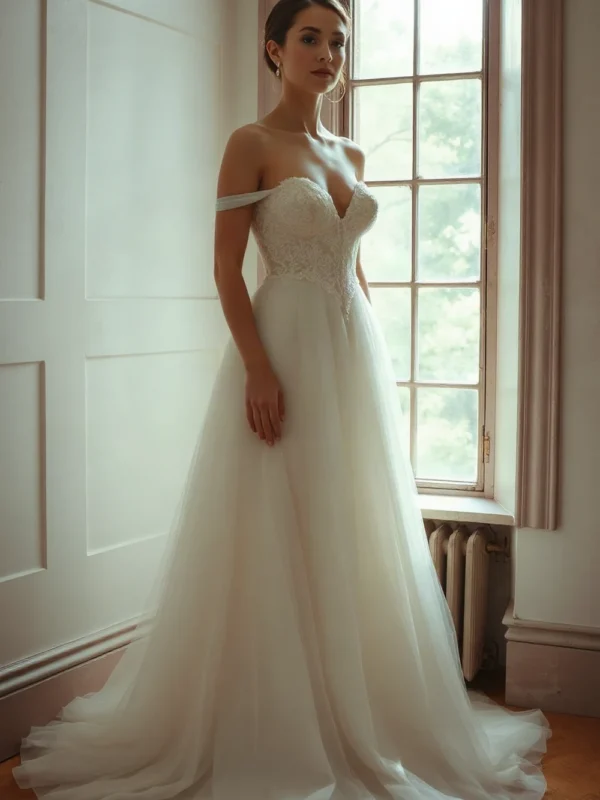
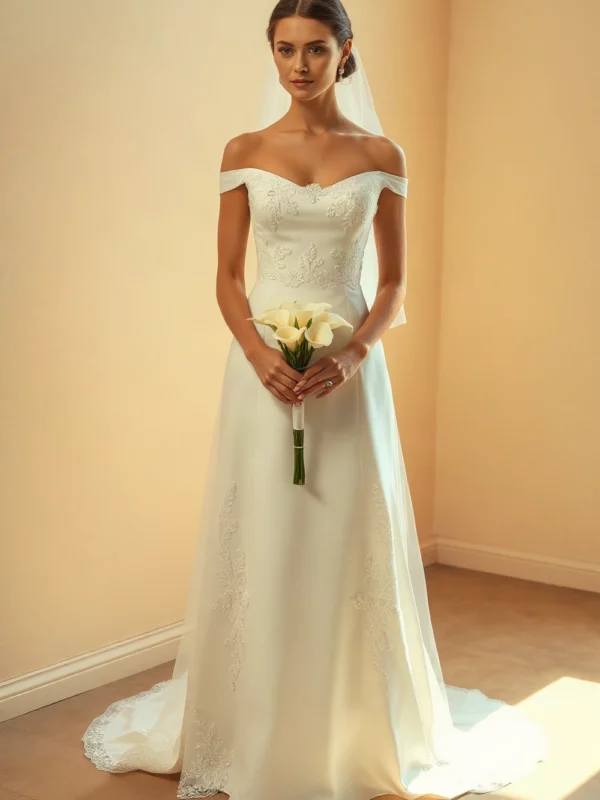
The shared theme is a wedding dress silhouette that leaves the shoulder line open or frames it with a lace-look layer. The first three images clarify front neckline and waist construction, while the remaining views expand the comparison to the back, the complete silhouette and accessory balance. Look beyond the shoulder treatment: where the motifs begin, taper or stop changes the direction of the entire dress.
In the first image, a sheer-looking floral yoke surrounds a deep central plunge and leads to a pointed waist. The second shifts the emphasis to raised floral forms, narrow dropped bands and a fuller layered skirt. In the third, a long central motif panel draws the eye from a plunging V-neck into an otherwise restrained A-line skirt. The first two suit a more decorative bodice direction; the third creates a cleaner vertical division between an embellished center and plain sides.
The fourth image shows why the rear view deserves a separate decision. Its deep V-back, descending motifs and broad train form one continuous composition. The fifth is a lighter counterpoint, combining slim arm bands and a textured sweetheart bodice with an almost undecorated skirt. The sixth feels more controlled: folded-looking shoulder bands frame a gentle neckline, while sparse skirt motifs leave room for a plain veil and compact pale bouquet.
Compare the ideas using three practical criteria: the balance of exposure and coverage above the bodice, the position and shape of the waist transition, and the amount of floor space required by the skirt. During a fitting, raise the arms, sit, walk and imitate a greeting or embrace. If the back matters most, assess the veil and train together. If accessories are central to the look, view the bouquet, earrings and veil edge beside the actual motif scale rather than choosing each item in isolation.