Colorful wedding dresses do more than replace white with another shade. Where color appears, which part of the silhouette it emphasizes and how it relates to surface detail can change the character of a look. These six concepts range from a crimson diagonal and windblown navy back panel to blush and mint florals, roses against black and continuous rose-gold shine.
Comparison should extend beyond hue. Consider how the front and back relate, how color may register in photographs, how much space the skirt needs and whether the neckline allows for jewelry or a veil. These images offer visual inspiration rather than evidence of purchasable garments. Each section examines the visible design logic, its differences from the other concepts and practical questions relevant when adapting the idea to a wedding look.
Graphic asymmetry from a crimson diagonal
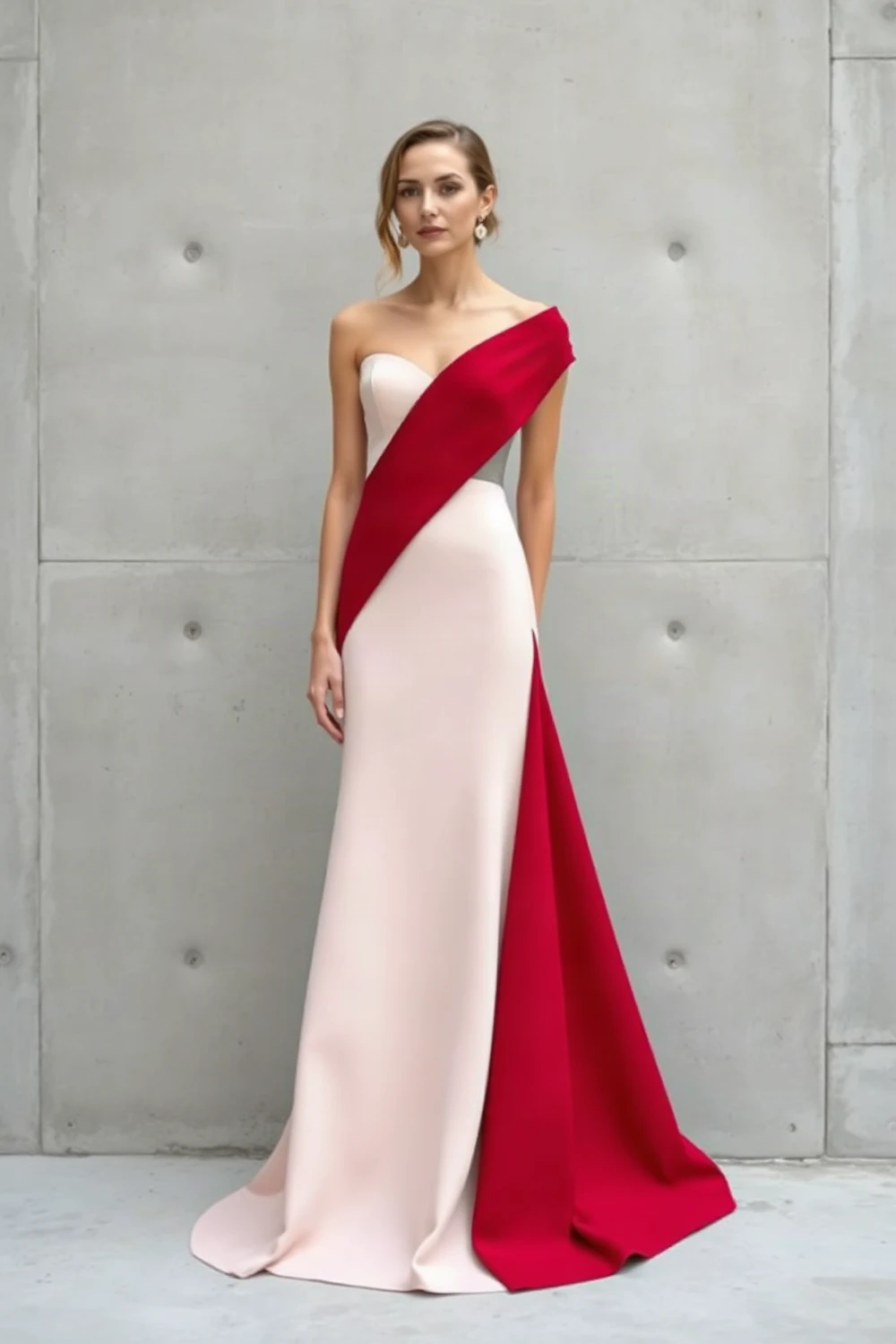
The first concept transforms a pale pink column gown with a broad crimson panel running diagonally from one hip toward the opposite shoulder. It divides the torso visually, covers one shoulder and creates an asymmetric neckline. Widening beside the skirt before reaching the floor, the panel links the front composition to a train-like side accent. Concentrated color feels more controlled than an entirely red gown but much bolder than narrow piping.
This clean, contemporary approach avoids floral decoration and all-over shine. Its placement should be assessed from the side and while seated, not only from the front, while the shoulder width must permit comfortable arm movement. Small earrings and a neutral bouquet would preserve the crimson line. For a pronounced two-tone effect without an expansive skirt, this narrow graphic silhouette offers a clear direction.
Movement created by a navy back panel
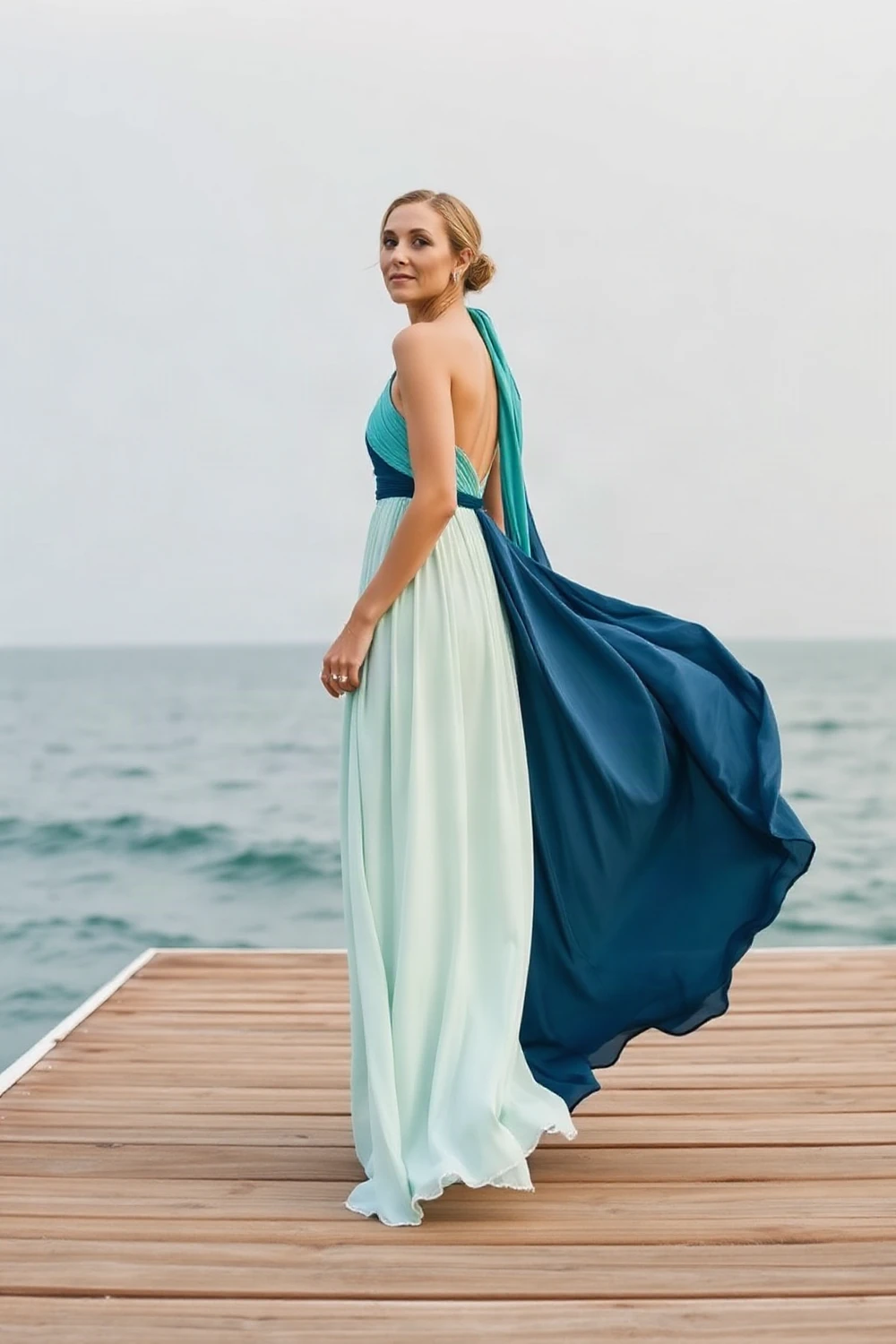
The second look combines a pale mint skirt, turquoise bodice and deep navy waistband. Its defining feature begins at the open back: a navy panel that expands toward the side when caught by the wind. The front presents a gentle transition between cool colors, while rear and three-quarter views gain volume, direction and photographic movement, reinforced by the open water and muted horizon.
The feature could make an entrance or outdoor portrait dynamic, although wind, narrow aisles and chair arrangements require consideration. A similar panel should not be assumed detachable; actual construction and manageability would need confirmation. Wearing the hair up reveals the open back. Unlike the crimson concept’s front-facing division, this design reserves its strongest statement for the rear, supporting a restrained arrival view and a more dramatic exit.
Scattered flowers across a blush ball gown
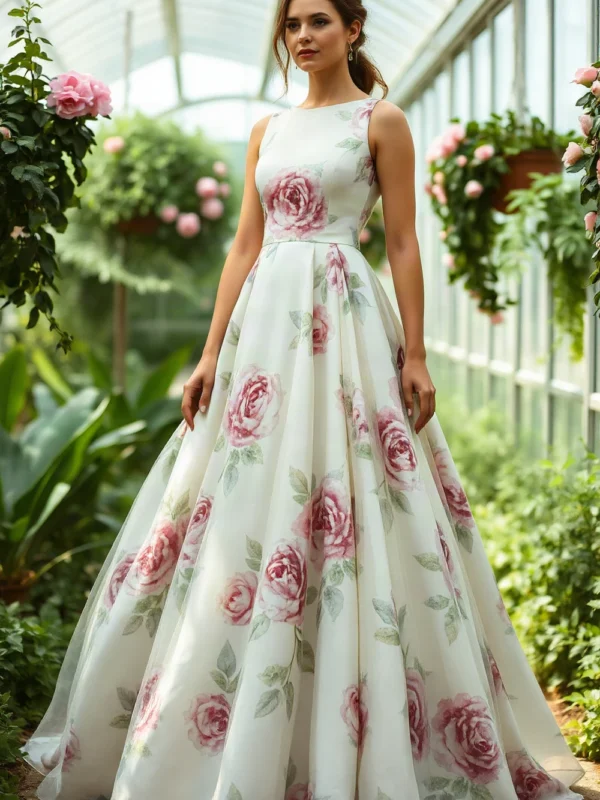
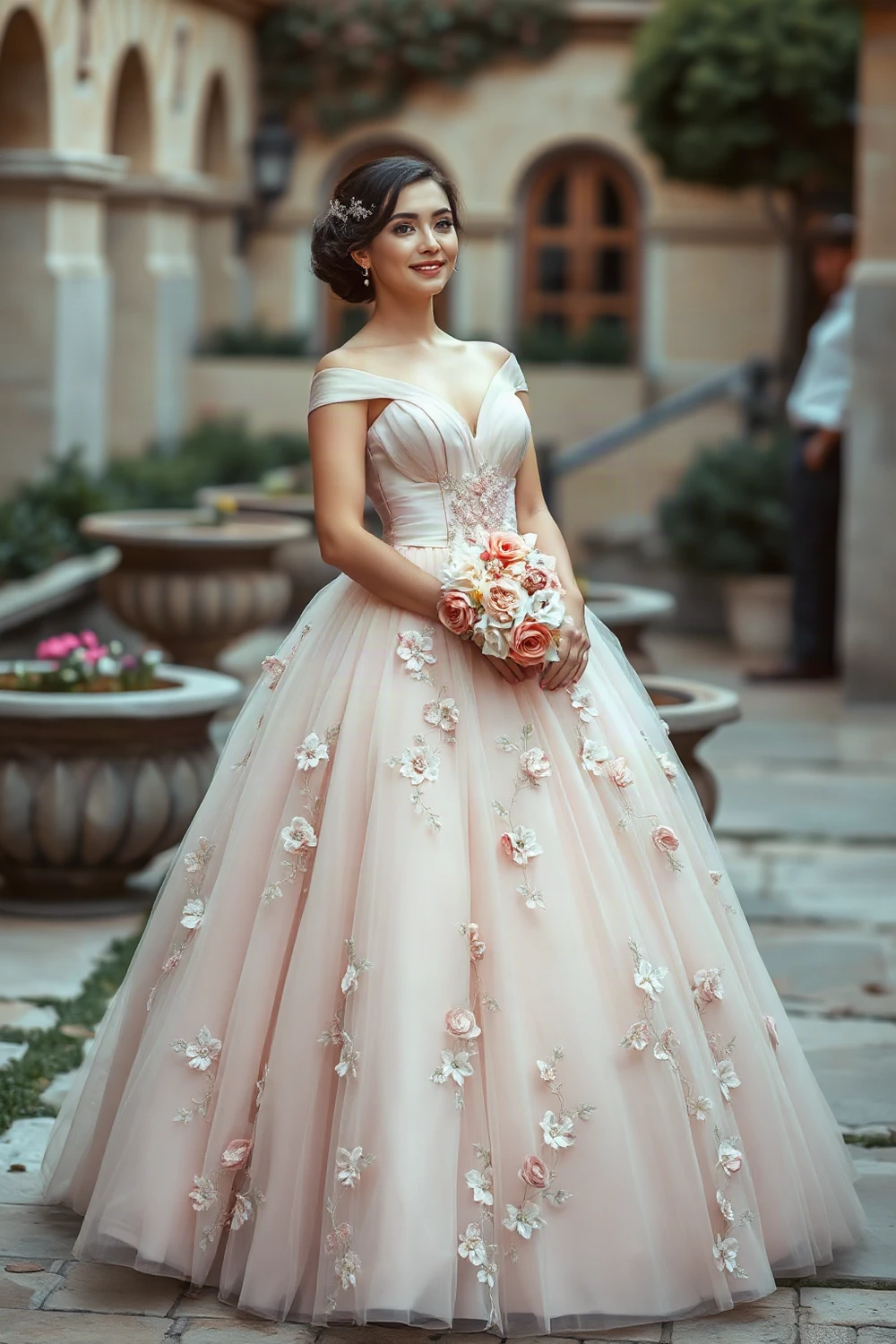
In the third image, blush provides a romantic base for a broad ball-gown silhouette. White and pale pink flowers appear at intervals rather than covering the whole surface, leaving the soft folds and substantial skirt visible. An off-the-shoulder V neckline opens the upper body, while denser flowers at the waist connect the fitted bodice with the expansive skirt. The result is detailed without becoming a uniform floral field.
This scattered arrangement creates a lighter rhythm than densely patterned lace or appliqué. The tonal rose bouquet supports the palette, though its size partly hides the waist detail. A styling trial should consider bouquet height, arm movement at the neckline and the space required for sitting in the full skirt. Compared with the black floral concept, the contrast is much softer, combining color and three-dimensional-looking detail with a gentle rather than theatrical impression.
Florals framing a pale mint A-line neckline
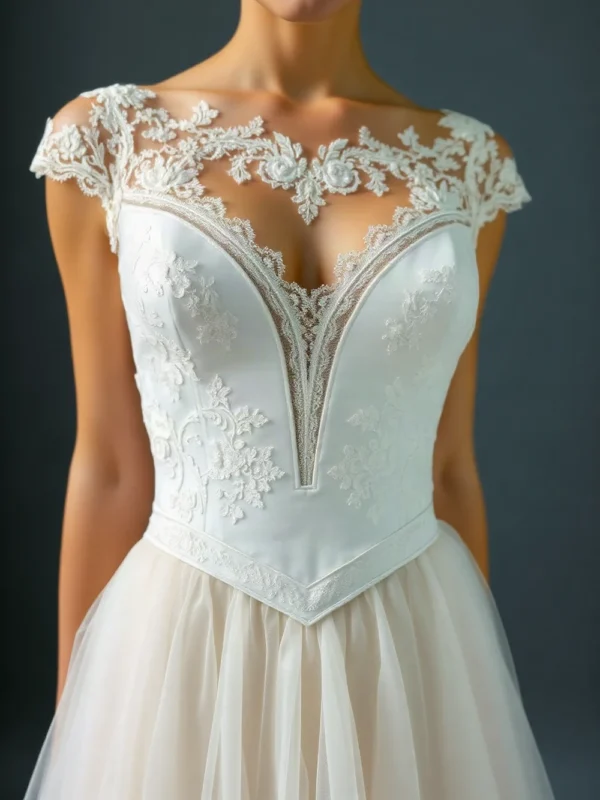
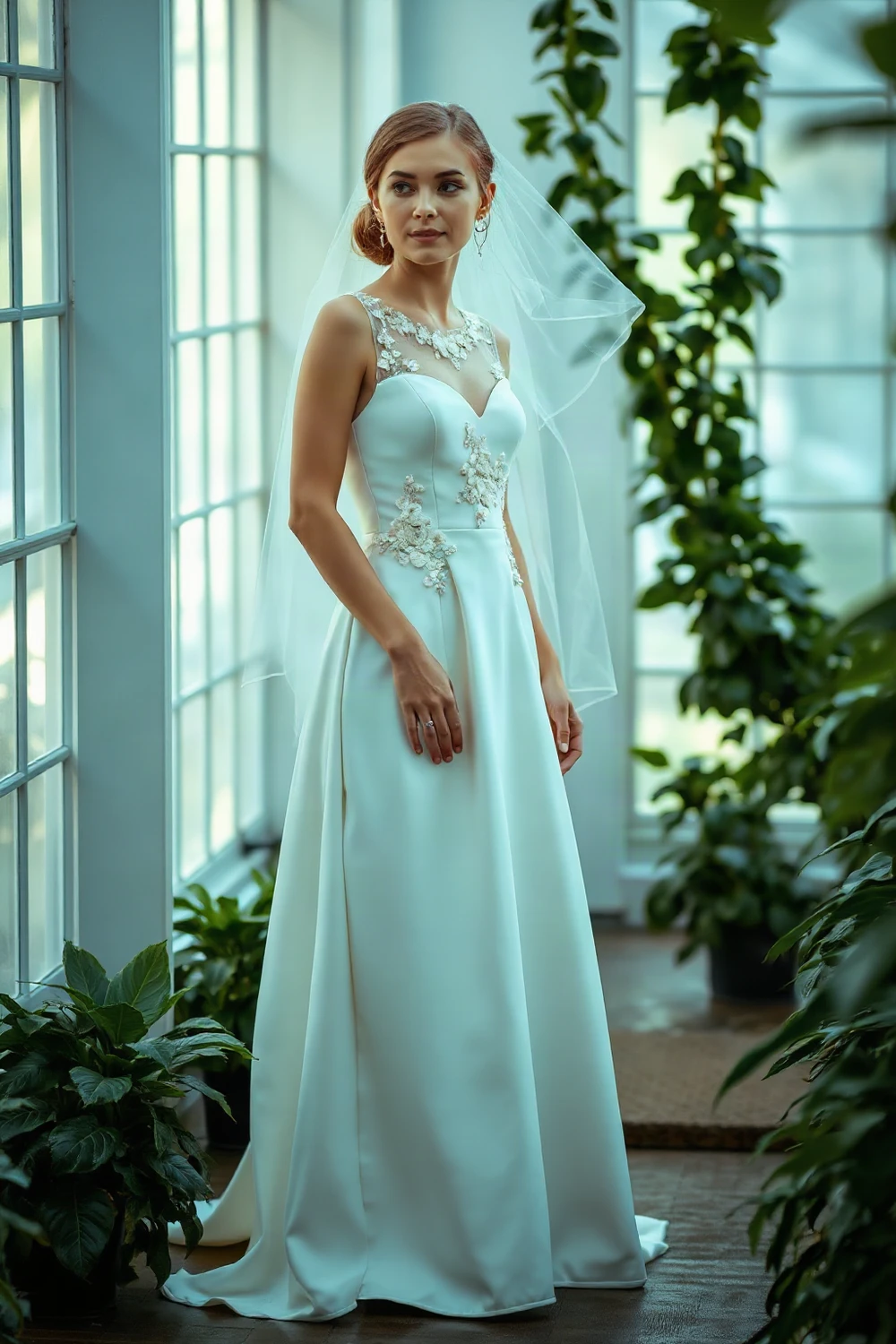
The fourth concept places very pale mint on a clean A-line silhouette. Rather than spreading across the skirt, flowers gather around the sheer-looking high neckline, one side of the bodice and the waist. The sweetheart-shaped inner neckline and floral upper layer frame the face, while the broad, almost plain skirt quiets the composition. A short veil supplies a soft rear layer without concealing the full outline.
This arrangement provides floral detail without the blush ball gown’s fullness or extensive decoration. Because the neckline already functions like a necklace, strong additional jewelry could crowd the upper area. The illusion section should be viewed in daylight and indoor lighting to see how it appears against the skin. The veil edge should also be checked against the flowers. Although the plain skirt allows a more noticeable bouquet, its colors should still be tested beside the cool mint.
High floral contrast on a black ball gown
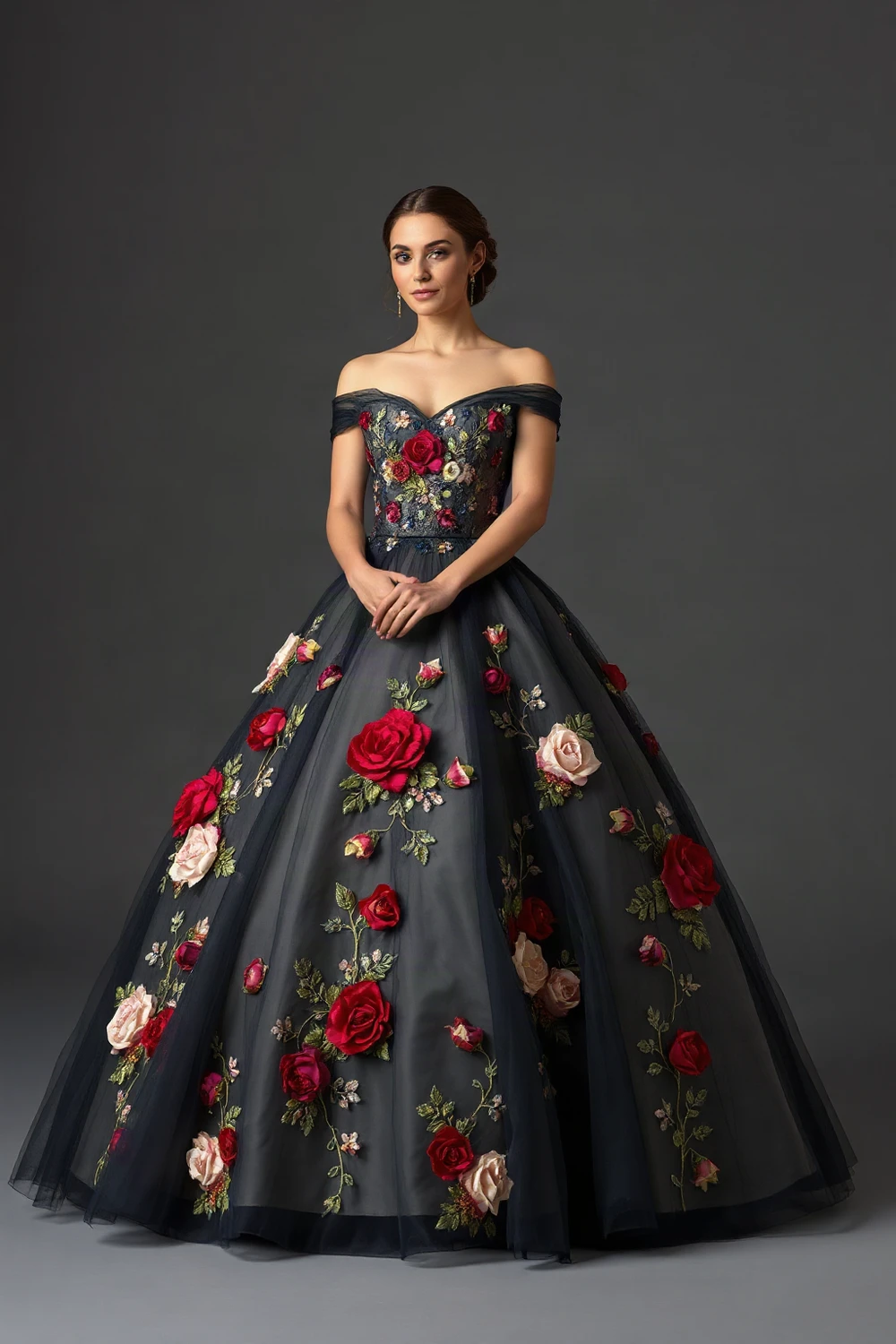
The fifth look combines a black and charcoal ball-gown silhouette with red, blush and small pale flowers. Against the dark base, the roses and connecting green stems remain readable from a distance. Flowers concentrate around the off-the-shoulder bodice to frame the face, while large roses lead the eye across the considerable skirt width. Strong contrast, rather than a delicate tonal transition, defines the design.
The gown already serves as the principal decorative feature, so combining a crown, large necklace, patterned veil and multicolored bouquet could overwhelm it. One or two restrained companions may create better balance. A photography test could show whether the details remain visible in lower venue lighting. This concept is more dramatic than the blush floral gown and much more voluminous than the metallic column, offering a clear reference for someone drawn simultaneously to botanical detail, a dark ground and an expansive silhouette.
Continuous metallic impact in rose gold
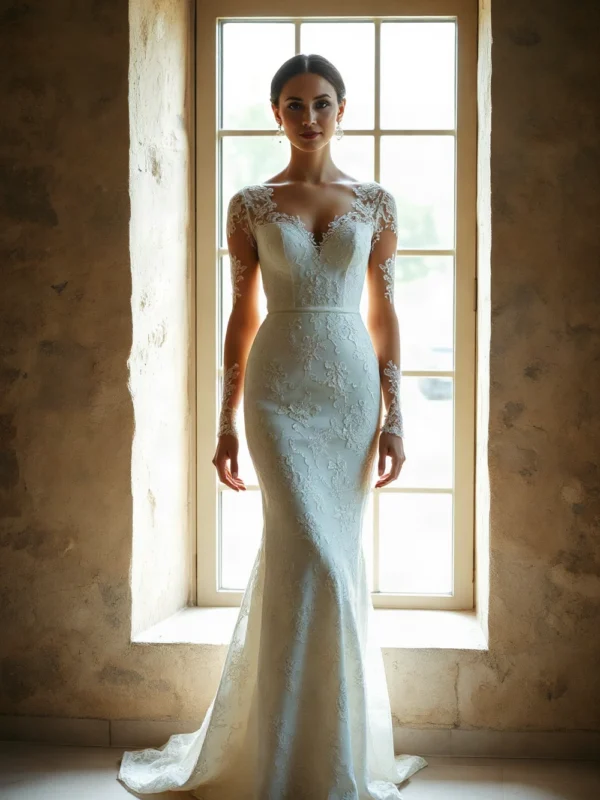
The final look replaces flowers and contrasting panels with rose-gold reflection across a long-sleeve column silhouette. A simple round neckline, defined waist and gently widening lower skirt let the sparkling surface read continuously. The small train forms a reflective border across the floor, and the dark studio background emphasizes the warm metallic color. Illumination, rather than motif placement, creates variation across this gown.
This approach favors a long, controlled line over ball-gown volume. Because reflective surfaces can change under different light sources, the color should not be judged from one studio view alone. Daylight, warm venue lighting and flash photography should be compared when possible. Sitting, extending the arms and walking also matter with long sleeves and a close body line. Small monochromatic jewelry suits the all-over shine, which already acts as a major accessory, while a compact bouquet could provide contrast without disrupting the vertical rhythm.
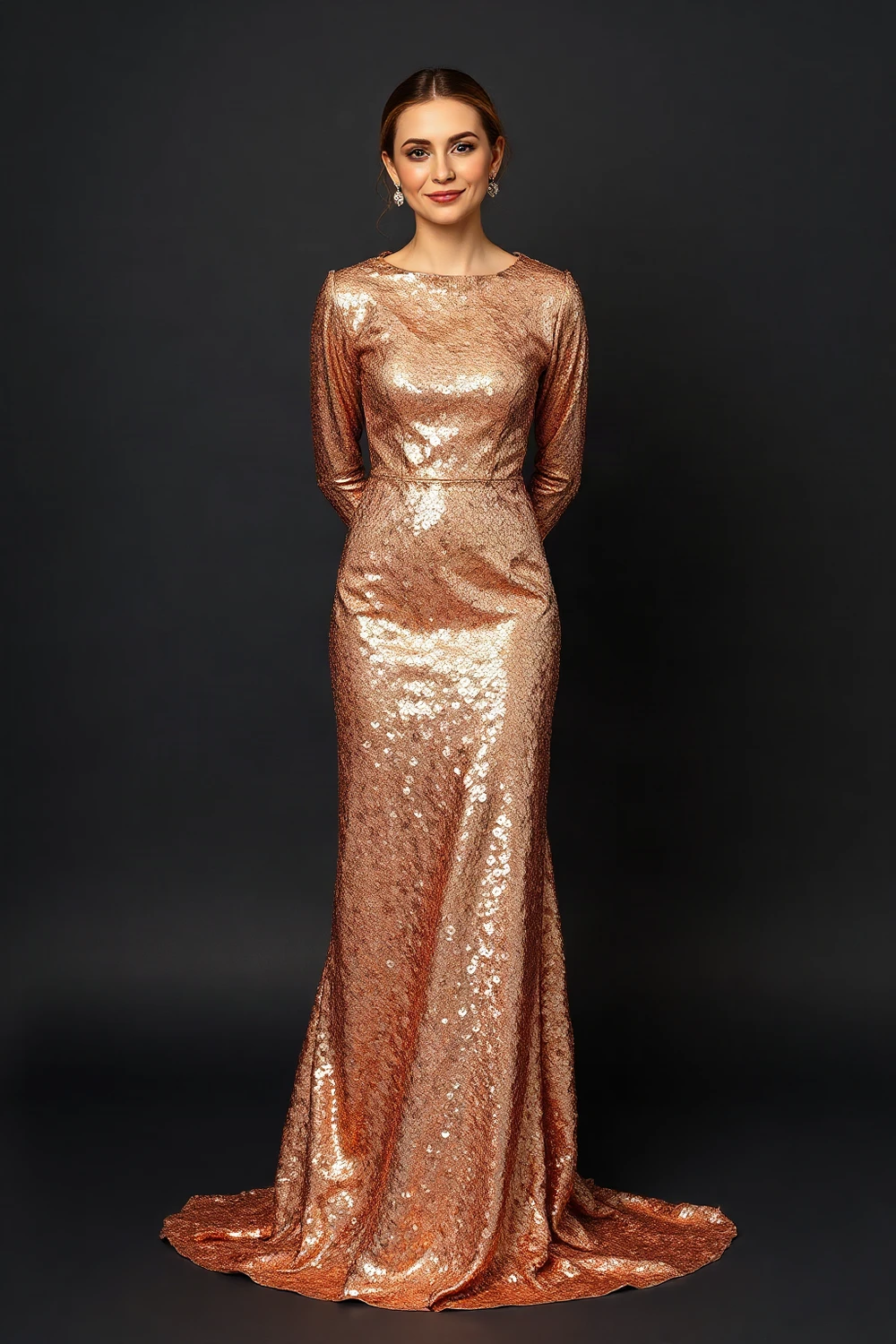
Together, these concepts demonstrate that choosing a colorful wedding dress involves more than naming a preferred shade. The crimson panel redirects the silhouette diagonally, the navy back accent emphasizes motion, and the blush and mint florals distribute detail differently. Black produces emphatic motif contrast, while rose gold makes reflected light the central design element.
Begin with a silhouette suited to the event and desired freedom of movement, then decide how much of it should carry color. Assess front, side and back views while walking and sitting, and compare the look under more than one type of illumination. Keep the bouquet, veil and jewelry focused on supporting the strongest feature rather than adding competing themes. Color then becomes part of the silhouette and setting instead of an isolated decoration.
Compare colorful wedding dress ideas ranging from crimson and navy panels to blush florals, a black botanical surface and rose-gold shine, with practical guidance on silhouette, styling and movement.
Frequently asked questions
Where should the second color sit on a two-tone wedding dress?
A diagonal front panel creates an immediate graphic statement, while a back panel keeps the arrival view quieter and adds impact in motion. Compare the placement from the front, side and rear.
What bouquet works with a blush floral ball gown?
A tonal blush arrangement can continue the soft palette, but it should not conceal important waist details. A smaller monochrome bouquet or a foliage-led design can provide a calmer alternative.
Can a veil work with a black floral wedding dress?
Yes. A plain veil with a simple edge can avoid competing with the high-contrast roses. Its length should be tested against the broad skirt so the rear floral composition remains visible.
Which lighting should be used to test a metallic gown?
Compare daylight, the venue’s warm or cool interior light and flash photography when possible. A reflective surface can appear brighter, darker or slightly different in tone under each source.
Does a floral illusion neckline need a necklace?
Not necessarily. Flowers around the collarbone already create a necklace-like frame, so small earrings may complete the look without crowding the neckline.