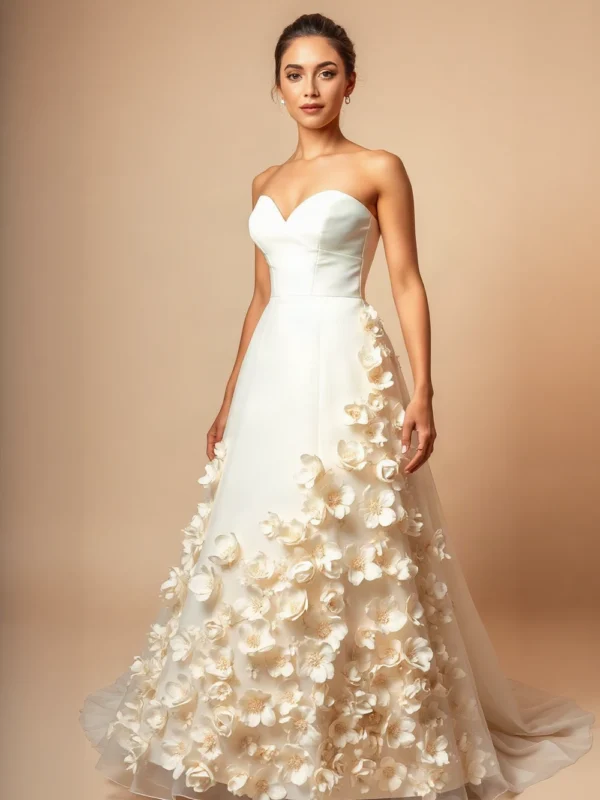
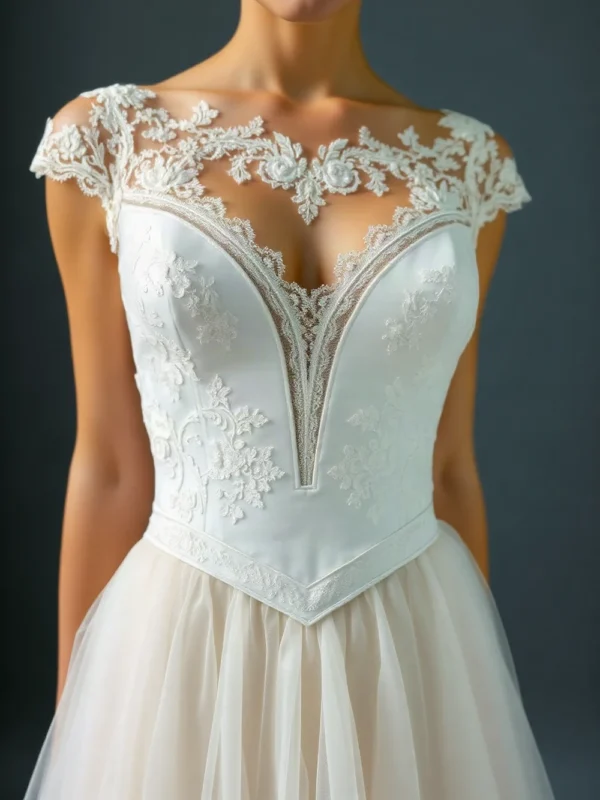
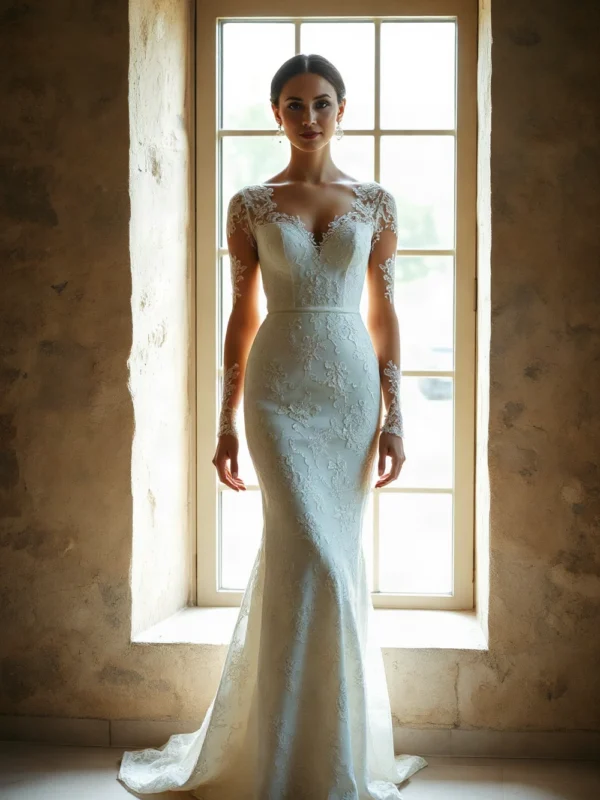
Elegance in modest wedding dress silhouettes involves more than long sleeves or a raised neckline. The shoulder-to-hem line, where volume begins, and the balance of structure and decoration can transform a look. Dresses in the same white color family communicate differently through a cape, sheer sleeves, square neckline, ornamental border, or buttoned back.
These six concepts are comparisons, not one ideal. Some follow the body vertically; others gain presence through volume, tiers, or ceremonial decoration. Assess the back, sleeve movement, hem circumference, and setting, not just a static front. Relating details to movement, accessories, and personal coverage can focus a fitting shortlist without treating any image as a ready-made product or universal solution.
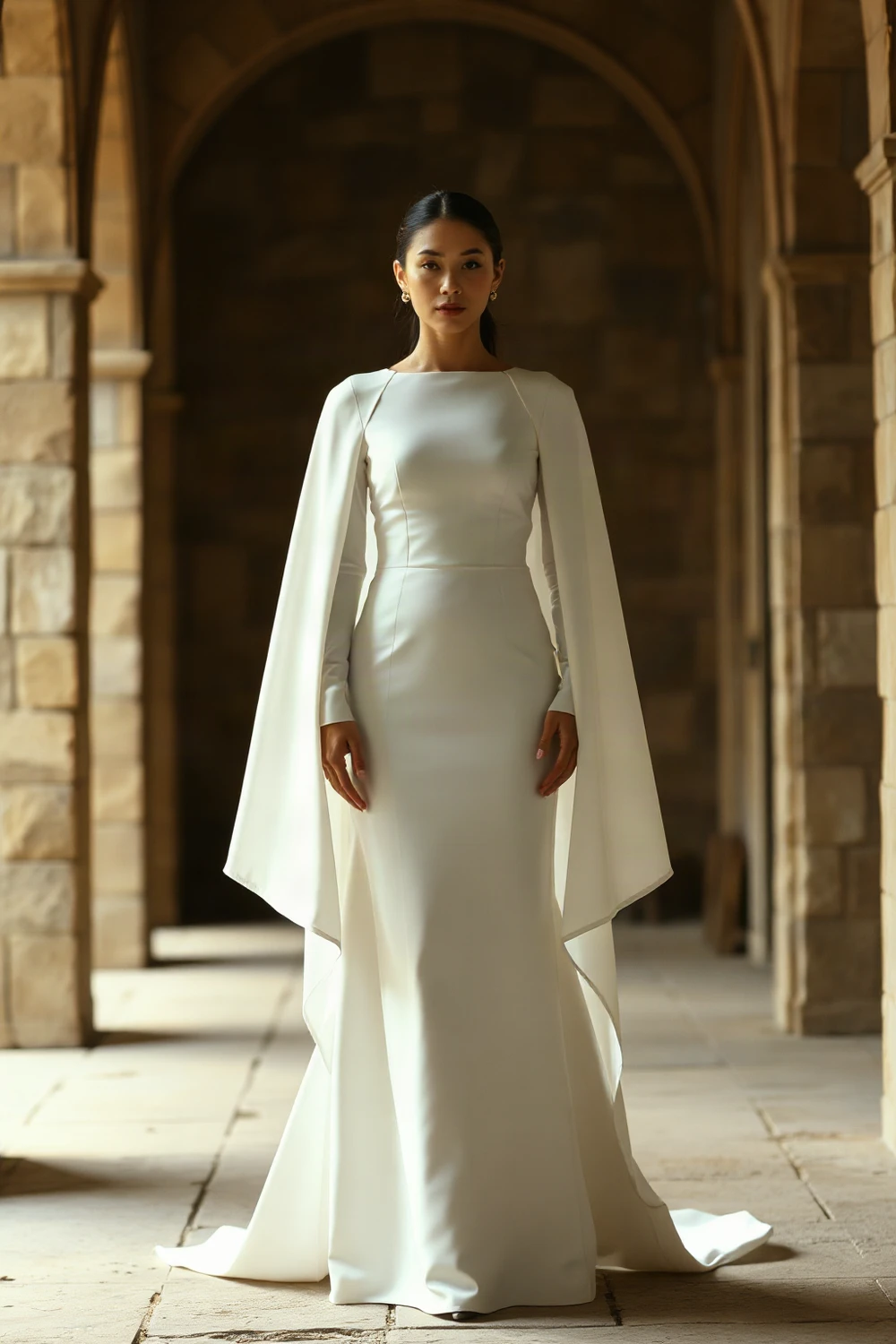
A Narrow Architectural Line Framed by a Cape
The first look pairs a long, body-skimming skirt with two broad panels descending from the shoulders. Its clean bateau neckline and shaped bodice contrast with the panels’ architectural frame. The skirt opens only slightly at the floor, appearing controlled and elongated rather than conventionally voluminous; strong verticals in the arched stone corridor reinforce the dress and cape length.
A cape offers rear movement without relying only on a veil, but a still cannot show its behavior. At a fitting, check its shoulder attachment, panel spread when arms rise, and where the fabric settles while sitting. Because the shoulders already carry a strong feature, a large veil or dense ornament may crowd the upper frame. Restrained earrings, clean hair, and a headpiece leaving the cape’s width visible maintain calm balance.
Soft Movement Through Balloon Sleeves and Tiers
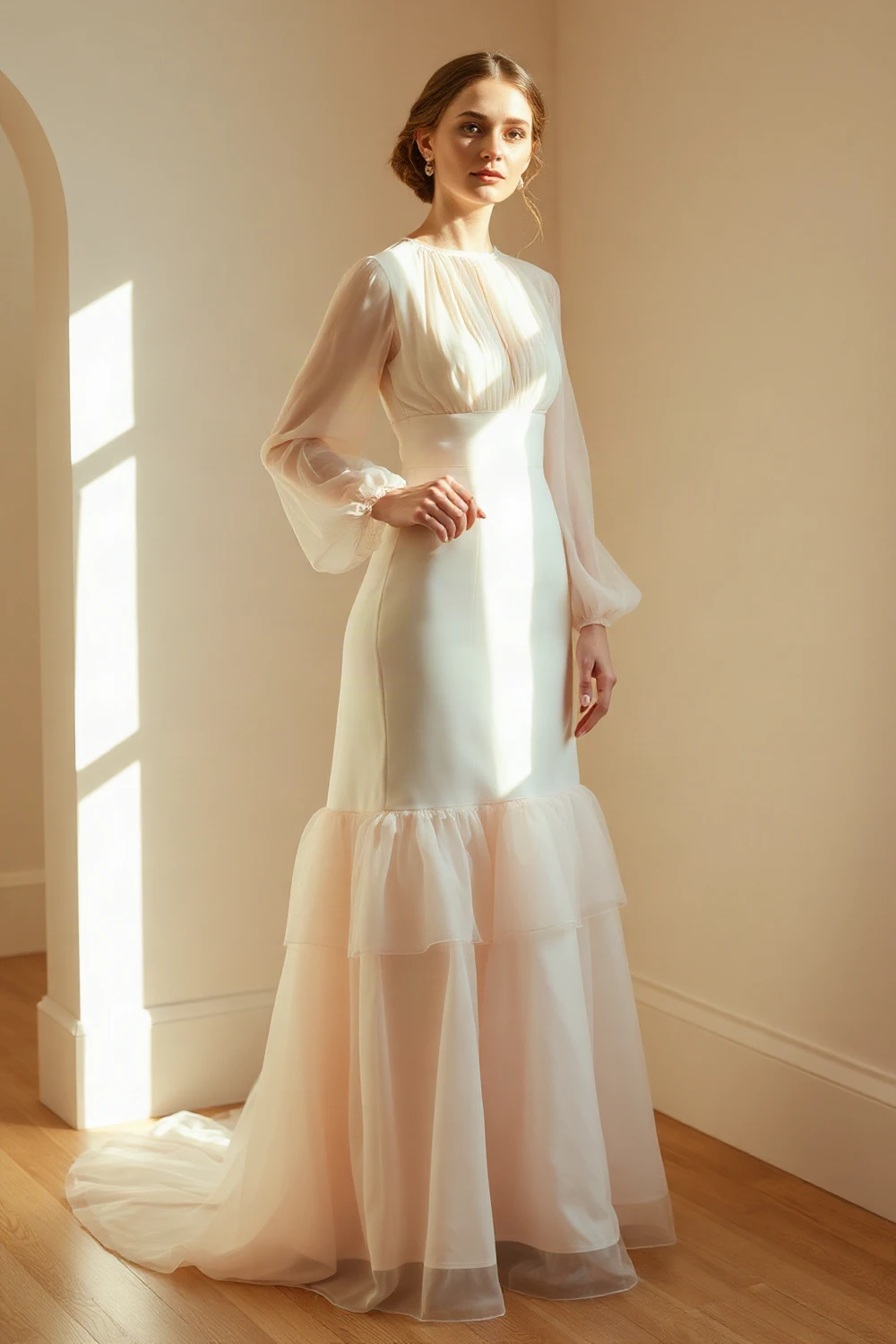
The second design combines translucent-looking balloon sleeves, a gathered round neckline, and a high, broad waistband. Soft upper gathering is echoed by two horizontal tiers beginning below the knee. Unlike the first silhouette’s uninterrupted vertical, this arrangement leads the eye through distinct levels from bodice to floor. Warm sunlight makes the layers’ light edges and sleeve volume especially visible.
Tiers add romantic movement but change where the skirt appears to widen. Consider placement with the wearer’s proportions and planned shoe height: a tier just below the knee balances differently from a lower one. Test cuff comfort and fabric volume as elbows bend; sit at a table, lift the arms, and try the intended bracelet. Since sleeves and skirt already provide detail, light earrings may be more coherent than another large jewelry focal point.
A Ceremonial Focus with Gold-Toned Borders
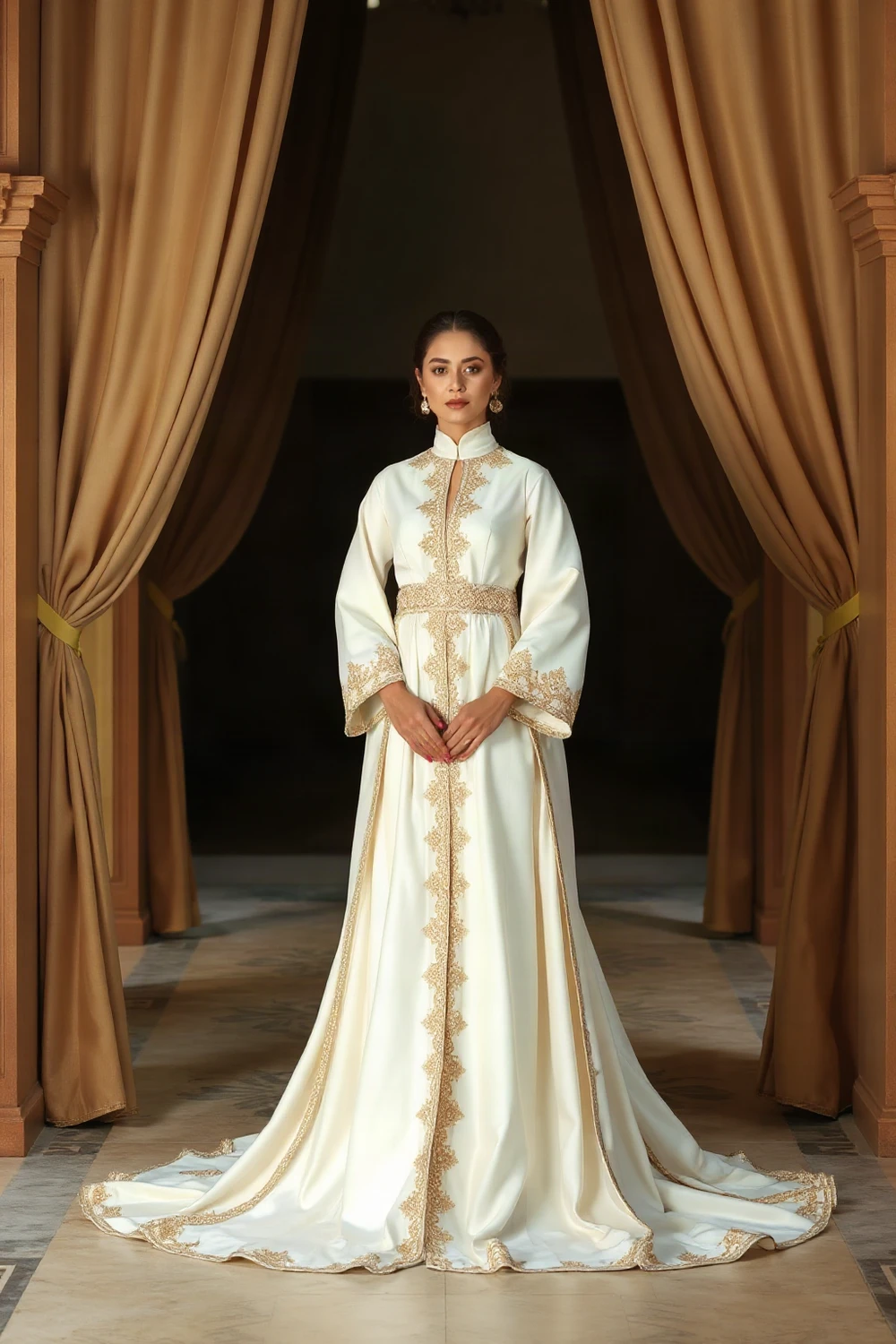
The third look uses caftan-inspired gold-toned borders to define a high standing collar and widening skirt. Decoration repeats across the collar, center front, broad waist, flared cuffs, and entire hem. A continuous central line preserves vertical direction despite the substantial width below; symmetrical curtains and the dark background reinforce a formal, almost stage-like quality.
Accessories should support the prominent borders’ axis rather than compete. A dense necklace could conflict with the high collar; smaller earrings and controlled hair preserve the ornamented front. The hem is striking at rest, but its behavior matters on steps, turns, and a dance floor. At a fitting, go beyond walking straight: make a small circuit, sit, stand, and practice gathering the skirt. This shows whether the edge feels flexible and its distribution remains balanced around the body.
The Role of a Square Neckline in a Plain Silhouette
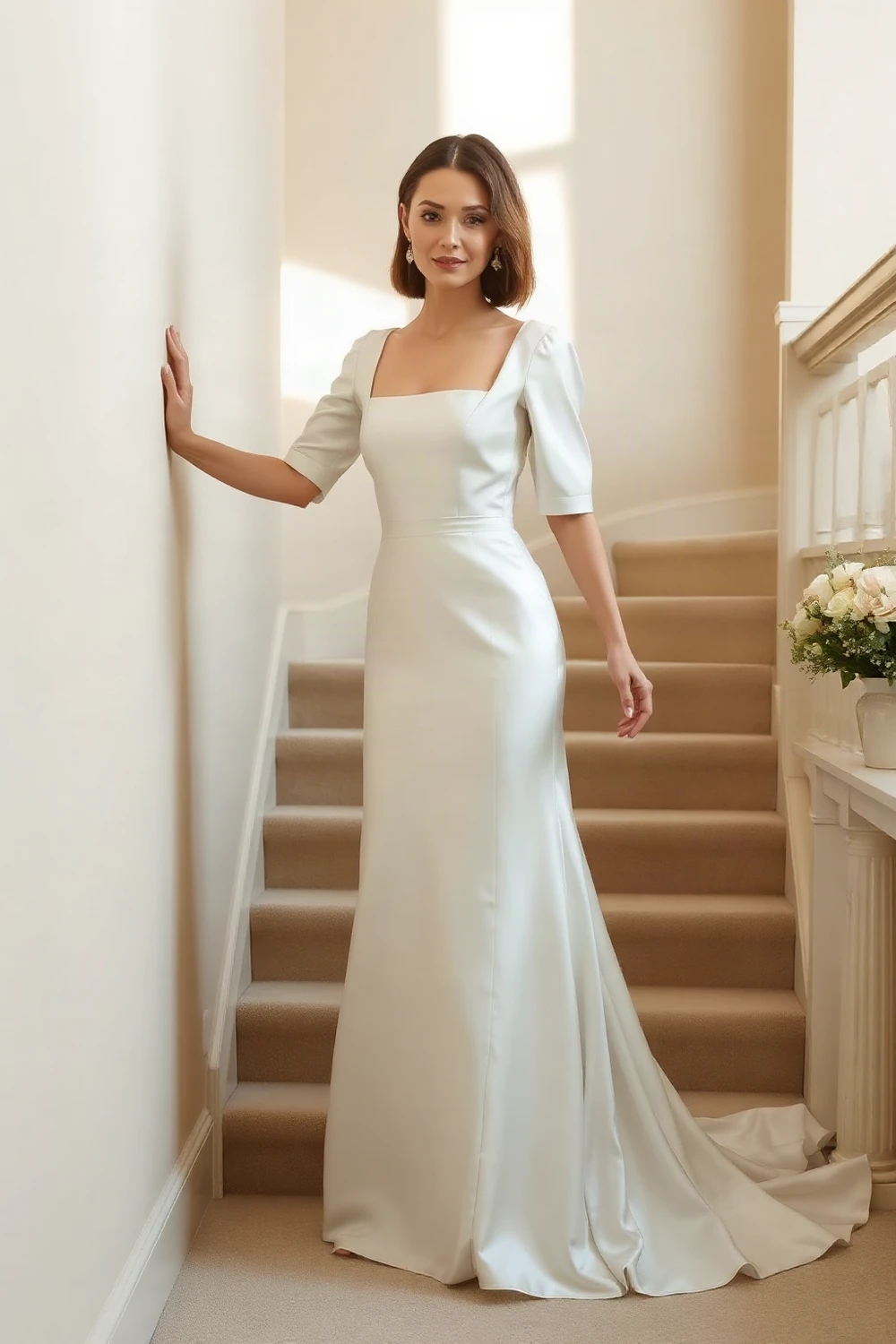
The fourth model centers on a square neckline against an unembellished surface. Slightly raised sleeve heads and elbow-length sleeves frame its geometry; below the defined waist, the skirt opens in a controlled way. The narrow stairway indicates the space occupied by the smooth skirt and modest train. Proportion and construction, not applied decoration, carry the design.
This neckline exposes more neck and upper chest than standing collars. If personal modesty requirements differ, discuss adjusted depth or a coordinated insert early rather than assume the pictured opening suits everyone; elbow sleeves may need extending for full coverage. The plain surface may help integrate alterations, but changes must preserve shoulder fit and sharp corners. Earrings, a hair ornament, or a light veil away from the neckline can retain its clarity better than a necklace crossing the square outline.
Planning Movement Around a Full Skirt
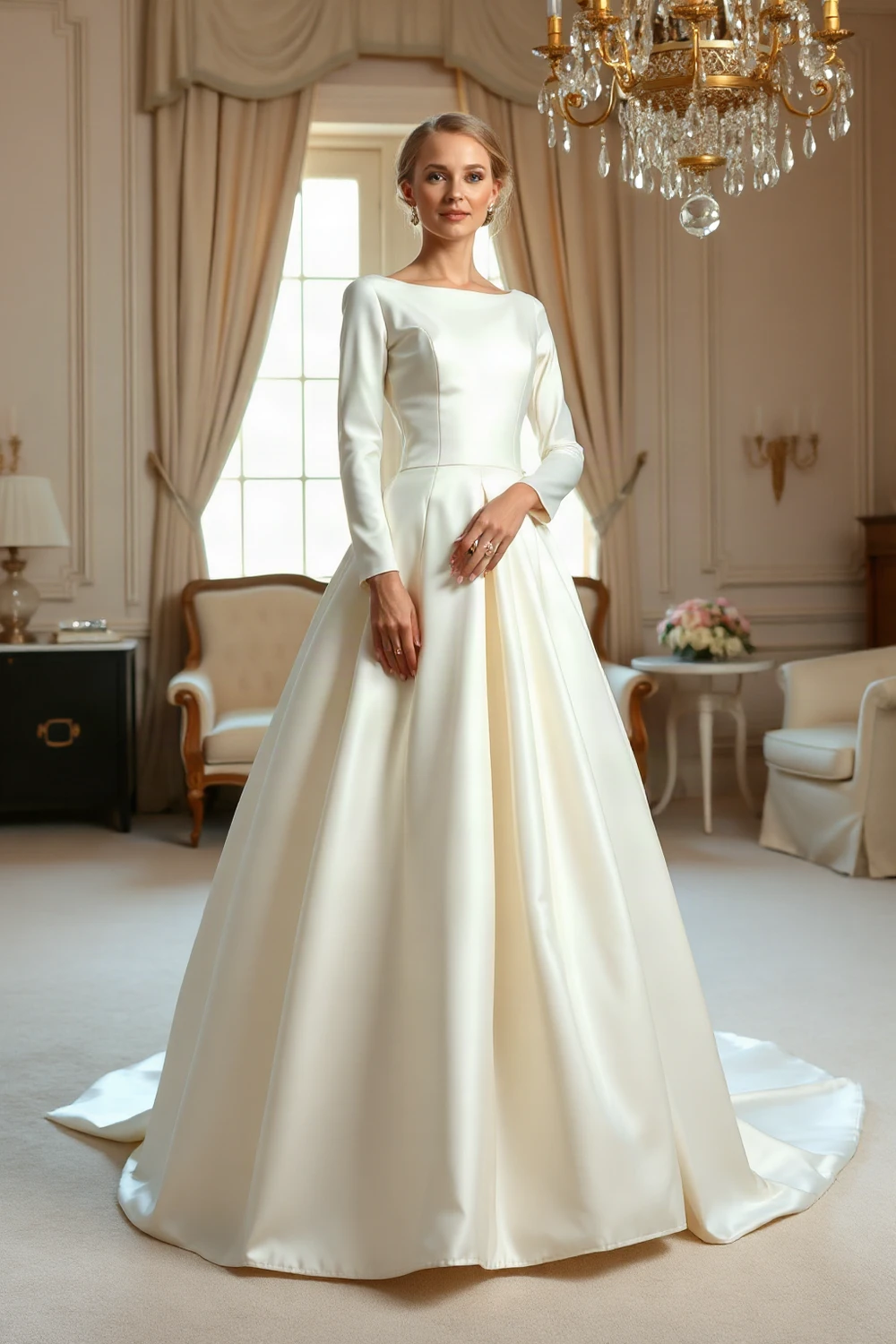
The fifth look balances a long-sleeved, bateau-necked bodice with a full skirt released from controlled waist folds. With minimal applied decoration, waist placement, seam direction, and circumference become central. The spacious formal room helps explain its ceremonial feel. Compared with the narrow caped design, visual weight sits below the waist, not around the shoulders.
A photograph cannot show how that circumference works all day. Aisle width, gaps between dining chairs, transport, and the planned dance area determine whether the volume feels comfortable. At a fitting, use different chairs, step backward, turn fully, and walk beside someone. If the skirt or train needs a lifting attachment, test its appearance and ease of use. The full shape already makes a statement, so smaller accessories let the clean bodice-to-skirt proportion lead.
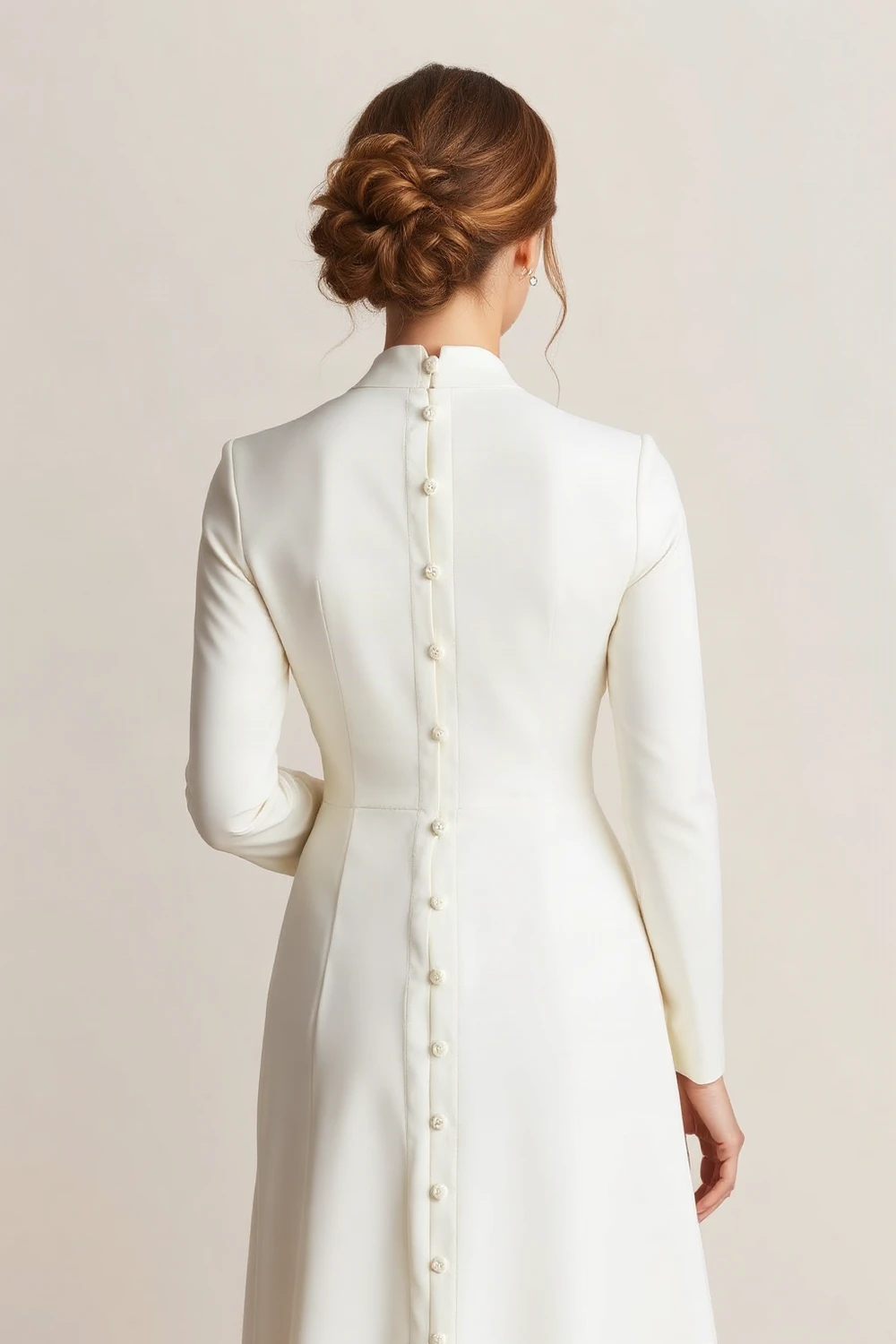
Balancing a Buttoned Back with the Hairstyle
The final image shows why the back deserves separate attention. Small buttons run from a standing collar through the plain white body, creating measured vertical rhythm. Back seams shape the waist; long sleeves and a clean shoulder line keep the effect restrained. Although the close crop omits the complete skirt, it shows the upper-back construction, fastening line, and relationship between collar and hair.
The low braided updo complements the dress without hiding buttons or nape. Long loose hair would cover this area, so hair trial and fitting should inform each other. Functional buttons may slow dressing and require help; a decorative row over a concealed zip is more convenient. Either way, sit to check pressure, collar friction, and gaping between fastenings. A dense multilayer veil may obscure this refined detail, while simpler placement reveals it as the wearer moves.
Together, these concepts show that greater coverage does not produce one silhouette: a cape is vertical and architectural; balloon sleeves and tiers are soft; gold-toned borders ceremonial; a square neckline crisp; a full skirt voluminous; and a buttoned back quietly detailed. A shortlist should fit the venue, personal coverage boundaries, and planned movements rather than copy a favorite photograph.
Before fitting, define three priorities: non-negotiable coverage, manageable skirt volume, and the feature meant to lead. View each option from front, side, and back; sit, walk, turn, and raise the arms. Test hair, veil, and jewelry with the dress, not separately. When every choice supports the same silhouette, the result feels considered, not crowded.
Compare six modest wedding dress ideas, from a narrow caped silhouette and tiered skirt to a square neckline, full skirt, ornamental borders and buttoned back.
Frequently asked questions
Does a caped wedding dress also need a veil?
Not necessarily. Shoulder panels already create movement at the back. If a veil is preferred, test a simple, light option that does not conceal the cape attachment or compete with its width.
Can a tiered skirt make the silhouette look shorter?
Horizontal tiers can divide the line more than an uninterrupted skirt. The result depends on where the tiers begin, the waist position and shoe height, so compare full-length views while standing and walking.
How can a square neckline provide more coverage?
Its depth can be raised or a coordinated insert can be planned. Review the insert’s color, opacity and corner lines on a sample, and confirm that the alteration preserves the shoulder and bodice fit.
How should the comfort of a full skirt be tested?
Sit on different chairs, walk through a narrow passage, climb steps and make a complete turn. If a bustle or lifting loop is planned, practice using it both independently and with assistance.
Which hairstyle keeps a buttoned back visible?
An updo or side-swept style leaves the standing collar and button line open. If hair will be worn down, assess exactly how much detail it covers during the combined hair and dress trial.