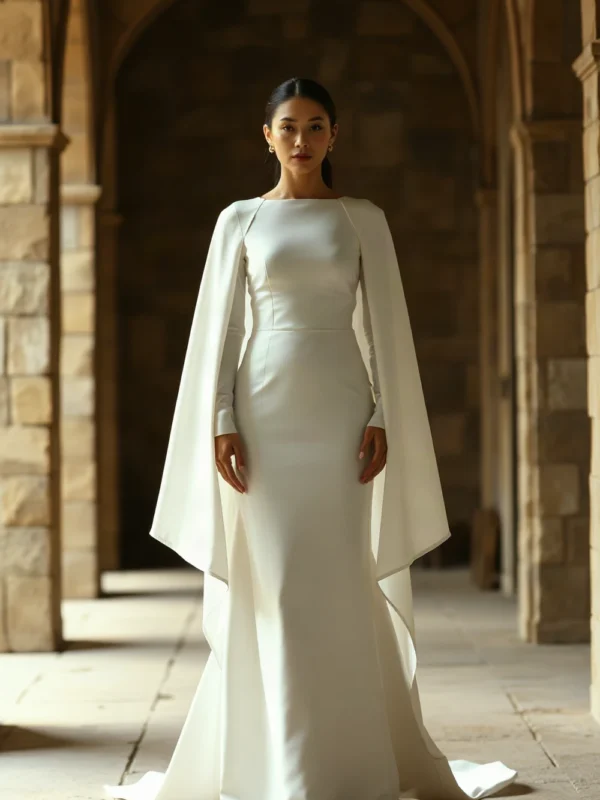
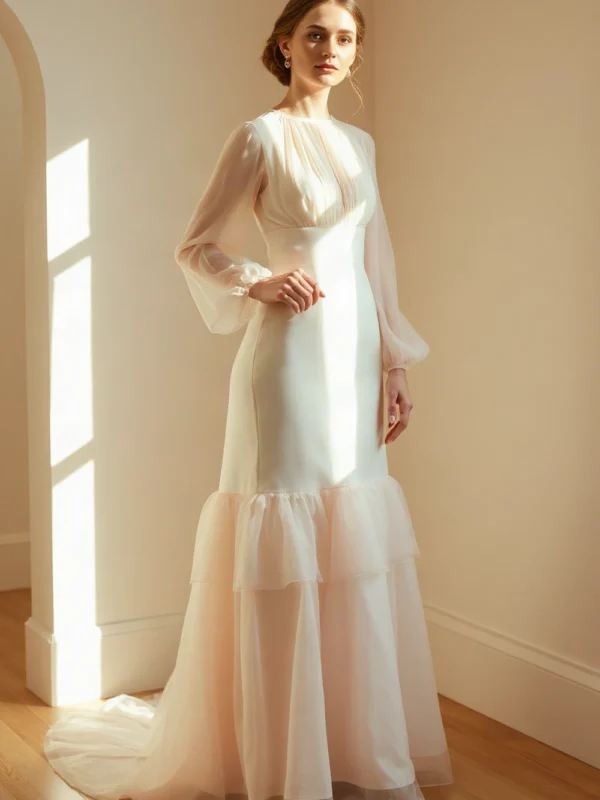
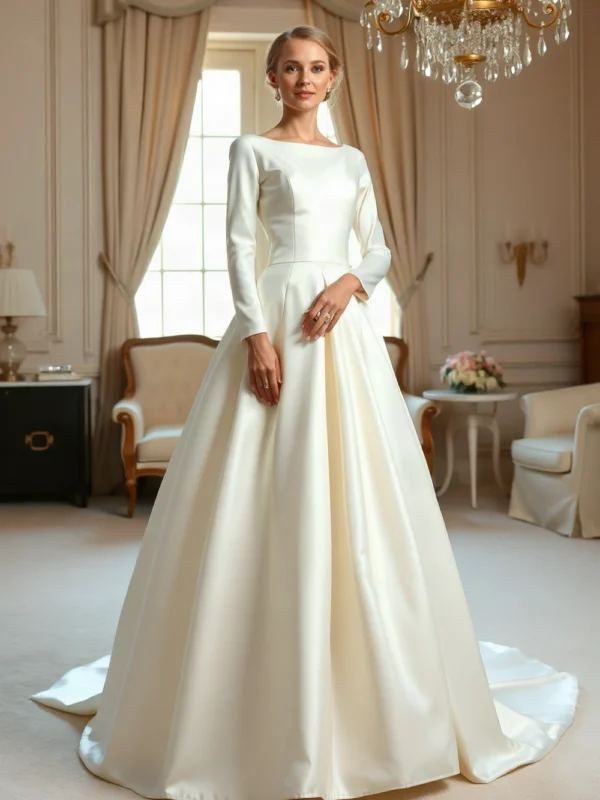
All six looks combine greater coverage with a clearly defined silhouette, but they do not create the same effect. The first uses long panels falling from the shoulders to frame a narrow dress with architectural vertical lines. The second feels softer: sheer balloon sleeves, gentle gathering and two skirt tiers introduce lightness and a more fluid visual rhythm.
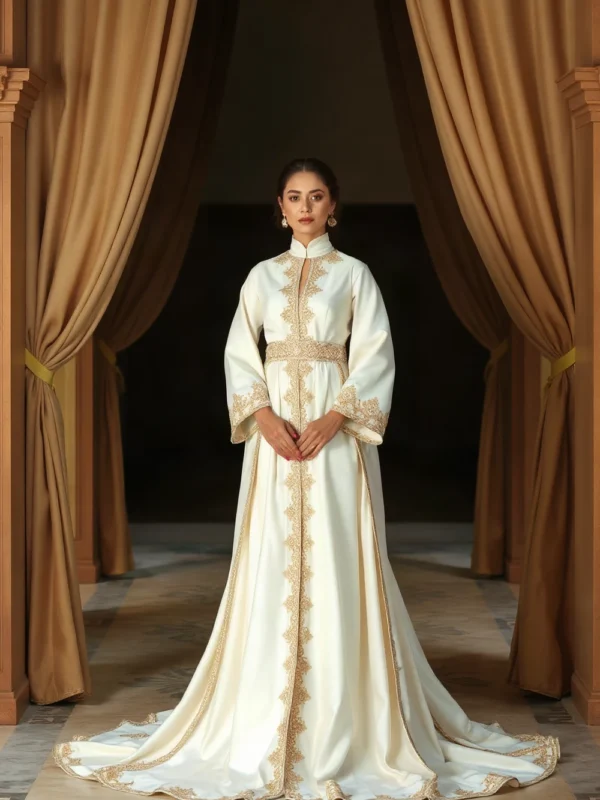
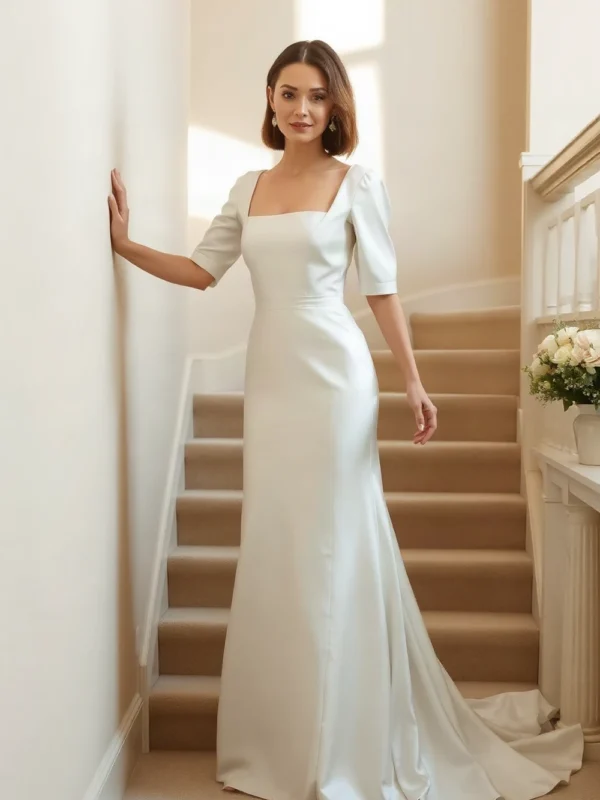
The third look emphasizes a high neck and expanding skirt with gold-toned borders. Because the decoration repeats at the collar, center front, waist, cuffs and hem, it establishes a strong ceremonial focus. The fourth design sits at the opposite end of the spectrum. Its open square neckline, elbow-length sleeves and uninterrupted fitted surface make proportion more important than ornament. The neckline also requires a personal assessment of the desired level of coverage.
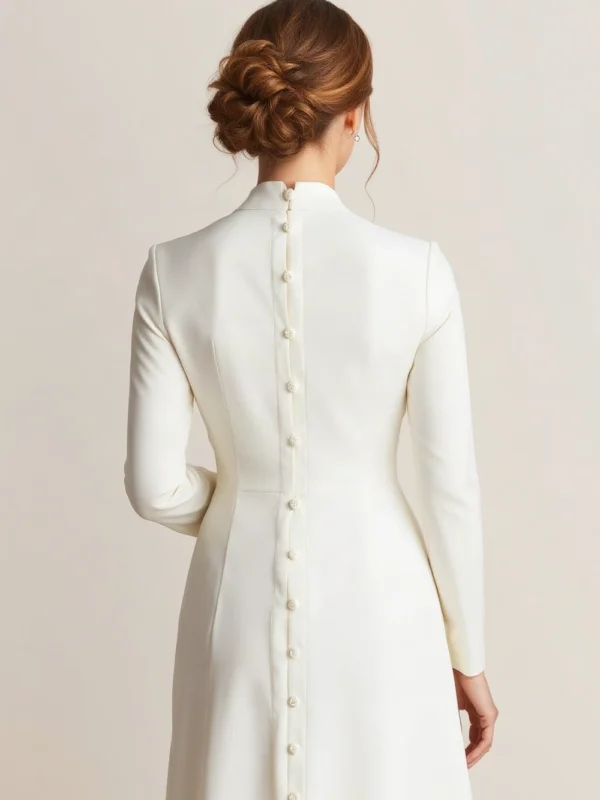
The fifth dress balances a bateau-necked, long-sleeved bodice with a broad, regularly folded skirt. Its visual weight comes from cut and volume rather than surface decoration, making it a useful reference for a spacious setting. The sixth image shifts attention from the front to the back. Small buttons descend from a standing collar, creating a restrained center line that remains visible beneath an updo.
Do not compare these ideas only as static front views. Consider how cape length, sleeve width and skirt circumference would behave while sitting, climbing stairs, turning and dancing. It also helps to select one leading feature: a cape, tiered skirt, gold-toned border, square neckline, full skirt or buttoned back. Keeping jewelry, hair and any veil subordinate to that feature usually produces a clearer, more balanced composition.