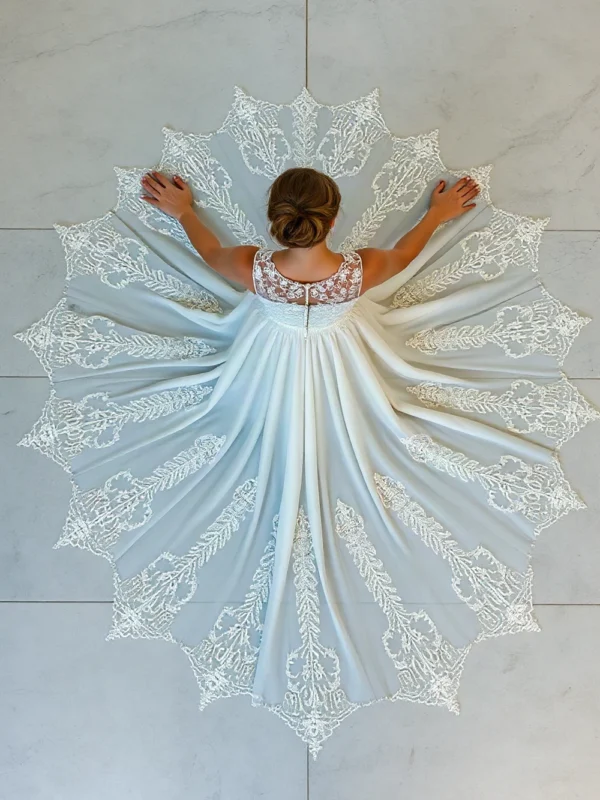
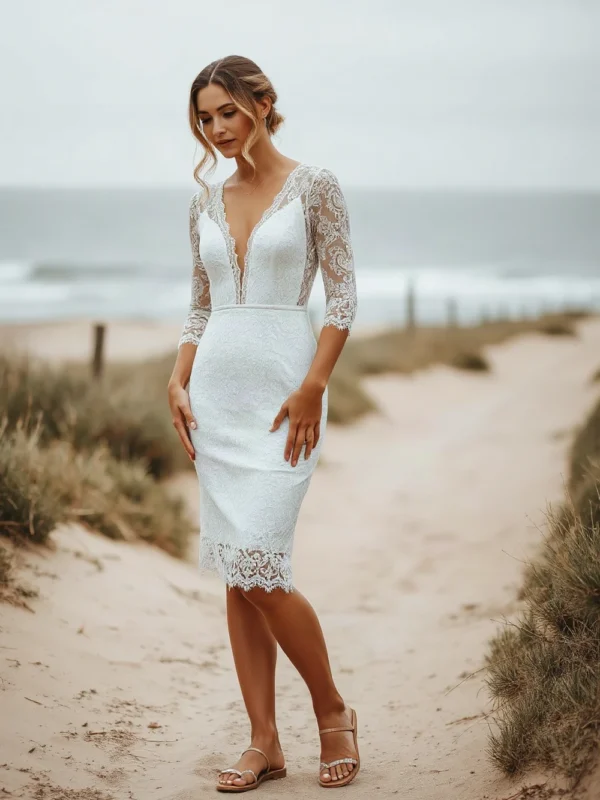
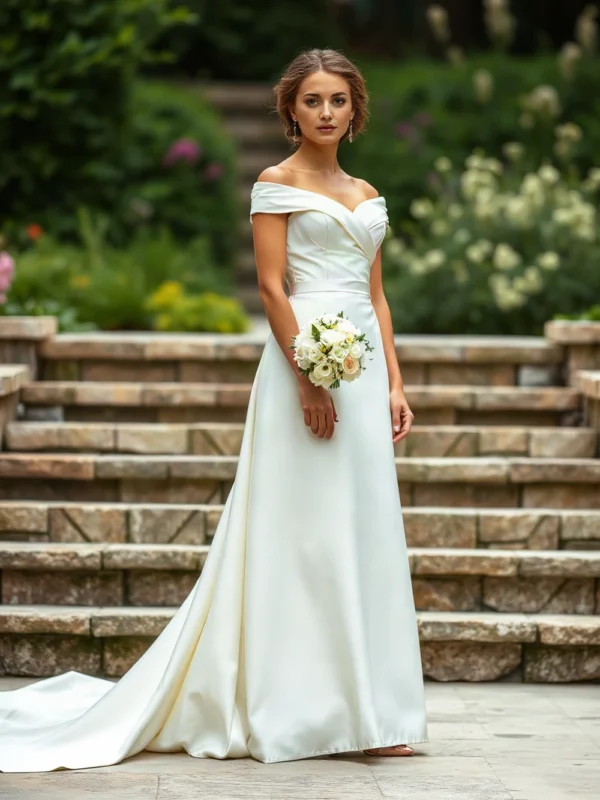
In a romantic wedding dress, floral lace matters, but so does its relationship with the neckline, sleeves and shoulders. These six white looks use distinctly different proportions: fitted sheer sleeves over a narrow skirt; an open plunging bodice above a broad A-line; bell sleeves beside a square neckline; and a high-neck design with an almost continuous lace surface. A cape-like veil and oversized bow straps offer two further ways to emphasize the shoulders.
This guide treats the images as style references for comparison before fittings, not as evidence of materials or available products. Rather than asking only whether a feature feels romantic, compare lace concentration, coverage, silhouette, movement and accessories. Each section considers a different upper-body solution alongside the skirt and setting, helping explain why a complete look feels balanced.
Balancing Sheer Long Sleeves with a Smooth Skirt
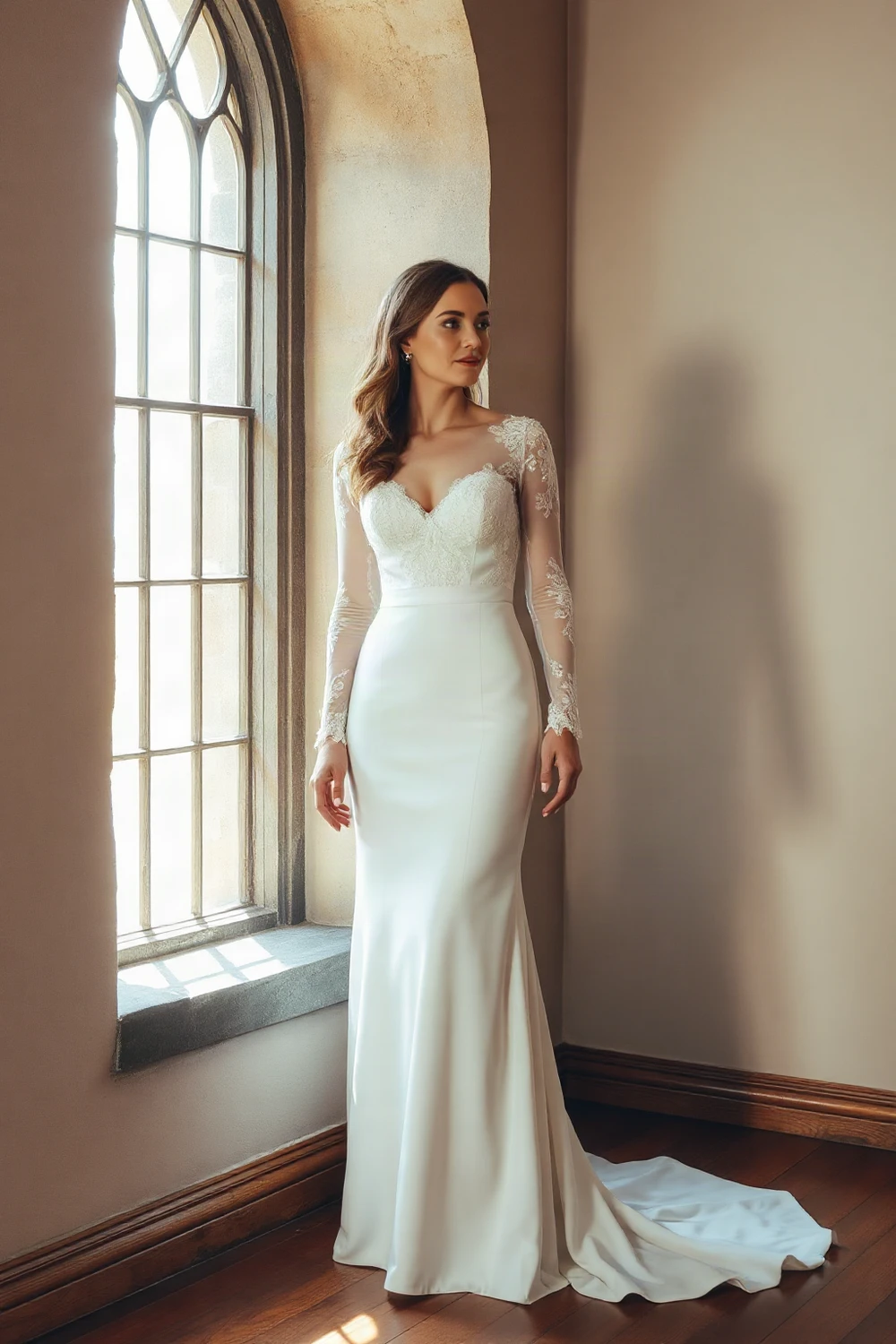
The first look concentrates floral lace around the sweetheart-shaped bodice and the sheer-looking sleeves from shoulder to wrist. A clean waistband introduces a smooth, fitted skirt, preventing the pattern from competing below the waist. The arched window and tall vertical panes reinforce the narrow silhouette, while the short train extends it without substantial volume. The result feels framed rather than covered in lace.
For someone wanting detail around the face, arms and hands but a controlled overall surface, this distribution provides a clear balance. At a fitting, reach forward and upward to check shoulder pull, motif placement at the elbows and cuff comfort. Choose earrings with neckline density in mind. A veil with a quiet edge preserves the upper-body frame; a heavily patterned layer may make it feel busier.
Opening the Bodice with a Plunging Neckline and A-Line Skirt
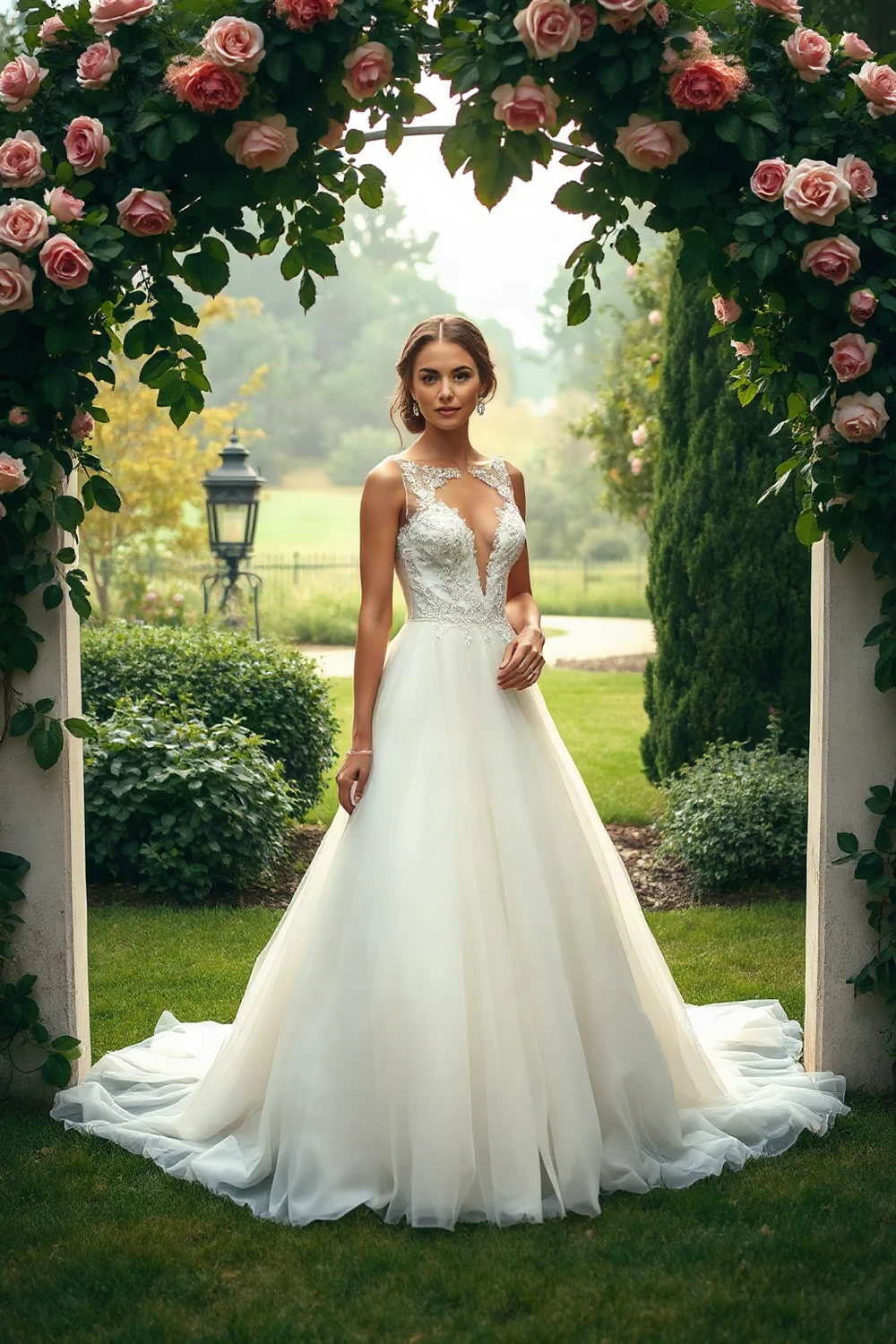
In the second image, romance comes partly from the link between the floral bodice and surrounding rose arch. A plunging central V and sheer-looking upper section create vertical direction, while broad shoulder areas anchor the neckline. From the narrow waist, the skirt opens into a generous A-line triangle. Bare arms and shoulders reverse the first dress’s coverage, making the upper body feel lighter beside the full lower shape.
Assess neckline and skirt volume together. The central opening must stay where intended during sitting, leaning and dancing; discuss coverage preferences and internal support at fittings. The wider hem needs more walking space despite the visually light bodice. Minimal jewelry preserves the open neck and floral center, whereas a visually substantial necklace may interrupt the neckline’s long vertical line.
Adding Soft Movement with a Square Neck and Bell Sleeves
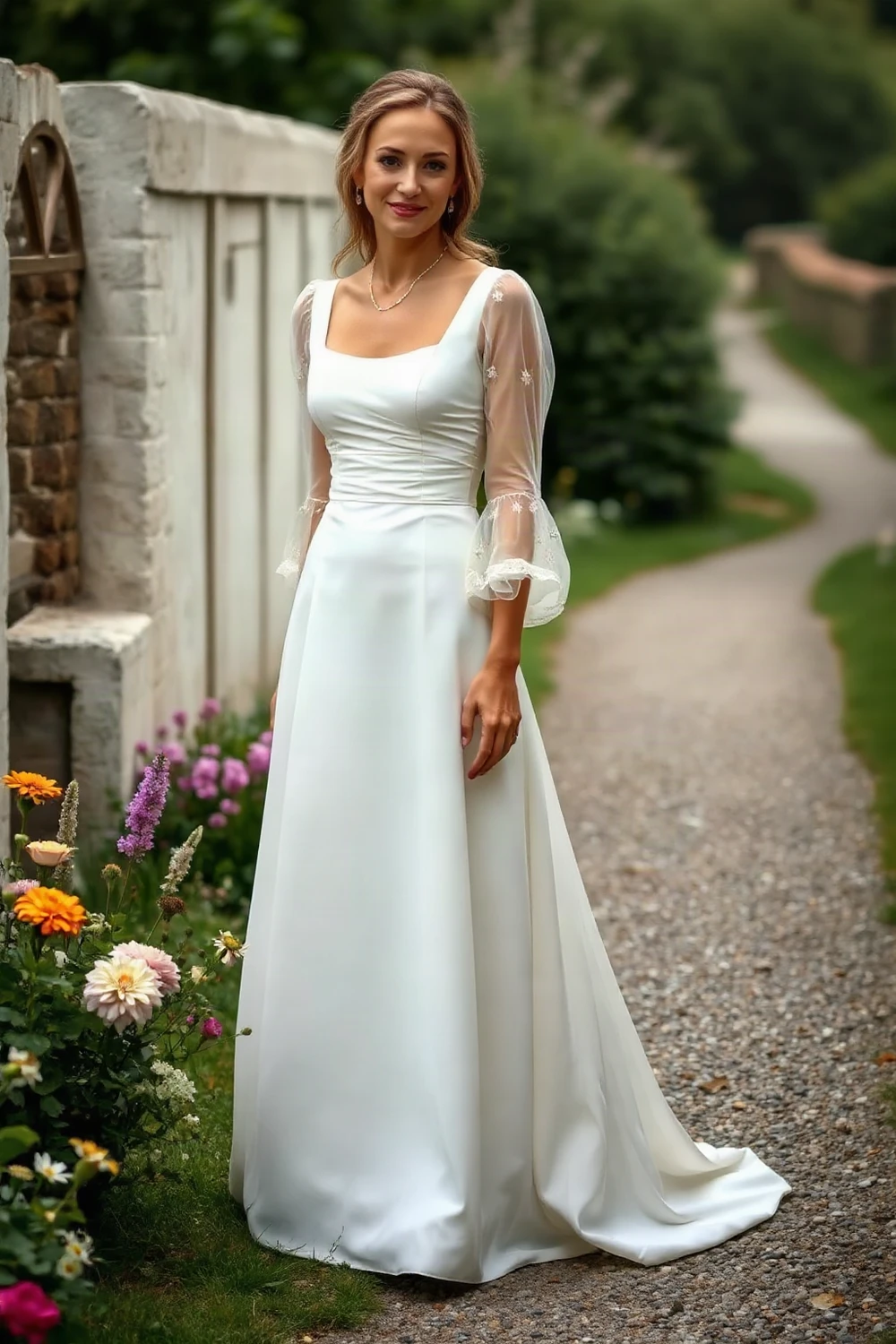
The third concept pairs a crisp square neckline with sleeves that stay narrow to the elbow, then open into transparent-looking bell cuffs. Small floral motifs and lace-edged openings bring movement to the arms while the dress remains mostly smooth. Horizontal waist gathering links the fitted upper section to an easy A-line skirt. In the country garden, clear geometry and softer sleeve movement create relaxed romance.
Because a square neckline strongly frames the collarbone, voluminous sleeves can compete with it; the scattered pattern allows both features to remain visible. Test the wide cuffs while carrying a bouquet, sitting at a table and moving near bracelets or decorative objects that might catch their edges. Short earrings or a fine necklace can complement the shape without adding another busy layer around the hands and shoulders. This option feels airier than fitted long sleeves while offering more arm coverage than the sleeveless plunging bodice.
Creating Continuity with a High Neck and Full Lace Surface
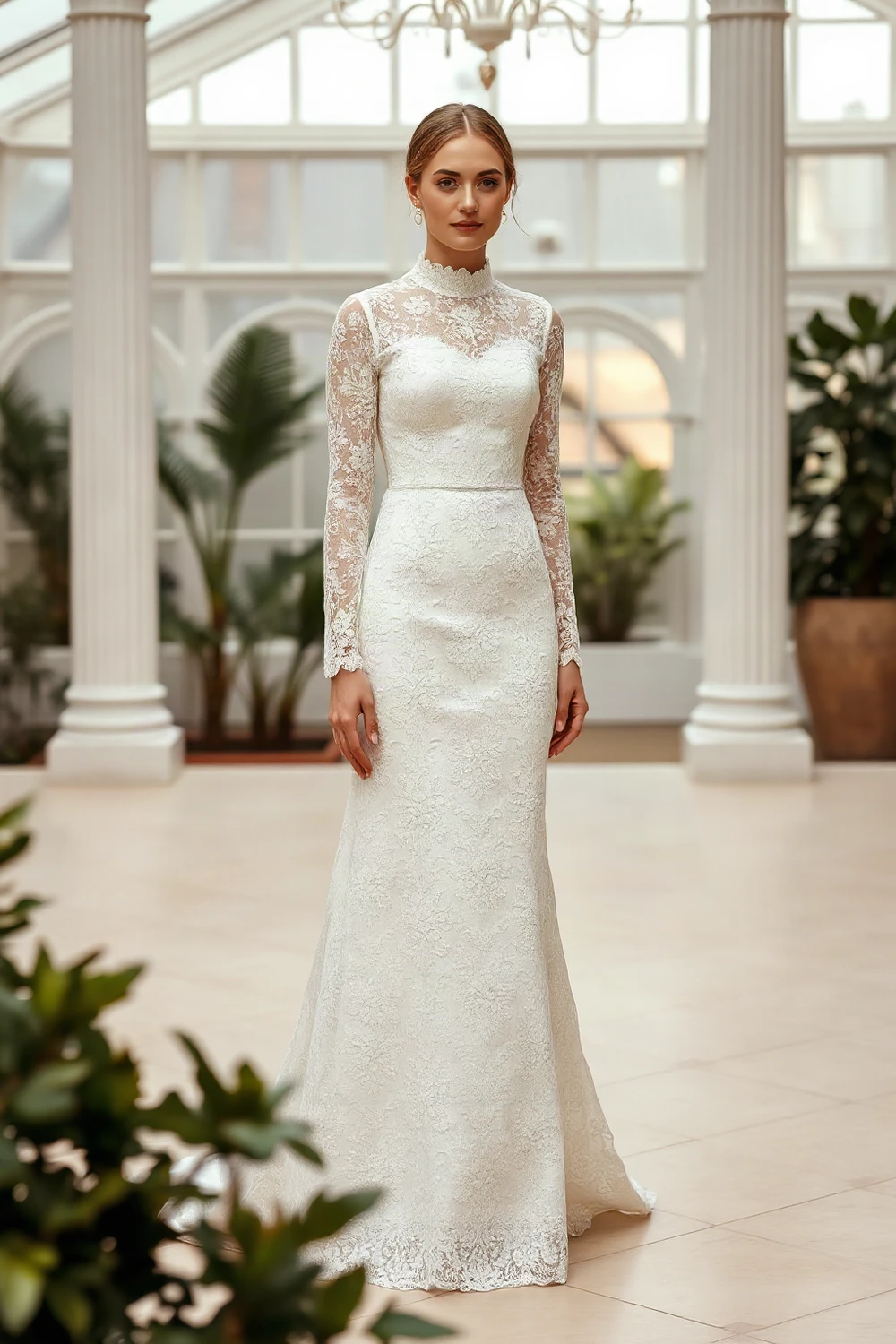
The fourth dress creates one continuous composition with a high collar, sheer-looking fitted sleeves and floral lace extending down the skirt. An opaque bust area adds coverage while the upper chest and arms appear lighter. The skirt follows the body before widening subtly near the floor, carrying the extensive motif without competing volume. Symmetrical conservatory columns and windows reinforce the ordered, composed effect.
Accessories can support this unified line rather than create another focal point. Because the collar already frames the neck, earrings may work more cleanly than a necklace. At a fitting, turn the head, bend the elbows and sit to assess the collar, shoulders and sleeves as one connected system. Consider motif scale in portraits too: an updo reveals the entire collar, while loose hair partly softens it and changes how much of the continuous lace field appears around the face.
Framing the Shoulders with a Cape-Like Veil
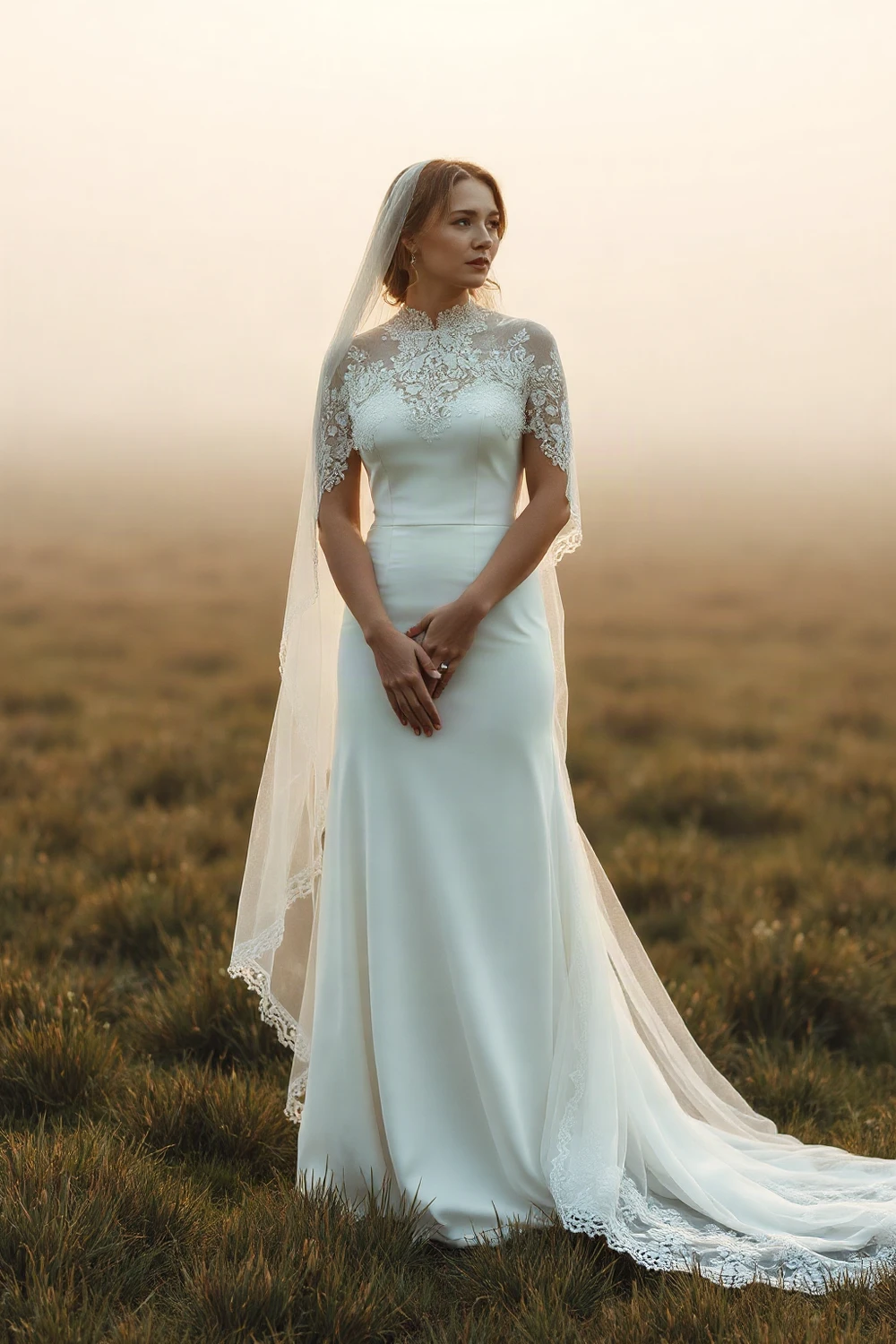
The fifth concept changes a simple white dress through a floral lace area spreading from the close neckline over the shoulders, with a long translucent veil falling on either side. Short edges near the elbows suggest a cape; longer lengths reach the ground and end in a visible lace border. Because the dress center remains smooth, decoration traces the head, shoulders and outer contour instead of filling the silhouette.
This is a useful comparison for someone wanting an expressive or more covered ceremony layer over a restrained main shape. Test how the veil meets the hairstyle, whether earrings stay visible, whether the shoulder area shifts and how the long edges behave while walking. Do not assume it is detachable; confirm the selected design’s fastening and construction. Outdoor wind and aisle width can affect movement, so venue and portrait plans should inform the decision as much as appearance.
Making the Shoulders a Focal Point with Bow Straps
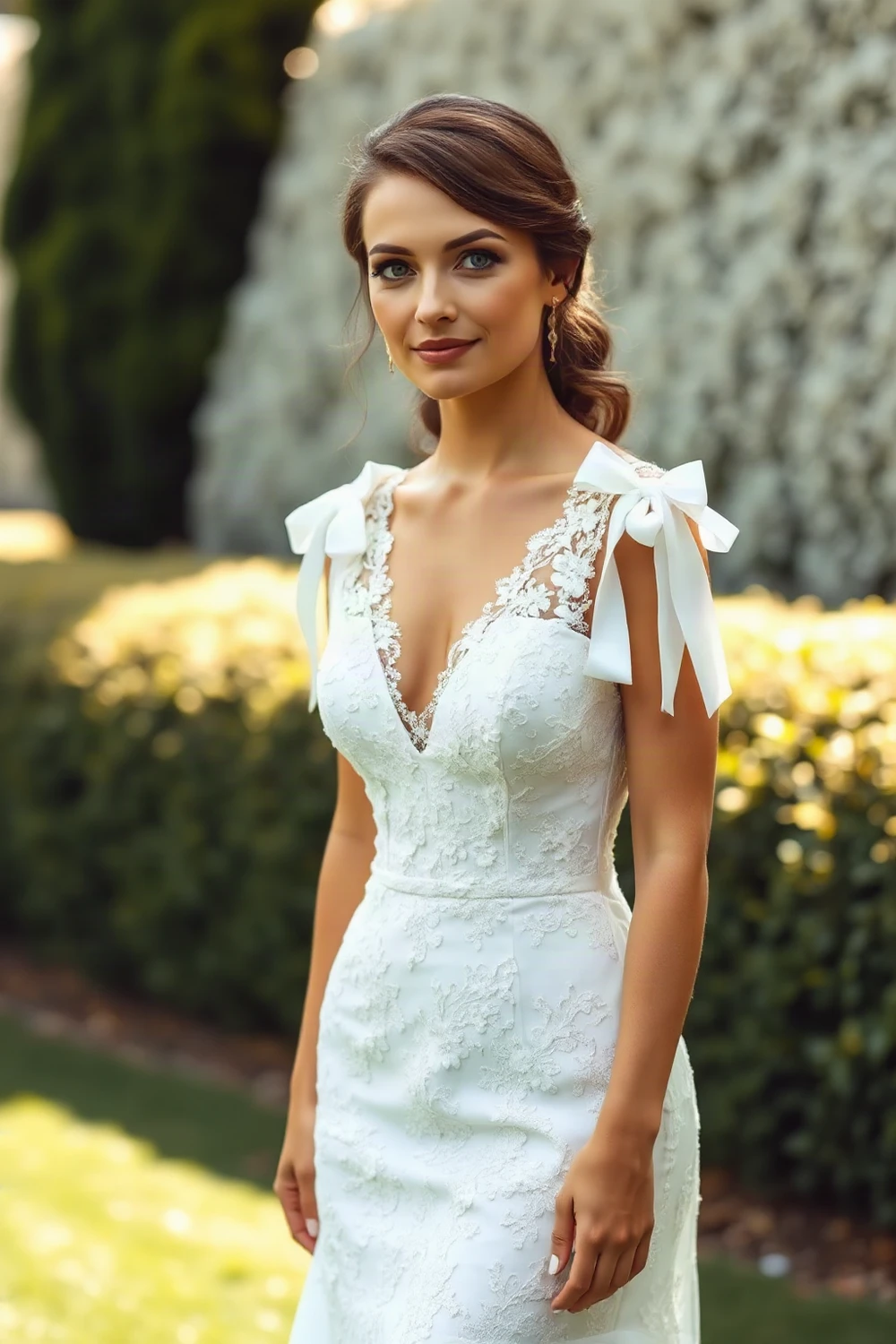
In the final image, floral lace covers a fitted bodice around a deep V neckline, while large white bows bring both shoulders forward. Smooth ribbon tails contrast in scale with the smaller organic motifs below. The open arms keep the upper body from feeling closed despite the ties’ volume. Because the frame is close, the dependable lesson is the proportion among neckline, straps and bodice, not the unseen full-skirt shape.
Assess bow straps from more than the front. Check the rear view, their relationship with the hairstyle and whether they shift as the arms move. Large earrings could compete with the bows beside the face, so quieter accessories may create clearer balance. A simple skirt or restrained veil would likewise let the shoulders lead. Even if the ties look adjustable, verify their structural role, fastening and support on the actual design during a fitting.
Together, these looks show that romantic floral lace has no single formula. Long sleeves can frame a simple fitted skirt; a plunging neckline can lighten a broad A-line; bell sleeves can soften a square neck; and a high collar can make lace continuous. A cape-like veil and bow straps give the shoulders contrasting characters.
First identify the desired coverage and freedom of movement, then compare silhouette with motif concentration. At fittings, sit, walk and raise the arms, adding the intended hair accessories or veil. The strongest choice is not necessarily the most detailed, but the one whose neckline, sleeves, shoulders, skirt and ceremony setting share a visual language without compromising comfort or one another.
Compare six floral lace wedding dress concepts featuring sheer long sleeves, a plunging or square neckline, a high neck, a cape-like veil and statement bow straps.
Frequently asked questions
How should floral lace density be chosen for long sleeves?
Evaluate it both close up and in a full-length mirror. Motifs concentrated at the shoulders and cuffs can create a clear frame, while continuous placement gives a more unified and covered impression.
Can a plunging neckline balance a wide A-line skirt?
Yes. Its vertical opening can offset the skirt’s broad lower volume. Personal coverage, internal support and the neckline’s position during sitting and movement should still be tested at a fitting.
Which sleeves work with a square neckline?
Fitted sleeves create a more graphic outline, while sleeves that flare below the elbow soften the neckline. Wide cuffs should be tested with a bouquet, table setting and jewelry.
Should a necklace be worn with a high lace collar?
A high collar already frames the neck strongly, so earrings may keep the area clearer. The best choice depends on motif density, collar height and whether the hair is worn up or down.
How do you choose between a cape-like veil and bow straps?
Choose the veil concept for a longer, more covered outer outline, or bow straps for open arms and a decorative shoulder focus. Test either option with the intended hairstyle and natural arm movement.