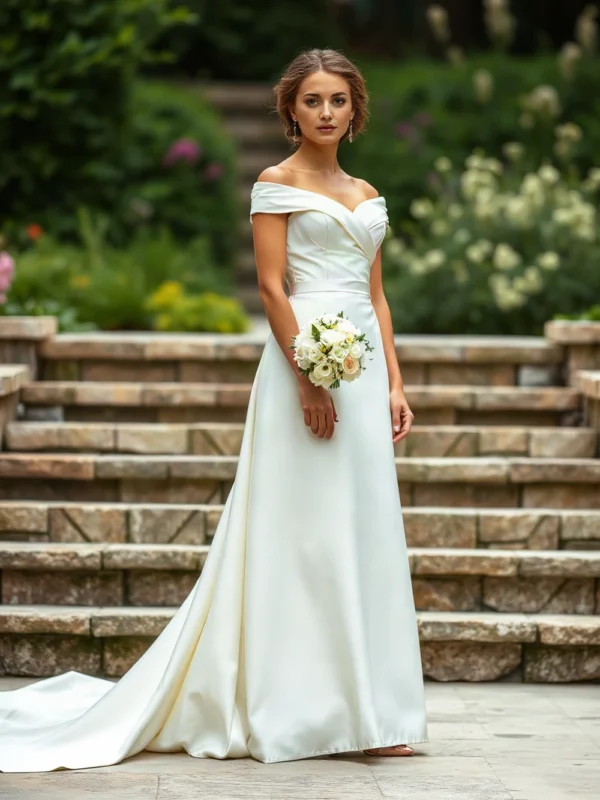
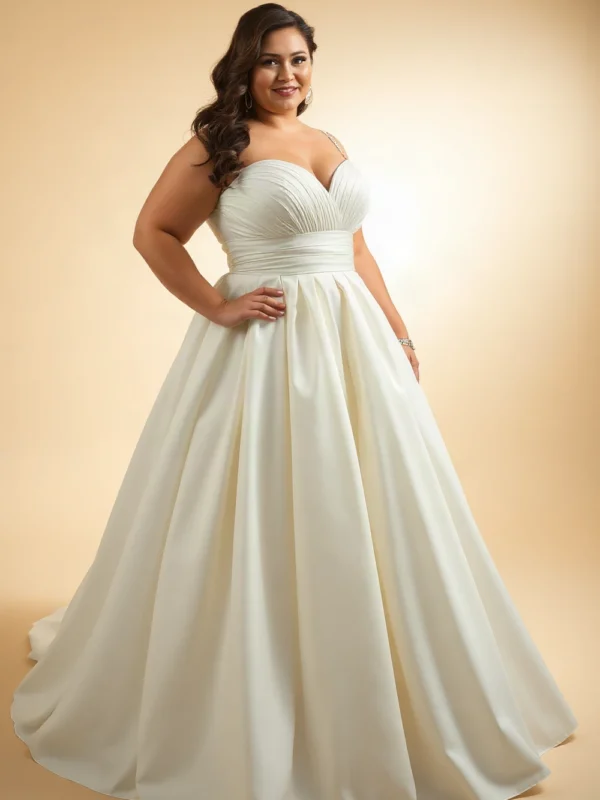
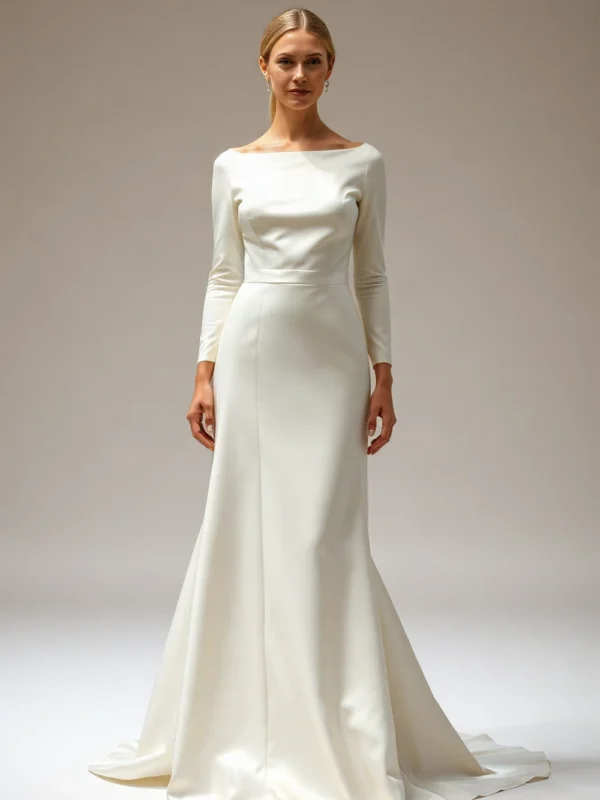
Choosing a short wedding dress is not simply a matter of removing length from a conventional skirt. Once the hem rises, shoes, leg line, waist placement and movement become more visible parts of the composition. A knee-length sheath, an asymmetrical hem and a full tea-length skirt therefore require different criteria. Wrap shaping creates diagonal flow, while a peplum or fringe concentrates volume in a particular area. Lace or a feather-like border can likewise transform a minimal silhouette.
These images are visual concepts for comparing proportions, not a list of purchasable pieces. Before deciding on formality, consider how the day will unfold: walking, sitting, dancing, ground conditions and shoe visibility. Then choose one leading detail and balance everything else around it. The six looks show how short hems and distinctive decoration can work together without following one bridal formula.
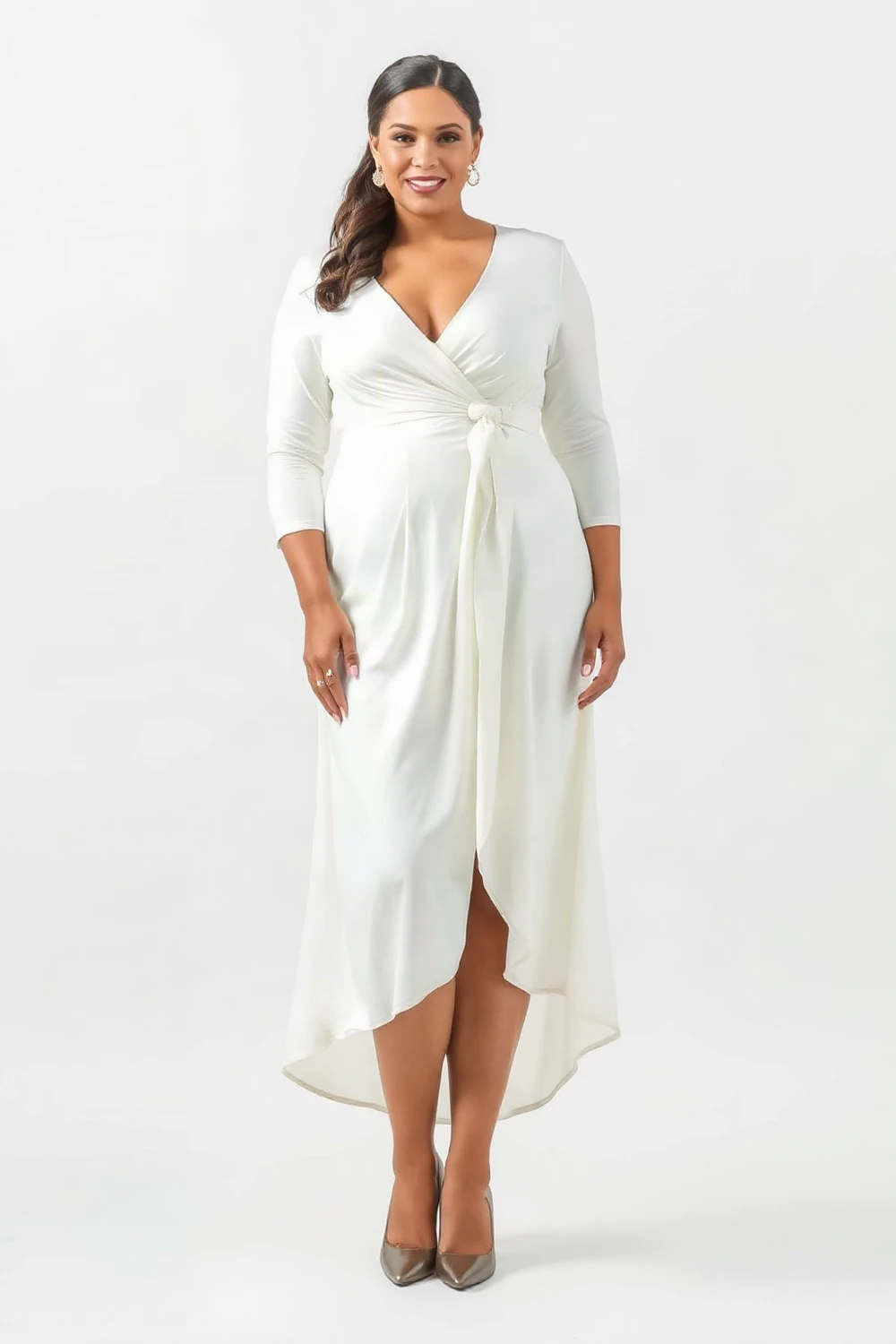
A fluid line from wrap waist to high-low hem
The first look uses a wrap V-neck, three-quarter sleeves and a side tie to define the torso diagonally. The skirt exposes the calf in front and extends farther behind, bridging a clearly short dress and a long bridal silhouette. The open front shows the shoes, while the rear length adds ceremony in motion. A smooth white surface lets the folded construction lead without added decoration.
Assess this shape from the side as well as the front, especially the longer panel on stairs. During a fitting, sit to see how far the wrap separates, confirm that the tie stays secure without pulling, and take full steps to observe the overlapping edges. Choose the intended heel height before final hem adjustments so the high-low proportion remains accurate.
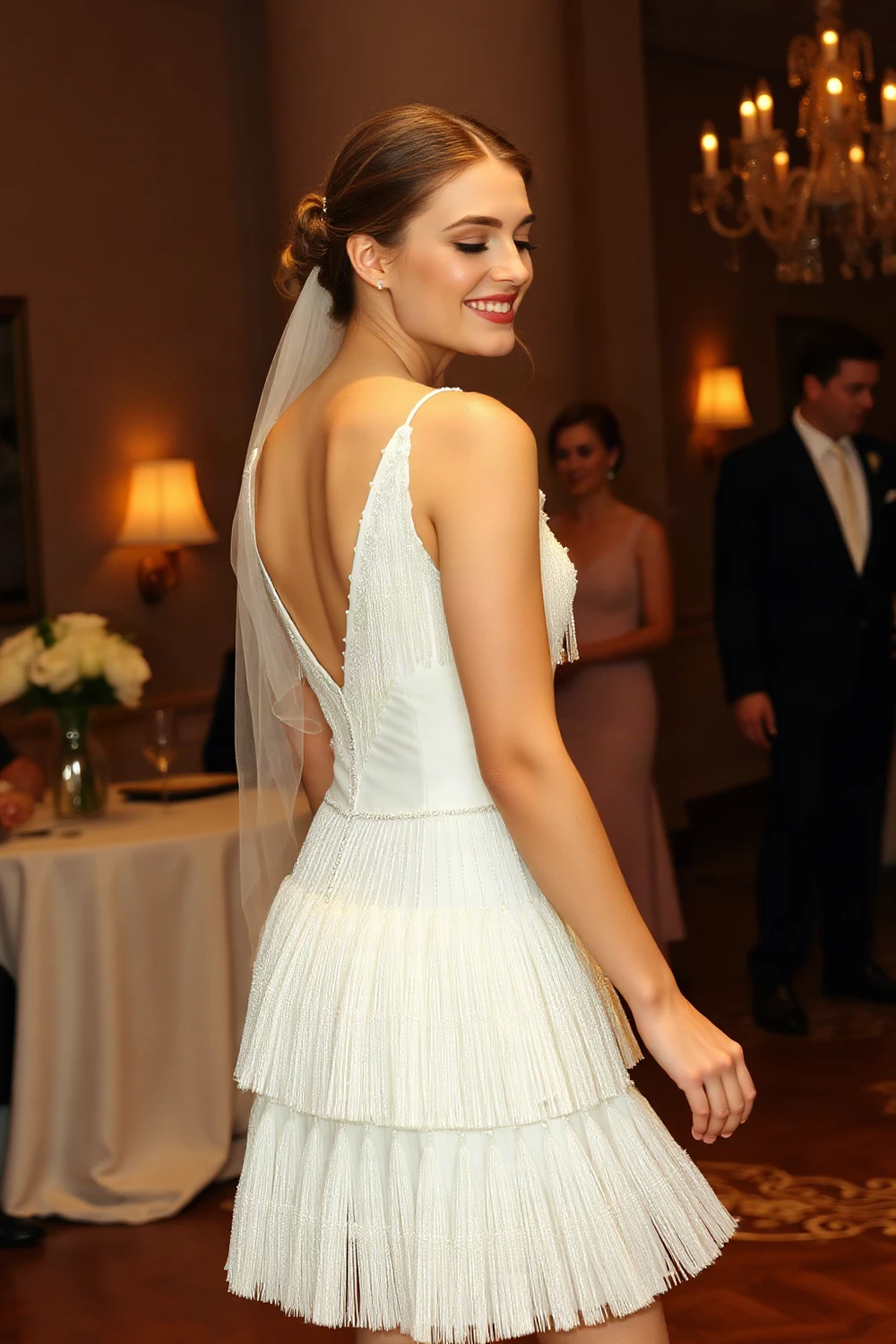
Fringe, an open back and movement on the dance floor
The second dress pairs slim straps and a deep open back with a short skirt of layered fringe. Its decoration is animated rather than fixed: fine lines separate while walking and change direction during a turn. A narrow reflective waistline preserves proportion within the busy surface, while a lightweight veil adds a vertical layer without fully hiding the back.
Fringe needs a moving fitting, not only a mirror check. Raise the arms to see whether strands catch, sit to watch the tiers spread, and take wide dance steps to confirm the layers do not restrict movement. Elaborate shoes or a heavily bordered veil could compete with the active surface, so keep accessories restrained. Because the back is open, determine support through the dress construction and an actual fitting rather than assumption.
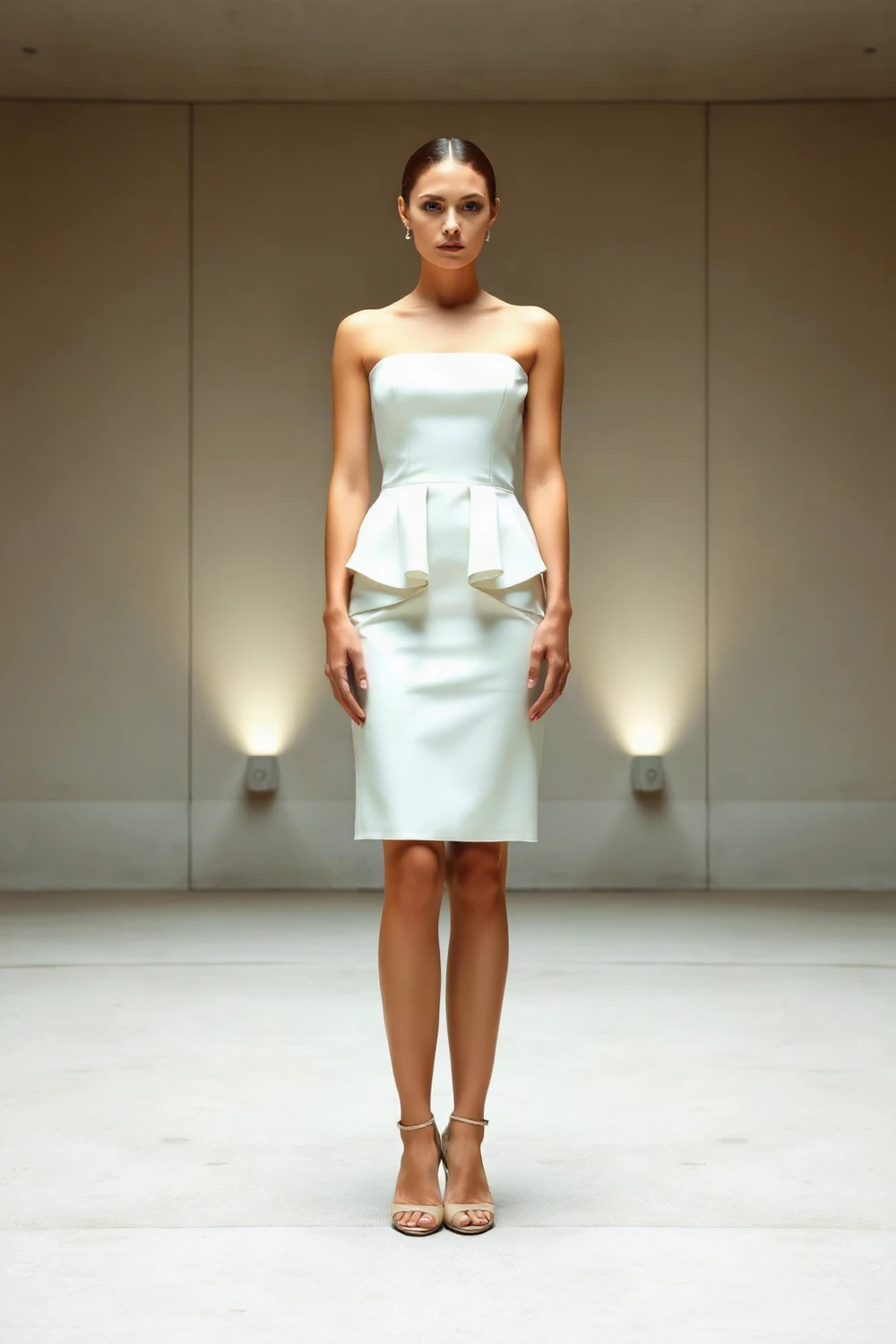
Architectural volume concentrated at the waist
The third concept pairs a straight strapless neckline and fitted knee-length skirt with a broad folded peplum at the waist. Its projecting panels concentrate volume at the body's center instead of spreading it through the skirt, keeping the outline close while making it sculptural. With no visible pattern competing for attention, seam placement and the peplum's curves provide the main design language.
This is an alternative for someone who wants a defined waist without a wide hem, but photographic symmetry cannot show how the peplum behaves all day. Sit to see where its folds settle, lower the arms to check contact with the side panels, and turn to learn whether it shifts around the waist. Test the narrow skirt on stairs and at a natural full stride. The strapless bodice must also stay stable while bending and dancing. An open neckline or small jewelry preserves the architectural focus.
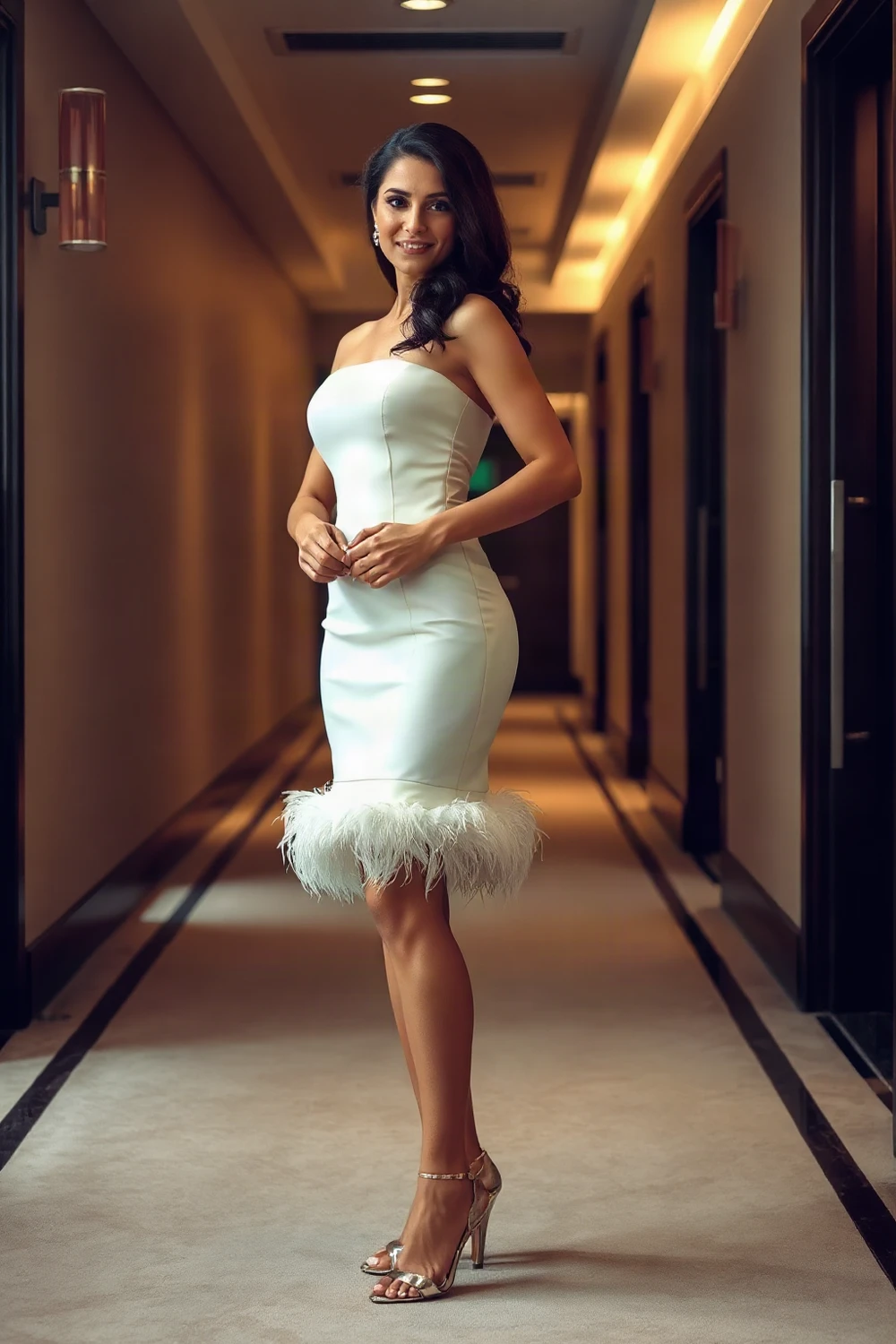
A feather-like finish focused at the hem
The fourth look follows a simple, close strapless line to the knees and reserves all texture for a full feather-like hem border. This low placement frames the legs without adding visual weight near the face or waist. The contrast between the smooth body and animated lower edge shows how one concentrated embellishment can redefine a restrained silhouette.
Because the shoes are fully exposed, consider them with the trim. Fine straps continue its lightness, while a visually heavy shoe could crowd the lower half. At a fitting, check whether the border compresses when seated, brushes the knees or turns inward unevenly while walking. Keep hair, earrings and veil clean-lined rather than adding another dense texture. Plan transport and storage carefully, since the airy border depends on retaining its volume. The result is strongest when the hem remains the single focal point.
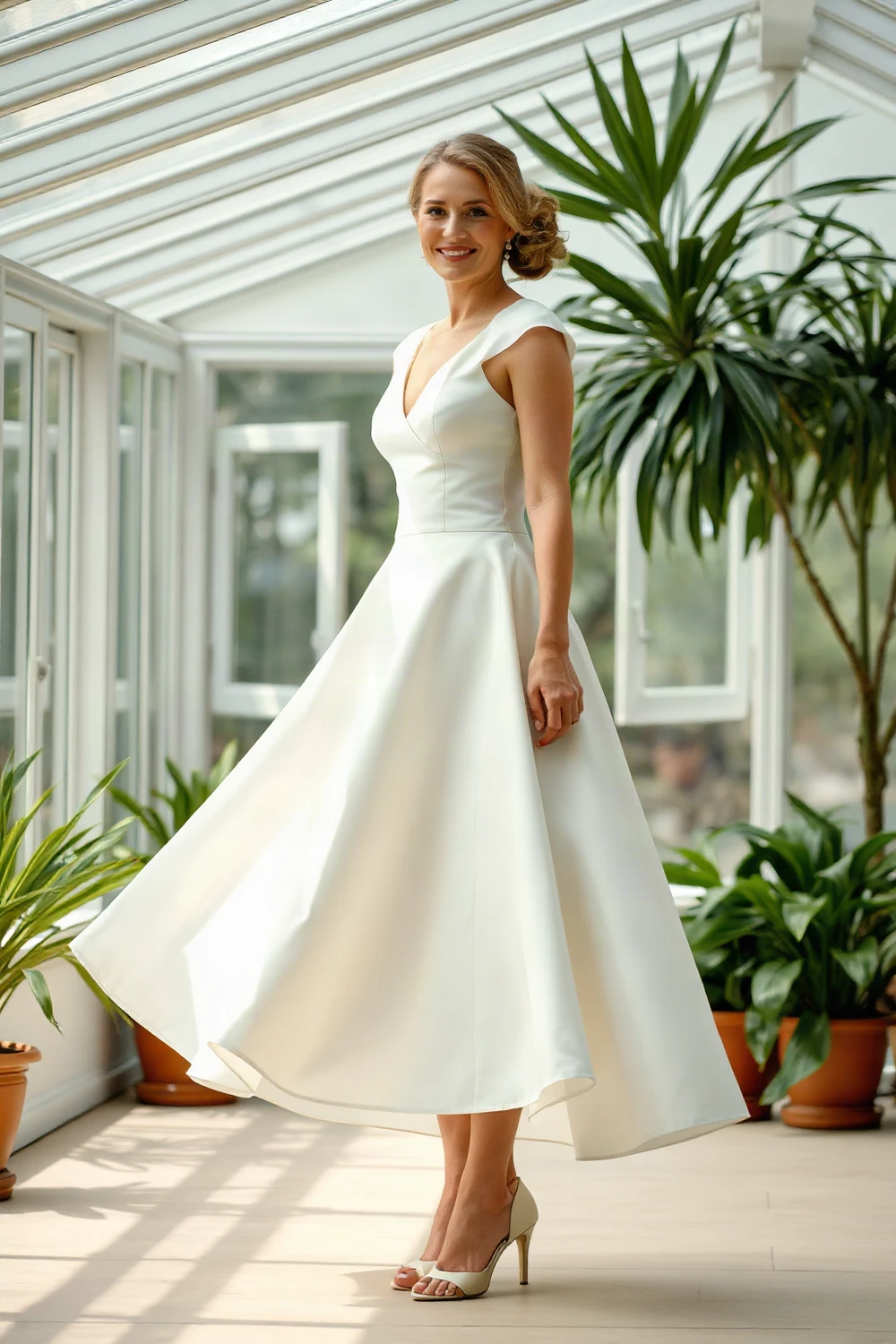
Fullness and turning room in a tea-length skirt
The fifth look offers the greatest overall volume, opening from a defined waist into a full tea-length skirt. A broad shoulder line and V-neck frame the upper body, while the smooth skirt traces a wide arc in motion. Without lace, fringe or a contrasting border, its character comes from proportion and swing rather than surface decoration. The light conservatory setting reinforces that open, airy quality.
A tea-length skirt reveals the shoes intermittently and clears the floor, yet its width still needs planning in compact spaces. During the fitting, walk between chairs, use stairs, sit and turn to understand its practical radius. If considering an extra underlayer, compare it with the skirt's natural fall rather than assuming more volume is better. Because the expansive hem already has presence, the balanced V-neck may need only small earrings instead of a heavy necklace. Footwear can prioritize lasting comfort because it is not continuously visible.
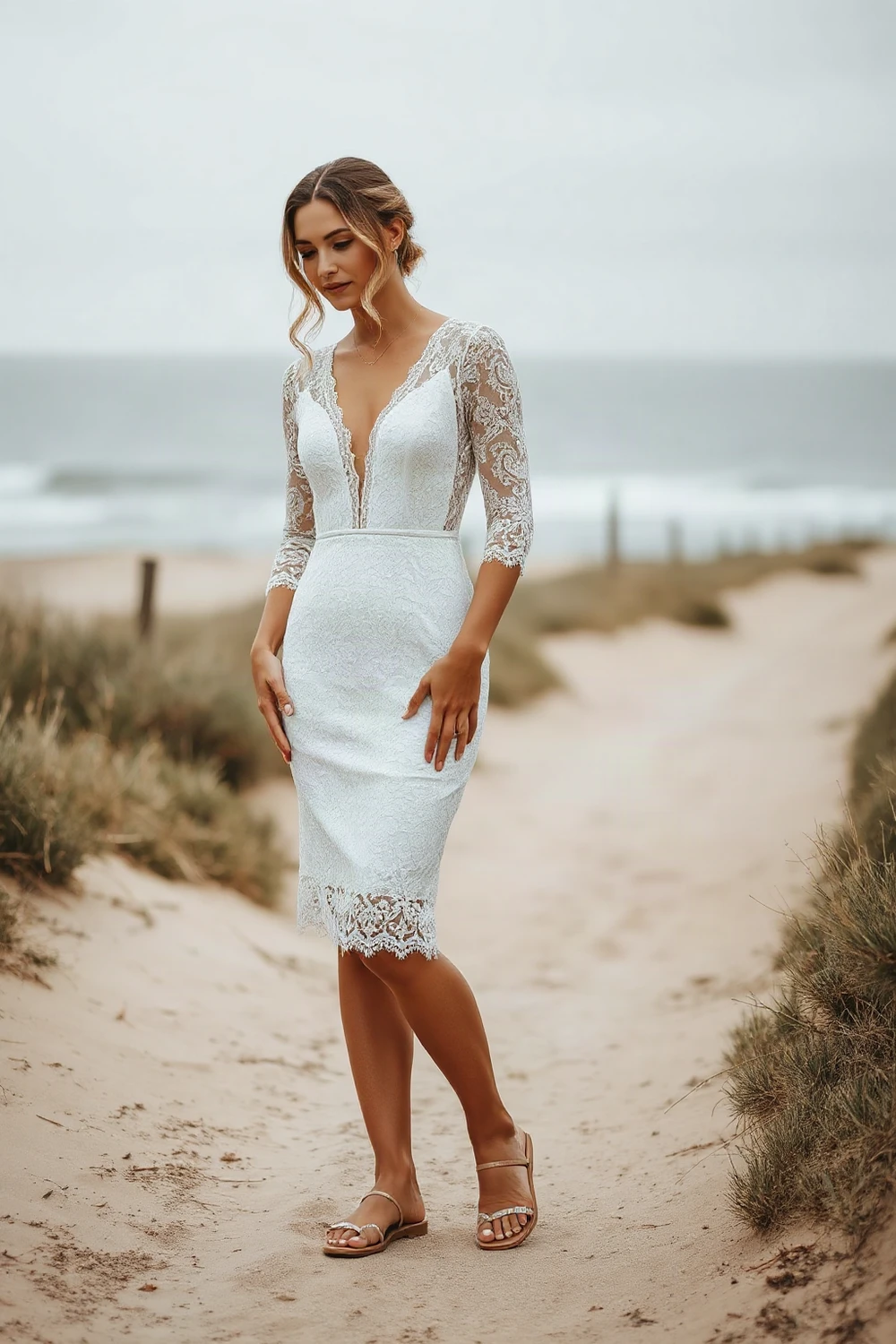
Lace texture, sleeves and a fitted midi proportion
The final look combines a fitted midi outline with a plunging V-neck, three-quarter lace-like sleeves and an openwork hem. Sheer-looking shoulders and arms contrast with the more covered bodice, while the floral pattern links every section. At the lower edge, that pattern forms a visible boundary instead of ending in a plain, straight cut. Muted coastal colors set the detailed white surface against a quiet setting.
Unlike the smooth tea-length design, this dress draws its richness from texture rather than volume. For an outdoor plan, consider sleeve comfort in the expected weather, the narrow skirt's stride on sand or uneven ground, and whether the open edge might catch. Review the neckline and sheer-looking sections in daylight and interior lighting because their appearance may differ. Simple jewelry keeps the lace legible, while secure lower footwear may work better than a narrow heel on soft ground. Judge lining for coverage and visual continuity.
Start with the movement required throughout the day, not decoration alone. The high-low skirt combines lengths, fringe emphasizes dancing, the peplum shapes architectural waist volume, the feather-like border defines the lower edge, the tea-length skirt provides expansive swing, and the lace midi offers controlled surface detail.
Test the strongest options with the intended heel height while walking, sitting, turning and using stairs. Review bodice support, skirt radius and visible coverage in realistic light. Then preserve one leading feature and let the veil, jewelry and footwear support it quietly. This approach makes shorter length a coherent, personal bridal silhouette rather than a collection of unrelated details.
Compare short and tea-length wedding dresses through wrap shaping, fringe, peplums, feather-like trim, full skirts and lace texture, then choose according to movement, setting and accessory balance.
Frequently asked questions
How should the hem length of a short wedding dress be chosen?
Evaluate sitting, stairs and dancing as well as the standing view. A knee-level hem keeps shoes in constant view, while tea length offers more coverage and skirt volume. Final alterations should be made with the intended shoes.
Is a high-low or tea-length skirt easier to move in?
Comfort depends on width and construction as well as length. A high-low skirt is open in front but has a longer back to manage on steps; a tea-length skirt clears the floor but may need more space around chairs.
What veil works with a fringed short wedding dress?
A lightweight veil with a simple edge lets the fringe remain visible and avoids competing movement. Test the veil and dress together while walking and turning to check whether their layers tangle.
What should be checked when fitting a strapless short wedding dress?
Confirm that the bodice stays secure while raising the arms, bending and dancing. Check that internal support does not create visible edges and that a fitted skirt permits a comfortable natural stride.
Can a lace midi wedding dress work for an outdoor ceremony?
It can, depending on the ground, weather and cut. Consider sleeve comfort, stride width on uneven surfaces, the possibility of an openwork hem catching and stable footwear suited to the setting.