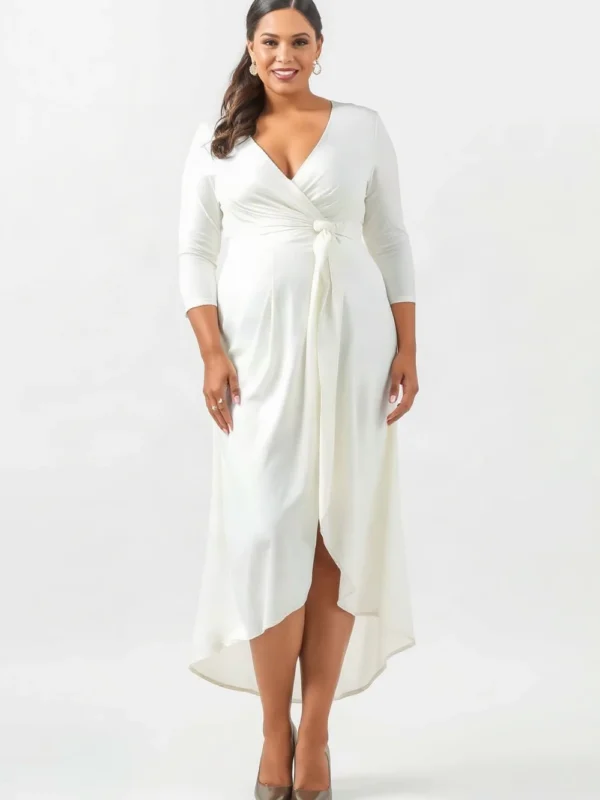
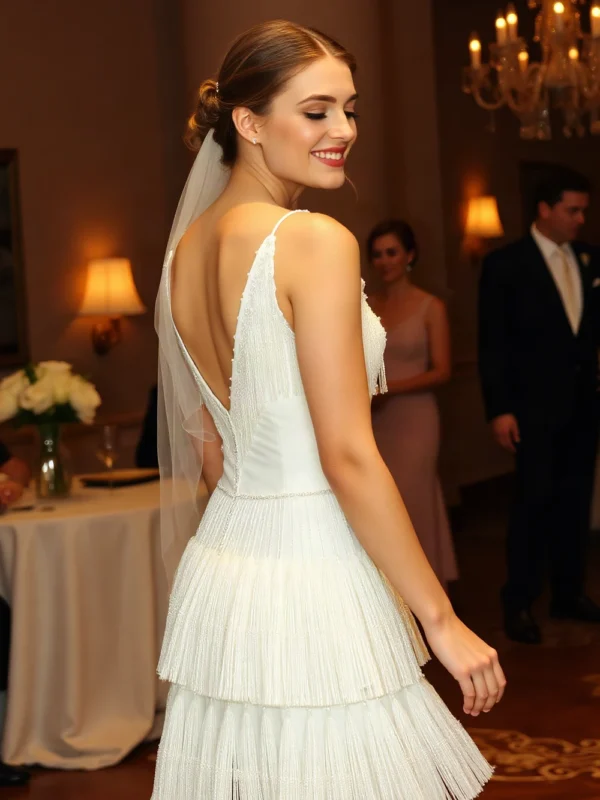
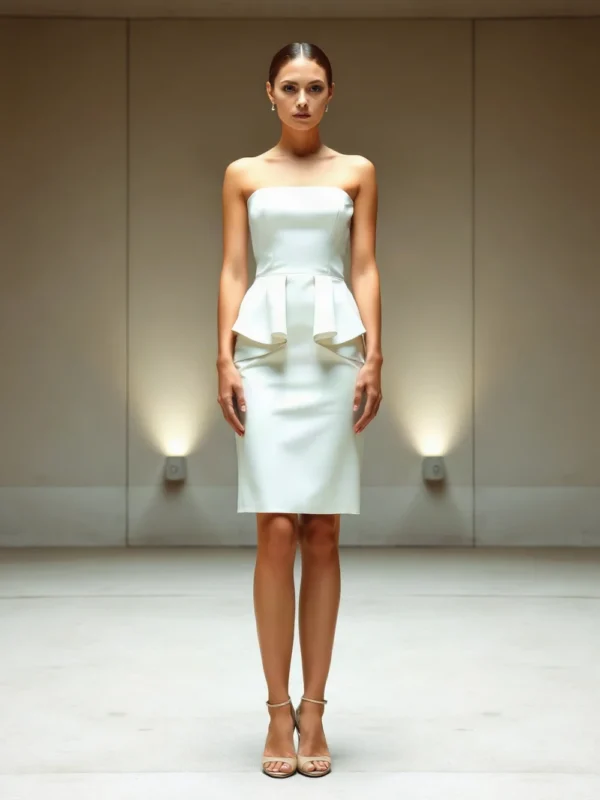
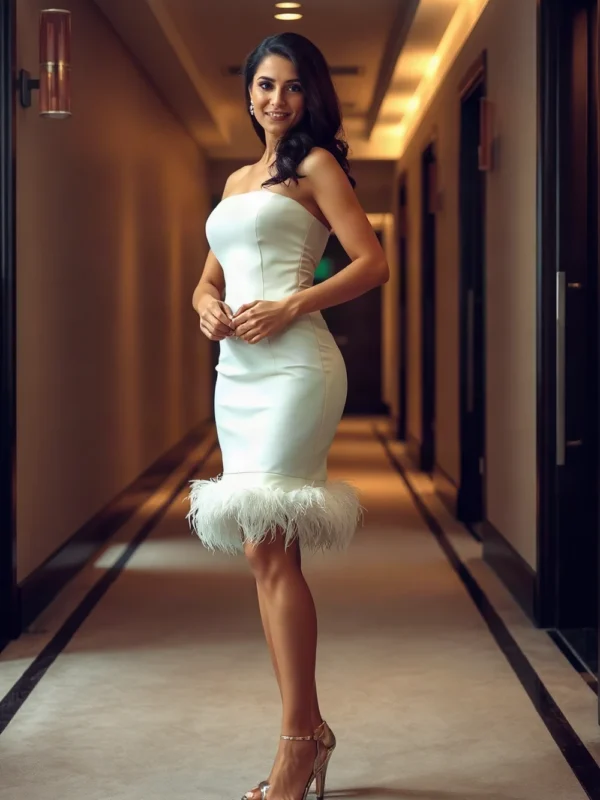
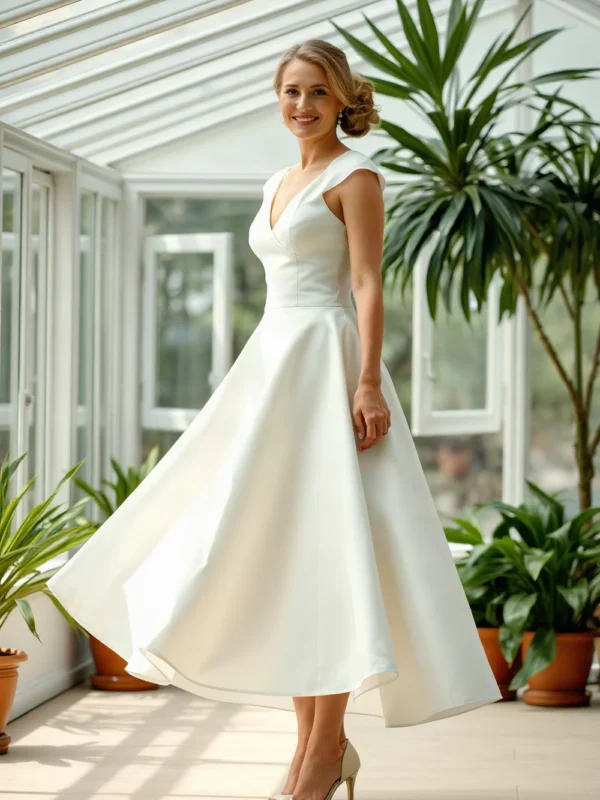
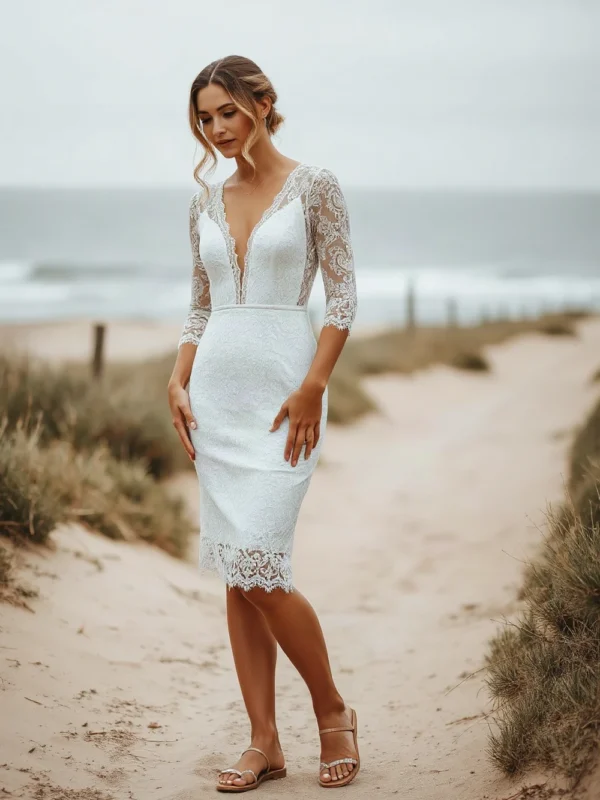
The shared idea across these images is a bridal silhouette that does not depend on a floor-length skirt for impact. Knee-level hems put shoes and the line of the legs in view, while tea-length proportions allow noticeably more skirt movement. The white and off-white palettes connect the concepts, but each design places its visual emphasis somewhere different.
The first look uses a wrap bodice, side tie and high-low hem to create a soft diagonal flow. The second takes the opposite approach: an open back and layered fringe turn movement into the main decoration. Fringe can be particularly expressive while walking or dancing, although a veil should remain light enough not to obscure or compete with it.
The third and fourth images begin with fitted, strapless, knee-length silhouettes but direct attention differently. A sculptural peplum concentrates volume at the waist, whereas a feather-like border emphasizes the lower edge. The former appears graphic and architectural; the latter feels playful and textural. Both require a fitting that includes sitting, longer steps and checks for bodice stability.
The fifth concept makes a full tea-length skirt the defining feature. Its smooth surface lets shape and swing do the work. The sixth stays closer to the body, using a lace-like surface, three-quarter sleeves and an openwork hem for visual richness. One needs room to turn; the other depends more on comfortable stride width and careful lining choices.
Before choosing, map the ceremony and celebration realistically. Stairs, floor texture, seating and the size of the dance area all affect a useful skirt width. Then identify one leading feature: waist, back, hem, overall volume or surface pattern. Keeping shoes, veil and jewelry supportive rather than equally elaborate usually produces a clearer, more intentional composition.