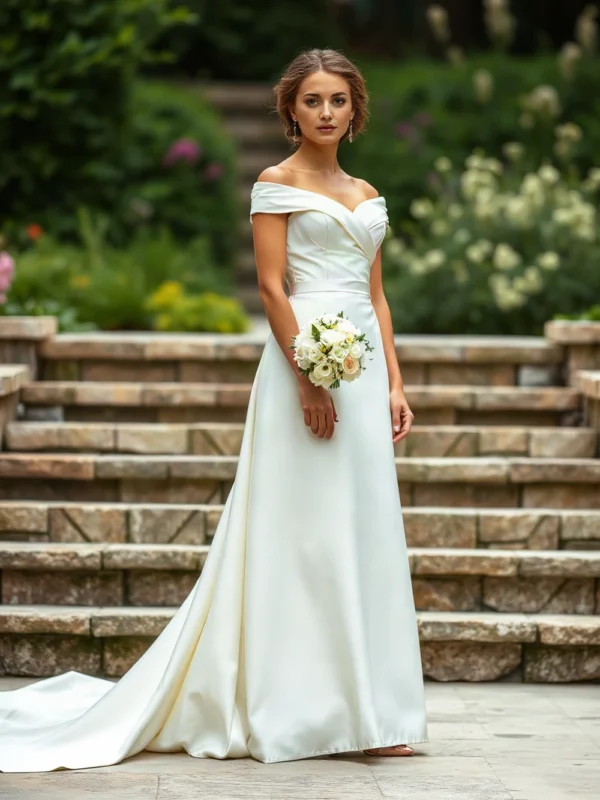
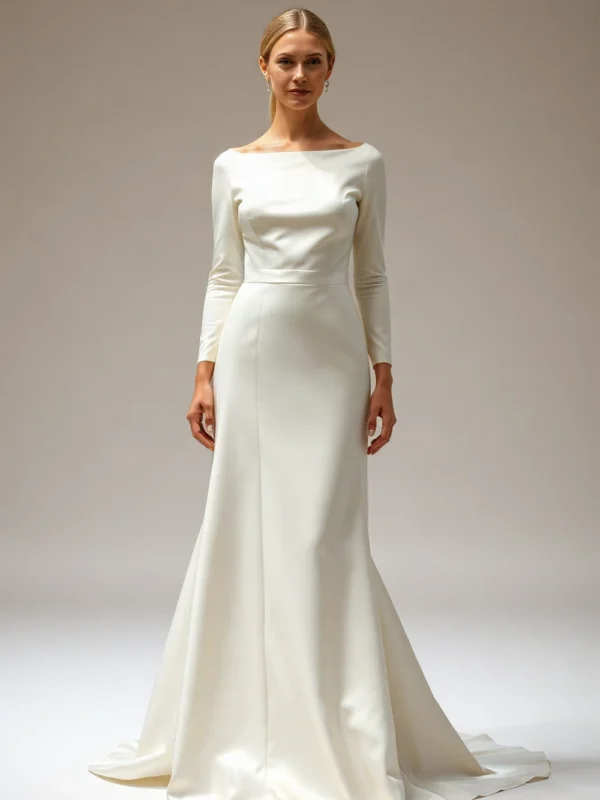
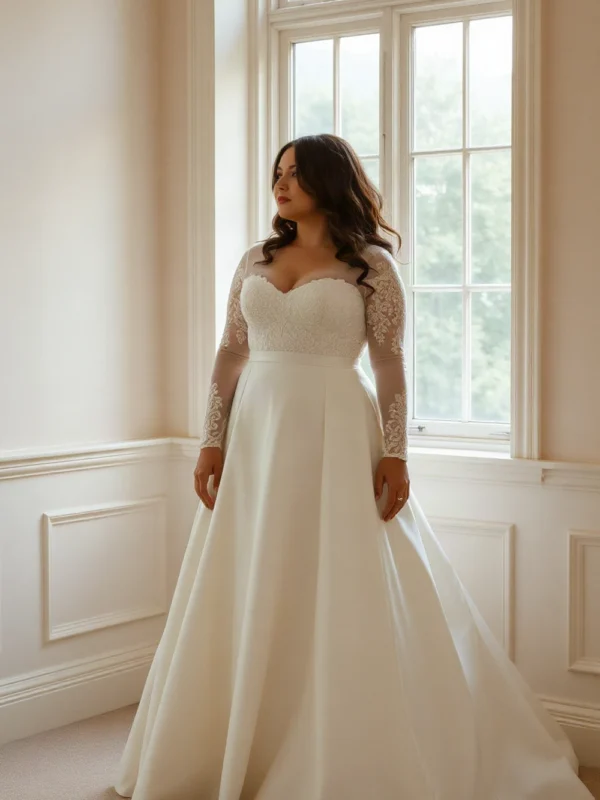
Minimalist ball gown wedding dresses make volume visible through cut, seam placement and proportion rather than dense decoration. That makes an apparently small decision capable of changing the whole character of the silhouette: a low back creates a romantic rear focal point, pockets introduce a more relaxed attitude, and an off-the-shoulder line builds a broad ceremonial frame. These six visual concepts share pale ivory color and predominantly smooth surfaces, yet differ substantially in their neckline, waist, back and train treatments. Comparison should extend beyond the still image to internal support, arm movement, sitting, walking and the venue floor. The purpose is not to identify a particular purchasable gown, but to clarify the questions worth taking to a fitting and the ways a clean ball gown can be directed through personal detail.
Balancing a Rounded Low Back with a Bow
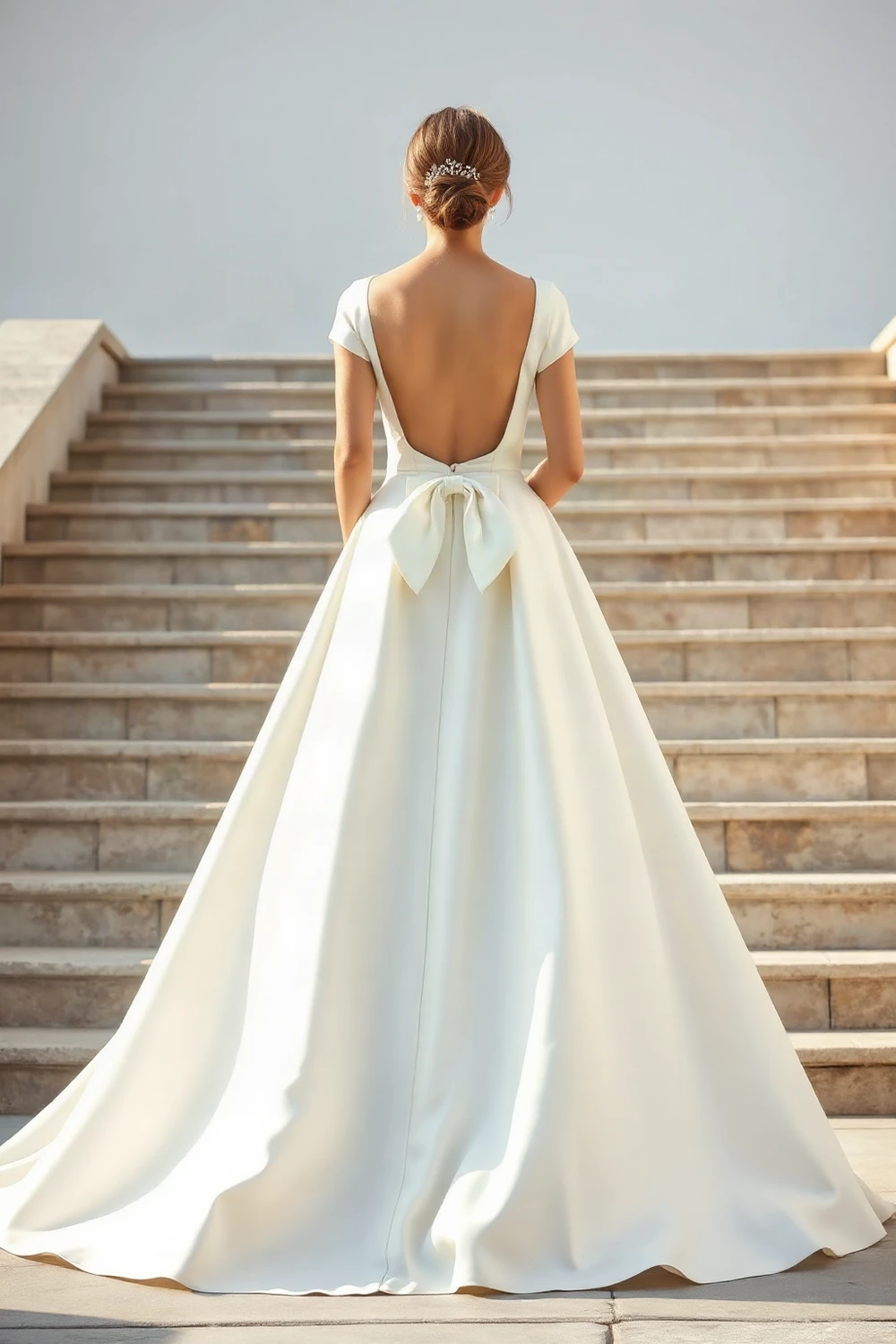
In the first look, a broad U-shaped opening falls between short sleeves and reaches the waist, making the back the principal feature. Because the rounded line runs continuously from the shoulders downward, the generous bow visually anchors its lowest point and establishes the transition into the full skirt. Soft bow edges also temper the formality of the smooth surface, removing the need for another major embellishment.
The stability of the opening matters as much as its depth. Internal support, the waist seam and the weight of the bow should be assessed together so that the edges remain secure during movement. A low updo leaves the entire arrangement visible, whereas a long, dense veil can conceal both the opening and bow. The skirt looks impressive across the stone steps, but a venue with stairs calls for practice in lifting its width and controlling the trailing edge without disturbing the waist detail.
A Geometric Front with Functional Pockets
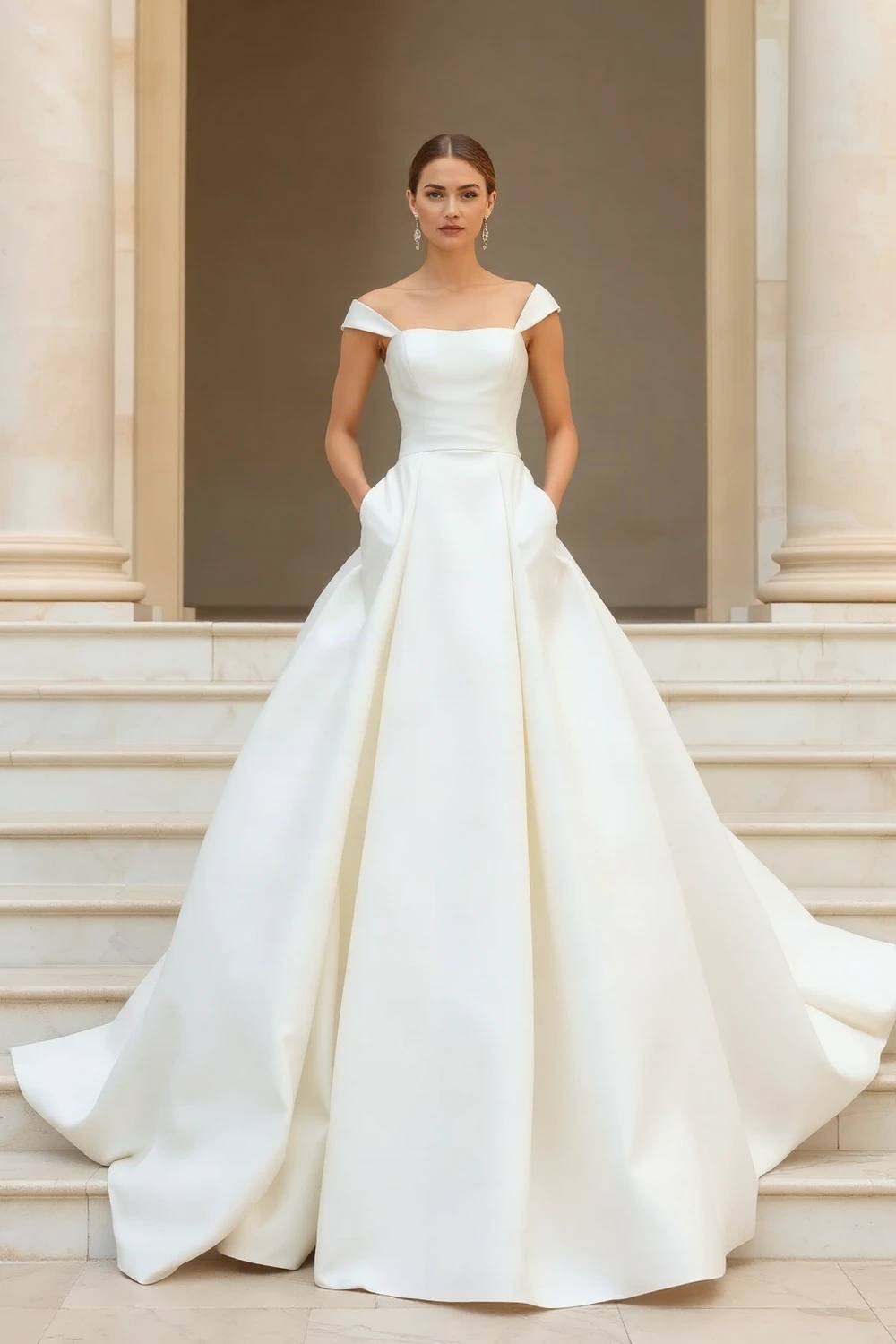
The second design combines a near-square upper edge with short folded pieces that sit beyond the shoulders. This decisive horizontal line is balanced by a long skirt that expands broadly from the fitted waist. Pockets introduce function without adding visible ornament; placing the hands inside them gives the formal silhouette a more relaxed, contemporary attitude.
Pocket selection involves more than confirming that they exist. Their height, opening and inner bags should be checked to see whether they add bulk, and any object intended for them should be tested for changes to the skirt line. Arm raising, embracing and dancing also reveal whether the off-the-shoulder pieces remain comfortable and secure. Because the neckline already creates a strong horizontal frame, earrings may work more cleanly than a large necklace. This approach suits someone who prefers structure and utility to decorative surface detail.
Softening a Sweetheart Neckline with Draping
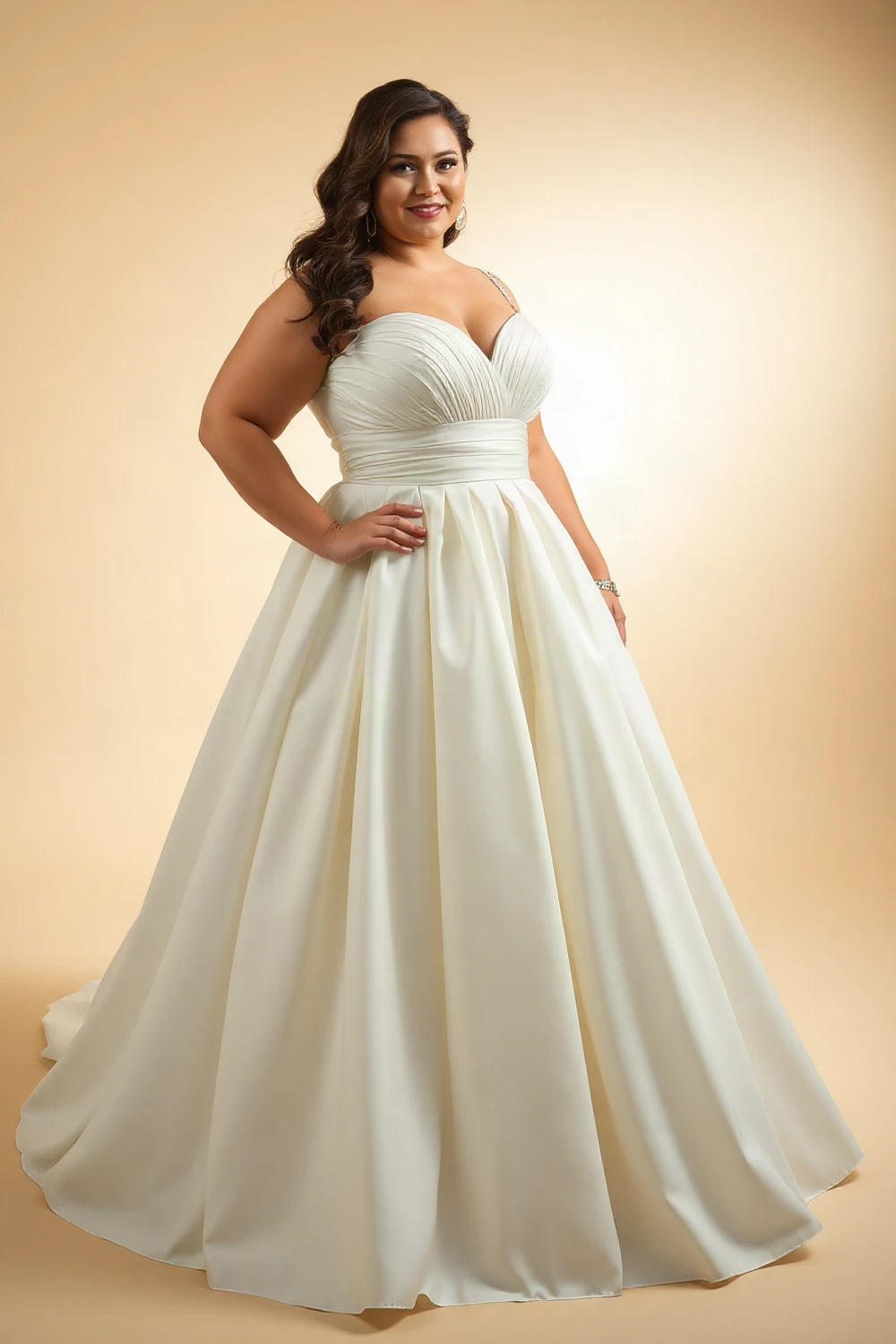
In the third concept, fine diagonal folds move across the sweetheart bodice and create a distinct contrast with the smooth skirt. A broad ruched waistband contains that movement and makes the starting point of the skirt easy to read. The slim, glinting strap visible on one side introduces a small asymmetric note. Below it, orderly pleats carry the volume downward rather than concentrating it around the waist.
With a draped bodice, the points where folds begin across the bust and the height at which the waistband divides the torso should be judged individually. Sitting and walking can show whether the folds rise, whether the strap remains comfortable and whether the neckline stays stable. The curves feel softer than the geometric edge in the second image. Hair swept to one side can reinforce the asymmetry, although its position should be tested from several angles if the strap and neckline are intended to remain visible.
Using Seams and Buttons on a More Covered Back
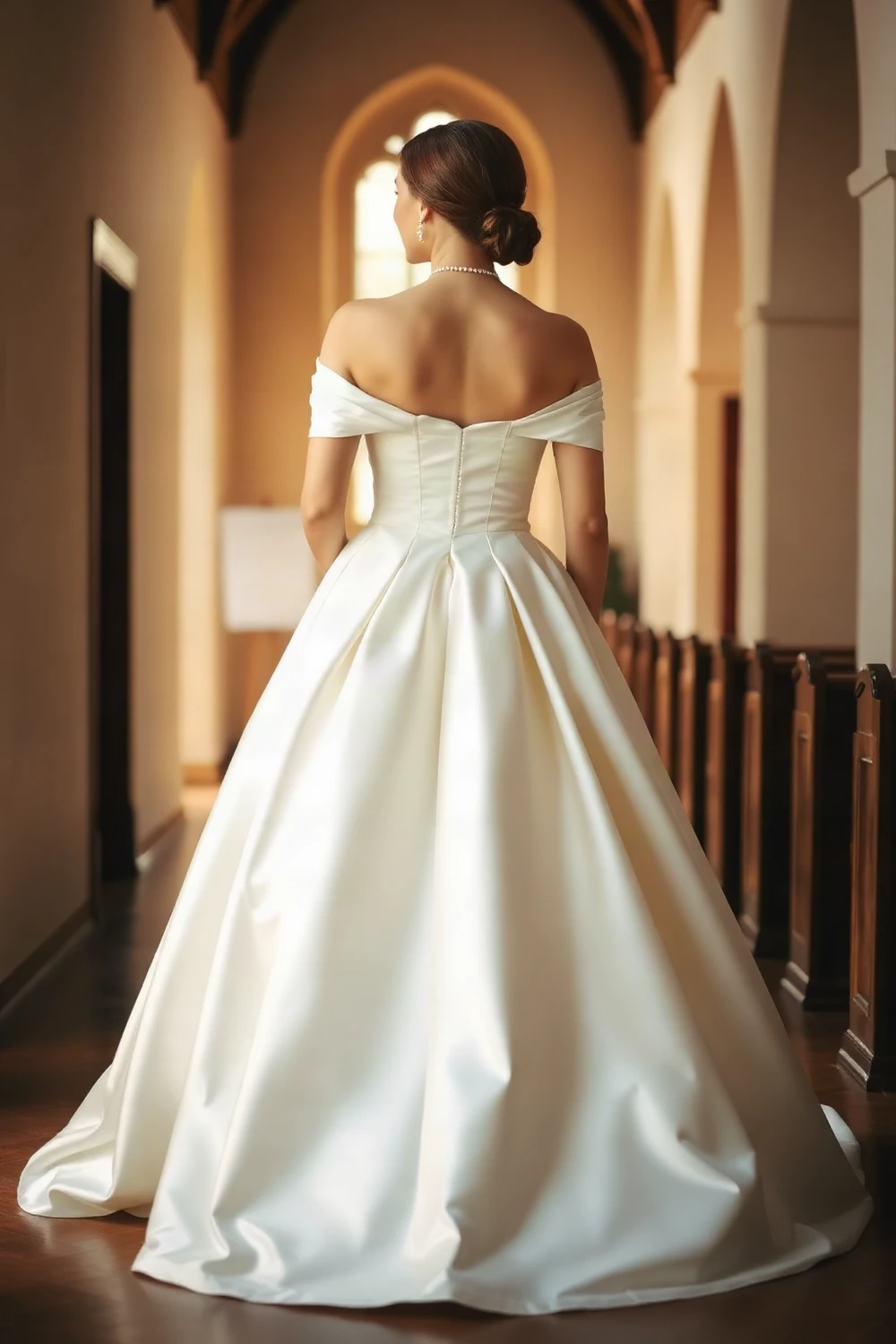
The fourth design replaces a deep opening with a broad band below the shoulders and a closely fitted structure. Vertical seams guide the eye toward the waist, while a line of small buttons defines the center without overwhelming the clean surface. The skirt opens through pronounced waist folds, producing a strong back view even without a bow or extensive texture. Warm aisle lighting makes the broad curves in the smooth skirt especially legible.
This option can suit someone who wants a defined ceremonial back with more coverage. The off-the-shoulder band creates elegant width, but its effect on arm movement should be tested. Buttons should not press uncomfortably when seated, and the center closure should remain straight. An updo keeps the seam work visible. If a veil is added, its transparency and attachment point can be assessed from behind so the buttons do not disappear entirely. The controlled sweep may also prove easier to navigate through a narrow aisle than an extended train.
Combining a V-Back, Waist Bow and Long Train
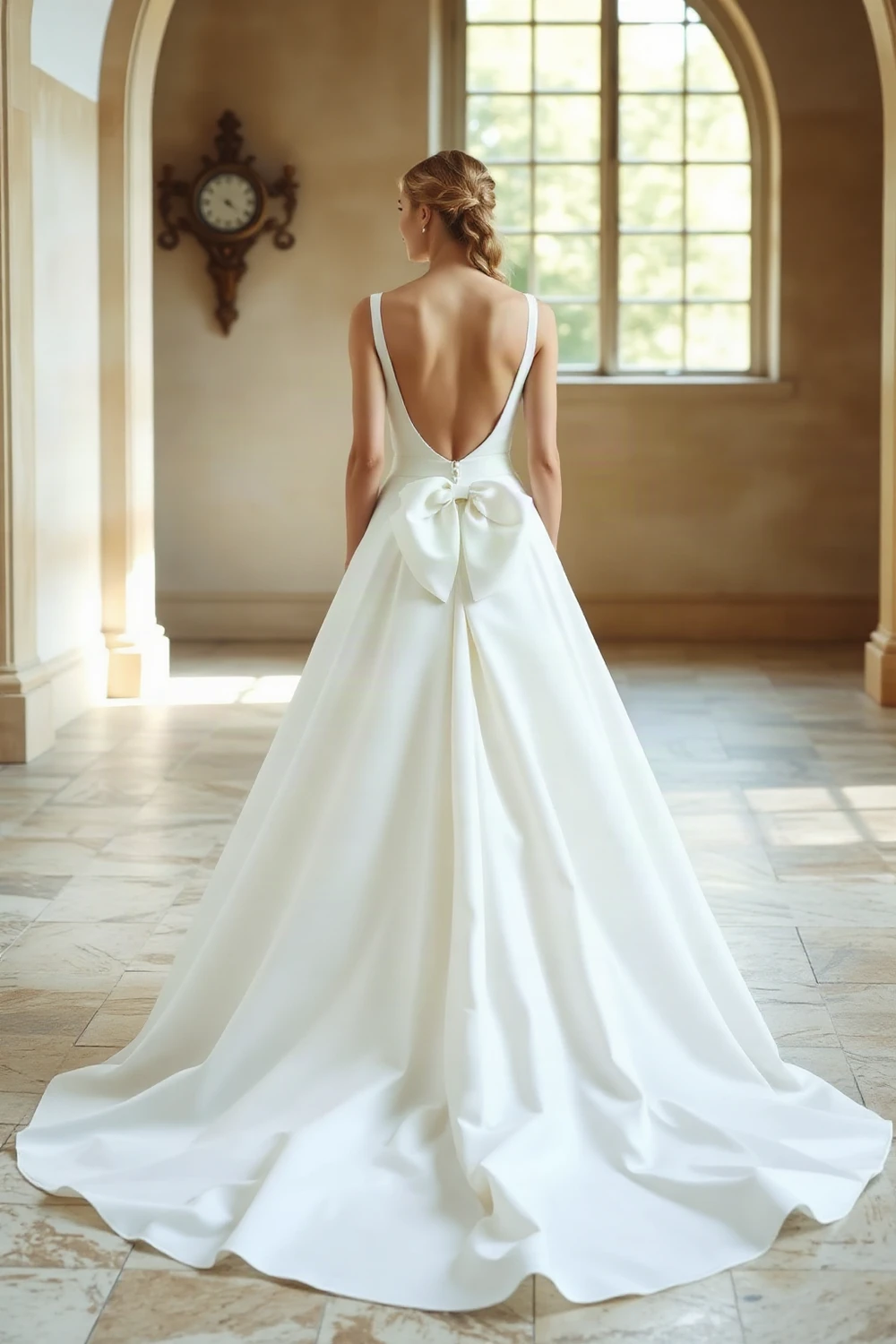
The fifth look frames a deep V-back with wide straps and brings that line to a conclusion at a large waist bow. Compared with the rounded opening in the first design, this sharper geometry visually lengthens the torso. The skirt spreads continuously into a long train, producing a strong ceremonial effect in the bright hall, while the restrained surface keeps the bow immediately readable.
The V edges, strap length and internal support should be considered during the same fitting because changing one can affect the position of the waist and bow. A train of this scale has presence across a broad entrance, but narrow corridors, outdoor ground and dancing call for an effective bustle or carrying plan. Since the bow already creates a major rear focal point, combining a dense veil, strong hair ornament and back necklace may blur the hierarchy. Hair that leaves the upper back clear maintains the definition of the V.
Enriching a Clean Silhouette with Restrained Texture
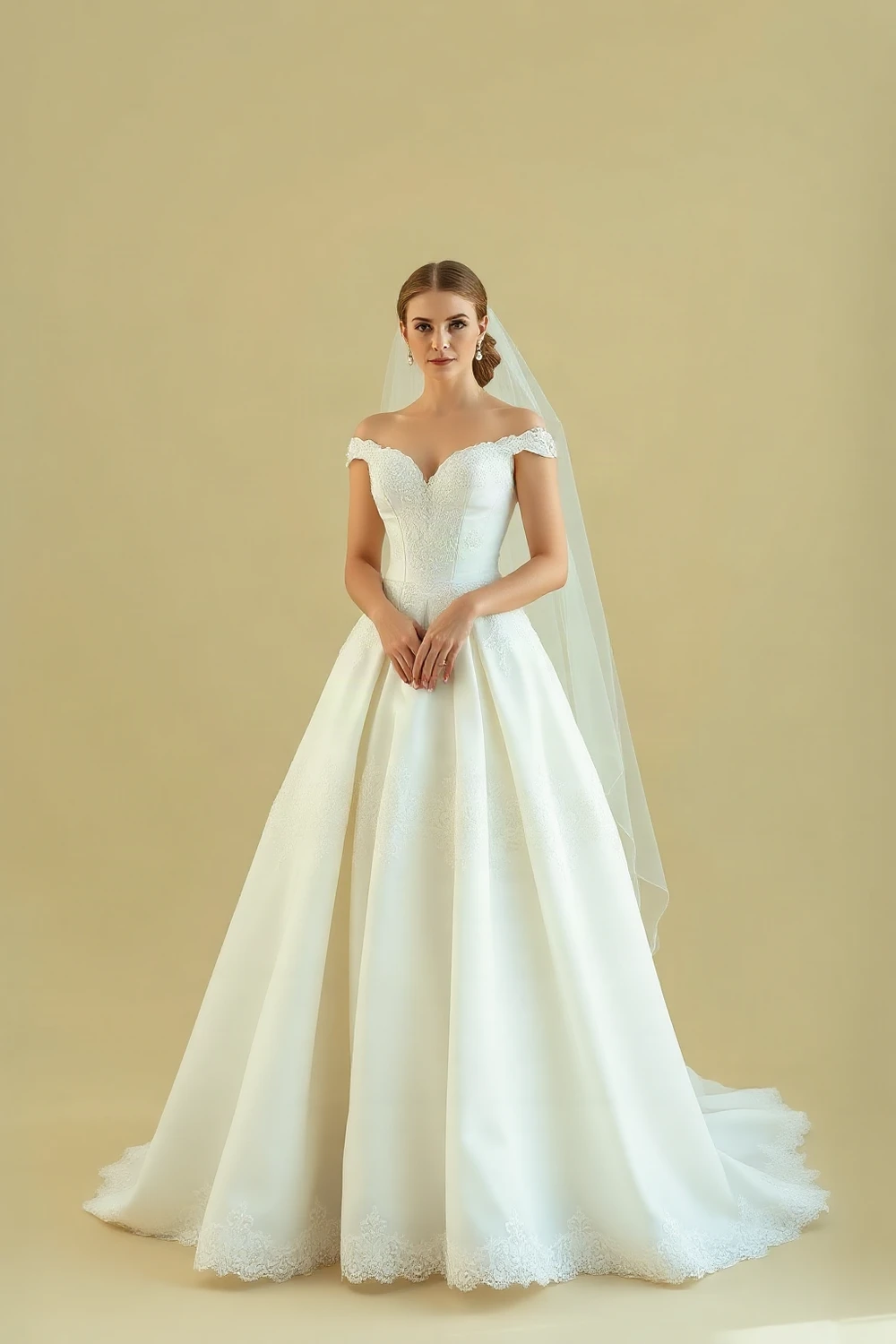
The sixth design joins an off-the-shoulder sweetheart neckline to a full skirt and introduces fine floral-like texture across the bodice and near the hem. Because the pattern does not cover the entire surface, the expansive skirt still appears calm and clean. A long translucent-looking veil softens the shoulder line, while the patterned edge acts as a subtle frame where the skirt meets the floor.
When texture is added to a minimalist gown, its scale and placement may matter more than sheer quantity. With a distinctive neckline and veil already close to the face, restrained jewelry can maintain a clear composition. Arm comfort should be checked along the off-the-shoulder edge, while the patterned hem should be considered in relation to shoes and the floor. This concept sits between the completely smooth, functional second look and the concentrated draping of the third. Viewing the surface under different light and in motion helps establish how prominent the pattern will actually appear.
These concepts show that the defining feature of a minimalist ball gown is not the amount of decoration, but the location of its visual focus. Low backs and bows emphasize the rear view; pockets and a geometric neckline create a modern front; draping and fine texture add softer movement. During initial selection, decide whether the neckline, back, waist or train should take the leading role. Then test the preferred option while sitting, walking, embracing and dancing, with the intended veil and hairstyle included wherever possible. Considering the venue floor and route at the same time helps create a coherent balance between visual impact, movement and personal comfort.
Compare how low backs, pockets, off-the-shoulder necklines, draping, bows and restrained texture change the character and practical demands of a clean ball gown silhouette.
Frequently asked questions
How should support be planned for a low-back ball gown?
Consider more than the shape of the opening. The bodice structure, strap or sleeve placement, waist seam and stability of the back edges should be tested together while sitting, walking and turning.
Do pockets distort a full ball gown skirt?
Well-positioned pockets can blend into a full skirt, but the pocket bags, hand position or stored object may create extra bulk. View them empty and in use from both the front and side.
Can an off-the-shoulder neckline work for dancing?
It can, depending on the band structure and available movement. Raise the arms, embrace, sit and practise turns during a fitting to check that the neckline neither rides up nor slips down.
Can a waist bow and long veil be worn together?
Yes, but the veil attachment, transparency and length determine how much of the bow and back remains visible. Photograph the complete arrangement from behind before making the final choice.
Where does restrained texture work best on a minimalist gown?
Limited areas such as the neckline, bodice or hem can direct attention without covering the silhouette. Assess the pattern alongside the veil edge, jewelry and lighting so the details do not compete.