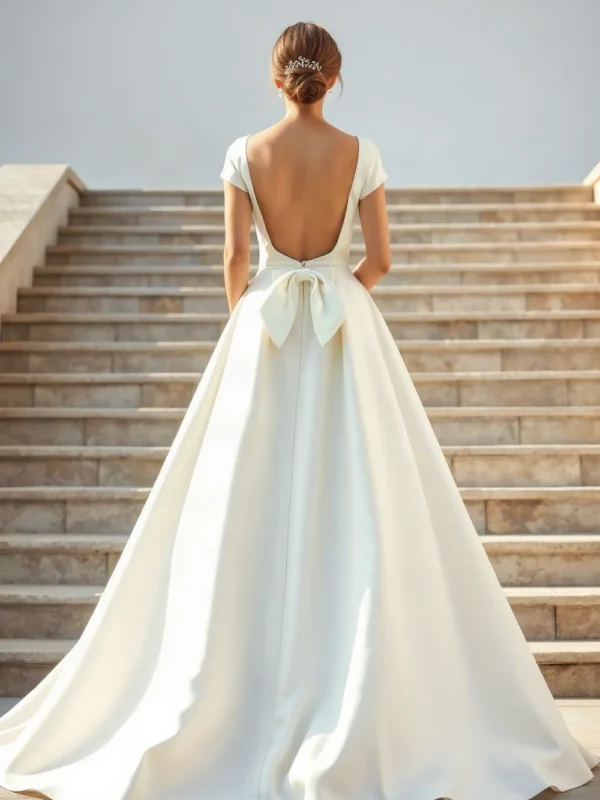
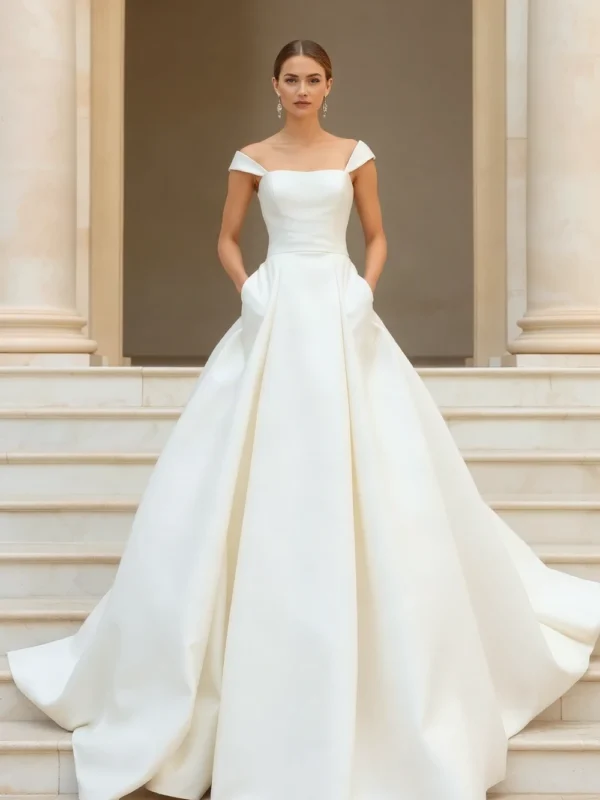
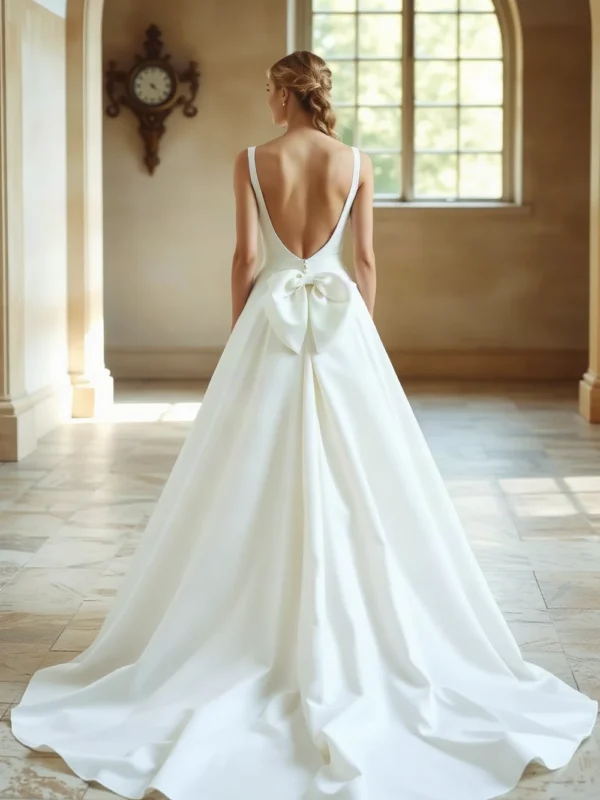
The shared visual language is an expansive ball gown skirt balanced by limited ornament. The first and fifth looks combine a low back with a bow at the waist, while the second redirects attention to a near-square neckline and pockets. A few structural choices therefore give similar pale silhouettes noticeably different personalities.
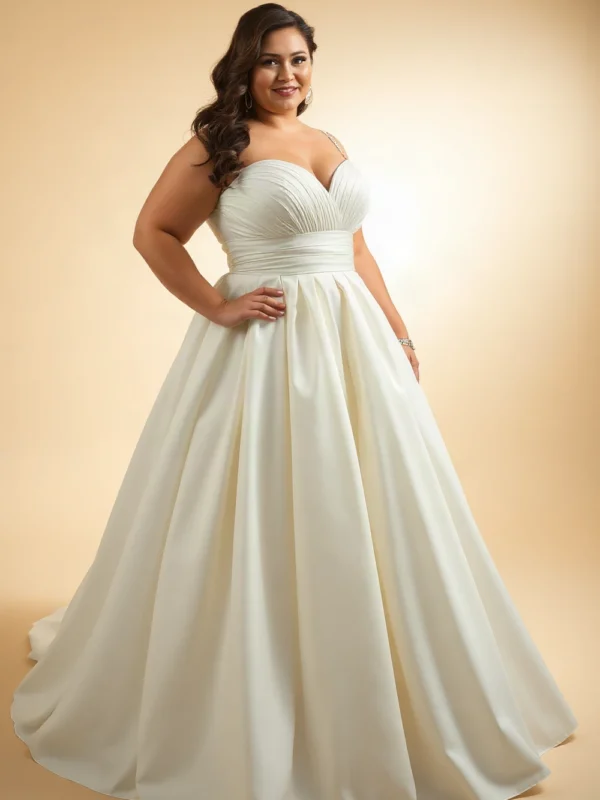
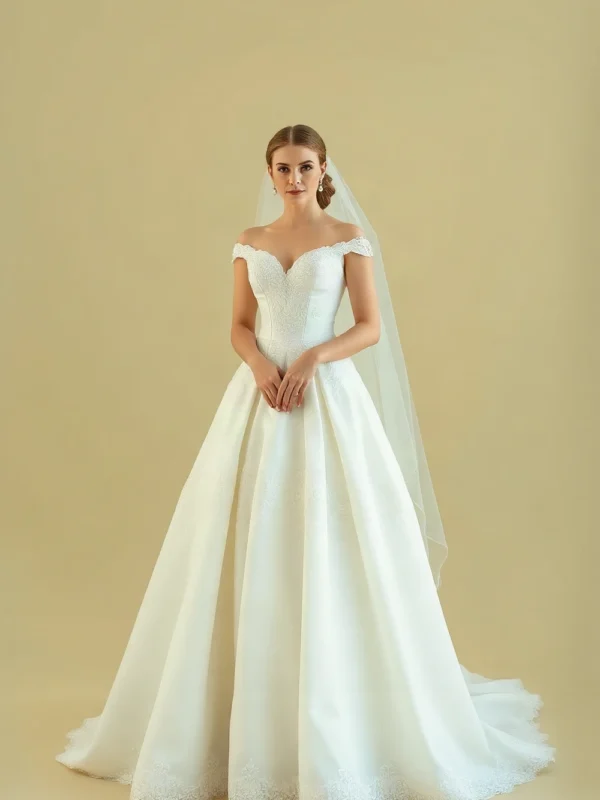
The front-facing second, third and sixth images demonstrate how neckline shape changes proportion. A straight upper edge and folded off-the-shoulder pieces make the second look architectural. Diagonal draping brings movement to the third bodice, where a wide ruched waistband defines the transition to the skirt. The sweetheart off-the-shoulder line in the sixth image feels more ceremonial beside fine surface pattern and a long veil.
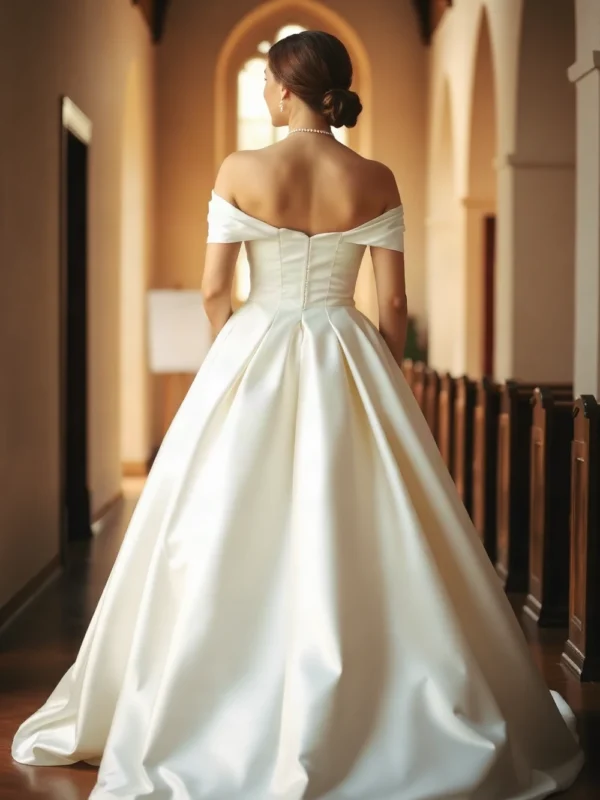
The back views also offer distinct levels of exposure. Short sleeves frame the rounded U-shaped opening in the first design; shoulder straps create a sharper V in the fifth. The fourth replaces a deep opening with an off-the-shoulder band, vertical seams and a narrow row of buttons. It is a quieter alternative for someone who wants definition at the back without a bow or extensive bare skin.
Selection should account for movement rather than the still pose alone. During fittings, check whether pocket bags alter the skirt, whether an off-the-shoulder edge allows comfortable arm movement and what support a low back requires. A long train can suit a broad, even floor, while steps, narrow aisles or energetic dancing may favor a more controlled sweep or an effective bustle. Choosing one principal accent—such as a veil, bow or noticeable earrings—also helps the clean surface retain its clarity.