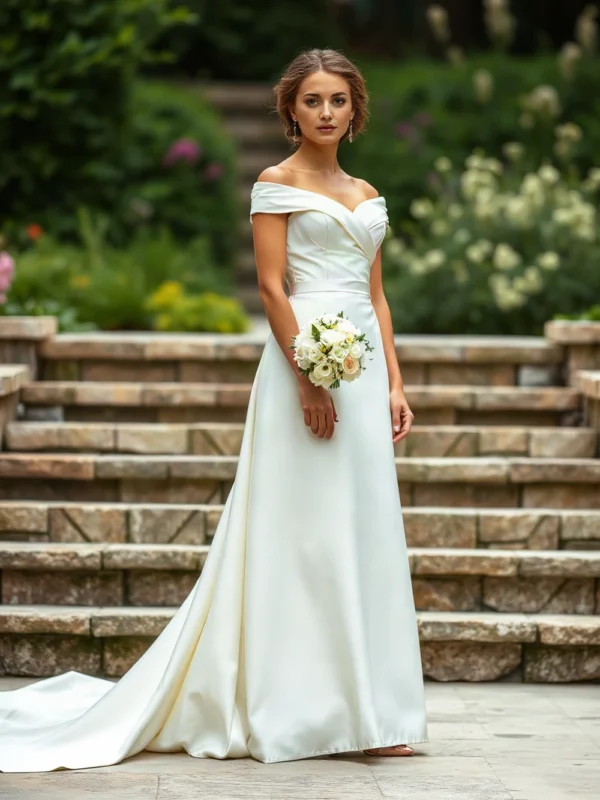
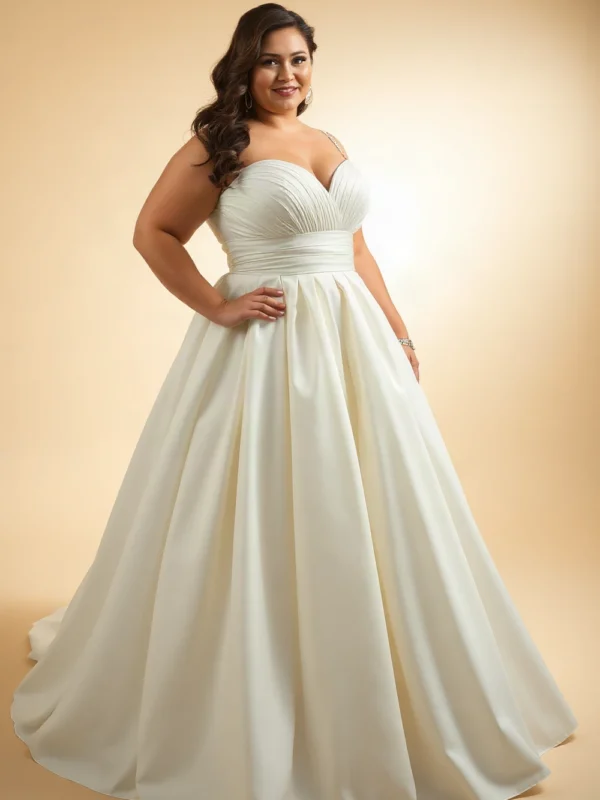
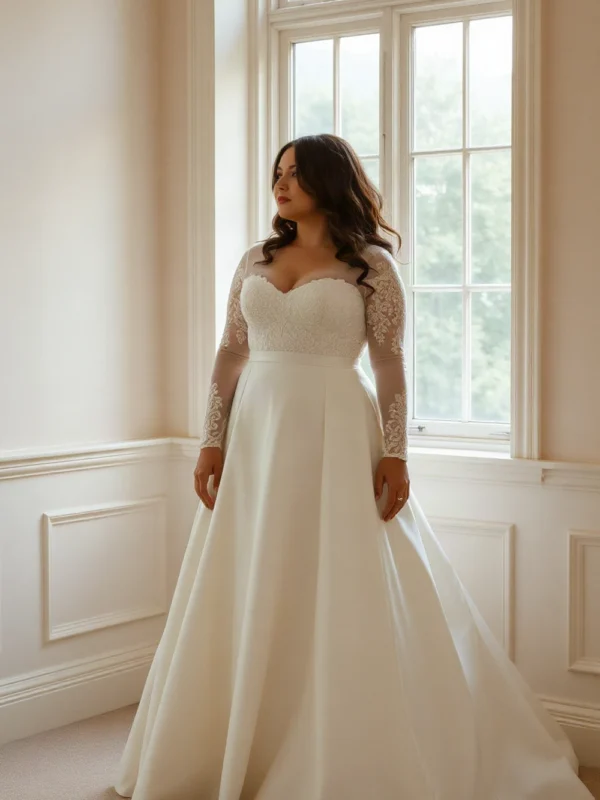
Coverage in a long-sleeve wedding dress is not determined by sleeve length alone. Neckline width, bodice opacity, sleeve shape, skirt volume and decoration all affect how enclosed or open it feels. The best choice is not automatically the highest collar or fullest skirt, but coordinated proportions that stay comfortable while sitting, walking and greeting people.
These six images present distinct approaches in a light bridal palette: floral openwork, pearl-like geometry, a smooth bateau neckline, flared elbow sleeves, a high embellished collar, and a clean A-line with hijab and veil. They are visual concepts for comparing styles, not purchasable products. Alongside the front view, consider the side profile, arm mobility, underlayer visibility and changing light. These checks distinguish details that merely photograph well from those that also provide the intended coverage and ease.
Balancing floral openwork between neckline and hem
The first look spreads floral, lace-like openwork across the shoulders and repeats it at the wrists and scalloped hem, giving the full A-line skirt one visual language. A raised pattern covers the bodice and skirt; a softer-looking layer extending into the train adds movement and breaks up the density.
Coverage depends as much on the motif backing as the neckline. A dress-colored lining minimizes contrast, while another tone emphasizes each opening. Since the neckline, cuffs and hem are detailed, a large necklace could compete. During fitting, bend the elbows, pass through a narrow doorway and turn both ways. Check that the border clears the shoes and the lighter side layer follows without twisting. This suits someone seeking romantic surface interest, but may feel busy to someone preferring uninterrupted planes.
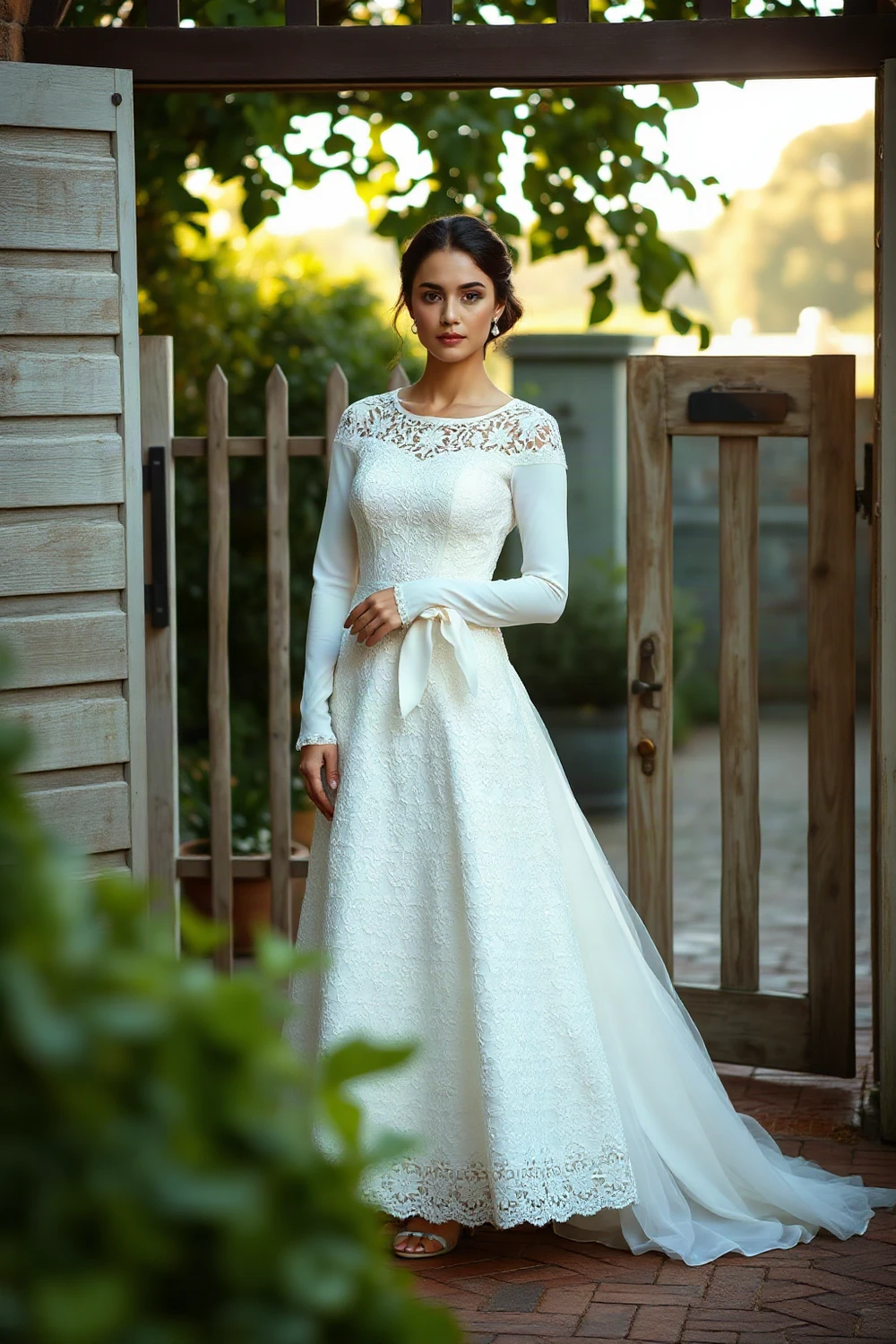
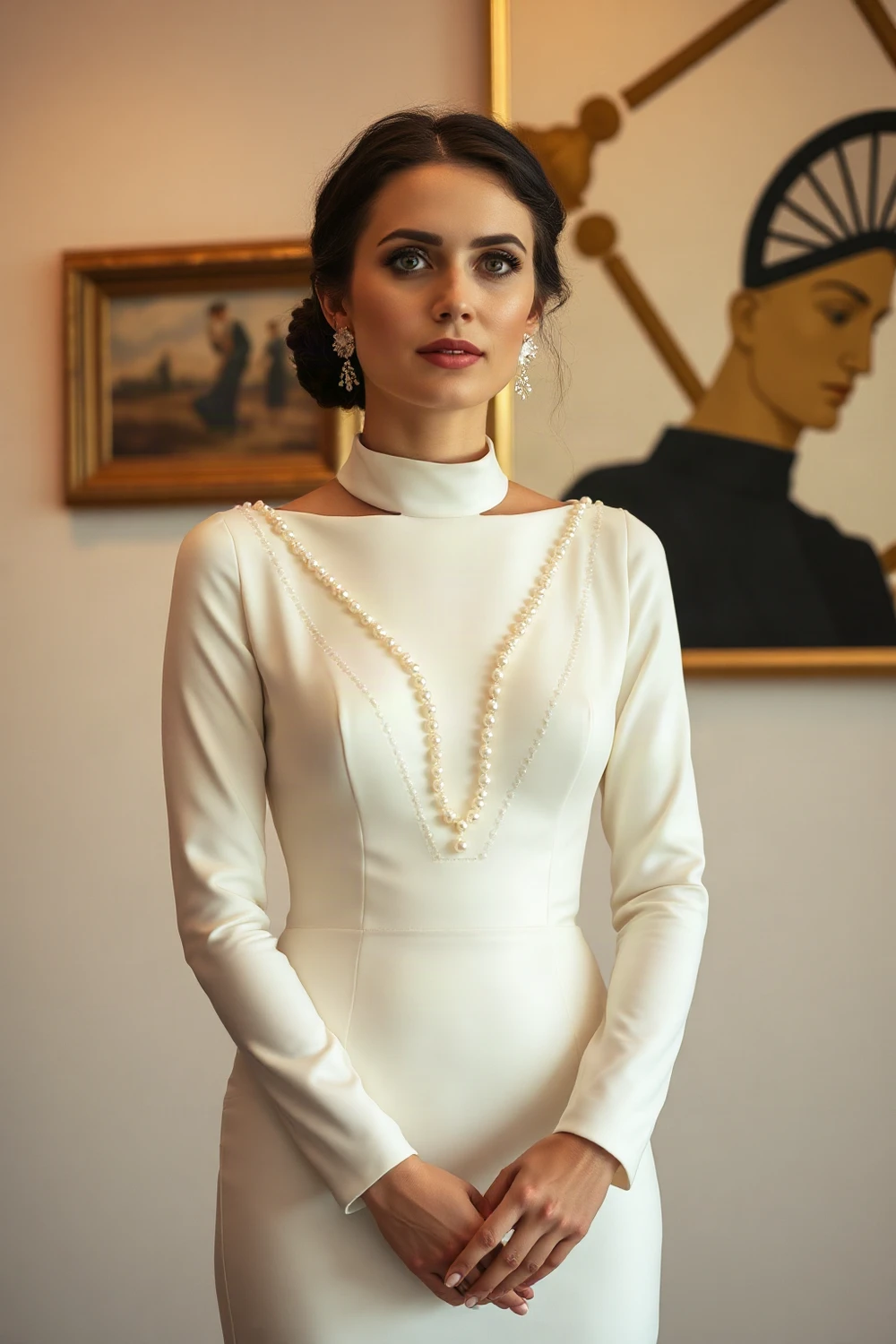
Using pearl-like geometry to frame a covered bodice
The second image creates neck coverage through a separate collar band and wide horizontal neckline. Pearl-like strands form nested Vs from the shoulders toward the center, directing attention to the face and waist. Straight sleeves and a smooth bodice keep the decoration controlled rather than all-over.
Assess the collar beyond a front view: turn the head, lower the chin and sit to detect rubbing or restriction. Long earrings echo the descending lines; smaller ones avoid too much movement near the neck. Check whether the strands lift from the bodice while seated and alter their geometry. The treatment is sharper and more graphic than floral openwork, and more formal and ornamental than the plain bateau design. It suits someone seeking an orderly central focus instead of texture across the dress.
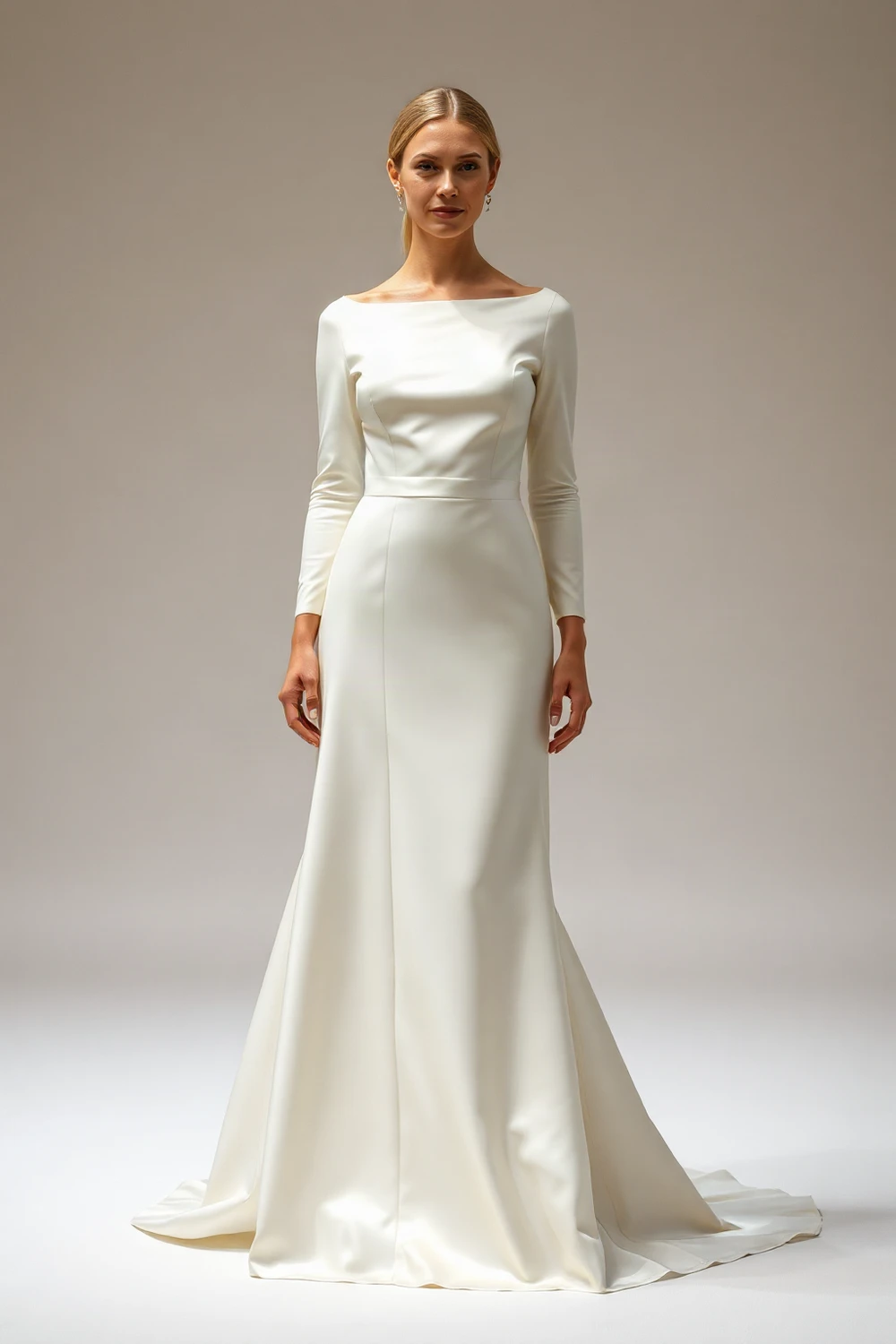
Letting a bateau neckline and seams define the shape
The third dress makes cut rather than decoration dominant. Its bateau neckline spans the collarbones, slim sleeves extend the shoulder line, and a natural waist seam marks the skirt. The upper skirt stays close before widening below; a short train gives the restrained surface a ceremonial finish.
Minimal designs expose fit problems. The neckline should sit evenly on both shoulders, underlayers stay hidden, and the waist seam remain level when the arms move. The clean outline also needs walking space. This feels calmer and more contemporary than the embellished upper bodices in the first and fifth images. Small earrings preserve the line, while a stronger veil or headpiece could add one controlled focus. Test stairs, sitting and turning, and see whether the skirt returns to position after movement rather than judging only a straight studio pose.
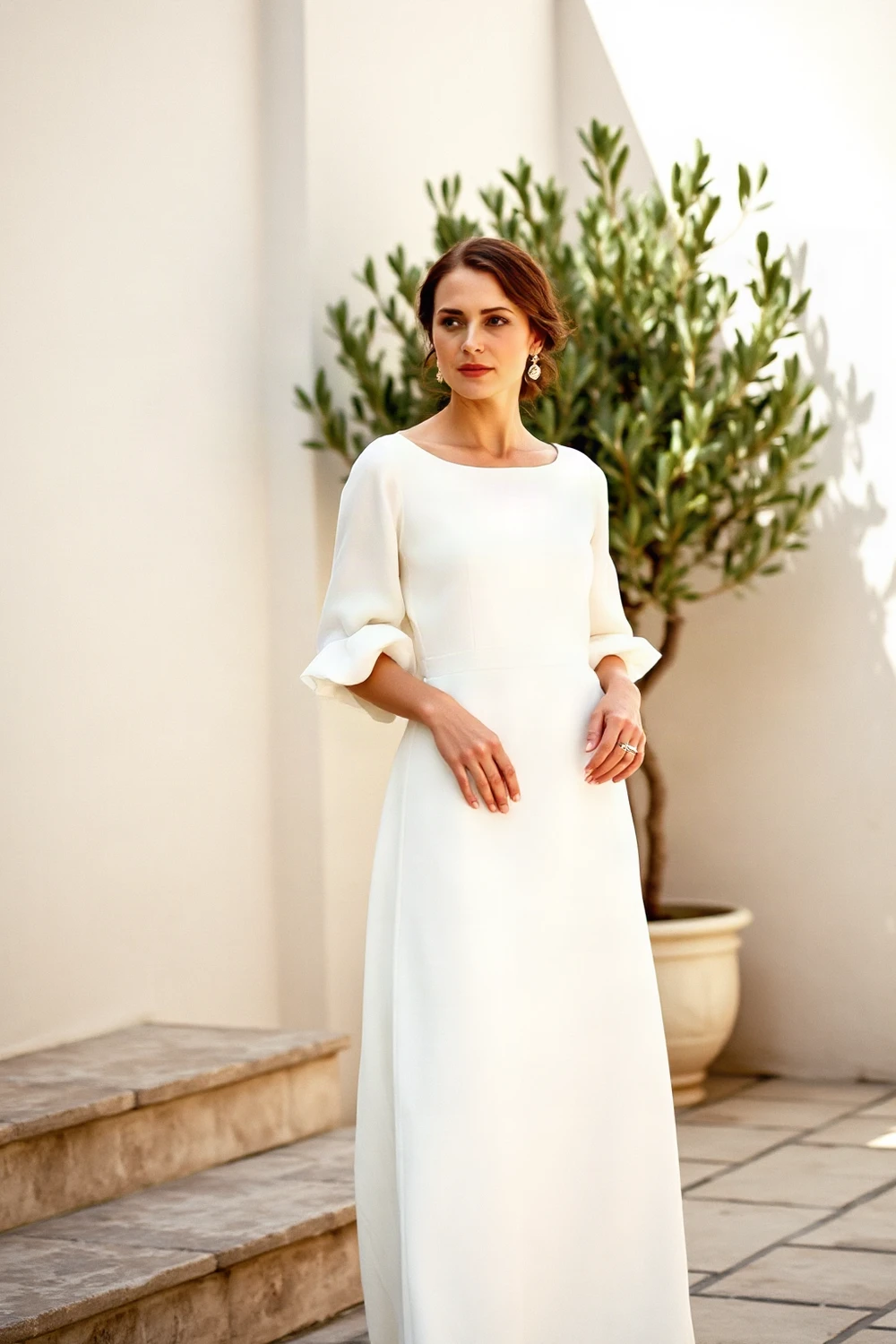
Choosing lighter coverage with flared elbow sleeves
The fourth look replaces wrist-length sleeves with sleeves ending below the elbow in softly layered flares. Against the restrained rounded neckline, plain bodice and straight-falling skirt, the cuffs become the signature and soften the vertical silhouette.
This lacks the uninterrupted coverage of a full-length sleeve, so set personal boundaries first. It may feel lighter in warm weather, during active movement or in a less formal outdoor setting. Test dining, carrying a bouquet, embracing and reaching across a table. If the flares catch nearby objects, a narrower or shorter version may work better. The plain bodice allows earrings or a visible hair accessory, but a necklace-free neckline keeps the sleeves primary. The choice balances arm coverage, motion and desired formality.
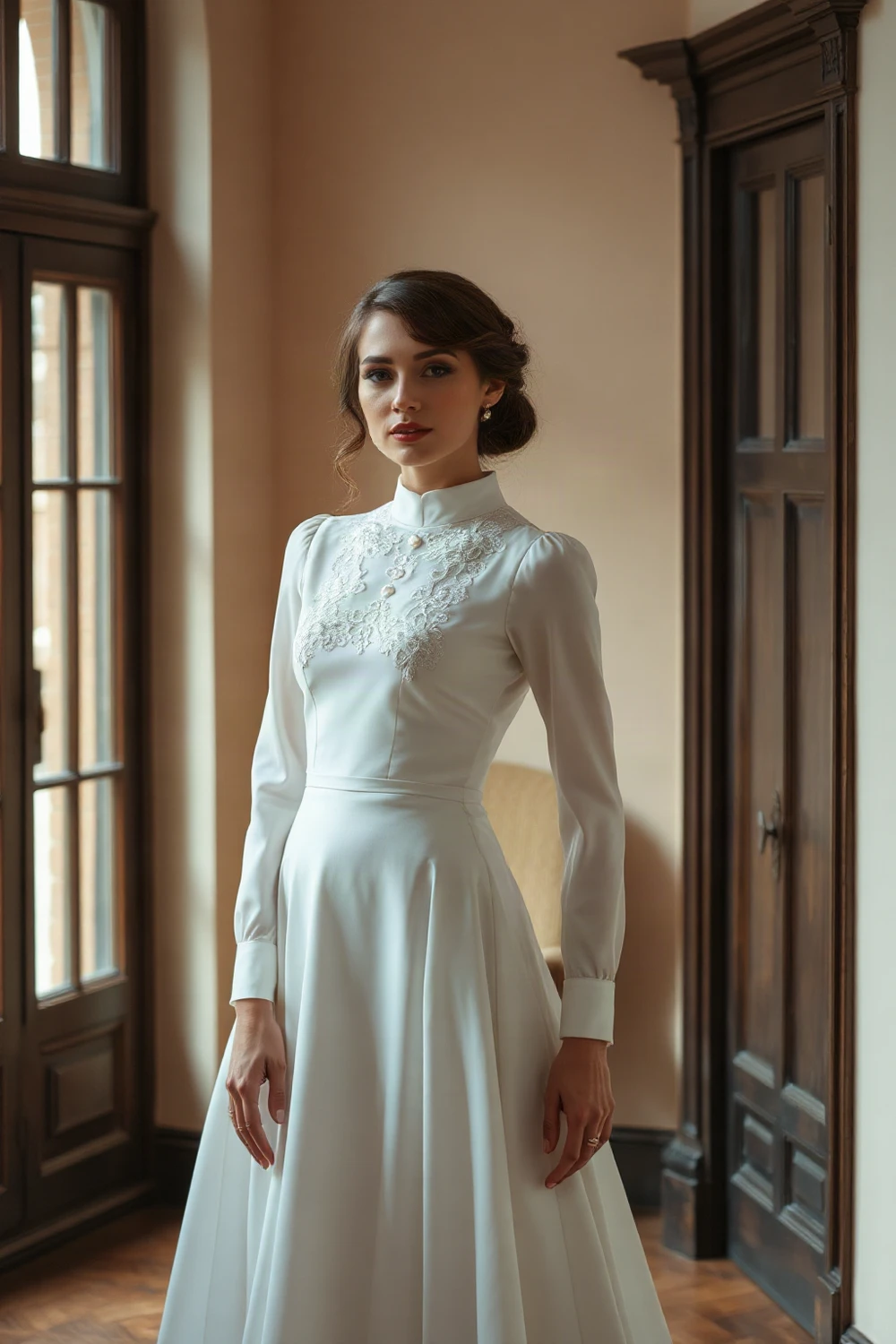
Concentrating detail beneath a high stand collar
The fifth concept combines a high stand collar, softly raised shoulders and gathered long sleeves in a historically influenced framework. A symmetrical lace-look panel and small central buttons draw the eye down from the face, while the broad skirt stays plain. Concentrated detail keeps the full silhouette from feeling heavy and separates the focal area from the supporting surface.
A high collar must also be comfortable: it should not press beneath the chin, fold when the head lowers or interfere with planned hair and veil attachments. Slightly puffed shoulders may broaden the upper body, so assess them with the defined waist and skirt volume. This is softer than the second image’s pearl-like geometry and more localized than the first image’s floral texture. Because the panel occupies necklace space, small earrings balance it better. Test wrist mobility and whether raised cuff edges might catch a fine veil.
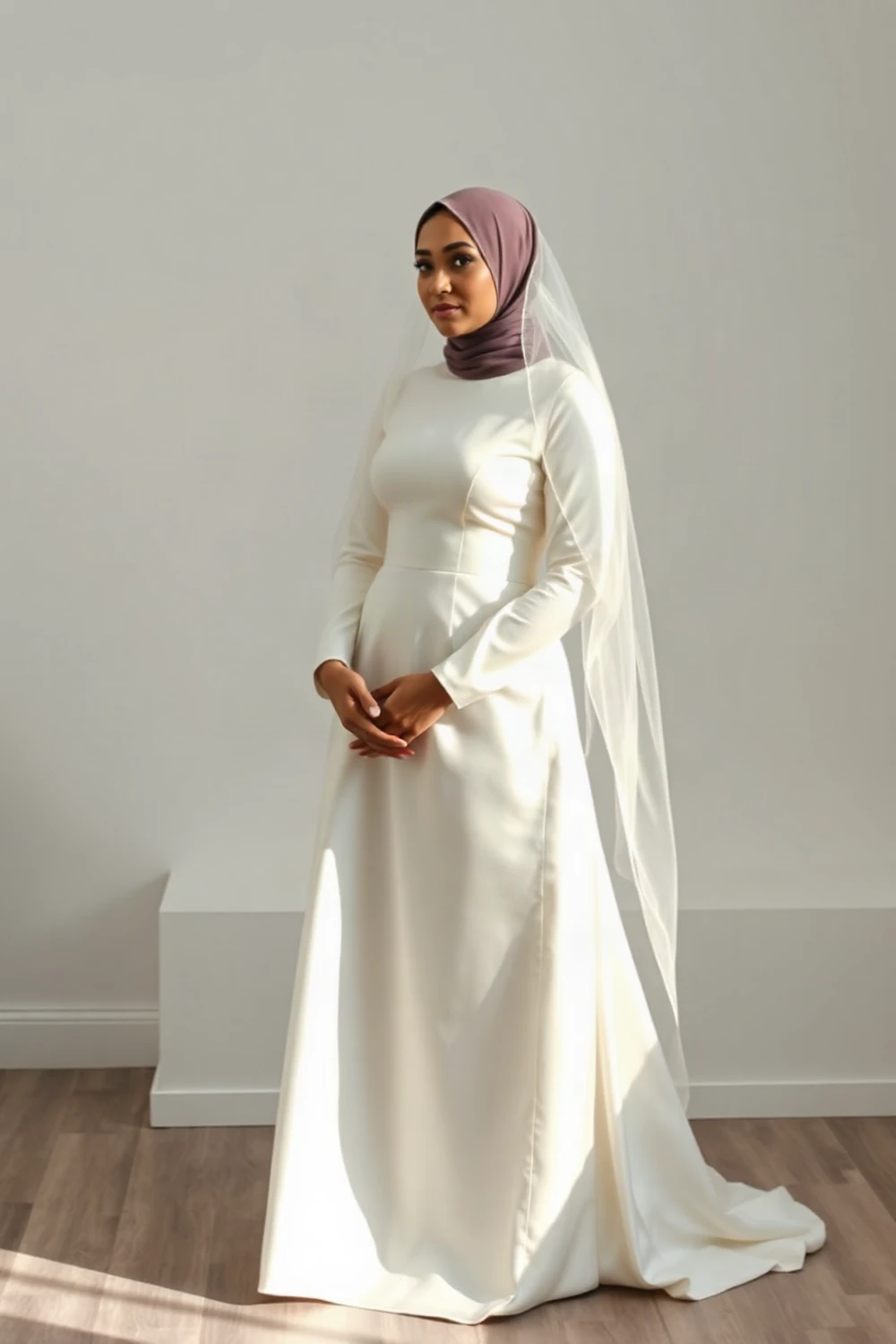
Coordinating a hijab, veil and unembellished A-line
The final look combines a clean high neckline, long sleeves and an undecorated A-line skirt. A mauve hijab provides the only pronounced color against the white silhouette, while a fine veil falls behind without breaking the dress’s vertical flow. Without ornament, color, layering and fit become prominent.
Assess the neckline with all neck layers. Hijab folds, collar height and veil attachment can create excess bulk together even if each looks simple alone. Try every component at one fitting; turn the head, raise the arms and sit for several minutes. Mauve creates a personal focal point, whereas near-white would appear more continuous. Compare either in daylight and indoor light. The quiet A-line supports the head layers, but the hem and small train still need walking, turning and sitting tests to confirm movement.
A balanced modest wedding dress need not cover or decorate every area equally. Define the required coverage first, then choose one main focal point. Floral borders create a romantic frame, pearl-like lines bring graphic order, and clean bateau or A-line shapes emphasize cut. Flared cuffs offer a lighter alternative, while a stand collar or coordinated hijab and veil creates a stronger frame around the face.
Try the preferred concept with the intended underlayers, shoes, headpiece and veil. Sit, climb a step, raise the arms, embrace and turn under more than one kind of light. Confirm that the neckline stays in place, sleeves remain comfortable and the train follows without obstruction. These checks reveal whether an appealing detail can also maintain the desired coverage, mobility and personal character throughout the event.
From floral openwork and pearl-like geometry to clean bateau necklines and a hijab-and-veil pairing, this guide compares how modest wedding dresses balance coverage, movement and one clearly placed focal detail.
Frequently asked questions
How should neckline height be chosen for a modest wedding dress?
Define the required coverage and planned underlayers first. A bateau neckline feels broad and visually open, while a stand collar creates a more enclosed facial frame. Turn the head, sit and raise the arms to check that the neckline neither shifts nor exposes an underlayer.
Does an embellished bodice need a necklace?
Usually not. Floral openwork, pearl-like strands or a symmetrical chest panel already forms a focal area beneath the face. Small earrings can provide balance without crowding it. If considering a necklace, test it with the dress to ensure it does not overlap the neckline or catch raised details.
Are flared elbow sleeves more practical than straight wrist-length sleeves?
They feel lighter and allow more air around the forearm, but they offer less continuous coverage and may touch plates, flowers or table edges. Straight wrist-length sleeves are visually quieter. Compare both by sitting, reaching, dining and carrying a bouquet.
How can a plain wedding dress avoid looking unfinished?
Choose one deliberate focus rather than adding several decorations. A distinctive neckline, precise seams, moving cuffs, a colored hijab, noticeable veil or restrained earrings can provide definition. Excellent fit at the shoulders, waist and hem is especially important because a plain surface makes proportion highly visible.
What should be tested when wearing a hijab and veil together?
Check that the neck layers do not create unwanted bulk, the veil attachment remains secure and head movement is unrestricted. View the hijab color in daylight and indoor light. Try sitting, embracing and lifting the arms while wearing the complete dress and head styling.