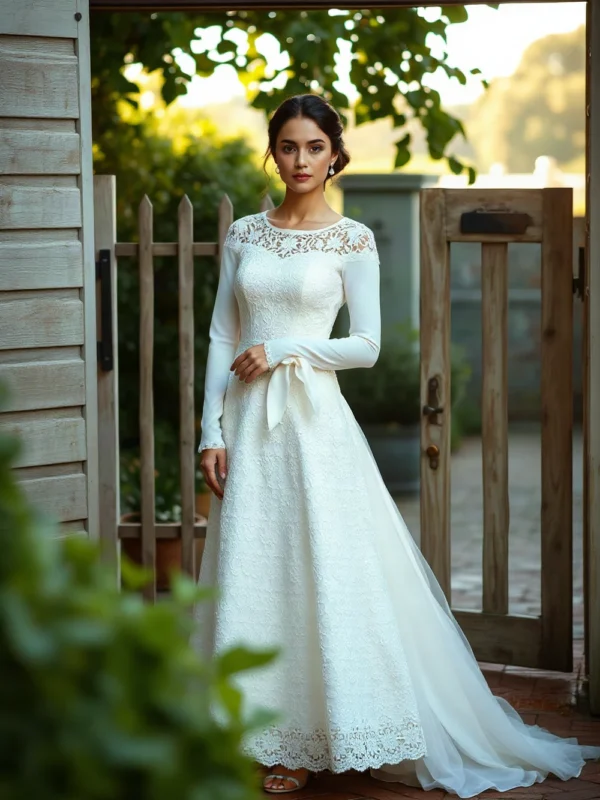
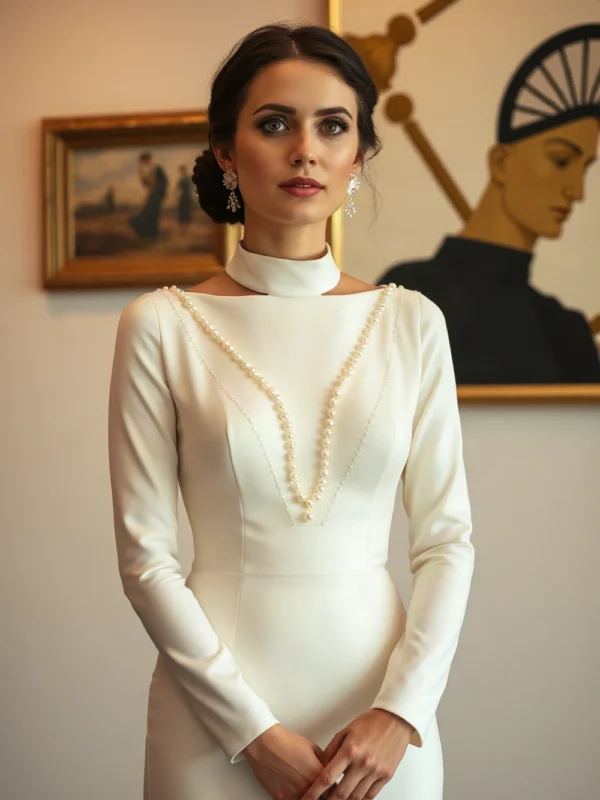
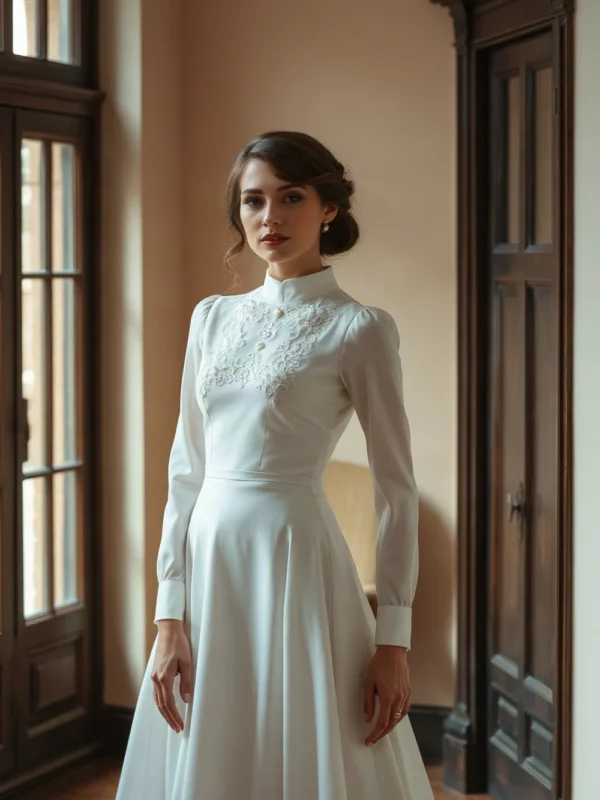
The shared theme is coverage achieved through sleeves and controlled bodice lines, but each image places visual interest differently. The first design repeats floral, lace-like detail across the upper bodice, cuffs and scalloped hem. The second replaces that organic pattern with nested pearl-like lines, while the fifth concentrates a symmetrical appliqué beneath a high stand collar. Each is embellished, yet the eye travels in a different direction.
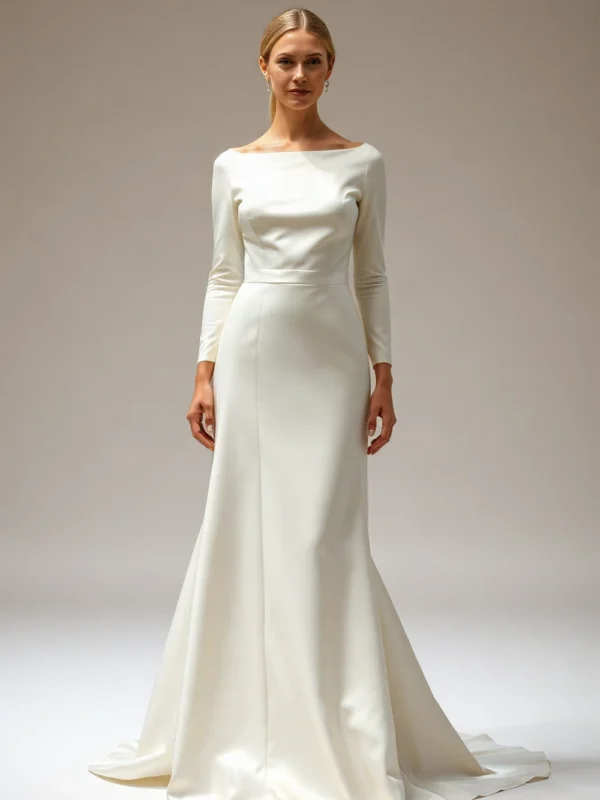
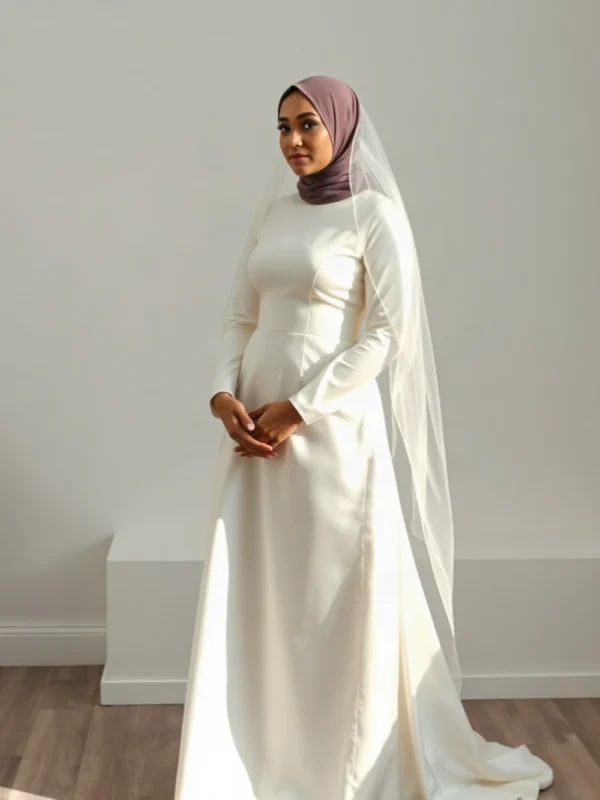
The third and sixth looks rely much more on cut than decoration. A wide bateau neckline, visible waist seam and gradually flared skirt create the structure of the third concept. In the sixth, a similarly clean dress is paired with a mauve hijab and a fine white veil. The contrast around the face becomes the focal feature, leaving the bodice and A-line skirt intentionally quiet. These are useful references for anyone who prefers proportion, color or head styling over dense surface work.
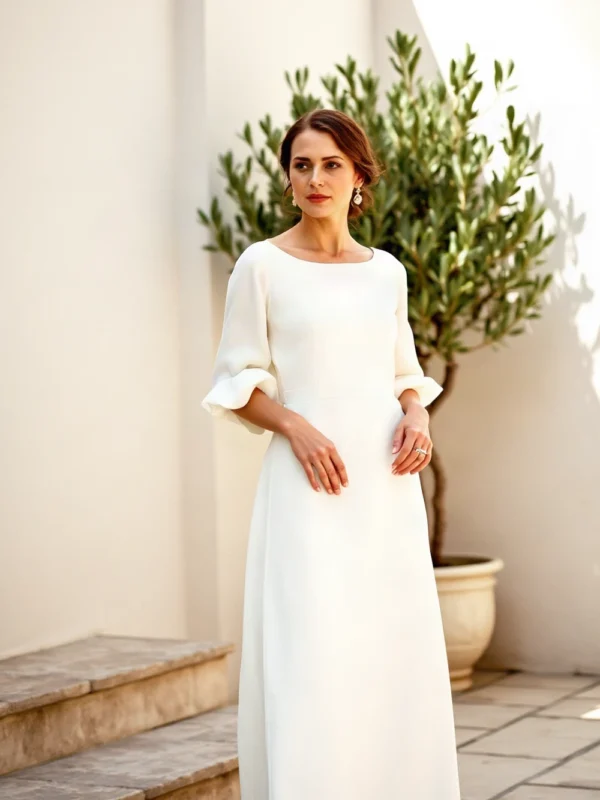
The fourth image introduces the gallery’s main sleeve variation. Its flared elbow-length cuffs feel lighter than the straight wrist-length sleeves seen elsewhere, and they soften an otherwise restrained column-like shape. That shorter sleeve does not provide the same uninterrupted coverage, however. A fitting should include sitting, reaching, carrying a bouquet and using a dining table, since a flared cuff may rise or touch nearby objects even when it looks balanced in a standing pose.
Begin a selection by defining non-negotiable coverage at the neck, arms and bodice. Then choose one principal focus: floral borders, pearl-like geometry, a clean bateau line, moving cuffs, a high embellished collar or the color relationship between hijab and veil. Review the side profile as well as the front, and test the design in daylight and indoor lighting. This makes it easier to judge whether the detail that reads clearly in an image will remain comfortable and coherent throughout an event.