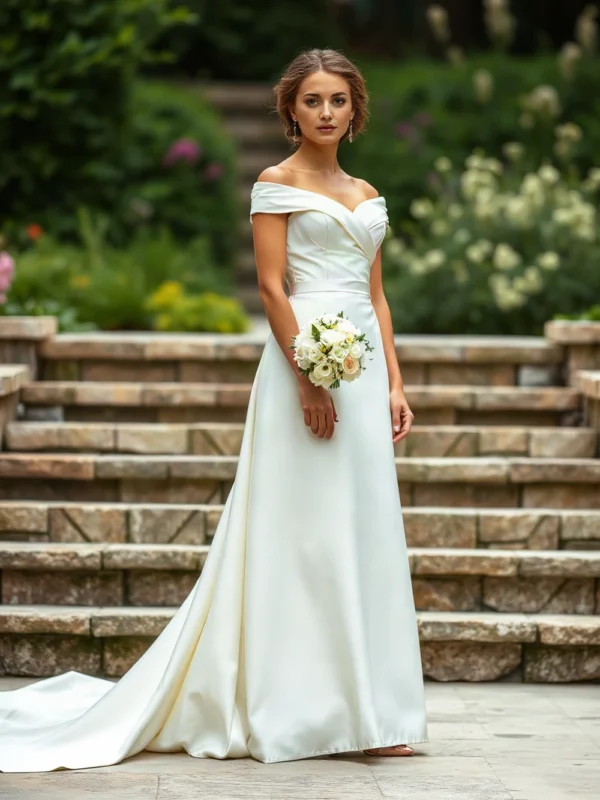
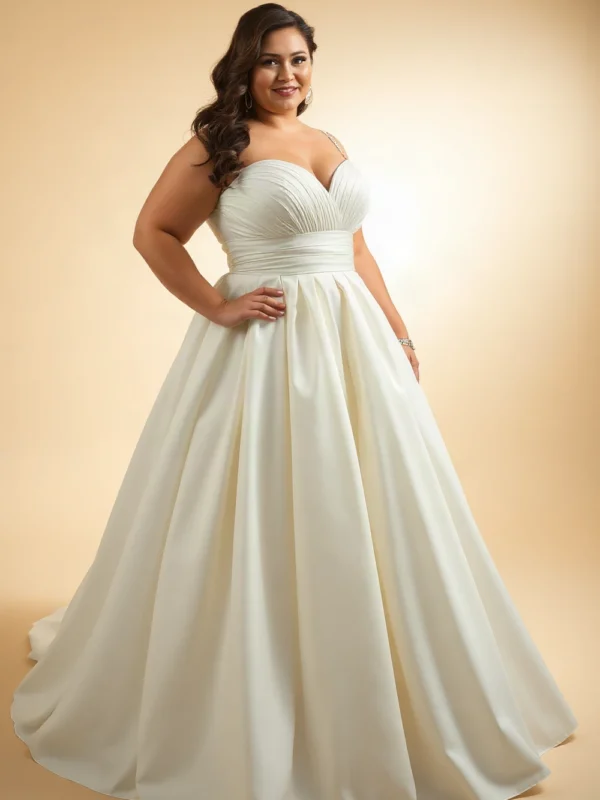
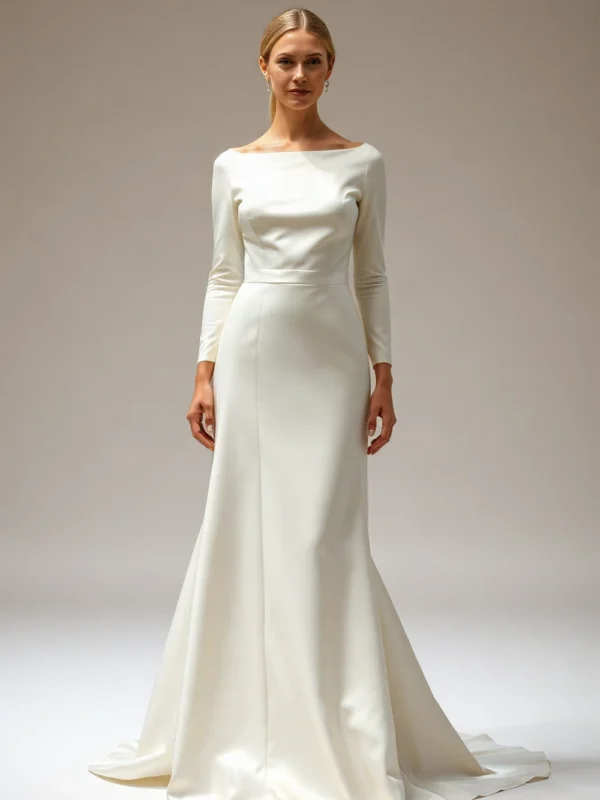
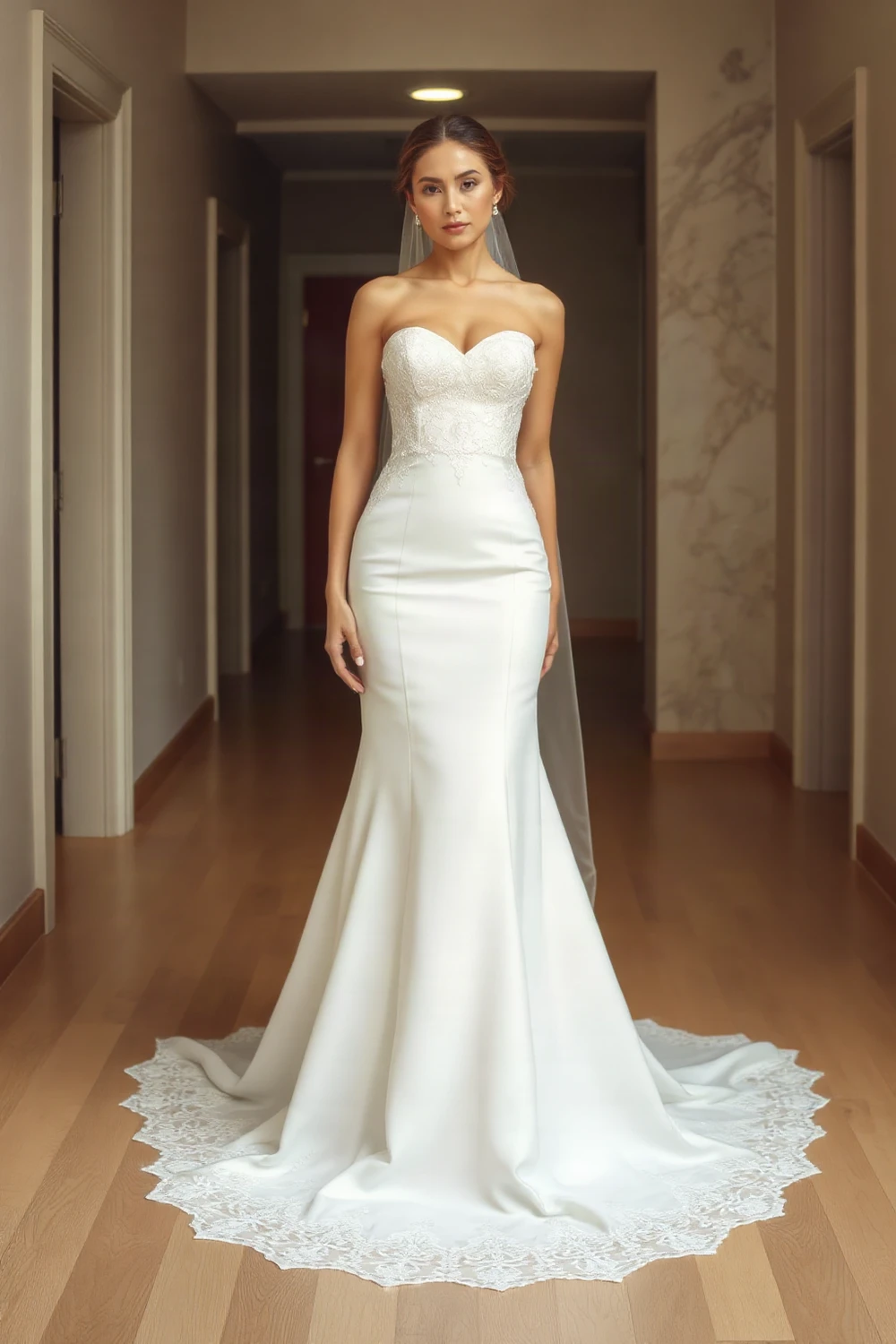
Strapless sweetheart fit-and-flare wedding dresses may share open shoulders, a close body and a widening skirt, yet lace placement and flare position substantially change their character. Across these six visual concepts, pattern may disperse below the hips, stop at the waist or continue nearly to the knees. A sharp waist divide feels clean and architectural, while motifs descending onto the hips connect bodice and skirt. Flare location also affects apparent proportion, knee movement and train prominence. Comparison therefore requires more than a stationary front view: side and back angles reveal how waist, seams and train relate, while walking and sitting show whether the sculpted outline suits the celebration. Each image is a separate fitting and styling reference, focused on visible transitions without assumptions about fibre content or real garment construction.
A Gradual Transition into a Layered Flare
In the first concept, the lace-like surface continues from the sweetheart bodice across the hips and upper thighs. Below this fitted area, pale layers widen as the motifs disperse rather than stop abruptly. The effect fluidly connects the narrow body to the broad train and is particularly clear in side view. A wide ornamental border makes the train a strong outline for rear and three-quarter photographs, though its expansive edge and layered volume may need more management along narrow routes. At a fitting, walk normally, turn in both directions and climb a few stairs. Confirm that the flare releases the knees, no layer reaches the heels, and the train can be lifted or secured. A plain veil keeps the perimeter visible; another heavily patterned edge might overlap the defining detail.
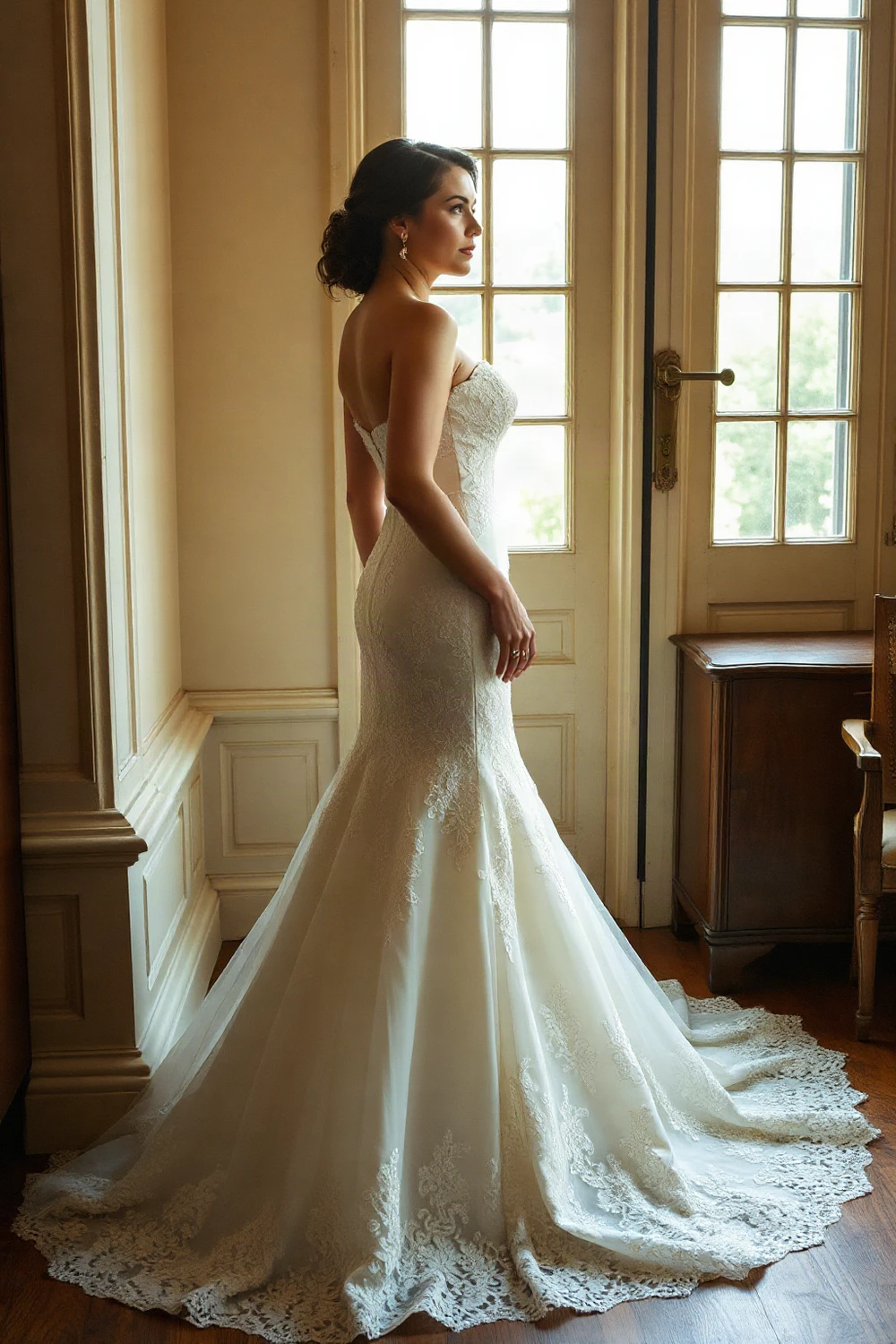
A Clear Divide Between Bodice and Smooth Skirt
The second concept concentrates its lace-like pattern on the strapless sweetheart bodice, leaving most of the skirt smooth. A clean waist join lets the textured upper section and narrowing lower silhouette read separately. In the symmetrical front view, long seams draw the eye down before the skirt opens below the knees into a short circular train. Compared with the layered first look, the surface is calmer and the result more graphic. That simplicity also makes the waist fit especially visible: the join should not roll while sitting, lift when leaning or interrupt the body with a rigid ridge. Test a normal stride, a longer step and a sideways dance movement through the narrow section. Because the main detail stays above the waist, a fine veil or restrained earrings can complement the dress without covering the open neckline.
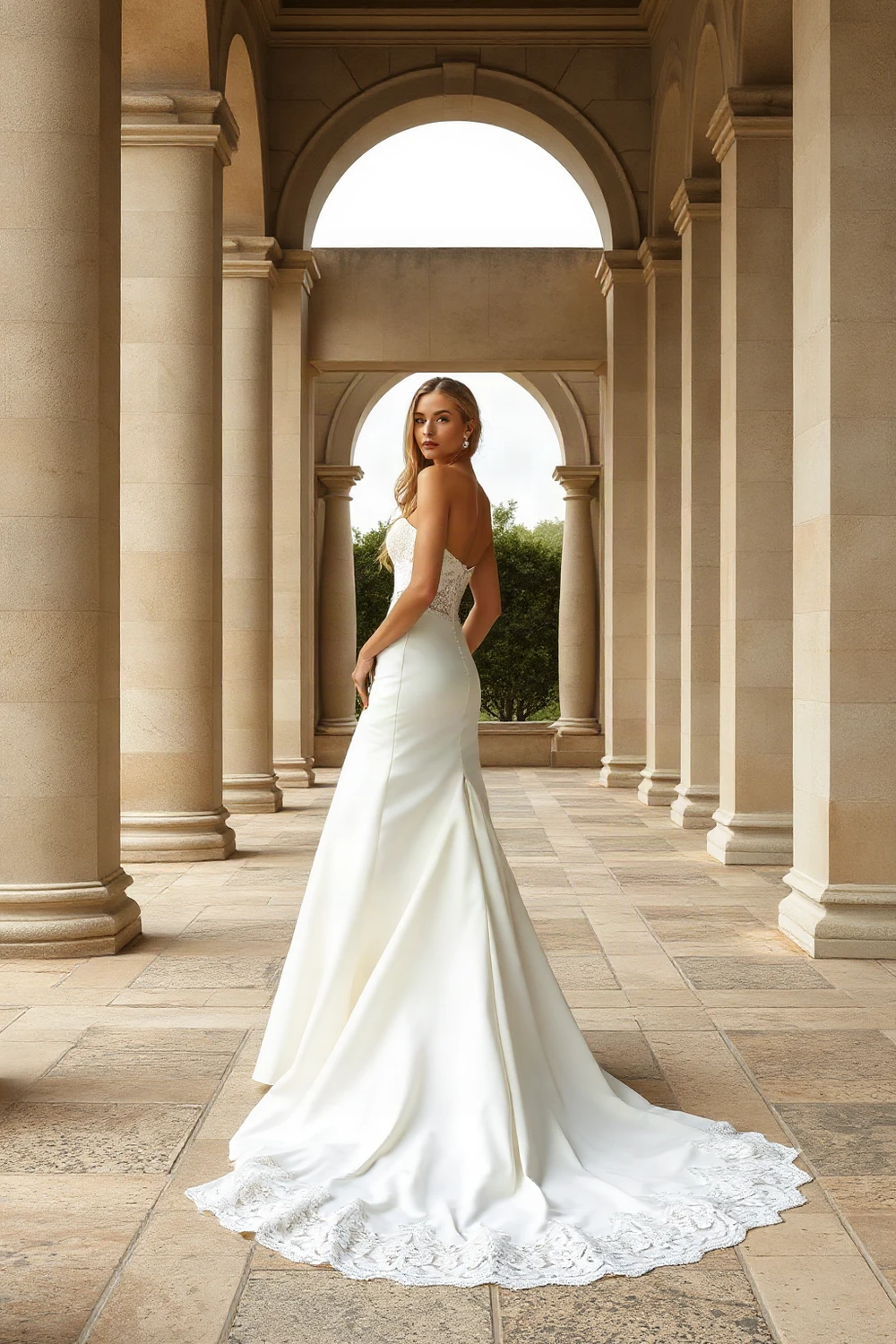
Balancing the Back Edge, Seam and Train
The third image shows how a smooth skirt can change when seen from behind. The patterned bodice ends around the waist, while a long central seam travels from the fitted hips into the train. This uninterrupted direction lengthens the back view, and the broad ornamental edge frames the otherwise plain center on the stone floor. A dress that appears restrained from the front may therefore carry much more detail at the rear. At a fitting, examine the upper back edge while sitting and bending slightly, not only while standing; it should remain secure without visible gaping. Also check for pulling where the fitted skirt releases into the train. If the ceremony route includes steps, uneven paving or tight aisles, practise holding or securing the train so the visually striking border remains manageable throughout the day.
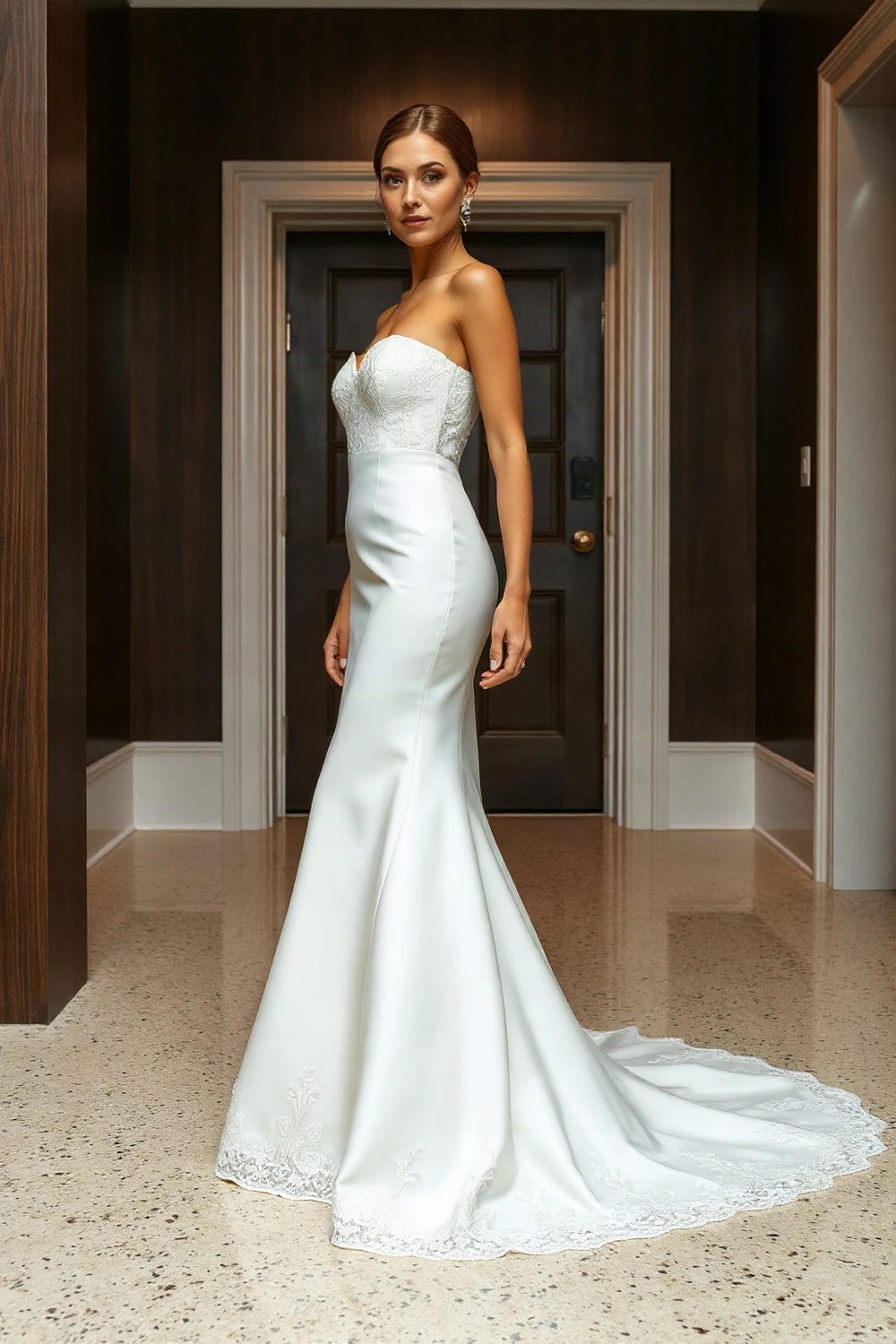
Contrasting a Sharp Sweetheart Edge with a Plain Skirt
The fourth neckline is defined by a narrower, sharper center notch than the soft curves in the earlier images. Raised outer edges give the patterned bodice a structured visual frame. At the waist, its detail stops cleanly, and a smooth skirt descends in one long line before opening low. Sparse motifs at the hem gently echo the bodice without filling the intervening surface. This is a useful reference for someone wanting a distinct silhouette with relatively controlled decoration. The precise upper edge still needs movement testing: raise the arms, reach forward, take a deep breath and sit, checking whether the neckline stays close to the body. A higher, sharply shaped sweetheart offers different coverage from a deep plunge, so the choice is practical as well as visual. Compact statement earrings can add interest while preserving the clean shoulder line.
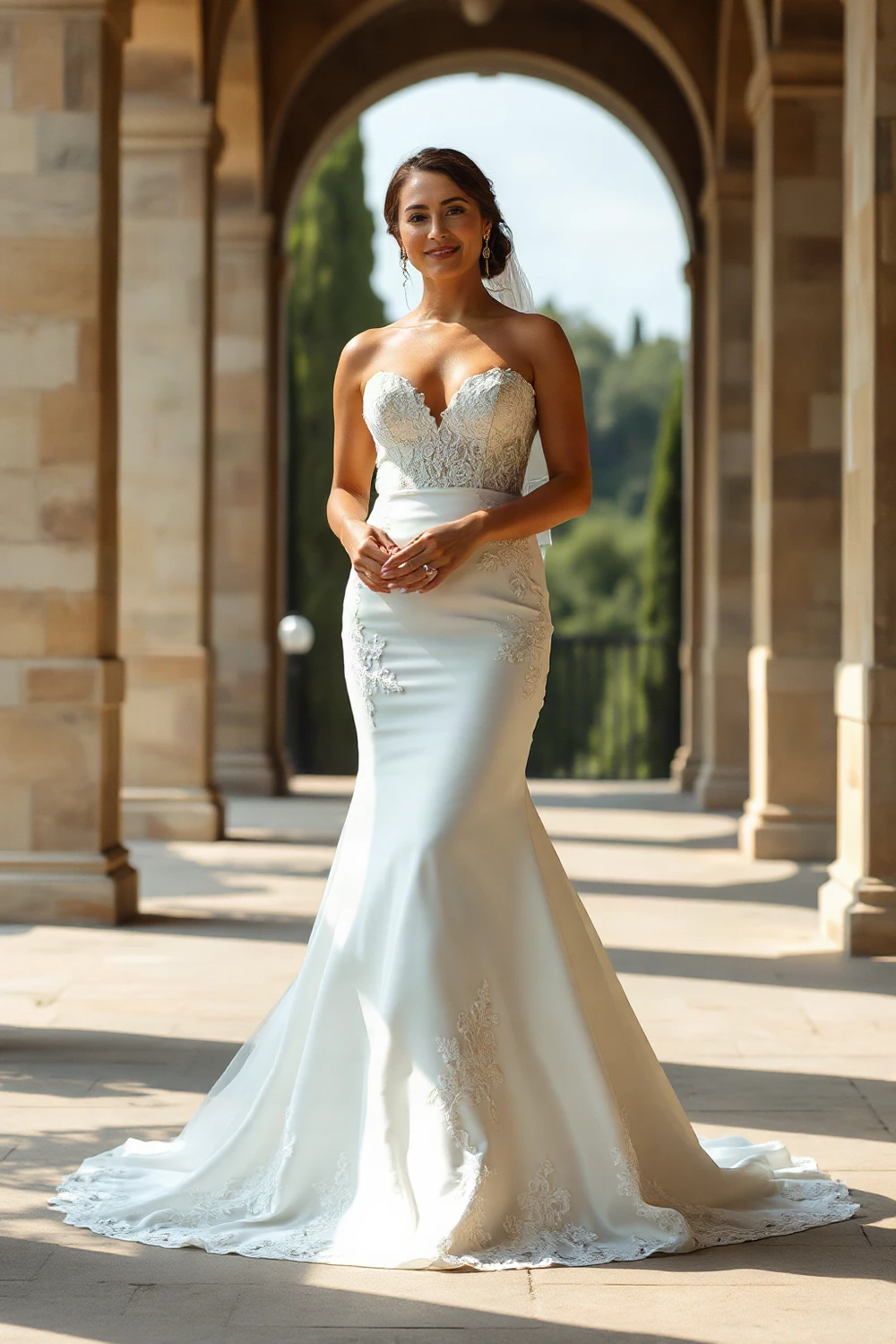
Softening the Waist with Motifs over the Hips
In the fifth look, a deeper sweetheart opening, highly patterned bodice and broad clean waist area work together. The motifs do not stop completely at the waist; they descend along both hips and scatter over the narrow skirt. Rather than the firm horizontal division in the second and fourth concepts, they form a softer diagonal transition. Their return near the hem also links the bodice to the train. This arrangement may appeal to someone wanting a defined waist without making the upper and lower sections feel separate. A deeper neckline merits thorough movement testing: sit, lean, turn and imitate an embrace or dance hold while watching the upper edge. Discuss how the hip motifs cross or approach the side seams before alterations, since substantial changes could interrupt their flow. A simple veil keeps attention around the neckline and waist.
Extending Lace to a Dramatic Low Flare
The sixth concept carries its lace-like surface continuously from the bodice across the hips and toward the knees. The skirt then releases very low into broad, translucent-looking layers, with long motif trails leading to larger patterns at the hem. Among the six, this most strongly emphasizes the mermaid shape because the body remains narrow for longer before volume appears. That dramatic proportion makes mobility checks particularly important. Judge the width around the knees while walking normally, sitting and climbing stairs rather than relying on a still pose. Watch whether the lower layers gather around the shoes or catch one another while turning. Compared with the gradual opening of the first image, this transition is sharper and more theatrical. Since the extensive pattern and large skirt already command attention, understated accessories can preserve the open neckline and silhouette.
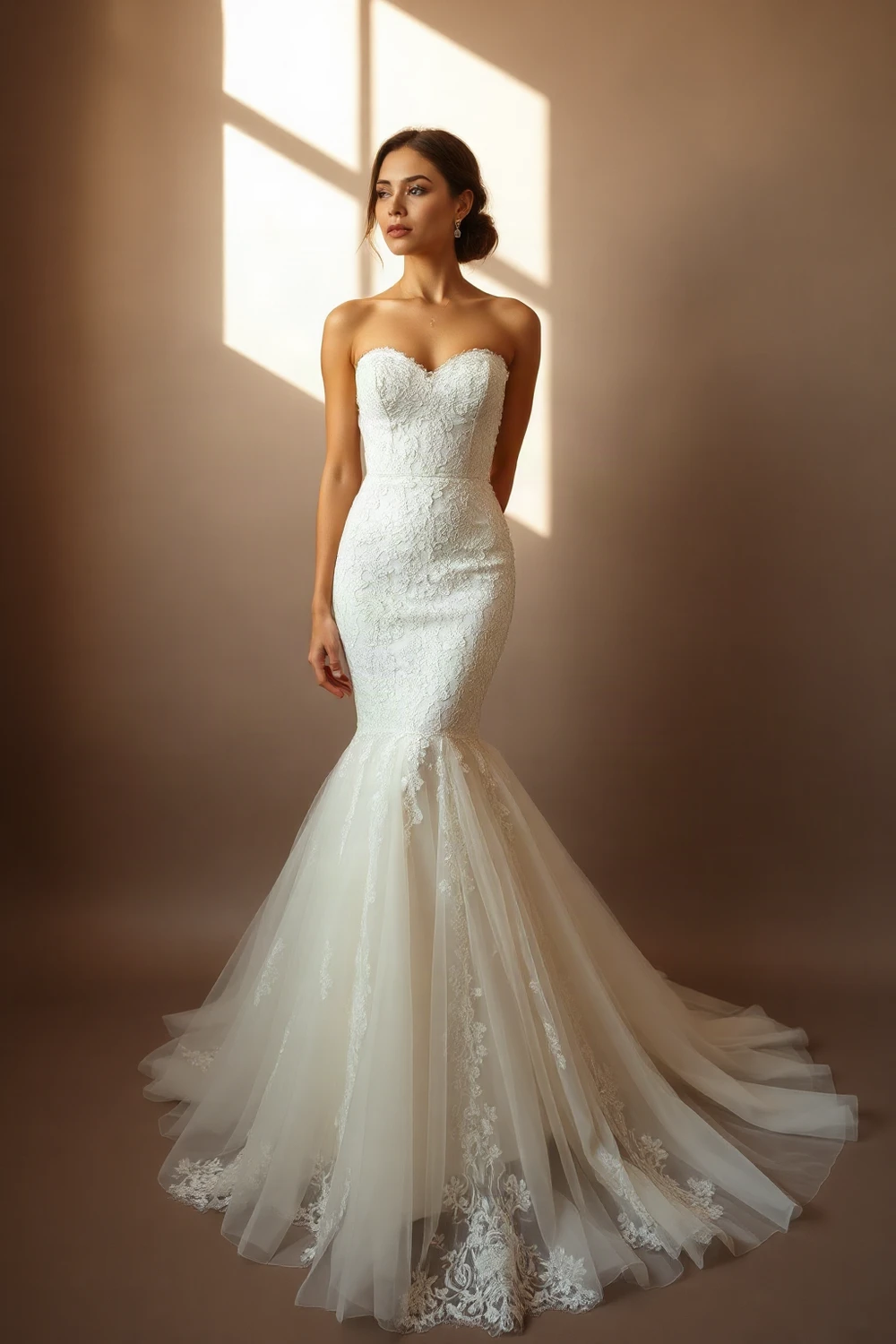
Together, these six looks show that choosing a sweetheart fit-and-flare dress means considering more than neckline and pattern. Lace stopping at the waist crisply contrasts with a smooth skirt; motifs over hips or thighs create continuity. An earlier layered flare appears fluid, while a sudden low release strengthens the mermaid outline. A broad framed train makes a memorable photograph, whereas a shorter perimeter can be easier in confined spaces. Compare front, side and back views, then test sitting, walking, turning and climbing steps. Add the intended veil to see whether it supports or conceals neckline and train. The best option balances the desired transition with comfort, venue route and realistic alterations.
Compare how lace moves from the bodice into the skirt across six strapless sweetheart fit-and-flare and mermaid looks. The visual guide considers clean waists, low flares, layered skirts and lace-framed trains.
Frequently asked questions
Where should the skirt of a fit-and-flare wedding dress begin to widen?
An earlier, gradual flare can create a fluid line, while a low release near the knees emphasizes the mermaid shape. Compare them while walking, sitting and climbing steps rather than judging only a standing pose.
Should the lace stop at the waist or continue over the hips?
A waist-level finish creates a clear contrast between the bodice and a smooth skirt. Motifs extending over the hips soften that division and connect the two sections. Compare both from the side as well as the front.
How can I choose between a deep and a more covered sweetheart neckline?
A deeper opening creates a stronger focal point, while higher curves may provide more coverage. Test the upper edge while sitting, leaning and lifting your arms to assess comfort and stability.
When is a broad lace-edged train practical?
A broad train has room to spread on open, level surfaces and creates a pronounced photographic outline. For narrow aisles, steps or textured flooring, test how it can be lifted or secured.
What veil works with a heavily patterned strapless dress?
A plain-edged veil can let extensive bodice and skirt motifs remain visible. With a smoother skirt, a veil carrying a fine border may echo the train without making the overall surface feel crowded.