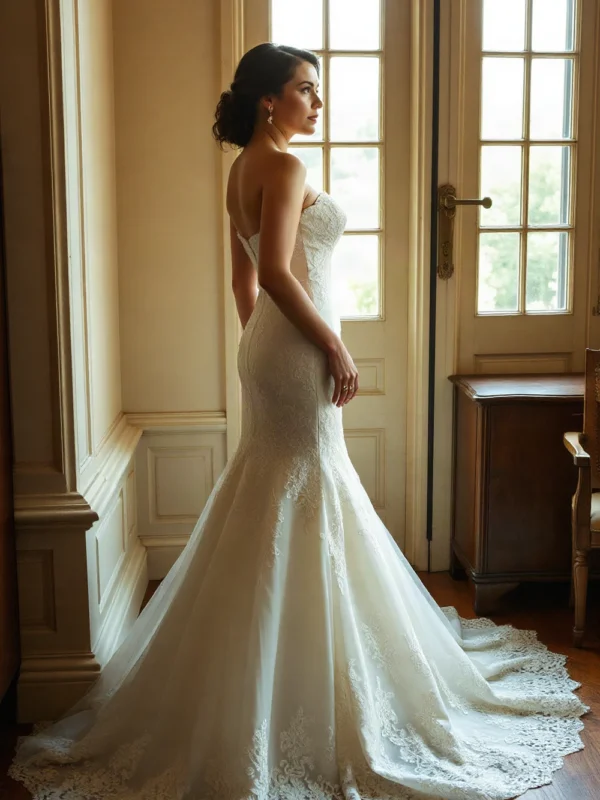
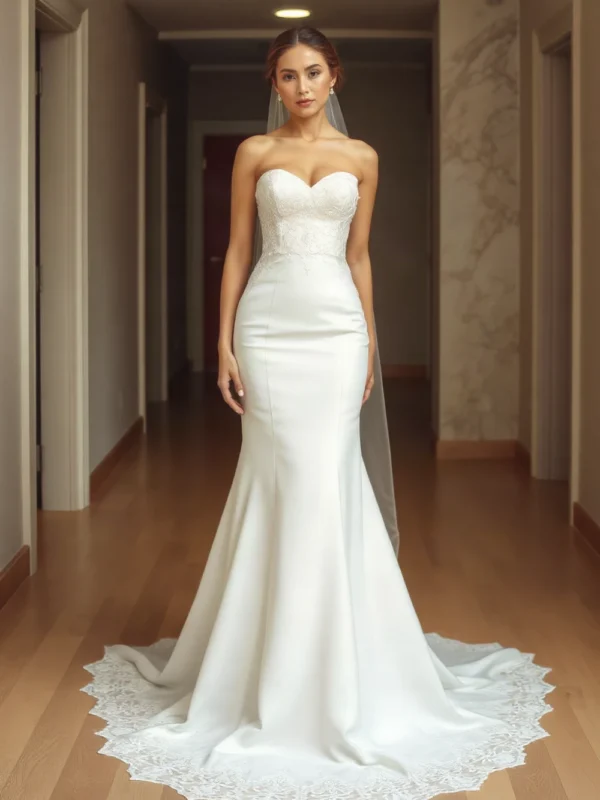
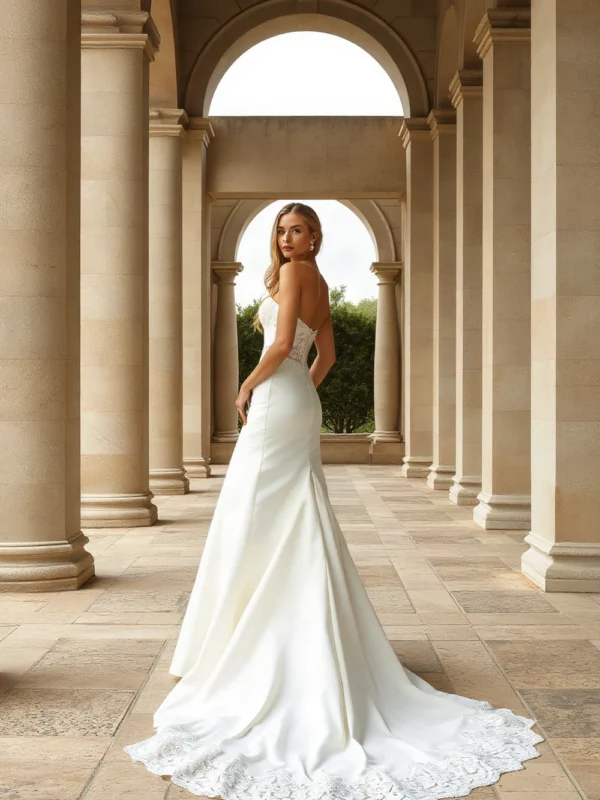
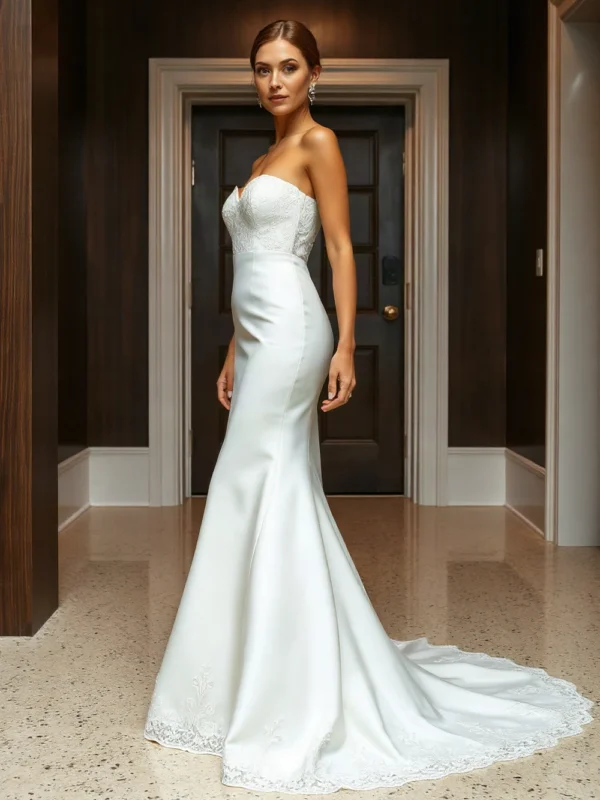
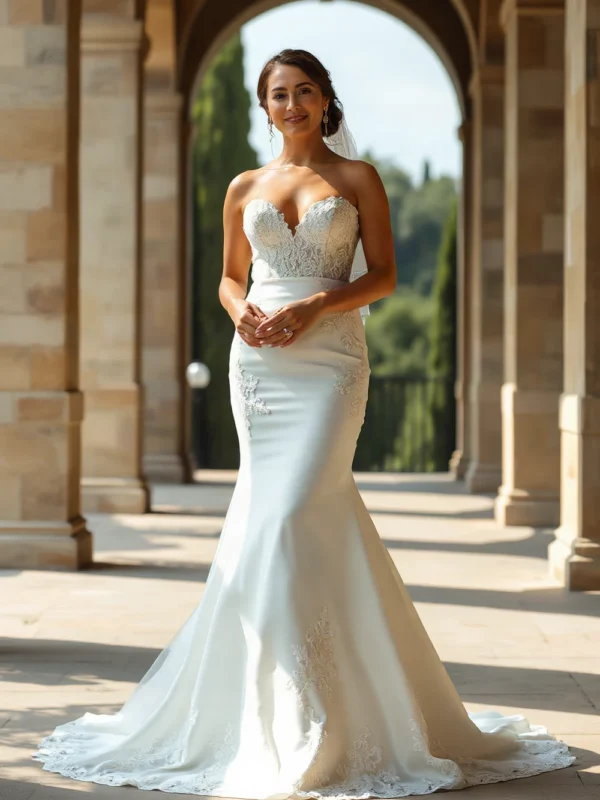
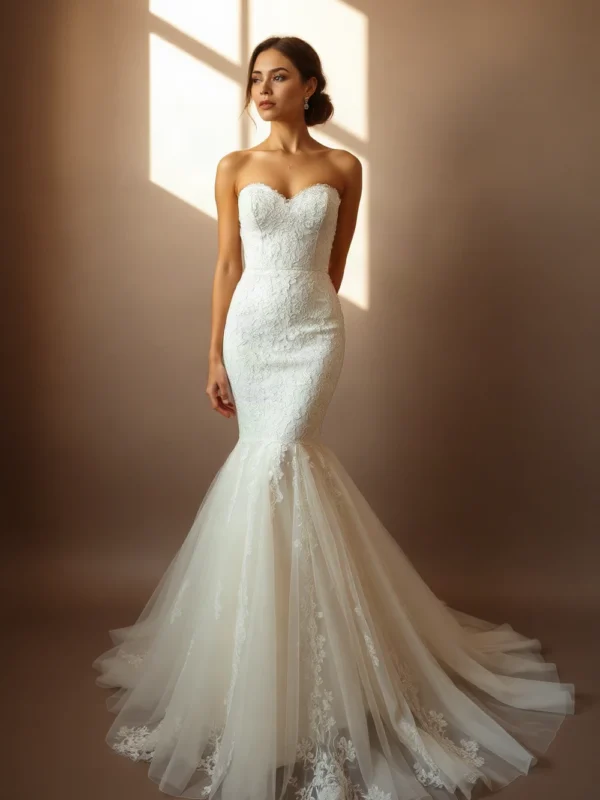
The shared theme is a strapless sweetheart neckline above a close-fitting body and a skirt that widens below the hips. The most revealing difference is where the lace-like pattern stops. In some images it covers much of the body; in others, it remains concentrated on the bodice and allows a smooth skirt to define the silhouette.
The first look carries patterning over the hips before opening into light-looking layers and an expansive framed train. The second and third looks create a clearer division between a patterned bodice and a smooth skirt. Image two presents that transition in a balanced front view, while image three shows how the same idea can produce a long back seam and a more prominent train from behind.
The fourth interpretation is especially clean and architectural. A sharply notched sweetheart edge, uninterrupted skirt and low controlled flare form one long vertical line. In the fifth look, a deeper neckline and motifs extending onto the hips soften the waist transition. The sixth keeps its pattern through the thighs and releases into translucent-looking layers near the knees, producing the gallery’s most dramatic lower volume.
When comparing these ideas, do not rely only on a still front view. Examine the waist from the side, the upper edge while sitting, and the flare while walking or turning. Broad lace-framed trains make a strong ceremonial and photographic outline, whereas shorter, simpler trains may be easier to manage in narrow routes or on steps.
Let surface density guide the accessories. A highly patterned bodice can remain the focal point with a plain veil and restrained earrings. A smooth skirt and clearly divided waist can accommodate a veil with a fine border. The most useful choice is the one that supports the preferred neckline depth, visual transition and practical range of movement together.