Draped and pleated evening gowns create volume through more than a wide skirt. They can direct surface lines toward the waist, fold a neckline around the shoulders or place sculptural detail near the face. Similar-length gowns can therefore read differently according to pleat density, waist placement and where the skirt begins to expand.
The six concepts range from a warm orange halter gown to a metallic silver pleated look. Rather than ranking silhouettes, this guide compares shoulder exposure, waist definition, movement, reflection and accessory needs. Look beyond a front-facing still: consider sitting, walking, turning and navigating the venue. When practical checks support the visual idea, draping and pleating become deliberate parts of the silhouette rather than details requiring constant management.
Creating a Long Line with Vertical Pleats
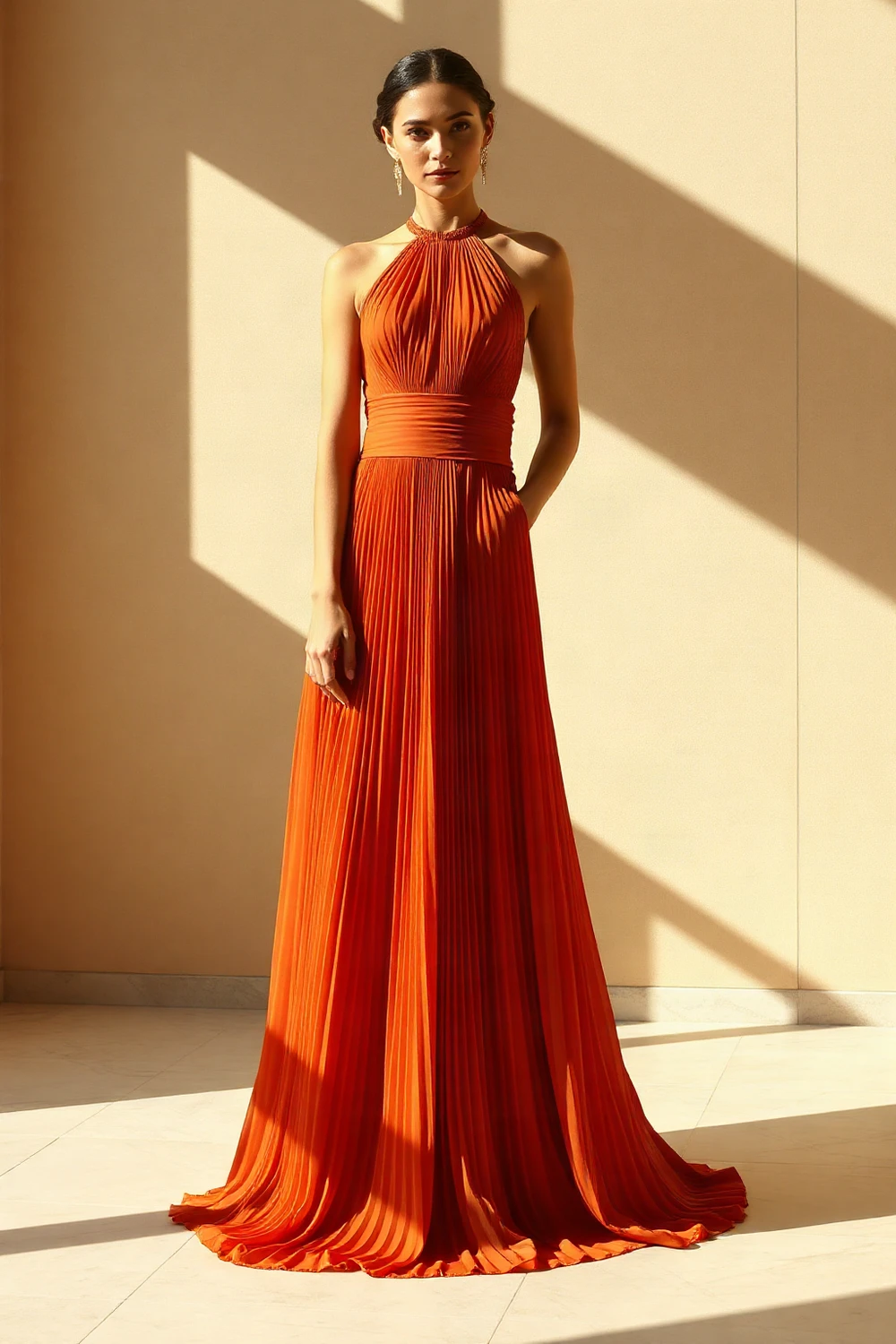
On the orange halter gown, pleats gather around the neck, stop at a broad horizontal waistband and return as vertical rhythm across the skirt. This directs the eye downward despite the lower half’s substantial width. Warm color and hard-edged sunlight also make each pleat’s depth unusually visible.
The halter exposes the shoulders but encloses the neck, leaving less room for a necklace and more opportunity for earrings. At a fitting, check that the bodice pleats converge without pulling across the chest and the waistband stays flat. The lightly pooled hem gives the lines a fluid finish, but test it with the intended shoes on stairs, the dance floor and in crowds. This controlled volume suits someone who prefers repeated texture to isolated sculptural folds.
Balancing a Draped Neckline with an A-Line Skirt
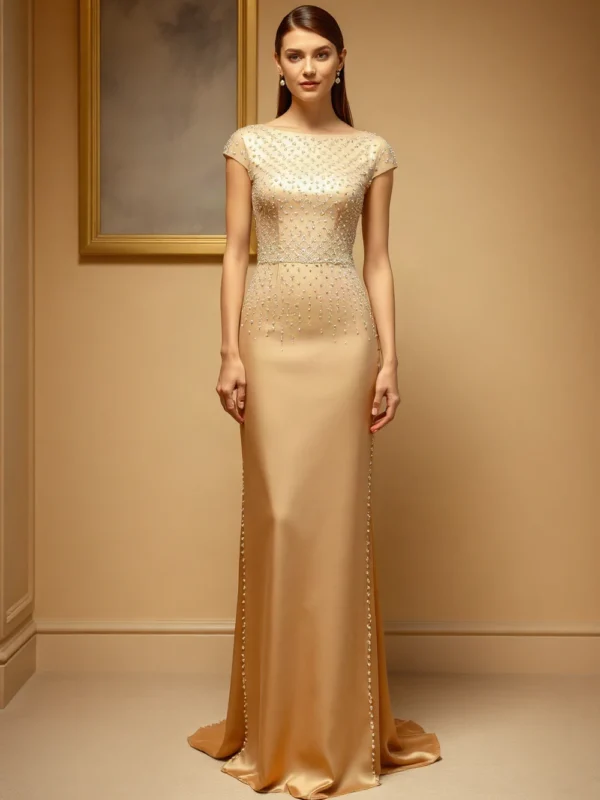
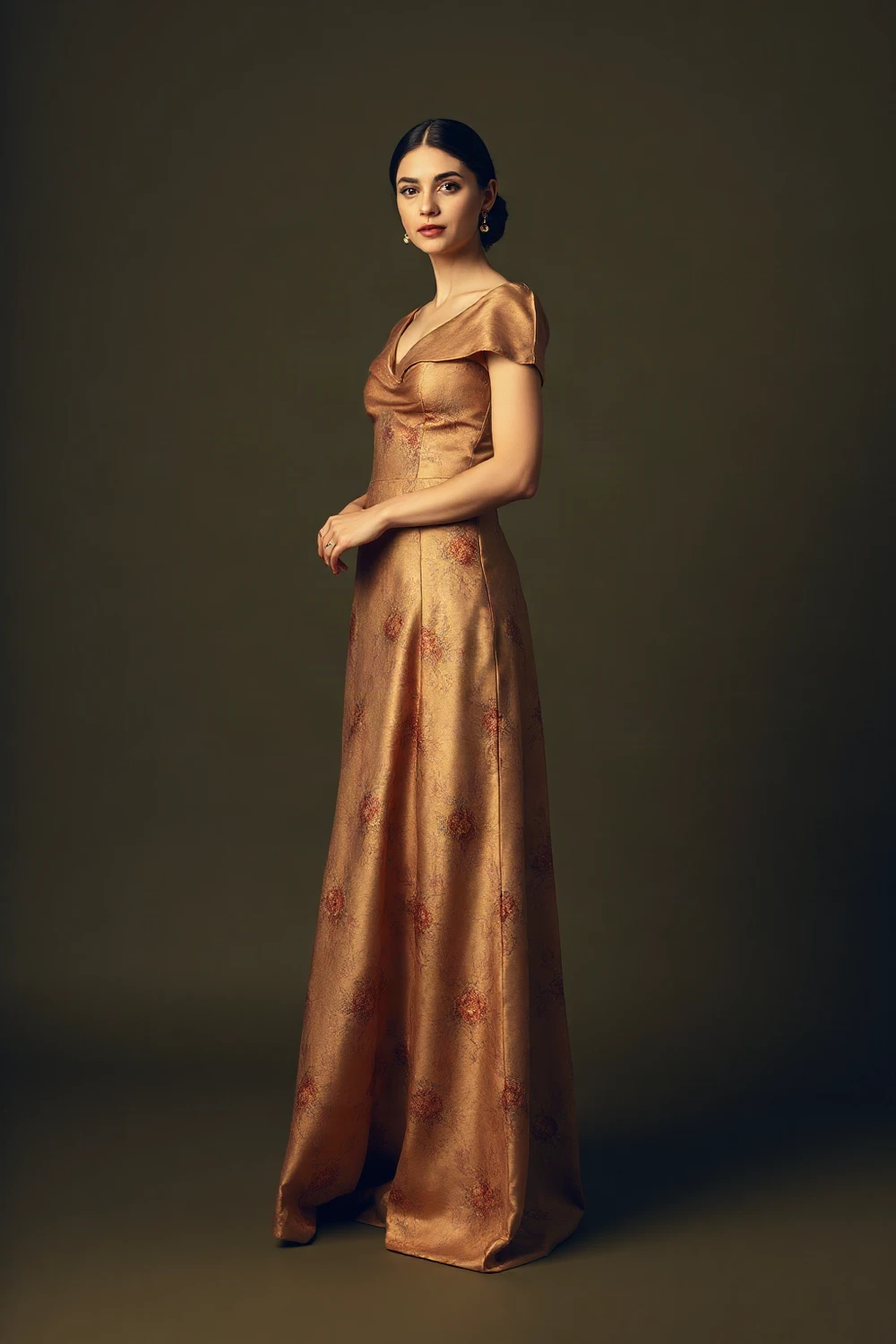
The antique-gold gown concentrates its main fold in a wide, softly lowered neckline rather than distributing volume across the surface. Short flowing sleeves continue that movement, while the comparatively close bodice leads into a skirt that expands gradually below the waist. Scattered reddish motifs add quiet texture to the reflective ground.
This creates a distinct neckline without large applications or dense pleats. Check whether the drape turns inward when seated, slips around the shoulders or conflicts with preferred undergarments. The A-line skirt can allow a freer step than a mermaid cut, although its floor length must still be assessed with shoes. Because sheen and small motifs are already present, accessories need not repeat every color. A restrained bag and limited jewelry keep the soft neckline movement primary.
Managing Movement in a High-Low Skirt
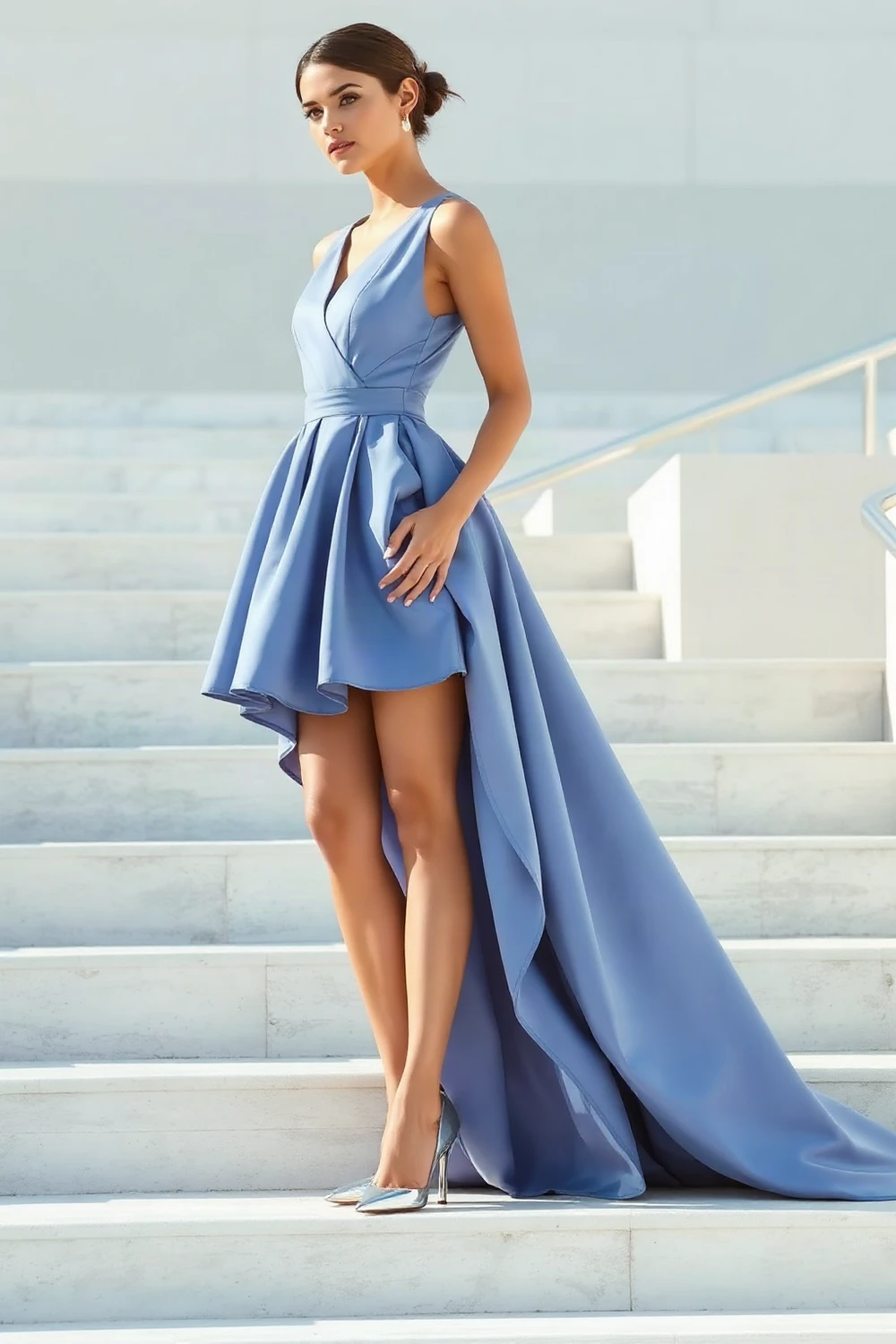
The pale blue concept pairs a quiet V-neck bodice with sculptural folds expanding directly below the waist. A short front reveals the legs and footwear, while side panels continue into a long, sweeping back. The waistband clearly separates these contrasting proportions.
The high-low shape offers freedom at the front, but the long back requires testing on stairs, between chairs and while changing direction. Broad folds may spread or collapse differently when seated, so perform a sit-and-stand test. Fully visible footwear makes its color, toe shape and ankle details part of the silhouette. Compared with a traditional floor-length A-line, this construction appears more dynamic and emphasizes motion. Its formality should still suit the venue, dress code and amount of walking required.
Pairing a Sculptural Neckline with a Mermaid Flare
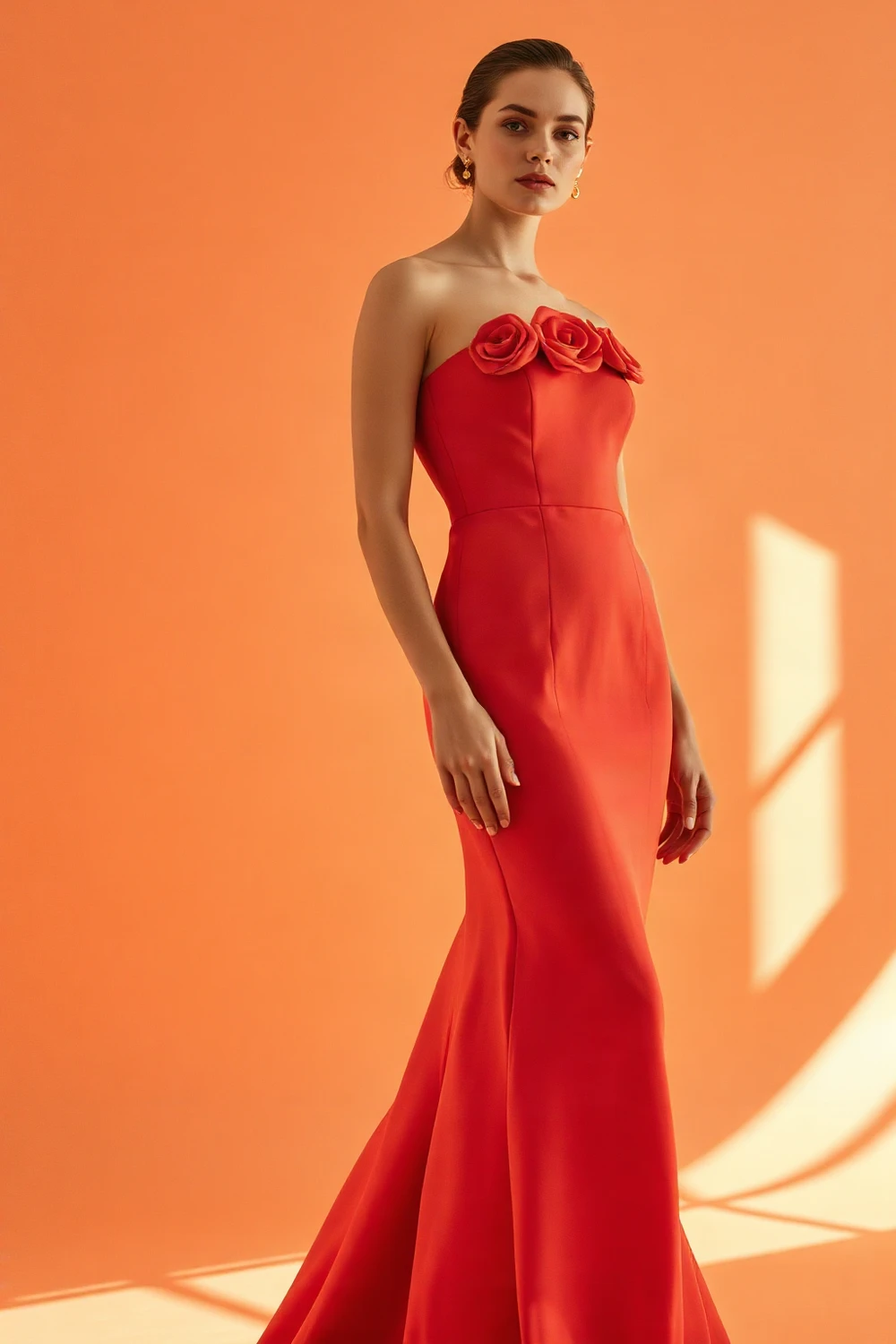
Three rose-shaped details make the upper edge of the coral strapless gown a sculptural focal point. The cut stays close through the torso and hips, then expands below the knees into a mermaid line. Volume near the face and lower hem remains separated by the smooth fitted section.
Assess more than the roses’ appearance. Check whether they interfere with the arms and whether the strapless edge stays secure while reaching upward or sitting. The narrow knee area must allow a natural stride rather than very short steps. Because the neckline already acts like statement jewelry, a large necklace may be unnecessary. The smooth-looking surface creates a clearer outer line than pleating but may reveal creases more readily. Walk, sit and stand during the fitting to confirm that the gown returns to its intended shape.
Using Shoulder Draping as a Horizontal Accent
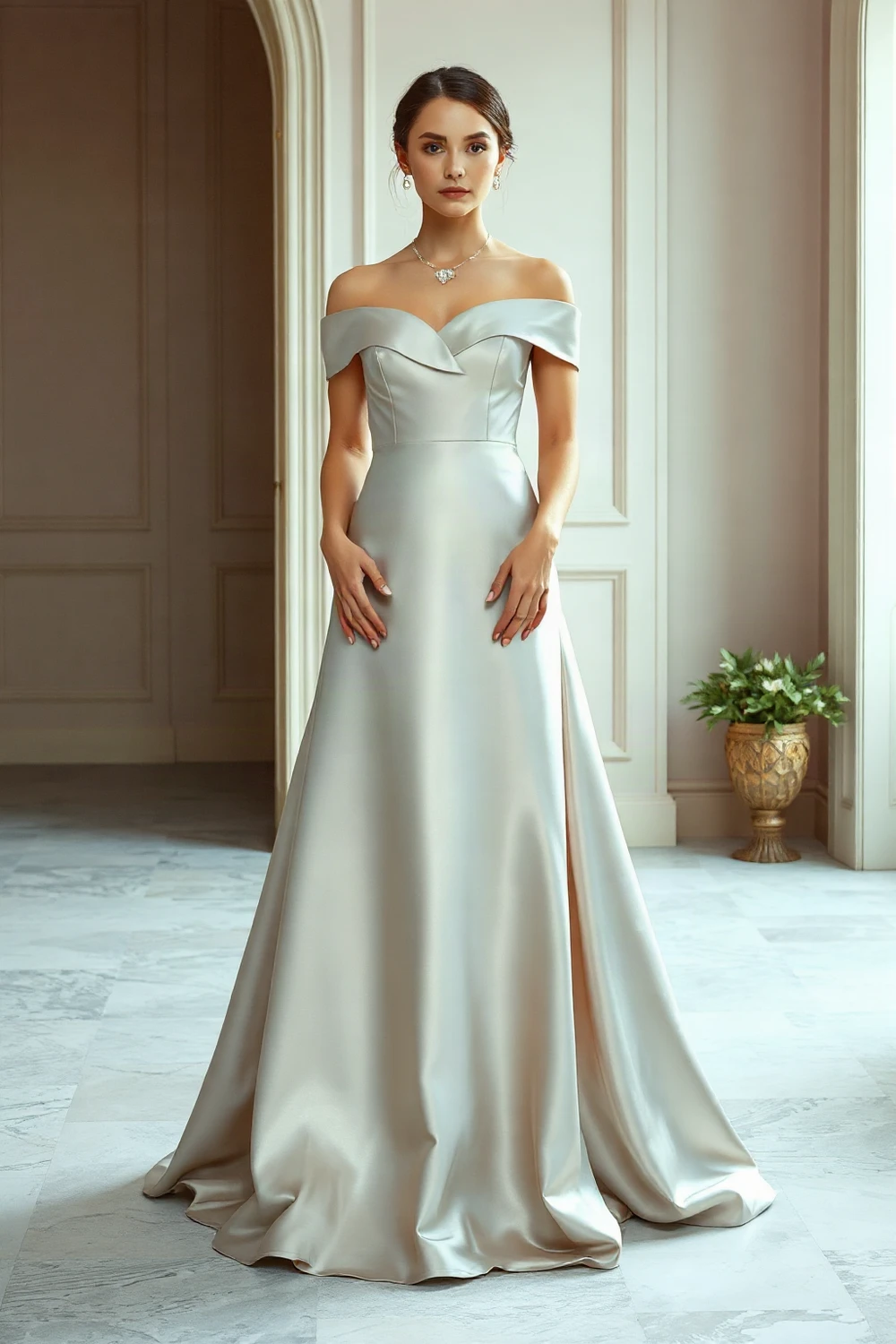
The pearl-gray gown creates a wide horizontal line through a folded neckline wrapping around the shoulders. Vertical bodice seams balance that breadth, while the plain A-line skirt opens calmly from the waist. A narrow side opening adds slight movement without disturbing the restrained shape.
The central practical question is how the off-the-shoulder band responds to arm movement. Reach forward, lift the arms carefully and imitate movements expected at dinner or on the dance floor. The band should neither ride up nor restrict the torso excessively. Although the open neckline accommodates a necklace, the shoulder line is already substantial; one measured central piece is more coherent than competing elements. The A-line provides more lower-body freedom than a close mermaid cut. Because the hem touches the floor in several places, establish its final length with the actual shoe height.
Organizing Shine with Fine Metallic Pleats
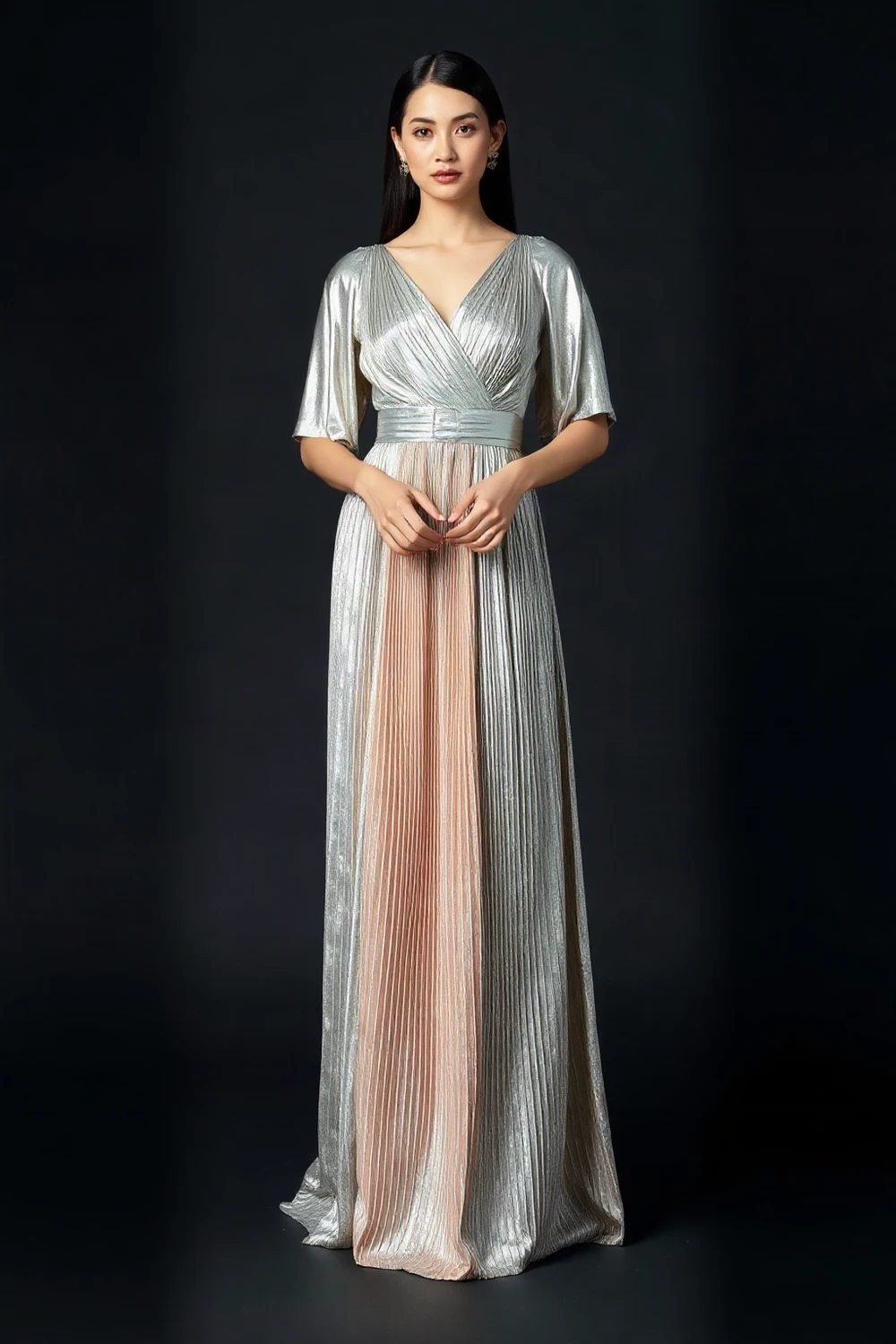
In the silver concept, narrow vertical pleats meet the diagonal lines of a wrap V-neck and the horizontal line of a wide belt. These directions prevent a uniform surface: the neckline draws attention inward, the belt defines the waist and the skirt pleats continue downward. Loose sleeves provide soft movement and greater upper-arm coverage.
Reflective surfaces can change markedly under daylight, warm interior lighting and camera flash, so view the gown in several lights. The central buckle is already a clear accent; highly reflective jewelry or a brilliant bag could compete with it. At the fitting, confirm that the crossover neckline stays closed when bending, the belt does not press while seated and the pleats fall evenly below the waist. This combination offers more coverage than a halter while retaining a fluid vertical effect.
These six approaches show that sculptural effects are not limited to one cut. Fine pleats establish consistent rhythm, broad skirt folds create dramatic motion, rose-shaped neckline details concentrate attention and shoulder draping introduces a composed horizontal line. Suitability depends on the detail’s size and placement, as well as how manageable it remains throughout an event.
Before deciding, wear the intended shoes, then sit, walk at different speeds, turn and raise the arms. Let accessories respond to the gown’s existing focus: reduce jewelry around a distinctive neckline, quiet the bag and shoes beside a highly reflective surface, and consider the venue route when the hem is long. These checks allow drapes and pleats to support both visual balance and the practical experience of the look.
Compare six evening-gown concepts, from fine vertical pleats to sculptural necklines and high-low skirts, to understand how folds, proportion, color and movement shape a balanced formal look.
Frequently asked questions
Do dense pleats make the waist look wider?
The effect depends on where the pleats begin and how the waistband is structured. A flat, defined band can separate upper and lower pleating clearly. Check front and side views to ensure the pleats fall from the waist without unwanted bulk.
What shoes work with a high-low evening gown?
Because the shoes remain visible, their color, toe shape and ankle details contribute to the outfit. A streamlined pointed toe can continue the long line, but comfort and a heel height that works with both front and back lengths matter most.
Should I wear a necklace with a sculptural neckline?
A rose-appliquéd or broadly folded neckline may already provide enough emphasis, making small earrings a calmer choice. With a simpler open neckline, one restrained necklace that follows the direction of the opening can work well.
How do I choose between a mermaid and an A-line skirt?
A mermaid skirt follows the hips and stays narrow toward the knees before flaring, so stride length needs testing. An A-line opens earlier below the waist and usually offers more freedom. Consider the venue, seated time and plans for dancing.
Should a metallic evening gown be tested in different lighting?
Yes. Reflective surfaces can appear different in daylight, warm room light and camera flash. View the gown from several directions when possible, and check whether jewelry, shoes or a bag compete with its existing shine.